Table of Contents
- Verify Licensing, Insurance, and Credentials
- Understand the Termite Inspection Checklist and Process
- Compare Termite Treatment Methods and Recommendations
- Request a Detailed Termite Treatment Cost Estimate
- Review the Termite Treatment Warranty and Guarantees
- Assess Experience with Your Specific Situation
- Confirm Safety Protocols and Preparation Requirements
- Frequently Asked Questions
Last Updated: October 10, 2026
Verify Licensing, Insurance, and Credentials
Before hiring any termite exterminator, confirm they hold valid licenses and insurance. This protects you legally and ensures you’re working with qualified professionals.
Ask to see proof of licensing. Most states require pest control operators to pass exams and maintain active licenses. Request their license number and verify it with your state’s regulatory body. Insurance matters just as much, ask for proof of liability coverage and workers’ compensation insurance. A licensed, insured termite exterminator gives you recourse if something goes wrong during treatment.

Ask how long they’ve been in business. Experience handling termite infestations in your region is valuable. We prioritize licensed and insured technicians because your peace of mind matters. Ask whether their team members are individually certified, not just the company itself. Some states require individual technician licensing in addition to company licensing.
Request the names and contact information of recent clients. A reputable termite exterminator will provide references without hesitation. Call at least two and ask about their experience with treatment effectiveness and follow-up service.
Understand the Termite Inspection Checklist and Process
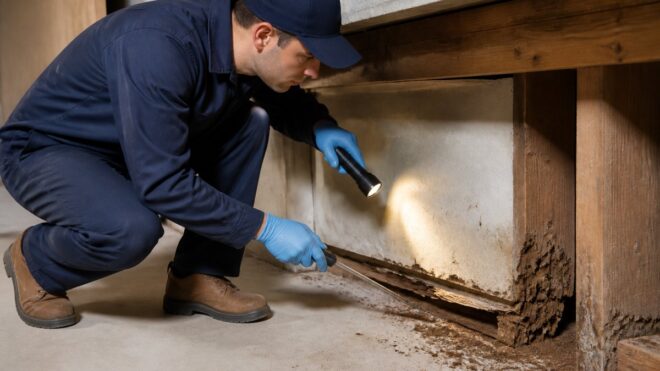
A thorough termite inspection is the foundation of effective treatment. Ask what the inspection includes and how long it typically takes.
The inspection should cover all accessible areas: foundation, crawl spaces, attic, wood framing, and exterior. A quality termite inspection identifies the infestation’s extent, the termite species present, and damage already done. Ask the exterminator to explain what they’re looking for and why each area matters.
Request a detailed inspection report in writing. The report should document findings by location, note the termite species identified, and estimate infestation severity. Ask whether they’ll provide photos of problem areas.
Ask about the inspection timeline. Most inspections take 1-3 hours depending on property size and accessibility. Clarify whether the inspection fee is separate from treatment costs or credited toward the final bill if you hire them. Understanding the termite inspection process upfront prevents surprises and sets realistic expectations.
Compare Termite Treatment Methods and Recommendations
Different situations call for different termite treatment approaches. Ask what methods they recommend and why those methods suit your specific infestation.
Common termite treatment methods include liquid termiticides applied as barriers, bait systems that eliminate colonies over time, and spot treatments for localized damage. Each method has trade-offs in cost, timeline, and effectiveness. A competent termite exterminator explains which approach fits your situation, whether you need fast results, long-term prevention, or both.
Ask about the active ingredients in their recommended termiticide. Modern termiticides are designed to be effective at low doses with minimal environmental impact. Request the product label and safety data sheet. This information helps you understand what’s being applied in your home and what precautions to take.
Ask whether they recommend bait systems, liquid barriers, or both. Bait stations work by eliminating the entire colony but take weeks to months. Liquid barriers create a chemical perimeter that kills termites on contact. Many professionals use both methods for comprehensive protection.
Avoid exterminators who recommend the most expensive option without explaining why it’s necessary for your specific situation. Pressure to over-treat is a red flag. A professional recommends proportional solutions based on infestation severity.
Request a Detailed Termite Treatment Cost Estimate
Get everything in writing before committing. A detailed termite treatment cost estimate protects both you and the exterminator, but the real value comes from comparing estimates side-by-side to understand what you’re actually paying for.
Ask for a written estimate that breaks down labor, materials, and any additional services. The estimate should specify which areas will be treated, what products will be used, and how many visits are planned. Clarify what’s included in the base price and what costs extra. Ask about payment terms, do they require full payment upfront, or can you pay after treatment?
How to Compare Estimates Across Multiple Contractors
When you receive estimates from three or more exterminators, resist the urge to simply choose the lowest price. Instead, create a comparison grid that evaluates these key variables:
- Treatment scope: Does the estimate cover the entire perimeter, foundation, crawl space, and attic, or only visible problem areas? A narrower scope may explain a lower price but leave you vulnerable to missed infestations.
- Retreatment terms: If termites return within the warranty period, does the contractor retreat at no charge, or do they charge a service fee? Some estimates include one free retreatment; others charge $200-$500 per visit.
- Repairs versus treatment: Clarify whether the estimate covers treatment only or includes repairs to damaged wood. Some contractors bundle minor repairs; others refer you to a carpenter and charge separately.
- Exclusions and limitations: Read the fine print. Does the estimate exclude certain areas (attics, crawl spaces, interior walls)? Does it exclude damage that occurred before treatment? These gaps can become expensive later.
- Product and method: Two estimates at different prices may use different termiticides or application methods. Liquid barriers and bait systems have different timelines and effectiveness profiles. A higher estimate using a combination approach may offer better long-term protection than a single-method treatment.
Request clarity on what happens if the infestation is worse than initially assessed. Some exterminators charge a flat fee; others charge by the hour or by treatment method. Understand the pricing model before signing anything. Ask whether the estimate is binding or if changes could trigger additional costs.
When comparing estimates, ask each contractor to explain why their recommendation and price differ from the others. A professional can articulate the reasoning (e.g., “We recommend bait stations because your infestation is in the foundation; liquid barriers alone won’t reach the colony”). Vague or dismissive responses are a red flag.
A suspiciously low estimate might indicate inexperience, use of cheaper products, or inadequate treatment scope. An extremely high estimate might reflect unnecessary upselling or premium pricing without corresponding added value. Look for estimates that are reasonable, detailed, and backed by the exterminator’s experience and credentials. The goal is not the cheapest option but the best value for your specific situation.
Review the Termite Treatment Warranty and Guarantees
A strong warranty demonstrates confidence in the work. Ask what guarantee they offer if termites return after treatment.
Many pest control companies provide a termite treatment warranty covering retreatment if you spot signs of infestation within a set period, commonly 90 days to one year. Zoifia Pest Control backs its work with a 90-day guarantee, ensuring your property stays protected without long-term contracts. Read the warranty terms carefully.
Ask what “covered” means in their warranty. Some warranties cover only active infestations; others include preventive retreatments. Ask whether the warranty is transferable if you sell the property. Understand the claim process, how do you report a problem, and how quickly will they respond?
Ask about their follow-up inspection schedule. Many warranties require inspections at 30 days and 90 days post-treatment to monitor effectiveness. Clarify whether follow-up inspections are included in the initial cost or charged separately. A termite exterminator confident in their work welcomes follow-up inspections.
Assess Experience with Your Specific Situation
Your home’s age, construction type, and location affect which termite species and treatment approach make sense. Ask whether the exterminator has handled similar properties.
Older homes in areas with established termite populations need different strategies than newer homes. Ask about their experience with your building type, wood frame, brick veneer, slab-on-grade, or crawl space. Ask how many termite infestations they’ve treated in your neighborhood or region. Local expertise matters because regional termite species and soil conditions vary.
Ask about their experience with your specific situation. If you’re a renter without landlord approval for certain treatments, ask what options exist. If you have pets or young children, ask about safety precautions. If you’re dealing with a severe infestation, ask how they’ve handled similar cases. A termite exterminator with relevant experience inspires confidence.
An experienced termite exterminator tailors recommendations to your home’s unique characteristics, not a one-size-fits-all approach. They explain why your situation requires specific methods and can reference similar cases they’ve successfully treated.
Confirm Safety Protocols and Preparation Requirements
Termite treatment involves chemicals that require careful handling.
Pre-Treatment Preparation (1-2 Days Before)
Ask what you need to do before the technician arrives. Common preparation steps include:
- Moving furniture away from baseboards and walls so technicians can access treatment areas
- Securing or removing pets from the home during treatment
- Covering or removing food, dishes, and food-preparation surfaces
- Closing windows and doors to contain the treatment (for some methods)
- Clearing access to crawl spaces, attics, and foundation areas
Get a written preparation checklist from the contractor at least two days before the appointment.
During Treatment (2-8 Hours Typical)
Ask how long the treatment itself takes. Most termite treatments take 2-8 hours depending on home size, infestation severity, and method used.
For liquid barrier treatments, technicians typically drill small holes in the foundation, inject termiticide, and seal the holes.
Ask about ventilation requirements during treatment.
Post-Treatment and Re-Entry (Hours to Days)
Ask when you can return to treated areas and resume normal activities. This varies by product and method:
- Liquid barrier treatments: Most allow re-entry after 2-4 hours once the product has dried. Children and pets can return once treated areas are dry to the touch.
- Bait systems: Re-entry is typically immediate since bait stations are sealed and placed in low-traffic areas.
- Spot treatments: Localized treatments may require 24 hours before the area is fully accessible.
Request written post-treatment instructions that specify:
- When children can play on treated floors
- When pets can return and whether they need any special precautions
- Whether you should avoid touching treated walls or baseboards
- How long to keep windows open for ventilation
- Whether treated areas should be cleaned or left undisturbed
Do not allow anyone back into the home until the contractor confirms it is safe. If you have infants, pregnant household members, or anyone with respiratory sensitivity, inform the contractor in advance. They may recommend a longer re-entry window or alternative products.
Monitoring and Follow-Up (30-90 Days)
Ask about the follow-up inspection schedule.
During follow-up visits, technicians check bait stations for activity, inspect treated areas for new termite signs, and reapply treatments if needed.
Long-Term Safety and Reapplication
Ask about long-term safety of treated areas.
Request the product label and safety data sheet for the specific termiticide being used. This document specifies toxicity, precautions, and re-entry times.
Cleanup and Documentation
Ask about cleanup after treatment. A professional termite exterminator handles cleanup as part of the job and leaves detailed instructions for ongoing prevention.
Frequently Asked Questions
What should I ask a termite exterminator before hiring them?
Ask about licensing and insurance credentials, years of experience with termite infestations, the specific termite inspection checklist they use, which termite treatment methods they recommend and why, a detailed written cost estimate with no hidden fees, warranty coverage and follow-up inspection schedules, and preparation requirements before treatment. Request references from past clients and verify their experience with your building type, whether older multi-family housing or newer construction.
How do I know if a termite exterminator is actually licensed and insured?
Ask for proof of licensing from your state’s pest control regulatory board and request current insurance certificates. Verify credentials directly with the licensing authority rather than relying solely on the company’s word. Licensed technicians must display their certification number, and insured companies carry general liability and workers’ compensation coverage. Request documentation before treatment begins and check that coverage limits are adequate for your property.
What does a termite treatment cost estimate typically include?
A detailed termite treatment cost estimate should itemize the inspection fee, treatment method selected, materials and termiticide used, labor costs, preparation work required from you, and warranty or follow-up inspection fees. It should specify whether retreatment is included if infestation persists within the warranty period, any travel or service call charges, and payment terms. Ask what is not included to avoid surprise charges, and request the estimate in writing before agreeing to service.
What happens if I still see termites after treatment, is that covered by the warranty?
Most termite treatment warranties cover retreatment at no additional cost if termites return within the guaranteed period, typically 30 to 90 days. Review the warranty fine print carefully: it may require follow-up inspections at set intervals, exclude damage that occurred before treatment, or require you to maintain prevention measures like removing wood debris. Ask whether the warranty covers the same species and infestation area, and confirm the process for claiming coverage if pests reappear.
Hiring the right termite exterminator protects your home and your investment. Ask these questions, compare answers, and choose someone with solid credentials, clear communication, and proven experience. At Zoifia Pest Control, we answer every question thoroughly and back our work with a 90-day guarantee. Get a quote today and take the first step toward eliminating termites for good.
