Table of Contents
- Identify the Droppings and Assess the Contamination
- When to Call Pest Control for Mice
- Prepare Your Space: Ventilation and Personal Protective Equipment
- How to Clean Up Mouse Droppings Safely
- How to Disinfect After Finding Mouse Droppings
- What to Do if You Find Mouse Droppings in the Kitchen
- Proper Disposal and Handwashing
- What to Do After Possible Exposure
- Frequently Asked Questions
Last Updated: October 11, 2026
Identify the Droppings and Assess the Contamination
Finding rodent droppings in your home demands immediate action. The steps to take after finding rodent droppings determine whether you handle the situation safely or risk exposure to harmful pathogens.
Rodent droppings vary in appearance depending on the species and age. Fresh droppings are dark, moist, and roughly the size of a grain of rice.
The location matters as much as the appearance. A single dropping in a kitchen might indicate a passing visitor. Multiple droppings throughout a room suggest an active infestation.
How to Tell Fresh Droppings From Old Contamination
Fresh rodent droppings pose a higher health risk than old ones. New droppings are still moist and may contain active pathogens. Old droppings have dried completely and lost their glossy appearance.
Check the surrounding area for other signs of activity. Greasy smudges along walls indicate rodent highways. Chewed wires, gnawed wood, or torn insulation all point to recent occupation. If you find fresh droppings alongside these signs, the infestation is current and requires urgent attention.
Estimating the Scope of the Problem
Count the droppings and map their locations. A handful scattered across one room differs greatly from dozens spread throughout your home. Take photos if you can do so safely without stirring up dust. Document which rooms are affected and whether you see droppings in multiple levels of your home.
Consider the timeline. Did you notice droppings yesterday or weeks ago? Active infestations produce new droppings daily. A single old dropping might be a one-time event. Multiple fresh droppings indicate an ongoing problem that requires professional intervention.
When to Call Pest Control for Mice
Some situations demand professional help immediately. If you discover extensive contamination, droppings in multiple rooms, visible nesting materials, or signs of a large population, contact a pest control company right away.
Call pest control if you’re pregnant, immunocompromised, or have respiratory conditions. These groups face elevated risk from rodent-borne pathogens. Professional teams have the protective equipment and expertise to manage contamination safely.
You should also call professionals if the droppings are in your HVAC system, attic insulation, or other hard-to-reach areas. These spaces require specialized cleaning and disinfection that goes beyond DIY cleanup.
If you’ve already attempted cleanup and still see droppings days later, the infestation persists. Stop DIY efforts and bring in experts.
Prepare Your Space: Ventilation and Personal Protective Equipment
Before touching anything contaminated, prepare your environment. Open all doors and windows in the affected room. Fresh air circulation reduces your exposure to airborne particles released during cleanup.
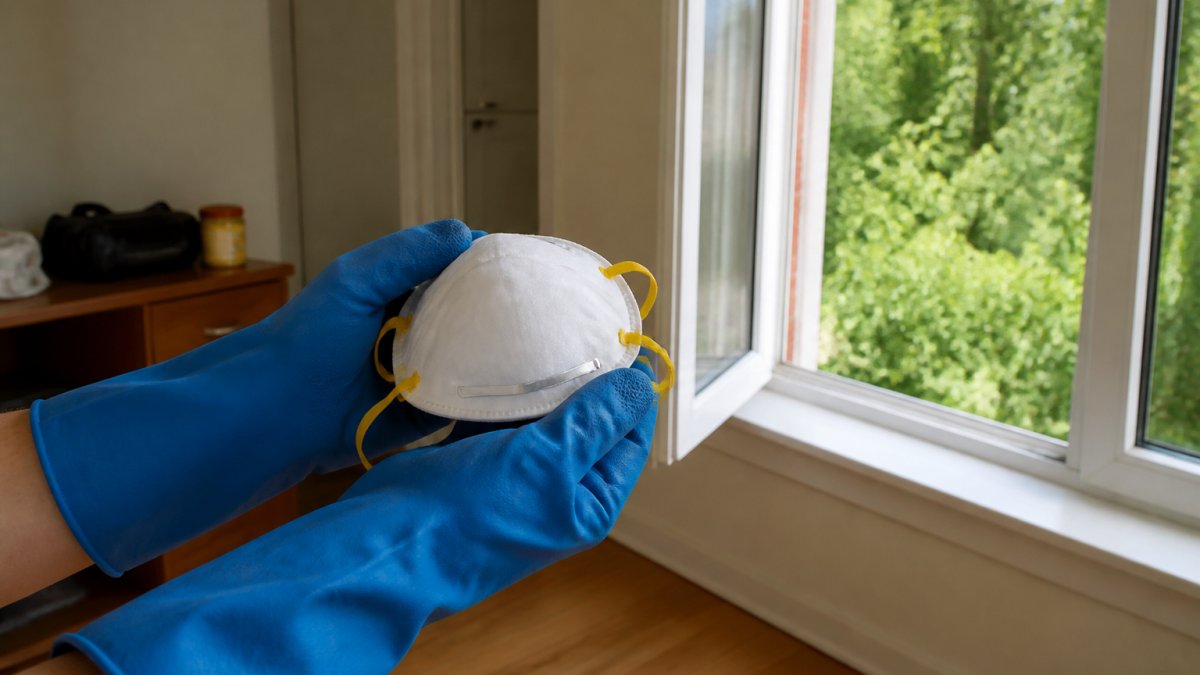
Wear heavy-duty rubber gloves, not latex or thin plastic. Rodent urine and droppings can penetrate thin gloves. Double-glove if you prefer extra protection. Wear long sleeves and pants to minimize skin exposure.
Opening Doors and Windows for Fresh Air
Air circulation is your first defense against inhaling contaminated dust. Open windows on opposite sides of the room to create cross-ventilation. If the weather permits, leave windows open throughout your cleanup and for several hours afterward.
Fans can help but use them carefully. Aim a fan outward through an open window to push air outside. Never aim a fan at the contaminated area, that stirs up particles and spreads them through your home. If you lack windows, open doors to other rooms and use a fan to direct air toward an exterior exit.
Selecting the Right Gloves and Respiratory Protection
Wear an N95 mask or equivalent respiratory protection rated for particulate matter. Cloth masks and surgical masks do not provide adequate protection against the particles released during rodent dropping cleanup. An N95 blocks 95% of airborne particles, which is the minimum standard for this task.
Ensure your gloves cover your wrists. Roll your sleeves over the glove cuffs so no skin is exposed. Keep gloves on throughout cleanup and disposal. Remove them carefully by peeling from the wrist, turning them inside out as you go. Dispose of gloves in a sealed plastic bag.
How to Clean Up Mouse Droppings Safely
The core principle of safe cleanup is simple: never dry-sweep or vacuum rodent droppings. Dry cleaning methods launch particles into the air, increasing your inhalation risk.
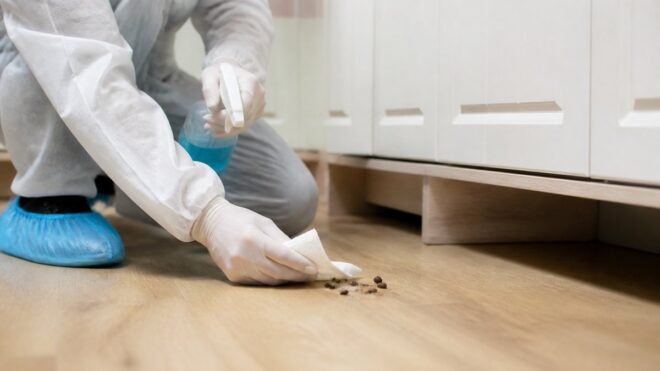
Start by spraying the affected area with a disinfectant solution. Wet the droppings thoroughly until they’re visibly damp. Wait for the contact time specified on your disinfectant label, typically 15 to 20 minutes.
After the contact time, wipe up the droppings with paper towels. Place contaminated materials directly into a sealed plastic bag. Do not set them aside or leave them exposed.
Wetting Droppings and Nesting Materials With Disinfectant
Spray disinfectant directly onto droppings and nesting materials. Use enough liquid to saturate the material without creating a puddle. The goal is to keep particles from becoming airborne when you handle them.
For nesting materials, shredded paper, fabric, or insulation, spray thoroughly and let the disinfectant soak in. These materials absorb liquid and require more contact time than droppings alone. After soaking, carefully place them in a sealed bag without shaking or disturbing them.
Bleach Solution Dilution and Disinfectant Alternatives
A common household option is a bleach solution. Mix one part bleach with nine parts water (the CDC). This dilution is strong enough to kill rodent-borne pathogens but mild enough for safe household use. Wear gloves and ensure good ventilation when working with bleach.
Alternative EPA-registered disinfectants work equally well. Look for products labeled as effective against viruses and bacteria. Quaternary ammonium compounds and phenolic disinfectants are reliable alternatives. Whatever you choose, follow the label instructions for dilution and contact time.
Contact Time and Soak Requirements
Contact time is the duration the disinfectant must remain wet on the surface. Most EPA-registered disinfectants require 15 to 20 minutes of contact time to be effective. Do not wipe up the material before this time passes.
For heavy contamination or porous materials like insulation, extend contact time to 30 minutes. Porous surfaces absorb liquid more slowly, so longer contact ensures the disinfectant reaches pathogens throughout the material. Check your specific disinfectant label for exact requirements, times vary by product.
How to Disinfect After Finding Mouse Droppings
After removing visible droppings and nesting materials, disinfect the entire affected area. Spray disinfectant on all surfaces where droppings were visible, plus a 2-foot radius around them. This extended area may contain microscopic contamination.
Wipe all treated surfaces with fresh paper towels. Work from the center of the contaminated area outward to avoid spreading pathogens to clean areas. Dispose of used paper towels in a sealed bag immediately.
Wiping Up Contaminated Materials Safely
Use only paper towels for cleanup, never cloth rags. Paper towels are disposable and prevent cross-contamination. Cloth rags retain pathogens even after washing and can spread contamination if reused.
Wipe slowly and deliberately. Rushing causes splashing and aerosolization of particles. After wiping each area, fold the paper towel to contain the contaminated side and grab a fresh towel for the next section. This method minimizes your exposure.
Room-Specific Guidance for HVAC Systems and Porous Materials
HVAC systems require special attention. Rodent droppings in ductwork or on filters contaminate the air you breathe throughout your home. If you suspect contamination in your HVAC system, contact a professional. They have equipment to safely access and clean ducts without spreading pathogens.
Porous materials like insulation, drywall, and carpet absorb rodent urine and require different handling. Spray these materials thoroughly and allow extended contact time, 30 minutes or longer. If insulation is heavily contaminated, replacement may be safer than attempting to disinfect it. Drywall with visible contamination should be removed and replaced.
What to Do if You Find Mouse Droppings in the Kitchen
Kitchen contamination demands extra caution. Food preparation surfaces, cookware, and stored food may all be affected. Rodent urine and droppings carry pathogens that cause serious illness if ingested.
Food and Cookware Decisions
Discard any food that rodents contacted or that sat in contaminated areas. This includes opened boxes, bags, or containers. Unopened, sealed packages are safer, but consider discarding them too if they were in a heavily contaminated cabinet for weeks.
Cookware and dishes exposed to droppings should be washed in hot soapy water. Standard dishwashing kills pathogens effectively. If you prefer extra assurance, run dishes through a hot dishwasher cycle after hand washing.
Sanitizing Food-Contact Surfaces
Clean all food-contact surfaces with hot soapy water first. This removes visible contamination and organic material that can shield pathogens. After washing, spray with an EPA-registered disinfectant and allow the specified contact time.
Countertops, cutting boards, and inside cabinet surfaces all need disinfection. Pay special attention to corners and crevices where droppings accumulate. Wipe thoroughly with paper towels after the contact time expires.
Proper Disposal and Handwashing
Proper disposal prevents recontamination and protects others handling your trash. Handwashing after cleanup eliminates any pathogens that contacted your skin despite precautions.
Sealing and Disposing of Contaminated Materials
Place all contaminated materials, droppings, nesting materials, used paper towels, and gloves, into a plastic bag. Seal the bag tightly. Place the sealed bag into a second plastic bag and seal that as well. Double-bagging provides extra containment.
Dispose of the sealed bags in your regular household trash. Do not leave them outside or in a garage where children or pets might access them. Standard municipal waste disposal handles contaminated materials safely.
Handwashing and Post-Cleanup Safety
Wash your hands thoroughly with soap and warm water for at least 20 seconds immediately after cleanup. Pay attention to areas between your fingers, under your nails, and your wrists. Soap and water remove pathogens more effectively than hand sanitizer alone.
Wash your clothes and any fabric that contacted contaminated areas. Use hot water and your normal laundry detergent. Dry clothes in a hot dryer cycle.
What to Do After Possible Exposure
If you touched rodent droppings without gloves or suspect inhalation of contaminated dust, monitor yourself for symptoms. Rodent-borne illnesses typically appear within 1 to 8 weeks of exposure (the CDC).
Seek medical attention if you develop these symptoms. Tell your doctor about the rodent exposure and the timeline.
Contact your local health department if you believe you’ve been exposed. They can provide guidance specific to your situation and track potential outbreaks in your area.
Finding rodent droppings signals an infestation that requires both immediate cleanup and long-term prevention. The steps to take after finding rodent droppings protect your health now, but eliminating the rodent population prevents future contamination.
Frequently Asked Questions
How can you tell whether rodent droppings are fresh?
Fresh rodent droppings are dark, shiny, and moist to the touch, while old droppings appear gray, dry, and brittle. Fresh droppings indicate an active rodent infestation and require immediate cleanup and disinfection. If droppings are more than 5 days old, the contamination risk is lower, but you should still follow safe cleanup procedures. When in doubt, treat all droppings as potentially hazardous.
How to disinfect after finding mouse droppings?
Ventilate the area for at least 30 minutes before starting. Wear rubber gloves and a mask, then wet the droppings and surrounding surfaces with a bleach solution (one part bleach to nine parts water) or an EPA-registered disinfectant. Let the solution soak for 15-20 minutes to kill pathogens. Wipe up the contaminated material with paper towels, place everything in a sealed plastic bag, and dispose of it as regular trash. Wash your hands thoroughly with soap and water afterward.
When should you call a pest control professional after finding droppings?
Call a professional if you find droppings in multiple rooms, discover an active infestation with live rodents, notice contamination in insulation or HVAC systems, or feel uncomfortable handling cleanup yourself. Professionals can safely remove contaminated materials, treat the infestation, and prevent future problems. If you have health concerns, respiratory issues, or the contamination is extensive, professional cleanup is the safer choice.
What should you do if you find rodent droppings in the kitchen?
Discard any opened food in the affected area. Sealed, packaged foods are generally safe if droppings didn’t contact them directly. Wash all cookware, utensils, and dishes with hot soapy water. Disinfect all food-contact surfaces, countertops, and cabinets using a bleach solution or EPA-registered disinfectant. Ventilate the kitchen thoroughly, wear gloves and a mask during cleanup, and follow standard disinfection procedures. If droppings are inside cabinets or near large quantities of food, consider professional remediation.
