Table of Contents
- What a 90-Day Pest Guarantee Actually Covers
- Understanding Pest Control Service Agreement Terms
- What’s Excluded from Your 90-Day Guarantee
- One-Time Pest Control Service Cost and What It Includes
- How to Request a Free Re-Treatment
- The Fine Print Checklist: What to Review Before Signing
- Guarantee vs. Service Contract: Know the Difference
- Conclusion
Last Updated: August 21, 2026
What a 90-Day Pest Guarantee Actually Covers
A 90-day pest guarantee is a promise from your pest control company that if covered pests return within 90 days of the initial treatment, you’ll receive free re-treatment at no additional cost. The guarantee typically applies only to the specific pests treated during your initial service call. If you had a roach problem and the technician treated for roaches, that’s what’s covered. If bed bugs appear later, that’s usually a separate issue and may not fall under the original guarantee. Understanding what’s actually included is critical before you sign any service agreement.
Most homeowners assume a 90-day guarantee means complete pest-free protection for three months. In reality, coverage depends on several factors: whether you follow the company’s recommendations, the type of pest involved, whether structural damage is present, and what the fine print says. At Zoifia Pest Control, we prioritize transparency so you know exactly what you’re getting.
Covered pests and initial treatment
Your 90-day guarantee covers the specific pests that the technician identified and treated during your initial service visit. Common covered pests include ants, roaches, rodents, and other household insects. However, the list varies by company and region. Bed bugs, for example, often fall outside standard coverage because they require specialized protocols and multiple treatments (the CDC).
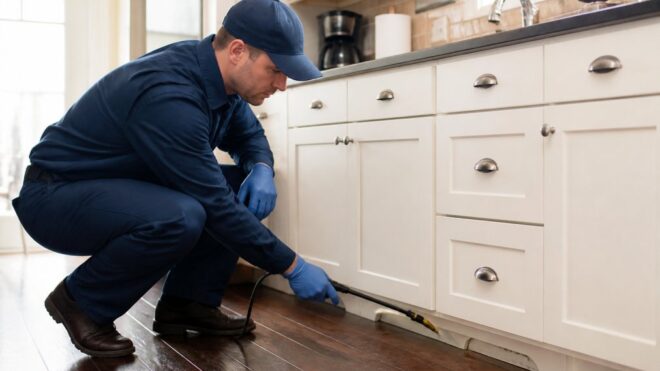
The initial treatment is the foundation of your guarantee. The technician will inspect your property, identify the pest problem, and apply targeted treatments. The guarantee only applies to pests actually present and treated during that first visit. Make sure the service report clearly lists which pests were treated, this becomes your proof if you need to request a re-treatment.
Re-treatment and follow-up visits
If you spot pest activity during the 90-day period, you’re entitled to a free re-treatment visit. You contact the company, report the problem, and they schedule a follow-up inspection. The technician will assess whether the pest activity is a re-infestation of the same pest or a new problem.
Re-treatment visits typically happen within 7-14 days of your request. The technician will retreat the affected areas using the same or different methods if the first approach didn’t fully resolve the issue. This second treatment is at no cost to you.
Some companies include one complimentary follow-up inspection 30 days after the initial treatment to verify the treatment worked. This inspection catches problems early, before they become full re-infestations.
Understanding Pest Control Service Agreement Terms
A pest control service agreement is the contract between you and the company that outlines what services you’re paying for, what’s guaranteed, and what happens if something goes wrong. Reading it carefully before signing is essential.
What’s in a standard service contract
Standard pest control contracts include the scope of service (what pests will be treated, what areas are included, what methods will be used), pricing (initial treatment cost and any recurring fees), and the warranty or guarantee section (duration of coverage, which pests are covered, and what you need to do to qualify for re-treatment).
The terms and conditions section covers the company’s liability limits. Most pest control companies limit their liability to the cost of the service provided (npma.org). If a pest infestation causes structural damage to your home, the company typically isn’t responsible for repair costs.
Payment terms specify when payment is due, what payment methods are accepted, and whether there are cancellation fees. If you’re signing up for recurring service, the contract should specify how often treatments occur and how you can cancel if needed.
How the warranty period works
The warranty period is the timeframe during which the company guarantees its work. For a 90-day guarantee, the clock typically starts on the day of the initial treatment. If you see pest activity on day 89, you’re still covered. On day 91, you’re not, unless the company extends coverage.
The warranty period applies only to the specific pests treated. If your initial treatment was for roaches and you later discover ants, those ants are not covered under the roach warranty.
Some contracts include a "satisfaction guarantee" separate from the pest control warranty. A satisfaction guarantee means if you’re not satisfied with the results within a certain timeframe, the company will retreat at no cost. This is different from a warranty period, which is automatic.
What’s Excluded from Your 90-Day Guarantee
Not everything pest-related is covered by your 90-day guarantee. Understanding the exclusions upfront prevents surprises later.
Common exclusion clauses explained
Most pest control guarantees exclude pests that weren’t present during the initial treatment. Geographic exclusions are also common, if your guarantee covers interior treatment but a pest problem develops in an exterior area, that may not be covered.
Pest activity caused by new infestations from outside sources is usually excluded. If you get a new roach infestation from a neighbor’s unit or from items you bring into your home after treatment, the company isn’t responsible.
Exclusions also apply if you don’t follow the company’s recommendations. If the technician advised you to seal entry points and you didn’t, and pests return through those same openings, the company may deny the re-treatment claim.
Structural damage and liability limits
Pest control companies typically limit their liability to the cost of the service provided. If a termite infestation causes structural damage worth thousands of dollars, the company isn’t responsible for those repairs. This is a standard industry practice clearly stated in most service agreements.
Some exclusions specifically address pre-existing damage. If your home already had structural damage before the pest treatment, the company isn’t liable for worsening that damage.
Environmental damage from treatment is also typically excluded. If the pesticide application harms your landscaping or lawn, the company usually isn’t liable.
One-Time Pest Control Service Cost and What It Includes
A one-time pest control service is a single treatment visit without a recurring service contract. This is ideal for renters, people dealing with isolated pest problems, or anyone who doesn’t want to commit to ongoing service.
How single-visit treatments differ from recurring service
Single-visit treatments are priced per service call. You pay once for the initial treatment, and if you need follow-up service, you pay again. There’s no contract, no recurring fees, and no commitment.
Recurring service involves signing a contract for regular treatments, typically monthly, bi-monthly, or quarterly. Recurring service is usually less expensive per visit than one-time treatments because the company builds efficiency into regular visits (the EPA). The trade-off is commitment, you’re locked into a contract for a set period, usually 12 months, with potential cancellation fees.
What happens if pests return after treatment
If pests return after a one-time treatment and you’re still within the 90-day guarantee period, you’re entitled to a free re-treatment. However, if you’re outside the guarantee period, a new pest activity requires a new service call and a new payment.
If pests return but you didn’t follow the company’s recommendations, like sealing entry points or removing conducive conditions, the company may deny the re-treatment claim. To avoid this conflict, follow all post-treatment recommendations.
How to Request a Free Re-Treatment
If you spot pest activity during your guarantee period, here’s how to request a free re-treatment without complications.
Documentation you’ll need
Start by gathering documentation from your initial service. You’ll need the service invoice or receipt, which includes the date of treatment and the pests that were treated. The service report is equally important, it lists the specific pests treated, the treatment methods used, and any recommendations the technician made.
Photos or descriptions of the pest activity you’re seeing now are helpful. Take a photo if you can safely do so, or write down where you saw the pests, how many, and when. This documentation strengthens your claim.

Timeline for scheduling your follow-up visit
Contact the company as soon as you notice pest activity. Most companies require you to request re-treatment within a specific timeframe, usually 14 days of noticing the problem. When you call, be specific about what you saw, where you saw it, and when.
Most companies schedule re-treatment visits within 7-14 days of your request. Confirm the appointment in writing if possible, via email or text. This creates a record of your request and the scheduled date.
The Fine Print Checklist: What to Review Before Signing
Before you sign any pest control service agreement, review these critical elements.
Key terms and conditions to understand
Start with the guarantee duration. Is it 30 days, 90 days, or longer? Check which pests are covered. If you have a roach problem but the contract only covers rodents, you’re not protected.
Review the liability limits. What’s the maximum the company will pay if something goes wrong? Look for cancellation clauses. If you sign a recurring service contract, can you cancel early? What are the penalties?
Check the payment terms. Is payment due upfront, or can you pay after service? Verify the service frequency if you’re signing up for recurring service. How often does the company visit?

Questions to ask your pest control company
Before signing, ask the company representative directly about anything unclear:
"If I see pests during the 90-day period, what’s the process for requesting re-treatment?" Get the answer in writing.
"Are there any fees associated with re-treatment visits, or is it completely free?"
"What pests are specifically covered under this guarantee?" Get a written list.
"What do I need to do to maintain the guarantee?"
"If I see a different pest than what was originally treated, is that covered?"
"How long do I have to request re-treatment after spotting pests?"
"What are your cancellation terms if I sign a recurring service contract?"
Guarantee vs. Service Contract: Know the Difference
These terms are often used interchangeably, but they’re legally distinct concepts that affect your rights differently.
A guarantee is a promise that the company’s work will achieve a specific result. For pest control, it means if the treated pests return within the guarantee period, the company will re-treat at no cost. The guarantee is conditional on you following the company’s recommendations.
A service contract is a broader agreement that covers the entire relationship between you and the company. It includes pricing, payment terms, service frequency, cancellation policies, liability limits, and the guarantee itself. The service contract is the legal document you sign; the guarantee is one component of it.
When comparing pest control companies, don’t just look at the guarantee length. Review the entire service contract. A 90-day guarantee sounds good, but if the contract includes high cancellation fees, limited liability, or exclusions that don’t match your situation, the guarantee loses value.
At Zoifia Pest Control, we back our work with a straightforward 90-day guarantee on covered pests, with clear terms and no hidden exclusions. We also offer flexible service without long-term contracts, so you’re never locked into recurring service you don’t want. Our licensed and insured team prioritizes transparency, you’ll know exactly what’s covered before we treat your property.
A 90-day pest guarantee only protects you if you understand what it covers and what it excludes. The fine print matters because it defines your rights when pests return. Before signing any service agreement, verify the covered pests, review the exclusions, understand the re-treatment process, and confirm the company’s liability limits. Get everything in writing. If a company resists transparency or avoids answering your questions directly, that’s a red flag. You deserve to know exactly what you’re paying for and what the company promises to deliver. Zoifia Pest Control offers transparent service agreements with clear 90-day guarantees and no long-term contracts, giving you peace of mind without the fine-print surprises. Get a quote and see how straightforward pest control service should work.
Frequently Asked Questions
What happens if pests return after the initial treatment during the 90-day guarantee period?
If pests return within the guarantee period, you're entitled to a free re-treatment visit at no cost. The pest control company will return to re-inspect and re-apply treatment to address the re-infestation. Contact your provider immediately with evidence of pest activity. Most companies require you to document the sighting (photos, location) and provide notice within the warranty period to qualify for the no-cost visit.
Does a 90-day pest guarantee cover new pest infestations or just the original pests treated?
A 90-day guarantee typically covers re-infestation of the same pests treated during the initial service, not new pest problems. If a different pest species appears, that's usually considered a new infestation outside the original guarantee. Review your service agreement terms carefully to confirm which covered pests are included and whether the guarantee extends to new pest activity of different types.
What's the difference between a pest control guarantee and a service contract?
A guarantee is a promise to re-treat at no cost if covered pests return within a specified period (like 90 days). A service contract is a binding agreement that outlines payment terms, service frequency, cancellation policies, and liability limits. You can have a guarantee without a long-term contract, or a contract with multiple guarantees built in. Understand both before signing.
Are there pests not covered under a standard 90-day pest guarantee?
Yes. Most guarantees exclude certain pests like termites (which often require separate structural warranties), wildlife (raccoons, squirrels), or pests that require ongoing preventative maintenance. The guarantee also typically doesn't cover new infestations caused by poor sanitation, open entry points, or environmental changes after treatment. Check your service agreement's exclusion clauses to see exactly which pests and conditions are excluded.
This article was written using GrandRanker
