Table of Contents
- Are Kitchen Ants Dangerous to Humans? The Short Answer
- Do Kitchen Ants Carry Disease?
- Can Ants Contaminate Food in Your Kitchen?
- Do Ants Bite Humans? Bites, Stings, and Allergic Reactions
- How to Get Rid of Ants in the Kitchen Safely
- How to Identify Kitchen Ants and Spot a Serious Infestation
- Preventing Ants From Coming Back
- Frequently Asked Questions
Last Updated: October 6, 2026
Are Kitchen Ants Dangerous to Humans? The Short Answer
For most households, kitchen ants are a nuisance rather than a serious health threat.
That is the honest answer, and it is the one most pest control pages avoid because it does not sell a treatment.
Below, we break down when kitchen ants are dangerous to humans, when they are not, and exactly what to do about the food they have reached.
Ordinary kitchen ants are a hygiene and nuisance problem first. The risk jumps only with specific species, allergic individuals, or heavy infestations near food prep areas.
Do Kitchen Ants Carry Disease?
Yes, kitchen ants can carry bacteria on their bodies, but the practical risk is lower than most people assume.
Ants travel through garbage, drains, and outdoor soil before walking across your counter. Along the way, they pick up organisms on their legs and bodies.
That said, a single ant crossing a clean counter is not a medical emergency. The CDC guidance on preventing foodborne illness focuses on proper food handling and surface cleaning, not on ants as a primary disease vector.
What matters is where they have been and where they go next. An ant trail that runs from a bathroom drain to your cutting board is a genuine hygiene problem.
Which Species Pose the Biggest Health Risk?
Pharaoh ants and carpenter ants top the list, but for different reasons.
- Pharaoh ants: Small, light brown, and drawn to protein and moisture. They can carry bacteria in hospitals and food facilities.
- Carpenter ants: Large and black. They do not eat wood, but they tunnel through it and can cause structural damage over time.
- Odorous house ants: The classic “sugar ant.” A nuisance, not a health threat.
- Pavement ants: Common outdoors and around foundations. Rarely a concern indoors.
Species identification matters more than most guides admit. The right treatment for a sugar ant trail will not touch a carpenter ant colony, and using the wrong bait can make a pharaoh ant problem worse by splitting the colony.
Can Ants Contaminate Food in Your Kitchen?
Yes. Any food left uncovered is fair game, and ants can spoil it in two ways: by physically transferring bacteria from wherever they have been, and by crawling into packaging where they leave behind waste, shed body parts, and dead ants. The USDA Food Safety and Inspection Service is clear that food exposed to pests should be treated as contaminated.
The foods most at risk are the ones you leave out: fruit bowls, open cereal boxes, pet food, honey, and anything with sugar or grease. Sealed containers are your best defense.
What to Do With Food Ants Have Reached
Most guides say “throw it out” and stop there. That is safe but imprecise, and it leads people to toss things they do not need to.
Discard outright:
- Open food ants have walked on, cereal, crackers, chips, bread, flour, sugar, and anything served raw
- Cut fruit and vegetables with exposed flesh
- Pet food from an open bowl or torn bag
- Anything with visible ants, frass, or a trail running across it
Wash and inspect:
- Whole fruit and vegetables with intact skin, rinse under running water, inspect for entry holes, and discard any with punctures
- Canned goods, wipe the outside of the can with soapy water before opening; the contents are protected by the seal
Usually fine if packaging is intact:
- Sealed jars, bottles, and cans where ants never got inside
- Factory-sealed bags or boxes with no punctures, chew marks, or ants inside
- Items stored in hard-sided, gasketed containers
Dishes and surfaces:
- Wash any dish, utensil, or cutting board ants walked on with hot soapy water, or run it through the dishwasher on a normal cycle
- Wipe countertops, stovetops, and food-prep surfaces with soapy water, then follow with a food-safe sanitizer if you have one
- Do not use the same cloth on ant trails and on food-contact surfaces, use a separate rag and wash it hot afterward
When in doubt: Toss it. No jar of jam is worth a stomach bug.
Never try to salvage food by brushing ants off. You cannot see the bacteria they left behind, and brushing spreads them.
Photograph the trail and the packaging before you clean up. If you end up calling a professional, the photo tells them the species and the entry point faster than a description will.
Do Ants Bite Humans? Bites, Stings, and Allergic Reactions
Some ants bite or sting, but the vast majority of kitchen ants do not harm people.
Common sugar ants and odorous house ants rarely bite.
Allergic reactions are rare but real. Watch for swelling beyond the bite site, hives, or trouble breathing. If those appear, seek medical help right away.
For a normal bite:
- Wash the area with soap and water.
- Apply a cold pack to reduce swelling.
- Avoid scratching to prevent infection.
- Use an over-the-counter antihistamine if it itches.
If you are unsure whether a bite needs attention, MedlinePlus medical guidance is a reliable starting point.
How to Get Rid of Ants in the Kitchen Safely
Getting rid of kitchen ants starts with cleaning, not spraying. Most infestations shrink fast once you remove the food and water sources drawing them in.
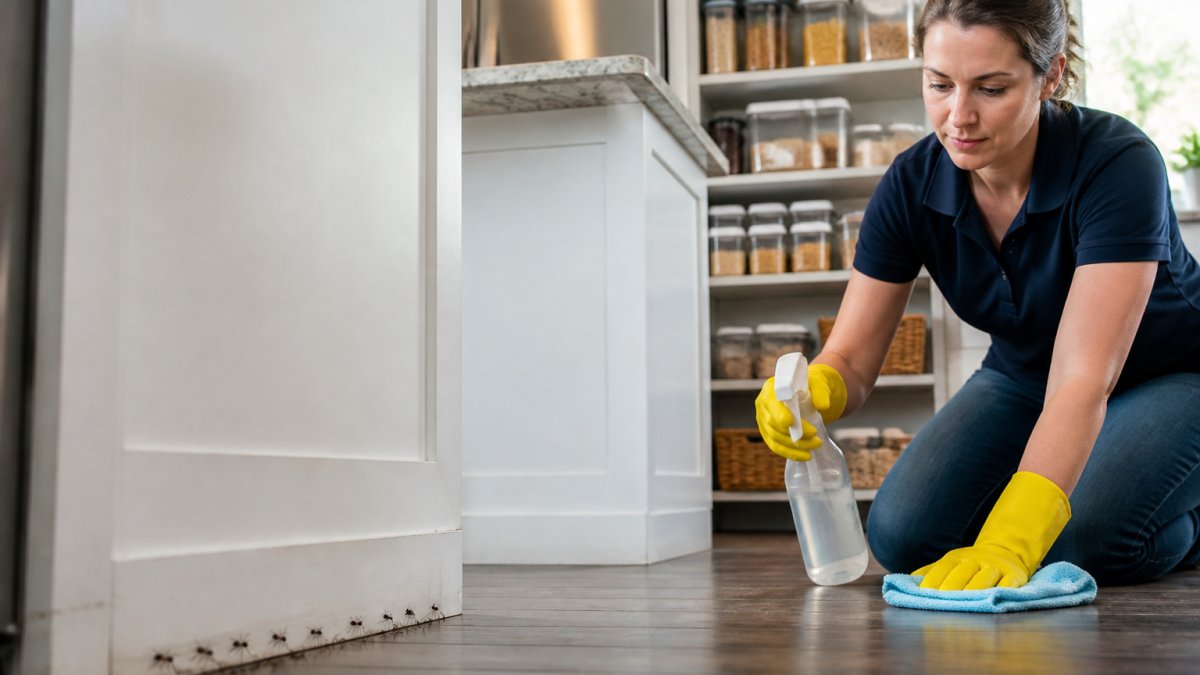
Sprays kill the ants you see and do nothing about the colony behind the wall. That is the mistake most homeowners make. You need to break the trail and remove the reason they came inside.
Step-by-Step Kitchen Response
Follow these steps in order. Most mild infestations clear within a week or two.
- Find the trail. Follow the line of ants back to their entry point, usually a crack, baseboard, or pipe.
- Clean the trail. Wipe it with soapy water to erase the scent trail other ants follow.
- Remove the food source. Seal all open food. Move pet bowls off the floor between meals.
- Fix moisture. Repair leaky faucets and dry damp areas under the sink.
- Seal entry points. Use caulk on cracks, gaps, and utility lines.
- Set bait, not spray. Baits let worker ants carry poison back to the colony.
- Monitor for a week. If ants persist, the colony is larger than it looked.
Do not spray insecticide directly on an ant trail you plan to bait. It kills the workers before they carry the bait home, and the colony survives.
If steps fail after two weeks, or you spot ants in multiple rooms, it is time to call a licensed professional.
How to Identify Kitchen Ants and Spot a Serious Infestation
Identifying the species tells you two things at once: whether you have a nuisance or a structural problem, and whether the risk profile changes for the people and pets in your home. Most guides stop at the first question.
Start with size, color, and travel pattern. Sugar ants (odorous house ants) are tiny, dark, and trail in a single line along counters. Carpenter ants are large, roughly the length of a grain of rice, and often appear near damp wood, window frames, or crawlspace trim.
Risk Differences by Species and Household
The danger question is not the same for every household. Here is how the risk shifts:
- Households with infants or toddlers: Any ant on a floor, play mat, or dropped snack is a contamination concern, because young children put hands and objects in their mouths constantly. The species matters less than the exposure pathway.
- Households with allergies or asthma: Cockroaches are the well-documented asthma trigger, but ant frass, shed body parts, and foraging debris can still aggravate sensitive airways in a heavy indoor infestation. If someone in the home reacts to dust or pests, treat a persistent indoor nest as a health issue, not just a nuisance.
- Households with pets: Pet food bowls are a primary ant attractant, and some baits contain ingredients (like boric acid in higher concentrations, or sweeteners such as xylitol in some formulations) that are unsafe for dogs and cats. Read the label before placing bait anywhere a pet can reach.
- Households encountering biting or stinging species: Fire ants, harvester ants, and some larger field ants can sting. Fire ant stings in particular can cause pustules and, in rare cases, severe allergic reactions. If you are seeing stings indoors, the response is different from a sugar-ant trail.
- Households with carpenter ants: The risk here is structural, not medical. Carpenter ants do not sting and do not transmit disease to people, but their galleries weaken wood over time. Seeing them indoors, especially in winter, usually means a satellite colony or a moisture problem inside the structure.
Signs of a Serious Infestation
- Ants in more than one room, or on more than one floor
- A steady trail that returns within a day or two of cleaning
- Small piles of sawdust or frass near wood (carpenter ants)
- Ants appearing in winter, which points to an indoor nest rather than seasonal foraging
- Visible damage to wood, insulation, or trim
When to Escalate
If you can identify the species and it is a nuisance forager like an odorous house ant, a two-week bait-and-clean routine is reasonable. If you see carpenter ants, pharaoh ants, or fire ants indoors, or if anyone in the home has had a reaction to a bite or sting, skip the DIY phase and bring in a licensed professional. Pharaoh ants in particular require species-specific bait; the wrong product can split the colony and spread it through the walls.
Species identification is not trivia, it determines whether your problem is hygiene, structure, or medical risk. Match the response to the species and to who lives in the home.
Preventing Ants From Coming Back
Prevention comes down to three things: no food, no water, no entry.
- Store food in sealed containers, including pet food.
- Wipe counters and sweep floors nightly.
- Take out trash daily and keep bins sealed.
- Fix leaks and dry damp areas.
- Seal cracks around windows, doors, and pipes.
A quarterly walk-around of your home catches most entry points before ants find them. This approach works because it removes the conditions ants need rather than chasing them one at a time.
Frequently Asked Questions
Can kitchen ants make you sick?
Kitchen ants rarely make people sick directly, but they can carry bacteria on their bodies and deposit it on food and surfaces. If ants have walked across food you plan to eat, the CDC recommends discarding it. The bigger risk is indirect: contaminated crumbs and open food attract more ants and other pests. For most healthy adults, a stray ant in the kitchen is a nuisance, not a medical emergency. People with allergies or asthma should be more cautious around large indoor infestations.
Should you throw away food that ants have crawled on?
Yes. The CDC advises throwing away any food that ants have crawled on, because ants can transfer bacteria from drains, trash, and outdoor sources onto whatever they touch. This applies to open packages, fresh produce, and anything left uncovered. Sealed jars, cans, and unopened packaging are usually safe to wipe down and keep. When in doubt, throw it out. The cost of replacing a loaf of bread is far lower than the risk of foodborne illness.
Do kitchen ants bite or sting people?
Most kitchen ants, including sugar ants, odorous house ants, and pavement ants, rarely bite humans and do not sting. Pharaoh ants can bite but their bites are minor. Carpenter ants can bite if handled or trapped. The bite typically causes brief pain, redness, and slight swelling. Some people experience an allergic reaction with hives, swelling, or difficulty breathing. If that happens, seek medical attention. For a normal bite, wash the area with soap and water and apply a cold compress.
Are kitchen ants dangerous to children or pets?
For most children and pets, kitchen ants are not dangerous. The main risks are contaminated food, accidental ingestion of ants or ant bait, and allergic reactions in sensitive individuals. Store ant bait stations and insecticides out of reach of children and pets, and follow label directions. If a child or pet eats bait, call Poison Control or your veterinarian immediately. Carpenter ants are a bigger concern for the structure of your home than for your family’s health.
Kitchen ants are usually a manageable nuisance, but they can carry bacteria, spoil food, and, in the case of carpenter ants, damage your home. The safest path is a clean kitchen, sealed food, and a fast response when you spot a trail. When the problem outgrows a spray bottle, Zoifia Pest Control can help. We are licensed and insured, we respond fast, and every treatment is backed by a 90-day guarantee with no long-term contract required. Get a quote and let us clear the ants for good.