Table of Contents
- Why Ants Are Attracted to Kitchen Trash Cans
- How to Get Rid of Ants in a Trash Can
- What to Put in a Trash Can to Repel Ants
- Choosing an Ant-Proof Kitchen Trash Can
- How to Dispose of Food Scraps to Prevent Ants
- Ant Species and Baiting Strategy for Kitchen Infestations
- Pet- and Child-Safe Prevention for Your Kitchen
- Prevention Beyond the Bin
- Frequently Asked Questions
Last Updated: October 6, 2026
Why Ants Are Attracted to Kitchen Trash Cans
A kitchen trash can is an open invitation to ants. It holds exactly what they need: food, warmth, and a dark place to build a trail.
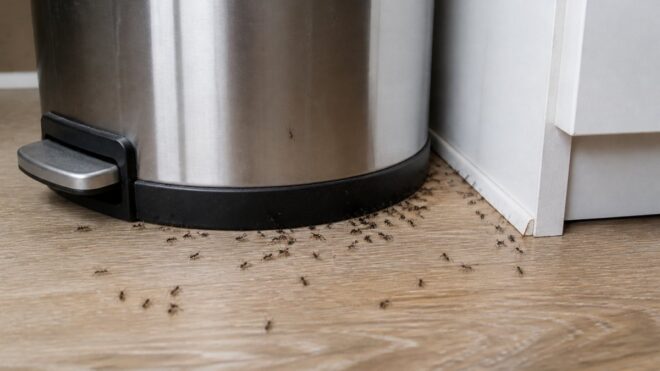
Ants follow scent, not sight. A single crumb can trigger a trail within hours. Once scouts find a food source, they lay down a pheromone path that leads the whole colony straight to your bin.
The fix is rarely one product. It is a mix of sealing, cleaning, and smart bin choices.
Food Scraps and Sugary Residue as Ant Attractants
Food scraps are the number one reason ants target kitchen bins. Banana peels, meat trimmings, and coffee grounds all send a strong scent signal.
Sugary residue is just as bad. Syrup drips, soda cans, and juice boxes leave a sticky film on the bin’s rim and lid.
So the goal is simple: cut off the food source. Do that and most ant trails into your kitchen stop.
Wiping the bin but leaving the lid rim sticky is a common mistake. Ants walk the rim, not the bottom. Clean the rim, the handle, and the outside walls too.
How to Get Rid of Ants in a Trash Can
Getting rid of ants in a trash can means removing the food source, killing the trail, and sealing the bin so scouts cannot return. Skip any one of these steps and the ants usually come back within days.
Here is the order that works best.
Step-by-Step Response for Ants Already Inside the Bin
- Take the bag outside first. Do not spray inside a bagged bin. Carry the sealed bag straight to an outdoor can.
- Empty and rinse the bin. Do this outdoors with a hose if you can.
- Wash with soapy water. Scrub the inside, the rim, the lid, and the outside walls.
- Wipe down the ant trail. Follow the line of ants back toward their entry point and clean that path.
- Spray a vinegar and water mix. Use equal parts white vinegar and water on the trail and around the bin base.
- Let it dry fully. Moisture attracts ants. A dry bin stays clean longer.
- Re-bag and seal. Use a fresh bag and press the lid shut.
Expected result: The trail breaks within a day. If ants return within 48 hours, the nest is likely inside a wall or under the floor.
What to Put in a Trash Can to Repel Ants
Vinegar and lemon juice are the two most common natural deterrents for trash cans, and both work for the same reason: they strip the pheromone trail ants use to navigate. Ants do not see a path to your bin, they smell one.
A simple spray works well:
- 1 cup white vinegar
- 1 cup water
- A few drops of lemon juice
Mix in a spray bottle. Spray the bin’s rim, base, and the floor around it. Reapply every few days, and always after you wash the bin.
Vinegar, Lemon Juice, and Other Natural Deterrents
Vinegar is acetic acid diluted in water. It dissolves the pheromone residue ants deposit, so returning scouts find nothing to follow.
Lemon juice works the same way and leaves a clean scent. The citric acid is the active part, not the smell.
Diatomaceous earth is a fine powder of fossilized silica.
Bay leaves and cinnamon are mild options.
Rubbing alcohol (isopropyl) sprayed on a trail kills ants on contact and evaporates clean.
Spray the floor line behind and under the bin, not just the bin itself. That is where scouts enter, and most people never clean there.
When Natural Sprays Are Not Enough
Natural deterrents erase trails. They do not kill the colony. If you are spraying every day and ants keep reappearing within 48 hours, you are treating a symptom, not the source.
That is the point where the strategy has to change. Contact sprays, including most vinegar and citrus mixes, kill the workers you see. If you then try to bait, you have already removed the foragers that would carry bait back to the nest. Pick one approach:
- Trail only, no nest problem: keep using vinegar or lemon spray as a barrier and cleaning routine.
- Recurring trail, likely nest nearby: stop spraying, switch to slow-acting bait stations placed along the trail, and let the workers carry it home.
- Large ants, damp wood, or sawdust: skip baiting and call a licensed technician. Carpenter ants need nest treatment, not kitchen cleanup.
For heavy infestations, natural sprays often are not enough. A licensed pest control visit can address the nest itself, not just the trail.
Choosing an Ant-Proof Kitchen Trash Can
The best ant-proof kitchen trash can has a tight-sealing lid, a smooth interior, and a design that keeps food smells inside. A pedal bin with a rubber gasket seals better than a swing-top or open bin.
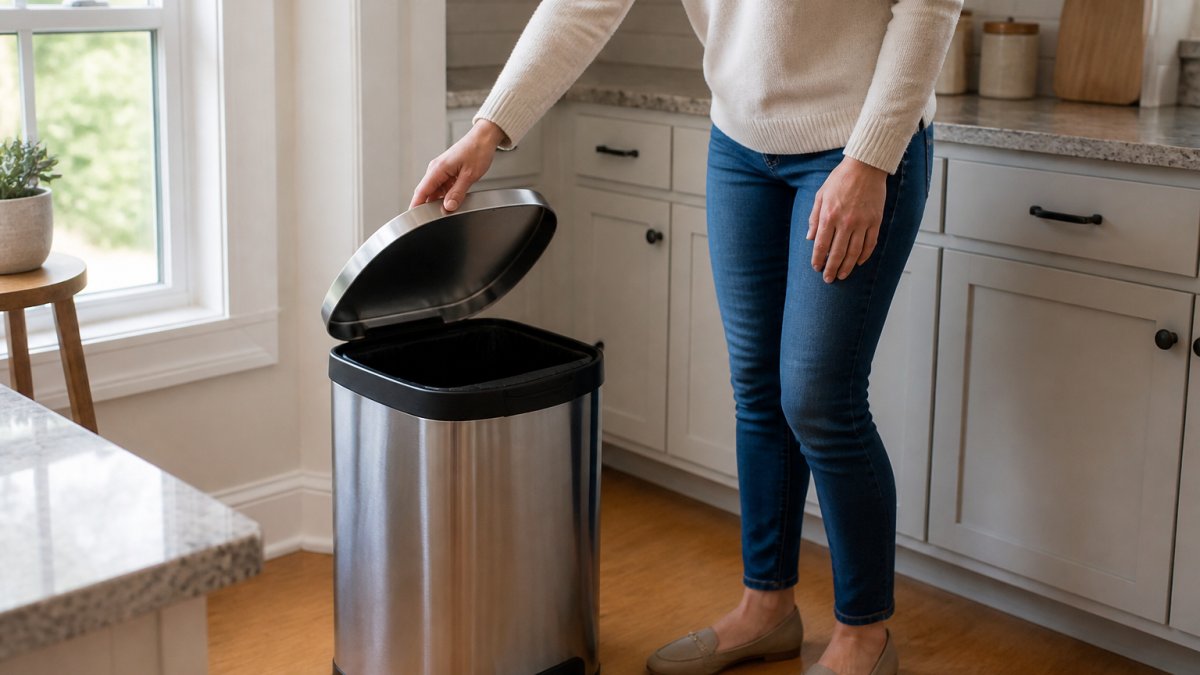
Look for these features:
| Feature | Why It Matters | Best For |
|---|---|---|
| Rubber-gasket lid | Blocks scent and entry | Most kitchens |
| Smooth interior | No cracks for crumbs | Easy cleaning |
| Pedal or motion lid | Stays shut between uses | Busy households |
| Removable inner bucket | Easier to wash | Daily use |
| Slim footprint | Fits tight corners | Small kitchens |
Placement matters too. Keep the bin away from exterior doors, baseboards, and known ant entry points. A bin against an outside wall is an open door for scouts.
Homes with kids or pets: a pedal bin with a locking lid and a removable washable bucket.
How to Dispose of Food Scraps to Prevent Ants
How you dispose of food scraps decides whether ants ever find your bin. The mechanism is simple: ants locate food by scent, and every hour a scrap sits in an open bin, that scent spreads further. Small changes to your daily routine make the biggest difference.
Follow these habits:
- Scrape plates straight into a sealed compost or scrap container, not the open bin.
- Rinse cans and jars before tossing them.
- Double-bag wet waste like meat and fruit.
- Take the trash out every night, not every few days.
Rinse and seal are the two habits that matter most. A rinsed can does not smell. A sealed bag does not leak.
Match the Bin to the Waste Stream
Not every kitchen bin handles every scrap well. The design trade-offs matter more than the brand:
| Bin type | Strength | Weakness |
|---|---|---|
| Pedal bin with rubber gasket | Seals scent in, stays shut between uses | Gasket needs wiping weekly or it collects residue |
| Swing-top lid | Hands-free, cheap | Gaps at the hinge let scouts in |
| Motion-sensor lid | Closes automatically, good for kids | Battery failure leaves it open |
| Open or wire bin | Easy to clean | No scent barrier at all |
| Countertop compost crock with carbon filter | Keeps daily scraps out of the main bin | Filter needs replacing monthly |
A pedal bin with a rubber gasket and a removable inner bucket is the practical sweet spot for most kitchens. The gasket blocks scent, and the removable bucket means you can wash the part that actually touches food.
Placement and the Entry-Point Problem
Where the bin sits matters as much as what is in it. A bin pushed against an exterior wall, a baseboard, or a door threshold gives scouts a short, sheltered route.
Prevention beyond the bin is part of disposal, not a separate task. Wipe counters and sweep floors nightly, seal cereal, sugar, and pet food in hard containers, and caulk gaps where plumbing and wiring enter the wall.
A clean bin with a dirty floor around it still feeds a colony. Sweep under and behind the bin every night, that is where crumbs and drips collect.
Troubleshooting and When to Escalate
Consider these indicators to help determine if you have a cleanup problem or a colony problem:
- Trail gone within 24 hours of cleaning and sealing: routine maintenance. Keep the nightly routine.
- Trail returns within 48 hours: a nest is likely inside a wall, under a floor, or behind a cabinet near the kitchen. Switch to bait stations along the trail.
- Trail returns within a week after baiting: the colony is larger than the bait can reach, or you are dealing with a species that does not take the bait. Call a licensed pest control operator.
- You see large black ants, sawdust, or winged ants in spring: treat it as a structural issue, not a trash issue. Get an inspection.
Signs that a recurring problem may need professional help include ants appearing in multiple rooms, trails that survive two full clean-and-bait cycles, or any evidence of nesting in wood. At that point, the trash can may be a symptom, not the cause.
Ant Species and Baiting Strategy for Kitchen Infestations
Different ants need different treatments.
Odorous house ants are small, dark, and give off a smell when crushed.
Carpenter ants are larger and black. They tunnel into damp wood. Baiting alone may not solve them.
Baiting works because ants carry the bait back to the colony.
Do not spray a trail you plan to bait. Sprays kill the workers that would carry the bait home.
Bait the trail, do not spray it. Spraying kills the scouts that would carry the poison back to the nest.
Pet- and Child-Safe Prevention for Your Kitchen
Prevention products must be safe for the whole household. Many sprays and powders are toxic if swallowed, so placement matters as much as the product.
Use these safer habits:
- Store baits in locked stations, not open trays.
- Keep diatomaceous earth behind baseboards, out of reach.
- Use vinegar and water sprays on food-contact surfaces.
- Close and lock bin lids between uses.
- Wash hands after handling any pest product.
If you have a serious infestation, a licensed technician can provide treatment options.
Prevention Beyond the Bin
Ants rarely come from the bin alone. The real entry point is usually a crack, a gap under a door, or a pipe line into the wall.
Seal those gaps with caulk. Fix leaky pipes, since damp wood draws carpenter ants. Trim plants and mulch away from the foundation. Keep counters and floors crumb-free.
A clean kitchen with sealed entry points is the strongest ant defense you can build.
Frequently Asked Questions
What can I put in my trash can to repel ants?
Vinegar and water sprayed inside the bin after cleaning is the most common household deterrent. A lemon juice and water mix works similarly. Both remove the food odors ants follow. For ongoing repellency, place bay leaves or a few drops of peppermint oil on a cotton ball inside the bin. None of these kill an established colony, so pair them with sealing and regular trash removal. If ants keep returning, a bait product placed near the entry point addresses the colony itself.
How can I get rid of ants in my kitchen garbage can?
Empty the bin, then wash it inside and out with warm soapy water to remove food scraps and sugary residue. Spray a vinegar and water solution along the rim, lid, and base. Wipe down the surrounding floor and wall where the ant trail runs. Seal all trash bags tightly and take garbage out daily until the trail stops. If ants still appear after several days, the colony is likely nesting nearby and a bait station or a licensed pest control visit is the next step.
Will a tight-fitting lid keep ants out of a kitchen trash can?
A lid with a tight seal blocks the food odors ants detect, which removes the main attractant. It also stops ants from walking straight into the bin. However, a lid alone will not stop an ant trail that has already formed around the can. You also need to clean the exterior, wipe the floor, and remove the trail scent. Pair a sealed lid with regular trash removal and surface cleaning for the best results.
Does Dawn dish soap really kill ants?
Dish soap mixed with water kills ants on contact by breaking down their outer coating, but it only works on the ants you spray directly. It does nothing to the colony or the ant trail. For a kitchen trash can, soapy water is useful for washing the bin during cleanup. To stop the infestation, you need to remove the food source, seal the bin, and use bait near the entry point so foraging ants carry it back to the nest.
Ants in the kitchen trash can feel like a losing battle when the nest is hidden in a wall. That is where Zoifia Pest Control comes in. We offer fast, licensed, and insured service with a 90-day guarantee and no long-term contract required. Our team treats the nest, not just the trail, so the ants stay gone. Get a quote from Zoifia Pest Control and take back your kitchen.
