Table of Contents
- DIY Vinegar Spray for Kitchen Ants: What You’ll Need
- Does Vinegar Kill Ants or Just Repel Them?
- Step-by-Step: How to Make and Apply Vinegar Spray for Kitchen Ants
- How Often Should You Spray Vinegar on an Ant Trail?
- What Kills Ants on Contact: Vinegar vs. Other Kitchen Remedies
- How to Get Rid of Ants in the Kitchen for Good
- When DIY Vinegar Spray Isn’t Enough: Signs You Need Professional Help
- Conclusion
- Frequently Asked Questions
Last Updated: October 4, 2026
DIY Vinegar Spray for Kitchen Ants: What You’ll Need
A DIY vinegar spray for kitchen ants is a homemade mix of white vinegar and water that wipes out the scent trails ants follow into your home.
Here’s the honest truth up front: vinegar works, but mostly as a deterrent.
Most people grab a bottle of vinegar, spray a few ants, and call it done. That’s the mistake, the ants you see are only a small share of the colony.
Supplies and Ingredients
You need four things, and you likely already own most of them:
- White vinegar (distilled, 5% acidity) – the base of the spray
- Water – tap water is fine
- A clean spray bottle – 16 to 32 ounces works well
Skip apple cider vinegar for cleaning. It leaves a sticky film and can stain light counters.
Does Vinegar Kill Ants or Just Repel Them?
Vinegar does both, but it’s better at repelling than killing. The acetic acid kills ants on contact by drying them out, and more importantly, it wipes out the scent trails ants use to navigate.
Ants lay down chemical signals called pheromones as they walk, and other ants follow those signals straight to your crumbs and sugar.
But here’s what most guides miss: killing visible ants and erasing a trail does nothing to the nest. The colony keeps sending foragers.
Vinegar is a solid short-term tool for breaking ant trails and cleaning surfaces. It is not a colony killer. Pair it with prevention or expect the ants back.
Step-by-Step: How to Make and Apply Vinegar Spray for Kitchen Ants
Making the spray takes about two minutes. The real work is where you apply it and which surfaces you keep it away from.
Mixing the Solution
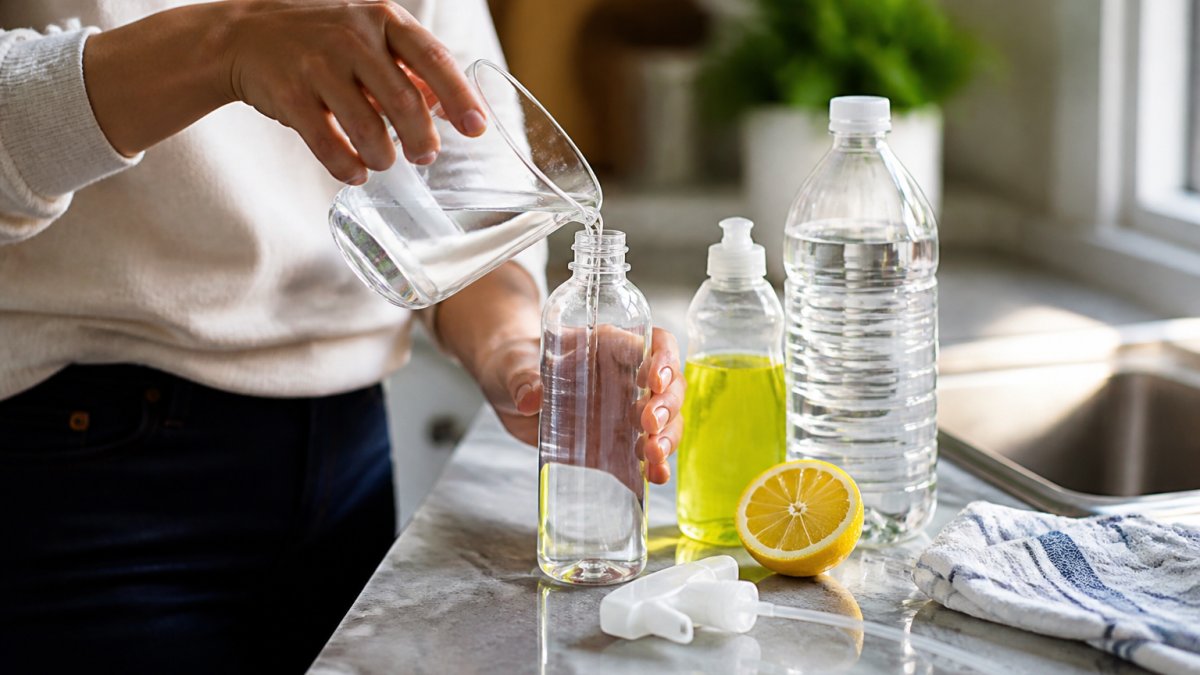
Follow this recipe for a kitchen-safe spray, based on a 16-ounce bottle; scale up for 32 ounces.
- Pour 8 ounces (1 cup) of distilled white vinegar into the bottle.
- Add 8 ounces (1 cup) of water. Equal parts disrupts trails but stays gentle on most sealed surfaces.
- Add 2 to 3 drops of mild dish soap so the liquid coats the trail instead of beading up.
- Cap and shake gently, don’t shake hard enough to foam.
- Label with contents and date, and remix every two to three weeks.
For heavy trails, use 2 parts vinegar to 1 part water (about 10 ounces vinegar to 5 ounces water in a 16-ounce bottle). Test a hidden spot first, the higher acid concentration is harder on finishes.
Never mix vinegar with bleach or ammonia-based cleaners. The combination can release fumes that are dangerous to breathe. Rinse surfaces with water and let them dry before switching products.
Where You Can and Cannot Spray Vinegar
This is the part most guides skip: vinegar is an acid, and acid etches some surfaces permanently.
Safe for regular use:
- Sealed granite, quartz, and laminate counters (wipe, don’t soak)
- Stainless steel sinks and most ceramic tile
- Glass, painted trim, and vinyl or tile flooring
Use with caution or avoid:
- Natural stone (marble, travertine, limestone, unsealed granite): acid dulls and pits the surface. Skip vinegar here entirely.
- Wood and butcher block: vinegar can strip oil finishes and raise grain. Use a damp cloth with plain soap instead.
- Grout and unsealed tile: repeated acid exposure breaks down grout over time.
When in doubt, test a quarter-sized spot in a hidden corner, wait 10 minutes, and check for dulling before treating the whole area.
Food-Contact Surfaces: Rinse After You Spray
Any surface where food is prepped, served, or eaten needs a rinse step. Vinegar is food-safe in small amounts, but dish soap shouldn’t be left as residue on a cutting board or countertop.
After spraying a food-contact surface:
- Let the spray sit for about 60 seconds to work on the trail.
- Wipe with a clean, damp cloth to lift the residue.
- Follow with a plain-water wipe.
- Let the surface air-dry before prepping food on it.
For non-food surfaces like baseboards, cabinet exteriors, and floors, a single wipe is enough, no rinse needed.
Spraying Ant Trails and Entry Points
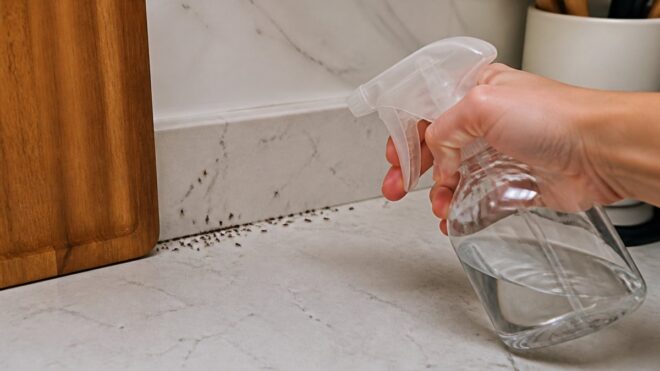
Spray directly on the trail, not just the ants, soaking the whole path and the surface around it.
- Follow the line of foraging ants back to where they enter.
- Lightly spray the full trail, from the food source to the entry point.
- Spray cracks and crevices along baseboards, windowsills, and pipe openings.
Don’t soak cabinets or let puddles sit, a light, even coat is enough, and standing liquid damages finishes.
Mix 1:1 vinegar to water in a 16-ounce bottle, add 2-3 drops of dish soap, and rinse any surface that touches food. Keep vinegar off natural stone, wood, and unsealed grout, and test a hidden spot before treating a new surface.
How Often Should You Spray Vinegar on an Ant Trail?
Spray vinegar on an ant trail once a day for the first three to five days, then step back to every two to three days as the ants thin out.
A simple schedule:
| Timeframe | How Often to Spray | What to Watch For |
|---|---|---|
| Days 1-3 | Once daily | Fresh trails, new entry points |
| Days 4-7 | Every 2-3 days | Fewer visible ants |
| Week 2 onward | Weekly as a barrier | Any return of activity |
If ants keep coming back after two weeks of steady spraying, the nest is likely inside your walls or under the floor. That’s a job for bait or a professional.
What Kills Ants on Contact: Vinegar vs. Other Kitchen Remedies
Vinegar is not the fastest killer in your kitchen. Several common remedies act quicker, each with trade-offs.
- Vinegar spray: Kills on contact and erases trails. Weak against the nest. Safe on most surfaces.
- Dish soap and water: Coats and drowns ants fast. No lasting trail control.
- Lemon juice: Similar acid effect to vinegar. Limited staying power.
For kitchen use, vinegar and soap are the safest everyday options. Bait belongs in cracks away from food prep areas.
Bait and vinegar work against each other. Vinegar erases the trails ants need to find bait. If you’re using bait, stop spraying the trail for a few days and let the ants reach it.
How to Get Rid of Ants in the Kitchen for Good
Getting rid of ants for good means removing what draws them in and cutting off the routes they use. Killing visible ants is easy; starving the colony and blocking its entry points ends the problem.
Find the Trail, Then Find the Entry
Before you clean anything, spend five minutes watching. Ants move in a line, and that line leads somewhere.
- Follow the trail backward. The ants carrying food are heading home; the ones moving toward food are leaving the nest. Follow the ones heading home.
- Look for the pinch point. Trails usually funnel through one narrow spot: a gap under a baseboard, a crack where a pipe enters the wall, a gap around a window frame, or a cabinet seam.
- Check the usual suspects. Behind the dishwasher, under the sink around the pipes, along the backsplash seam, inside the toe-kick of lower cabinets, and near the garbage can.
Once you know the entry point, treat it directly instead of chasing ants around the room.
Prevention Plan: Close Food, Water, and Access
Build a routine around three things ants need: food, water, and a way in.
Cut off food:
- Wipe counters and sweep floors nightly to clear crumbs and grease residue.
- Store sugar, cereal, flour, and pet food in sealed containers, not open bags or boxes.
- Rinse cans and bottles before they go in recycling.
Cut off water:
- Fix leaky faucets and dripping pipes under the sink.
- Dry the sink basin and dish rack before bed.
- Empty pet water bowls overnight if ants are active.
Cut off access:
- Seal cracks and crevices with caulk along baseboards, windows, and cabinet seams.
- Seal gaps around pipes where they enter the wall with steel wool or caulk.
- Repair torn window screens and worn door sweeps.
Bait or Repellent? Don’t Use Both at Once
This is the decision most people get wrong. Vinegar is a repellent that erases the trail ants use to navigate, while bait relies on ants finding it, carrying it back, and sharing it with the nest. Spray vinegar on a trail and then set bait there, and the ants can’t find the bait, the two methods cancel each other out.
Pick one path:
- If you just want the ants out of sight for now: spray vinegar, wipe surfaces, and accept that foragers will return until you seal the entry point.
- If you want to knock out the colony: skip the vinegar on the trail, place bait stations along the trail and near the entry point, and leave the ants alone for several days so they carry the bait home. Keep the area clean of other food so the bait is the best option.
- If you’re doing both: bait first, wait until activity drops, then switch to vinegar for surface cleaning and trail maintenance.
Bait stations work best in cracks and along baseboards, away from food prep areas. Keep them out of reach of pets and small children, and follow the label directions on the product you choose.
When the Routine Isn’t Enough
If you’ve sealed entry points, cut off food and water, and still see ants after two weeks, the nest is likely inside a wall, under flooring, or in a void you can’t reach. Surface treatment won’t solve it, see the next section for when to switch to bait or call a professional.
Renters and homeowners who want a low-cost, kitchen-safe routine they can run without harsh chemicals or a service contract.
When DIY Vinegar Spray Isn’t Enough: Signs You Need Professional Help
Call a professional when ants keep returning after two weeks of consistent treatment, or when you find nests inside walls, cabinets, or flooring, the colony is out of reach of any spray.
Watch for these signs:
- Ants reappear within days of every spray.
- You spot multiple trails leading to different entry points.
- You find a nest or a steady stream of ants near a crack.
Some species, like carpenter ants, damage wood. Others, like pharaoh ants, split into new colonies when disturbed, which makes DIY spraying backfire (Ants – Indoor Insects).
That’s where Zoifia Pest Control comes in. Our licensed and insured team backs the work with a 90-day guarantee. No long-term contract needed.
Conclusion
A vinegar spray buys you time, but it won’t win the war against a settled colony. When the ants keep marching back, bring in help that reaches the source.
Zoifia Pest Control offers fast, reliable, and affordable pest management solutions for both residential and commercial properties. Serving the Metro Boston area, our experienced team specializes in eliminating ants, roaches, rodents, bed bugs, and other household pests.
Get a quote from Zoifia Pest Control and get your kitchen back.
Frequently Asked Questions
Does vinegar spray get rid of kitchen ants?
Vinegar spray can kill visible ants on contact and disrupt their scent trails, but it won’t eliminate a colony. The acetic acid in white vinegar destroys the pheromone trails foraging ants rely on, which slows reinfestation temporarily. For a light trail, spraying equal parts white vinegar and water directly on ants and along their path can reduce activity for a few hours to a day. For a full infestation, you’ll need bait or professional treatment.
What kills ants on contact besides vinegar?
Dish soap mixed with water kills ants on contact by breaking down their exoskeleton. A common mix is one teaspoon of dish soap per cup of water in a spray bottle. Rubbing alcohol also kills ants quickly but is flammable and not ideal near kitchen flames. For long-term control, bait stations containing borax or boric acid work better because foraging ants carry the poison back to the colony.
How often should you spray vinegar on an ant trail?
Spray vinegar on ant trails every few hours while ants are active, or at least twice daily, because the scent trail fades and ants rebuild it. If you see ants returning within an hour, reapply. For prevention, wipe entry points and countertops with a vinegar solution once daily until activity stops. Vinegar is a temporary deterrent, not a residual treatment, so consistency matters more than volume.
When should you call a pest control professional for kitchen ants?
Call a professional if ants return within 24 hours of treatment, if you see multiple trails or nests inside walls, or if you’ve tried baits and sprays for more than two weeks without results. Carpenter ants and pharaoh ants require different treatment than sugar ants, and misidentification leads to wasted effort. A licensed technician can identify the species, locate the nest, and apply targeted treatments.