Table of Contents
- How to Find Roach Entry Points in Your Home
- Best Caulk for Roach Prevention: Materials That Work
- How to Seal Gaps Around Pipes for Pest Exclusion
- Step-by-Step: How to Seal Cracks to Prevent Roaches
- Common Mistakes to Avoid When Sealing Cracks
- Sealing Cracks in Apartments: Renter-Friendly Solutions
- Integrating Sealing with Baiting and Sanitation
- Maintaining Your Pest Barrier: Long-Term Prevention
Last Updated: July 9, 2026
Cockroaches exploit surprisingly small openings, a gap the width of a credit card is enough for many species to enter. At Zoifia Pest Control, we’ve helped hundreds of Metro Boston homeowners prevent infestations by sealing entry points before roaches establish themselves. This guide covers practical steps to seal cracks, materials that work, and why sealing must pair with other pest control strategies for lasting results.
The single most important step in roach prevention is identifying and sealing entry points. Roaches enter through cracks around pipes, baseboards, utility lines, and gaps in cabinetry. Without sealing these access points, baiting and sanitation efforts will have limited effectiveness.
How to Find Roach Entry Points in Your Home
Start in the kitchen, inspecting water lines, gas pipes, baseboards, and cabinet bottoms where plumbing runs. Check the bathroom behind and under the sink, around the toilet’s base, and where drain pipes exit the wall. Don’t overlook laundry areas, garages, and utility closets. Use a flashlight and get down to eye level with potential gaps, marking each location with tape.
Exterior entry points matter equally. Walk around the foundation looking for cracks in concrete or mortar, gaps where siding meets the foundation, and spaces around window frames and electrical lines.
Common Entry Points: Kitchen, Bathroom, and Utility Areas
The kitchen combines water, food debris, and shelter, everything roaches need. Seal cracks around sink drains, gaps between countertops and walls, and spaces behind appliances. The area where the water supply line enters under the sink is critical, as is the gap where the dishwasher connects to the sink drain.
In the bathroom, focus on the vanity cabinet where the sink drain runs and the toilet’s base where the water supply line connects. Utility areas including laundry rooms and furnace closets have multiple penetrations where pipes, electrical conduits, and HVAC ducts pass through walls and floors, ideal breeding sites if left unsealed.
Signs of Cockroach Activity Near Gaps and Cracks
Fresh droppings look like small black or brown specks along baseboards and inside cabinets. Smear marks appear as dark, greasy streaks along walls or pipes, indicating roaches use that area as a pathway. Egg casings, which look like small brown capsules about the size of a grain of rice, indicate breeding nearby. A musty or oily odor near cracks signals active infestation.
Best Caulk for Roach Prevention: Materials That Work
Silicone caulk is the gold standard for roach prevention. It remains flexible after curing, resists moisture, and lasts 20+ years without cracking. It adheres well to most surfaces and maintains its seal even when pipes expand and contract.
Polyurethane sealants offer superior flexibility and durability, often lasting 25+ years, but are more difficult to apply. Acrylic caulk is easier to apply but less durable for pest exclusion, lasting only 5-10 years before cracking.
Never use spray foam alone as your primary sealant for roach prevention. While foam fills large voids effectively, roaches can chew through dried foam, creating new entry points. Always pair foam with a hard sealant like silicone caulk applied over the foam surface.
Silicone Caulk vs. Acrylic vs. Polyurethane: Durability Comparison
Silicone caulk is the most moisture-resistant and flexible, ideal for kitchens, bathrooms, and areas around water lines. It doesn’t shrink as it cures, so the seal remains consistent. Acrylic latex caulk is water-based, easy to clean, and affordable, but shrinks as it dries and fails faster in areas with movement. Polyurethane sealants are the most flexible and durable, with some formulations lasting 25-30 years.
For roach prevention, silicone is the practical choice for most homeowners, balancing durability, ease of use, and cost.
Steel Wool, Copper Mesh, and Expansion Foam: Alternative Sealants
Steel wool and copper mesh provide physical barriers roaches cannot chew through. Copper mesh is superior because it doesn’t rust and remains effective indefinitely. Stuff copper mesh firmly into gaps, then seal with silicone caulk.
Expansion foam fills large voids effectively. Use minimal-expanding foam to avoid pushing walls or pipes out of alignment. After the foam cures (24 hours), trim excess and seal the surface with silicone caulk to prevent roaches from chewing through it.
How to Seal Gaps Around Pipes for Pest Exclusion
Pipes are among the most common roach entry points because gaps between pipes and surrounding materials are often large enough for roaches to slip through.
For pipes passing through exterior walls, seal on both the inside and outside. Remove loose caulk or debris, then apply silicone caulk directly to small gaps (less than 1/4 inch). For larger gaps, pack copper mesh around the pipe first, then caulk over it. Repeat on the interior side.
For pipes under sinks and in cabinets, remove existing debris or old caulk. If there’s significant space, use minimal-expanding foam first, then trim and caulk over it.
Sealing Utility Lines and Pipe Penetrations
Utility lines including electrical conduits, gas lines, and water supply lines create multiple penetration points. These gaps are often larger than single pipes and run directly to areas where roaches hide. Seal these as a priority.
For bundled utility lines, use copper mesh to fill the space around the bundle, then seal with silicone caulk. For very large gaps, use minimal-expanding foam first, then caulk. Pay special attention to where utility lines enter the home from the exterior.
Dryer vents and range hoods that vent to the exterior can allow roaches to enter. Install dampers or one-way flapper valves on these vents and seal gaps where ducts connect to walls or appliances.
Interior vs. Exterior Sealing Techniques
Interior sealing prevents roaches already inside from moving between rooms and establishing new harborage areas. Exterior sealing prevents roaches from entering in the first place. Both are necessary.
Interior gaps around baseboards, inside cabinets, and around pipes should be sealed with silicone caulk. Exterior sealing requires more durable materials because gaps are exposed to weather, temperature fluctuations, and UV light. Polyurethane sealants and exterior-grade silicone perform better outdoors.
Step-by-Step: How to Seal Cracks to Prevent Roaches
What You’ll Need Before Starting
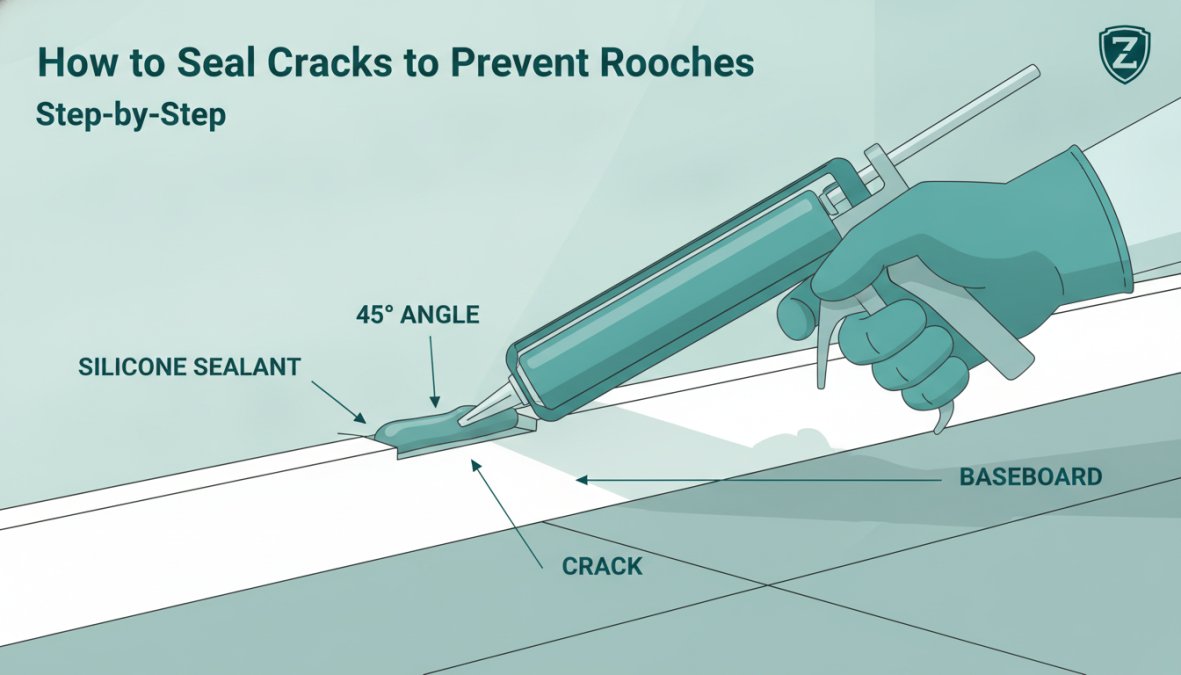
Gather materials before beginning: caulking gun, silicone caulk, polyurethane sealant (for exterior gaps), copper mesh or steel wool, utility knife, caulk smoothing tool or wet finger, flashlight, painter’s tape, and cleaning supplies like a wire brush and mineral spirits. Have a damp cloth nearby for cleanup and wear gloves to protect your hands.
Preparing Cracks and Crevices for Sealing
Clean out the crack thoroughly using a wire brush to remove loose debris, old caulk, and paint chips. For gaps with grease or oil buildup, use a degreaser or mineral spirits and allow the area to dry completely.
For cracks wider than 1/4 inch, pack copper mesh or steel wool into the gap first, pressing it firmly with a putty knife. Use painter’s tape on either side of the crack to create clean edges and prevent caulk from spreading.
Applying Caulk and Sealants Effectively
Load the caulk tube into the caulking gun and cut the tip at a 45-degree angle. Hold the gun at a 45-degree angle to the crack and apply steady, even pressure. For horizontal cracks, move left to right; for vertical cracks, move top to bottom.
Immediately after applying caulk, smooth it with a caulk smoothing tool or wet finger, pressing it into the crack and creating a concave surface. Allow the caulk to cure fully before exposing it to moisture or movement, silicone typically takes 24-48 hours; polyurethane takes up to 72 hours.
Prioritizing High-Risk Areas: Baseboards and Voids
Prioritize sealing baseboards first, especially in kitchens and bathrooms where roaches naturally travel. Next, seal gaps around cabinets, particularly underneath where pipes and utilities run.
Common Mistakes to Avoid When Sealing Cracks
The most common mistake is sealing only visible cracks while ignoring gaps around pipes and utilities. Do a thorough inspection and seal everything.
Another frequent error is using the wrong sealant for the environment. Acrylic caulk in a wet kitchen fails within a few years. Invest in the right material for each location.
Failing to clean the crack before sealing prevents new sealant from adhering properly. The seal fails faster and roaches can work through gaps that appear sealed but aren’t actually bonded.
When sealing gaps around pipes, apply caulk on the inside of the gap first, then on the outside. This double-sided approach creates a seal roaches cannot penetrate from either direction. It’s especially important for pipes that pass through exterior walls.
Why Sealing Alone Is Not a Complete Solution
Sealing cracks is essential but only one part of comprehensive roach prevention. Roaches also need food, water, and shelter to survive. Combine sealing with sanitation: clean up food debris immediately, wipe down surfaces regularly, fix leaky pipes, and reduce clutter.
If an infestation is already present, sealing alone won’t eliminate roaches inside your home. You’ll need baiting, traps, or professional pest control to remove existing populations. Once eliminated, sealing prevents new roaches from entering.
Can Roaches Chew Through Common Sealants?
Roaches cannot chew through properly cured silicone or polyurethane caulk. However, roaches can chew through uncured caulk and spray foam if not sealed over with a hard sealant. This is why combining foam plus caulk is effective.
Sealing Cracks in Apartments: Renter-Friendly Solutions
Renters cannot make permanent modifications but have effective options. Removable weatherstripping around doors and windows prevents roaches from entering without damaging the property.
For gaps around pipes under the sink, use temporary sealants like removable caulk or silicone-based putty. Alternatively, use copper mesh stuffed into the gap, which is removable and effective.
Discuss sealing gaps with your landlord. Many appreciate tenants who take pest prevention seriously and may authorize sealing work. If your apartment has a roach problem, report it to your landlord immediately. In most jurisdictions, landlords are legally required to address pest infestations.
Integrating Sealing with Baiting and Sanitation
Sealing prevents new roaches from entering but must pair with other pest management strategies. This integrated approach is called integrated pest management, or IPM.
Baiting is highly effective for eliminating existing populations. Place gel baits where you’ve seen roach activity, under sinks, inside cabinets, and along baseboards. Sanitation removes conditions roaches need to survive, clean up food debris, fix leaky pipes, and remove clutter. Traps help monitor roach activity and identify where roaches concentrate.
Maintaining Your Pest Barrier: Long-Term Prevention
Inspect sealed areas annually, particularly in spring before warm weather brings increased roach activity. Look for cracks in caulk, areas where caulk has shrunk away from surfaces, or new gaps. Reseal any problem areas immediately.
Pay special attention to areas around pipes and utilities, which experience more movement than static wall surfaces. If you notice signs of roach activity near a previously sealed area, inspect the seal for new gaps.
Maintain sanitation practices year-round. These practices combined with sealed entry points create a home environment where roaches cannot thrive. According to the EPA’s guidance on integrated pest management, combining exclusion (sealing), sanitation, and targeted treatments provides the most effective long-term roach control.
Sealing cracks to prevent roaches is foundational to keeping your home pest-free. If you’ve sealed entry points and sanitized your home but still see signs of roach activity, professional pest control becomes necessary. At Zoifia Pest Control, we specialize in eliminating cockroach infestations with fast, reliable service backed by a 90-day guarantee. Our licensed and insured team identifies entry points you might miss, applies targeted treatments, and ensures your home remains protected. Get a quote from Zoifia Pest Control today.
| Material | Best Use | Durability | Cost | Curing Time |
|---|---|---|---|---|
| Silicone Caulk | Interior cracks, kitchens, bathrooms | 20+ years | Moderate | 24-48 hours |
| Polyurethane Sealant | Exterior gaps, high-movement areas | 25+ years | Higher | 48-72 hours |
| Acrylic Caulk | Interior dry areas, temporary sealing | 5-10 years | Low | 12-24 hours |
| Copper Mesh + Caulk | Large gaps, pipe penetrations | 30+ years | Moderate | 24-48 hours |
| Expanding Foam | Large voids, irregular spaces | 20+ years | Low | 24 hours |
Research from the National Pest Management Association confirms that exclusion, sealing entry points, is the first line of defense against cockroach infestations. This approach is more cost-effective than relying solely on chemical treatments.
For apartments and rental properties, the Centers for Disease Control and Prevention’s housing guidance emphasizes that landlords bear responsibility for maintaining pest-free environments. Tenants should document requests for sealing work and report infestations promptly to ensure compliance with housing codes.
Frequently Asked Questions
What is the best caulk for roach prevention?
Silicone caulk and polyurethane sealants are among the most effective materials for how to seal cracks to prevent roaches because they remain flexible, resist moisture, and are difficult for roaches to penetrate. Silicone caulk is durable and long-lasting, while polyurethane offers superior adhesion. For gaps larger than ¼ inch, consider combining expansion foam with caulk for maximum pest exclusion effectiveness.
Where do roaches usually enter the house?
Cockroaches typically enter through cracks and crevices around baseboards, utility lines, pipe penetrations, and gaps under doors. Common entry points include kitchen cabinets, bathroom plumbing areas, and voids behind appliances. German cockroaches and American cockroaches favor harborage areas near moisture and food sources. Inspect these zones carefully when looking for how to find roach entry points in your home.
Does sealing cracks actually stop roaches?
Sealing cracks to prevent roaches is an essential part of pest exclusion and integrated pest management (IPM), but it works best when combined with sanitation and baiting strategies. Sealing eliminates entry points and harborage areas, but existing roaches inside your home still need to be eliminated through targeted treatments. Think of sealing as preventative maintenance that stops new infestations, not a standalone cure.
How do I seal gaps around pipes for pest control?
For how to seal gaps around pipes for pests, use expandable foam to fill large voids, then trim excess foam and seal with silicone caulk or polyurethane sealant. For smaller gaps, apply caulk directly. Utility penetrations and pipe openings are critical entry points because roaches exploit these voids. Ensure both interior and exterior sides are sealed for complete pest barrier protection.
This article was written using GrandRanker
