Table of Contents
- 10 Signs of Roach Infestation in Cabinets You Shouldn’t Ignore
- 1. Pepper-Like Droppings and Fecal Stains
- 2. Musty Odors in Kitchen Cabinets
- 3. Cockroach Egg Casings (Oothecae) in Hidden Corners
- 4. Shed Skins and Molting Evidence
- 5. Smear Marks Along Baseboards and Hinges
- 6. Live or Dead Roaches Behind Appliances
- 7. Cabinet-Specific Structural Vulnerabilities
10 Signs of Roach Infestation in Cabinets
Last Updated: July 6, 2026
10 Signs of Roach Infestation in Cabinets You Shouldn’t Ignore
Early detection of cockroach infestations saves thousands in extermination costs and prevents full-scale problems. Kitchen cabinets provide ideal roach habitat: darkness, moisture, food access, and protection. Most homeowners don’t realize they have an infestation until it’s established, making it critical to recognize the subtle evidence roaches leave behind.
A single pregnant female can spawn hundreds of offspring within weeks. By the time you see a live roach, the infestation is likely well underway in hidden cabinet spaces.
[German cockroaches](/best-roach-bait-german-cockroaches/), the most common kitchen pest, are nocturnal and hide in cracks and crevices during the day. Focus cabinet inspections on hinges, shelf edges, and corner voids where light doesn’t penetrate.
Why Early Detection Matters
Identifying roach activity early prevents exponential population growth. A cockroach infestation undetected for two weeks can involve hundreds of insects. Early intervention with targeted treatments stops the colony before it spreads.
The cost difference is substantial. Minor infestations caught early require one or two treatments. Severe infestations discovered months later demand multiple visits, structural repairs, and food storage replacement. Early pest detection reduces treatment costs by up to 60% compared to waiting until infestations become visible.
Beyond financial impact, roaches contaminate food surfaces with bacteria and allergens. Their droppings and shed skins trigger allergic reactions and asthma in sensitive individuals.
1. Pepper-Like Droppings and Fecal Stains
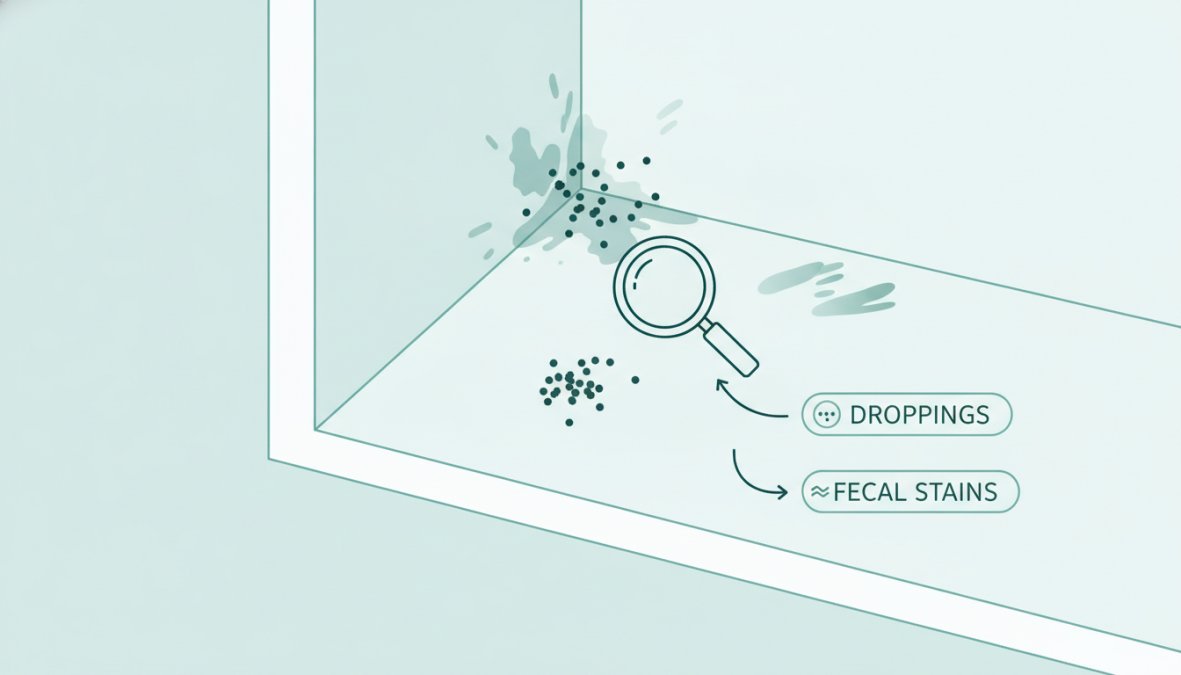
The most obvious sign of roach infestation is tiny, dark specks resembling ground black pepper scattered across cabinet shelves, corners, and drawers. These droppings concentrate in areas where roaches rest and feed: shelf edges, hinges, and cabinet corners.
Unlike mouse droppings, which are larger and rod-shaped, roach droppings are small and granular. A single roach produces dozens daily. Concentrated clusters in undisturbed corners indicate active infestation.
Fecal stains also appear as dark smears on cabinet surfaces, forming when roaches travel across damp areas. Inspect undersides of shelves and interior corners carefully.
What Roach Droppings vs Mouse Droppings Look Like
Roach droppings are tiny, roughly 1mm long, and appear as fine granules scattered widely across multiple shelves. Mouse droppings are 3-8mm long, rod-shaped with pointed ends, and cluster in specific nesting areas. Pepper-like specks distributed across multiple cabinet locations indicate roaches, not rodents.
2. Musty Odors in Kitchen Cabinets
A distinctive musty or stale smell from kitchen cabinets signals cockroach infestation. This odor comes from aggregation pheromones roaches release to communicate. When dozens or hundreds live in confined spaces, the smell becomes noticeable.
The odor intensifies in enclosed, undisturbed cabinet spaces. If you detect an unpleasant, stale smell that wasn’t there before, investigate immediately. The stronger the smell, the larger the population.
Don’t dismiss musty cabinet odors as a cleaning issue. The smell returns within days if roaches remain untreated.
Poorly ventilated cabinets under sinks or near dishwashers amplify odor. If the smell is strongest in high-moisture areas, focus your inspection there.
3. Cockroach Egg Casings (Oothecae) in Hidden Corners
Roach egg casings, called oothecae, are dark brown, capsule-shaped structures roughly 8-10mm long containing 12-40 eggs. Finding even one ootheca means roaches have established a breeding population.
Oothecae appear in the darkest, most protected cabinet corners: interior angles where walls meet, inside hinge mechanisms, and along back shelf edges. German cockroaches often carry oothecae for 1-2 days before depositing them, so finding one indicates recent activity. Multiple oothecae suggest an established breeding population present for weeks or months.
A single ootheca can hatch 30-40 nymphs within 6-12 weeks. Immediate action is critical.
Oothecae resist many common pesticides. Even if you kill all adult roaches, surviving oothecae will hatch and restart the infestation.
4. Shed Skins and Molting Evidence
As cockroaches grow from nymphs to adults, they shed exoskeletons multiple times. These shed skins accumulate in cabinet hiding spots, providing clear evidence of active infestation and population growth.
Shed roach skins are tan or brown, hollow, and roughly the same size as a live roach but lighter and obviously empty. Multiple shed skins in different locations indicate an infestation developing for at least 4-6 weeks. Nymphs molt 5-8 times before adulthood, so shed skin quantity correlates with population size and infestation duration.
Molting evidence is particularly important because it indicates successful breeding, not just adult roaches passing through.
5. Smear Marks Along Baseboards and Hinges
Smear marks appear as dark, irregular stains on cabinet surfaces, hinges, and baseboards. These form when roaches travel across damp surfaces, leaving body oils, feces, and dirt. Smear marks concentrate in areas roaches use as highways.
Cabinet hinges are prime locations because roaches use them as entry and exit points. The metal provides grip, and gaps offer protection. Look closely at cabinet door edges, especially inner surfaces where hinges attach.
Baseboards directly below cabinets also show smear marks from roach traffic. Multiple marks suggest roaches have used that route for weeks or longer.
6. Live or Dead Roaches Behind Appliances
Finding a live cockroach in or near kitchen cabinets confirms infestation. Spotting one during the day indicates severe infestation, since roaches are primarily nocturnal and only become active in daylight when nighttime hiding spaces are overcrowded.
Dead roaches behind appliances or inside cabinets signal infestation. Multiple dead roaches indicate a population present long enough for natural mortality to occur.
If you see roaches during the day, the infestation is likely severe. Contact professional pest control immediately.
Pay special attention to areas under and behind appliances. Warmth from refrigerators, dishwashers, and stoves creates ideal roach colony conditions.
7. Cabinet-Specific Structural Vulnerabilities
Kitchen cabinets have design features that make them vulnerable to roach infestation. Gaps between cabinet boxes and countertops, spaces around pipes under sinks, and voids behind cabinets provide roach highways and harborage areas.
Cabinet hinges create entry points through small gaps allowing roach movement between cabinet interiors and spaces behind cabinets. Shelf supports and corner braces offer protected hiding spaces where roaches rest undisturbed during the day.
Hinges, Shelf Edges, and Undisturbed Areas as Entry Points
Cabinet hinges are critical inspection points. Roaches use gaps around hinges to access cabinet interiors. Droppings, smear marks, or shed skins concentrated around hinges indicate entry and exit locations.
Shelf edges, particularly back edges where shelves meet cabinet walls, create narrow spaces roaches favor. These edges are often overlooked during cleaning, allowing debris and moisture to accumulate.
Undisturbed areas, back cabinet corners, spaces above high shelves, areas under sinks with pipes, become roach strongholds. Roaches establish populations in these locations precisely because humans avoid them.
Use a flashlight to inspect corners and shelf edges. Check spaces behind cabinets against walls. Look inside hinge mechanisms. These focused inspections reveal evidence casual glances miss.
| Cabinet Area | Signs to Look For | Inspection Frequency | Action if Found |
|---|---|---|---|
| Hinges and door edges | Smear marks, droppings, shed skins | Weekly | Immediate treatment |
| Shelf corners and edges | Pepper-like droppings, oothecae | Weekly | Immediate treatment |
| Under-sink cabinet | Dead roaches, musty odor, moisture | Twice weekly | Professional inspection |
| Back wall gaps | Roach activity trails, debris buildup | Monthly | Seal gaps, apply treatment |
| Baseboard below cabinet | Smear marks, droppings | Monthly | Professional treatment |
Practical Cabinet Inspection Checklist
Conduct thorough cabinet inspections monthly, taking 15-20 minutes per cabinet. Systematic inspection catches infestations early.
Remove all items from the cabinet to inspect every surface without obstruction. Inspect the interior with a flashlight, looking for droppings in corners, shed skins, oothecae, and smear marks. Smell the interior for musty odors. Take photos of any evidence.
Examine the cabinet exterior, particularly the bottom edge where it meets the baseboard. Check for smear marks and droppings. Inspect hinge mechanisms from both sides.
After inspection, clean thoroughly with hot soapy water and disinfectant. Roaches are attracted to food debris and grease, so removing these attractants prevents future infestations.
Use a vacuum with a HEPA filter to remove droppings and shed skins. Never use a regular vacuum; roach allergens spread through the air. Seal the vacuum bag immediately and dispose of it outside.
When to Call Professional Pest Control
DIY monitoring works for early-stage infestations, but professional intervention becomes necessary when multiple signs appear in cabinets. The EPA recommends professional pest control when infestation evidence is present in multiple locations.
Zoifia Pest Control specializes in eliminating cockroach infestations in kitchen cabinets using targeted treatments that reach roaches in hiding spaces without requiring cabinet replacement or kitchen renovation. Our licensed team applies gel baits, growth regulators, and targeted applications to eliminate adults and developing colonies.
Professional treatment provides comprehensive coverage. Technicians know exactly where roaches hide and apply treatments to those locations. We identify structural vulnerabilities and recommend sealing gaps to prevent future infestations.
Zoifia Pest Control backs every treatment with a 90-day guarantee. If roaches return within 90 days, we retreat at no additional cost.
Treatment Options for Cabinet Infestations
Several treatment approaches are available depending on infestation severity and your comfort level with pesticides.
Gel baits like Advion Cockroach Gel Bait are highly effective. The non-repellent formula ensures roaches return to the nest before dying, infecting other colony members. Apply small dots along shelf edges, inside hinges, and cabinet corners.
Insect growth regulators like Gentrol Point Source disrupt roach reproduction without killing adults immediately. These products prevent nymphs from developing into adults. Over 60-90 days, the breeding population collapses. Growth regulators work best combined with gel baits.
Monitoring traps like Catchmaster Sticky Traps track treatment progress. Declining trap counts signal successful elimination.
Barrier treatments using products like Alpine WSG create residual pesticide layers on cabinet surfaces. Roaches crossing treated areas absorb the active ingredient and die.
Combining gel baits for immediate adult control, growth regulators for breeding suppression, and monitoring traps for progress tracking provides the fastest path to complete elimination.
Prevention: Stopping Future Infestations
After eliminating an infestation, prevention becomes critical. A single surviving pregnant female can restart an infestation within weeks.
Sanitation is your primary defense. Clean cabinet interiors thoroughly and regularly, wiping shelves and removing crumbs and grease. Store food in airtight containers rather than open boxes.
Fix plumbing leaks under sinks and around appliances. Even small drips provide sufficient hydration for roach colonies. Repair leaky faucets and seal cracks around pipes.
Seal structural vulnerabilities. Caulk gaps between cabinets and countertops, around hinges, and along back walls. Research from the National Pest Management Association indicates that sealed entry points reduce reinfestation risk by 85% when combined with regular cleaning and monitoring.
Reduce cabinet clutter. Empty cabinets are less attractive to roaches than packed ones. Monitor regularly using sticky traps placed in cabinet corners and along baseboards monthly.
Early detection of roach infestation in kitchen cabinets makes elimination straightforward. By identifying the signs, droppings, odors, oothecae, shed skins, smear marks, and live roaches, you can catch problems before they spiral. Zoifia Pest Control offers fast, reliable elimination backed by a 90-day guarantee. Our licensed team targets roaches in hiding spaces, eliminates breeding populations, and identifies structural vulnerabilities to prevent future infestations. Get a quote from Zoifia Pest Control and reclaim your kitchen cabinets from cockroach infestation.
Frequently Asked Questions
What do roach droppings look like in kitchen cabinets?
Cockroach droppings appear as small, dark, pepper-like specks or coffee grounds scattered along cabinet shelves, corners, and hinges. German cockroaches leave droppings about 1mm in size, while larger species produce larger fecal matter. You'll often find them concentrated in undisturbed areas and along baseboards. Unlike mouse droppings, roach feces are smaller and more scattered throughout the cabinet rather than in distinct piles.
How do I know if I have roaches in my kitchen cabinets?
Multiple signs indicate cockroach infestation: pepper-like droppings, musty odors, shed skins, egg casings (oothecae), smear marks, and live or dead roaches. German cockroaches are nocturnal, so you may spot them at night. Use sticky traps or monitoring tools to detect roach activity in hidden corners. If you notice several signs together, especially droppings combined with musty smells, professional pest control inspection is recommended.
What's the difference between roach droppings and mouse droppings?
Roach droppings are tiny (1mm), dark, and pepper-like, scattered throughout cabinets and along edges. Mouse droppings are larger (3-8mm), pellet-shaped, and usually found in concentrated piles. Roach feces often appear as fine specks near food sources and hinges, while mouse droppings cluster in corners and along walls. Roach droppings may also have a musty odor, whereas mouse droppings typically don't produce a distinct smell.
How can I use sticky traps to monitor roaches in cabinets?
Place adhesive sticky traps in cabinet corners, under sinks, along baseboards, and near appliances where roaches hide. Position them in undisturbed areas where roaches travel at night. Leave traps in place for 3-5 days, then check for captures. Multiple roaches on a single trap indicates active infestation. Sticky traps are non-toxic and help identify hotspots, making them ideal for DIY monitoring before deciding on treatment options.
When should I call professional pest control for cabinet roaches?
Contact a professional if you find multiple signs of infestation (droppings, egg casings, live roaches), or if DIY treatments haven't reduced activity after 2-3 weeks. Professional pest control services like Zoifia Pest Control provide licensed, insured treatment with a 90-day guarantee, ensuring complete colony elimination. Professionals can identify hidden nesting areas in cabinet voids and apply targeted treatments safely around food storage areas.
This article was written using GrandRanker
