Table of Contents
- Does Boric Acid Kill Roaches Effectively? The Verdict
- How to Apply Boric Acid for Roaches: Step-by-Step Instructions
- How Long Does Boric Acid Last for Roaches?
- Is Boric Acid Toxic to Humans? Safety Precautions
- Why Boric Acid Fails: Common Mistakes and Behavioral Avoidance
- Boric Acid vs. Commercial Baits and Integrated Pest Management
- Conclusion: Making an Informed Decision
Does Boric Acid Kill Roaches Effectively? A Complete Guide
Last Updated: July 10, 2026
Boric acid can kill roaches, but only under specific conditions and with proper application. Many homeowners attempt this method hoping for a quick fix, only to find their infestation persists or worsens. Below, we’ll show you exactly how boric acid works, why it fails in most cases, and when professional intervention becomes necessary.
Does Boric Acid Kill Roaches Effectively? The Verdict
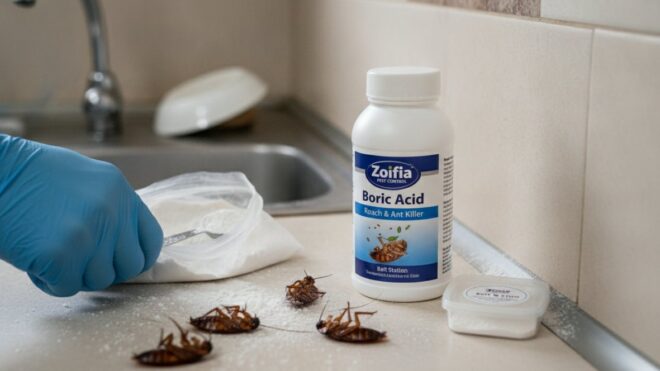
Boric acid does kill roaches, but it’s not a guaranteed solution for most infestations. The powder works as a stomach poison when ingested, but roaches must come into contact with it, consume it, and ingest a sufficient dose for it to be lethal. Research shows that boric acid effectiveness varies significantly based on roach species, with German cockroaches sometimes showing behavioral avoidance after initial exposure.
The powder functions as both a desiccant and stomach poison. When a roach walks through boric acid dust, the powder adheres to its exoskeleton. As the insect grooms itself, it ingests the powder, which damages the roach’s digestive system and dehydrates it from the inside. Death typically occurs within 24-72 hours after sufficient ingestion.
For boric acid to work effectively, you need three conditions: proper application creating a thin layer in high-traffic areas, roaches actually encountering and walking through the powder, and the roaches consuming enough of it during grooming. Most DIY applications fail because homeowners apply too much powder in visible clumps, which roaches avoid entirely.
Boric acid is toxic to humans and pets. Improper application or storage can create serious health risks. If you have young children or pets, this method requires extreme caution or may not be suitable at all.
How Boric Acid Works as a Stomach Poison
Boric acid is classified as an inorganic insecticide that operates through two pathways: as a stomach poison and as a desiccant that strips away the roach’s protective waxy coating.
When a cockroach ingests boric acid, the compound interferes with the insect’s metabolism and nervous system function. The powder damages the roach’s digestive tract lining and disrupts nutrient absorption while simultaneously removing moisture from the roach’s body. This dual action creates a lethal combination, though the process takes 24-72 hours.
The powder must be ingested in sufficient quantity for toxicity. A single grain won’t kill a roach. The insect needs to consume enough during grooming to reach a toxic dose. This is where application technique becomes critical. If the powder is clumped or visible, roaches recognize it as a threat and avoid it. The goal is a thin, nearly invisible layer that roaches encounter naturally during their movement.
Effectiveness Against German and American Cockroaches
Not all roaches respond equally to boric acid. German cockroaches and American cockroaches show different susceptibility levels and behavioral responses.
German Cockroaches: These are the most common indoor roaches in North America. German cockroaches are smaller, faster, and more adaptable than American roaches. They’re also more likely to exhibit behavioral avoidance of boric acid. After initial exposure, surviving German cockroaches may learn to avoid treated areas entirely, a phenomenon known as behavioral resistance. This means that even if your first application kills some roaches, the survivors may be genetically predisposed to avoid boric acid, making subsequent applications less effective.
American Cockroaches: These large roaches are less common indoors but more common in commercial settings and southern regions. American cockroaches tend to be less sensitive to behavioral avoidance and may be somewhat more susceptible to boric acid than German roaches.
Before attempting any treatment, identify which roach species you’re dealing with. German cockroaches are 1/2 to 5/8 inches long, light brown, and have two dark stripes on their back. American roaches are 1.5 to 2 inches long, reddish-brown, and have a yellow band behind their head.
How to Apply Boric Acid for Roaches: Step-by-Step Instructions
If you decide to attempt boric acid treatment, proper application is everything. Incorrect application is the primary reason this method fails.
Preparation and Safety Setup
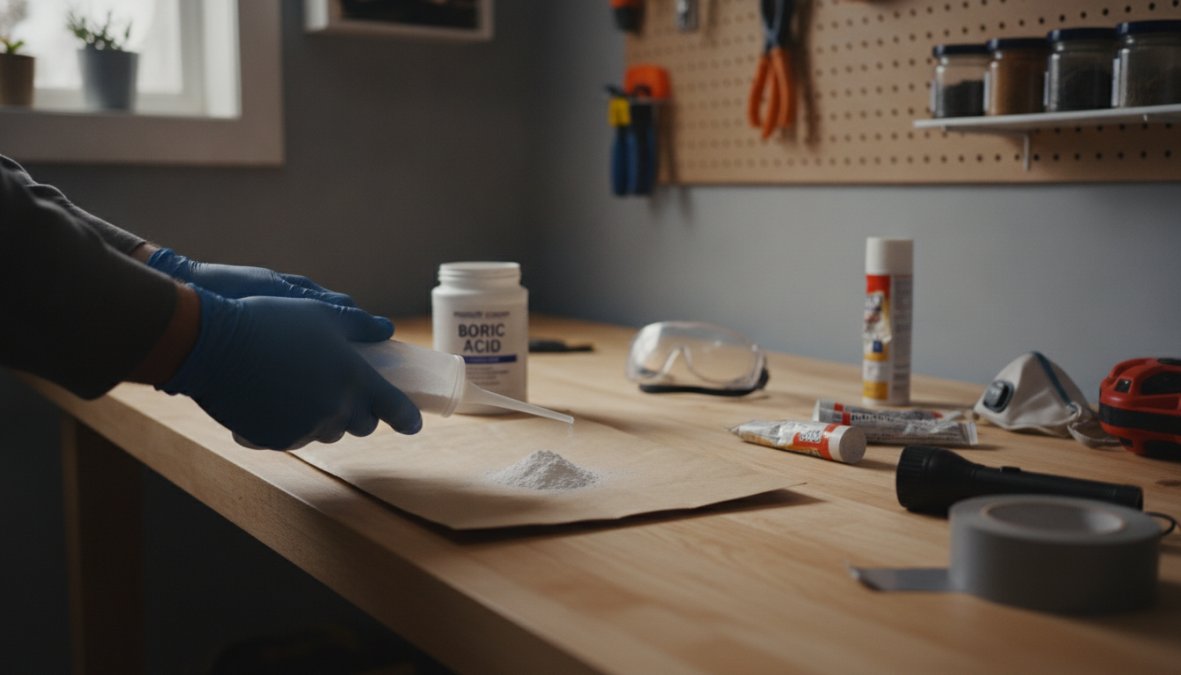
Before applying boric acid, wear nitrile gloves, a dust mask, and protective eyewear. Ensure children and pets are out of the treatment area and will remain excluded for at least 24 hours.
Identify all roach activity areas: kitchens, bathrooms, baseboards, under sinks, behind appliances, and cracks or crevices where roaches hide. Look for roach droppings, which appear as small dark specks, to confirm activity zones. Clean the treatment areas thoroughly to remove food debris, grease, and organic matter. Roaches are attracted to these substances more than boric acid, so eliminating competing food sources increases the likelihood that roaches will encounter and consume the boric acid bait.
Application Techniques: Dusting and Bait Stations
There are two primary application methods: dusting with pure boric acid powder and creating bait stations with boric acid mixed with attractants.
Dusting Method:
Apply boric acid as a thin, nearly invisible layer along baseboards, in cracks and crevices, and around pipes and entry points. The powder should be so thin that you can barely see it. Use a hand duster or bulb duster to apply the powder in a fine mist. Focus on areas where roaches travel: along baseboards, behind and under appliances, in cabinet corners, and around plumbing penetrations. Apply the powder in a continuous but thin line, approximately 1/8 inch wide.
Bait Station Method:
Mix boric acid with an attractant to create bait. Common recipes include boric acid mixed with powdered sugar and flour, or boric acid mixed with peanut butter. Form small pellets or place the mixture in shallow containers positioned in roach activity areas. The roach consumes the bait, ingests the boric acid, and dies.
Target Areas: Cracks, Crevices, and Nesting Sites
Precision targeting increases effectiveness. Apply boric acid in kitchen and bathroom baseboards, cracks in walls and around pipes, inside cabinet bases and under sinks, behind and underneath appliances, and crevices in door frames. Pay special attention to areas with moisture, as roaches seek water sources. However, avoid applying boric acid directly on wet surfaces, as moisture reduces its effectiveness.
How Long Does Boric Acid Last for Roaches?
Boric acid powder remains active indefinitely if it stays dry. However, moisture is its enemy. Humidity, water exposure, and condensation cause boric acid to clump and lose effectiveness within days or weeks. In typical home environments, boric acid remains reasonably effective for 2-4 weeks before requiring reapplication.
Monitor treated areas weekly for roach activity. Look for new droppings, live roaches, or evidence of continued infestation. Most treatment protocols recommend reapplication every 2-4 weeks for 8-12 weeks. This extended timeline accounts for the roach lifecycle, as eggs hatch approximately 6-12 weeks after being laid.
If you’re seeing roaches after the initial application, the infestation may be more severe than boric acid can handle. At this point, consider whether professional pest control is necessary.
Boric acid’s effectiveness window is typically 2-4 weeks in normal home environments. If you’re not seeing results after 3-4 weeks of consistent application, the infestation likely requires professional intervention.
Is Boric Acid Toxic to Humans? Safety Precautions
Boric acid is toxic to humans and pets, and improper use creates genuine health risks. Young children are at highest risk because they crawl, touch treated surfaces, and put their hands in their mouths. Pets, particularly cats and dogs that groom their paws after walking through powder, face similar risks.
Health effects of boric acid exposure include nausea, vomiting, and diarrhea from ingestion of small amounts, and more serious neurological effects from larger amounts. Skin contact causes irritation, eye contact causes conjunctivitis, and inhalation of dust causes respiratory irritation.
If you have young children or pets in your home, boric acid is not a safe treatment option.
During application:
- Wear nitrile gloves, a dust mask, and protective eyewear
- Apply boric acid only when children and pets are absent
- Keep the container sealed and labeled clearly
- Wash your hands thoroughly after application
After application:
- Keep children and pets out of treated areas for at least 24 hours
- Ensure adequate ventilation to disperse any airborne dust
- Store boric acid in a locked cabinet out of reach of children and pets
If accidental ingestion occurs, contact Poison Control immediately at 1-800-222-1222.
Why Boric Acid Fails: Common Mistakes and Behavioral Avoidance
Understanding why boric acid fails is as important as understanding how it works. Most DIY applications fail for predictable reasons.
Clumping, Repellency, and Roach Resistance
The most common application error is applying too much boric acid, creating visible clumps or thick layers. Roaches recognize these clumps as a threat and avoid them entirely. Roaches also develop behavioral resistance after exposure. A roach that encounters boric acid and survives may learn to avoid it in the future, and its offspring may inherit this behavioral trait.
Additional application errors that reduce effectiveness:
Insufficient coverage: Applying boric acid to only obvious roach areas while missing hidden nesting sites means roaches can still reproduce in untreated zones.
Moisture exposure: Applying boric acid in humid areas like bathrooms causes the powder to clump within days.
Competing food sources: If your home has abundant food debris and unsecured food storage, roaches have no reason to seek out boric acid bait.
Inadequate reapplication schedule: Many homeowners apply boric acid once and expect it to work indefinitely. Consistent reapplication is necessary.
Boric Acid vs. Commercial Baits and Integrated Pest Management
When DIY Boric Acid Works Best
Boric acid is most effective in these specific scenarios: small, early-stage infestations caught before roaches create multiple nesting colonies; low-humidity environments like bedrooms or living rooms where the powder remains active longer; American cockroach infestations rather than German roaches; and as supplementary treatment within a comprehensive integrated pest management strategy that includes sanitation, exclusion, and monitoring.
When Professional Pest Control Is Necessary
Professional intervention becomes necessary when the infestation is widespread across multiple rooms, roaches persist after 4-6 weeks of boric acid treatment, you have young children or pets, the infestation keeps returning, or you’re uncertain about proper application. Professional pest control specialists have access to more effective active ingredients and application techniques, and they address the root causes of infestation.
| Approach | Effectiveness | Cost | Time Investment | Best For |
|---|---|---|---|---|
| Boric Acid DIY | 30-50% (varies by species, conditions) | Low | High (ongoing application) | Small, early-stage infestations in dry areas |
| Commercial Baits | 60-75% | Moderate | Moderate (weekly monitoring) | Homeowners seeking better odds than boric acid |
| Professional Pest Control | 95%+ | Higher upfront | Minimal (technician handles it) | Established infestations, homes with children/pets, recurring problems |
Does boric acid kill roaches effectively? The honest answer is: sometimes, under specific conditions, with proper application and realistic expectations. However, most homeowners who attempt this method encounter failure due to application errors, behavioral avoidance, or infestation severity beyond what DIY treatment can address. If you’ve tried boric acid without success or if your infestation involves German cockroaches, young children, or pets, professional pest control is a more reliable path forward.
Frequently Asked Questions
Does boric acid kill roaches effectively on its own?
Boric acid can kill roaches, but effectiveness depends on proper application and infestation severity. It works as a stomach poison and desiccant, but roaches may avoid clumped powder or exhibit behavioral resistance. For moderate to severe cockroach infestations, boric acid alone often fails without addressing sanitation, exclusion, and monitoring, the core elements of integrated pest management. Professional pest control combines multiple methods for reliable results.
How long does boric acid last for roaches?
Boric acid powder maintains a residual effect for 2-3 months when applied correctly in dry conditions. However, moisture, foot traffic, and cleaning reduce its lifespan significantly. Environmental conditions matter greatly, humidity accelerates powder degradation, while dry spaces extend effectiveness. Reapplication every 4-6 weeks is typically necessary for ongoing control. Monitoring activity levels helps determine if reapplication is needed sooner.
Is boric acid toxic to humans and pets?
Boric acid has low acute toxicity but poses risks if ingested in large quantities. Keep it away from children and pets by applying it only in inaccessible areas like wall voids and under appliances. Wear gloves during application and avoid inhaling powder. Post-treatment cleanup is essential, vacuum thoroughly after a few days to remove residue. Never use boric acid in food preparation areas or where pets sleep.
Why does boric acid sometimes fail to kill roaches?
Boric acid fails when applied too thickly (roaches avoid clumped powder), in wet areas (moisture degrades the desiccant), or without addressing underlying conditions. Roaches may exhibit behavioral avoidance or develop resistance over time. Poor sanitation and food sources keep infestations alive despite treatment. German cockroaches and American cockroaches respond differently, German roaches are often more resistant. Success requires proper application rates, targeted placement in nesting sites, and elimination of attractants.
When should I call a professional pest control service instead of using boric acid?
Call a professional if you have a severe cockroach infestation, repeated DIY failures, or concerns about safety with children and pets. Professionals use integrated pest management combining sanitation, exclusion, baiting, and monitoring for guaranteed results. Zoifia Pest Control offers licensed, insured services with a 90-day guarantee, ideal when DIY methods haven't worked. A pest control professional can identify species, assess severity, and implement comprehensive solutions without long-term contracts.
External Sources
[EXTERNAL_LINK: EPA guidance on boric acid safety for residential use | epa.gov]
[EXTERNAL_LINK: University of California Integrated Pest Management program on cockroach biology and control | ipm.ucanr.edu]
[EXTERNAL_LINK: National Pesticide Information Center resources on roach control methods | npic.orst.edu]
This article was written using GrandRanker
