Table of Contents
- What Do German Cockroach Droppings Look Like?
- Step-by-Step: How to Identify German Cockroach Droppings
- Where to Find German Cockroach Droppings
- Signs of German Cockroach Infestation Beyond Droppings
- German Cockroach Droppings vs. Mouse Droppings: Key Differences
- How to Clean Cockroach Droppings Safely
- Common Mistakes to Avoid When Identifying Droppings
- What to Do If You Find German Cockroach Droppings
Last Updated: July 8, 2026
What Do German Cockroach Droppings Look Like?
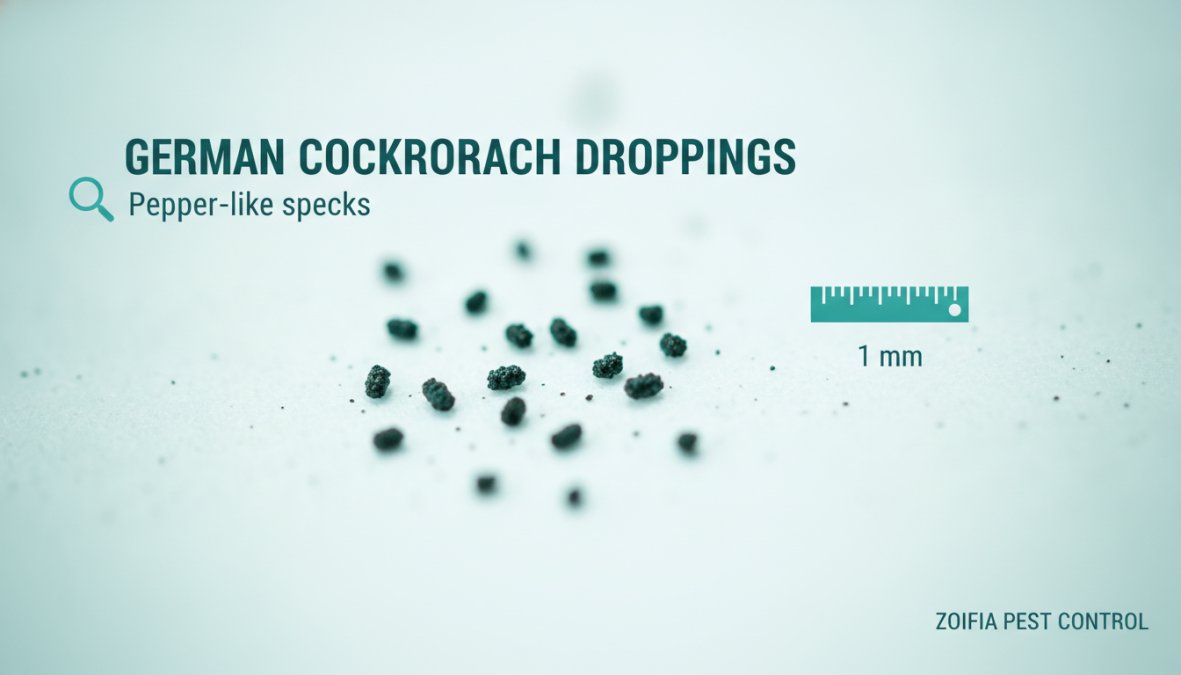
German cockroach droppings are one of the clearest early indicators of infestation. German cockroach frass (the technical term for insect droppings) appears as tiny black specks resembling ground black pepper or coffee grounds. Unlike larger roach species, German cockroaches produce droppings so small they’re often mistaken for dirt or dust at first glance.
Size and Shape
German cockroach droppings measure between 0.5 and 1 millimeter in length, barely visible without close inspection. Each dropping is roughly cylindrical or rod-shaped. The tiny size means droppings accumulate quickly, a single female can produce hundreds of offspring in months, each leaving countless droppings behind.
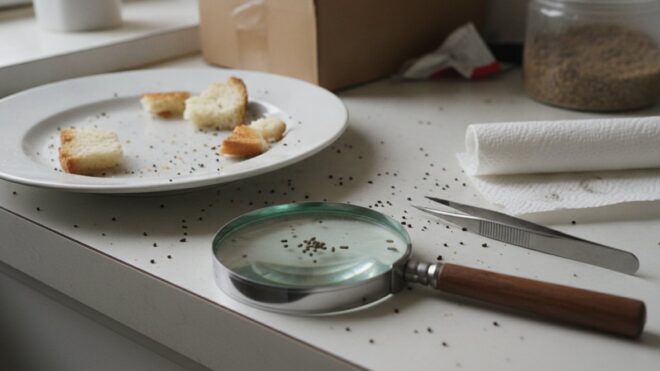
Use a magnifying glass or smartphone macro lens to examine suspected droppings. The cylindrical shape becomes clearer under magnification, confirming cockroach frass rather than household debris.
Color and Texture
German cockroach droppings are consistently dark brown to black, uniform across their entire surface. The dark coloration comes from the roach’s digestive process. When fresh, droppings may appear slightly moist or sticky; older droppings become dull and dry. The texture is grainy and slightly shiny under magnification.
Uniformity and Consistency
One of the most reliable identification markers is how uniform German cockroach droppings appear. Each dropping looks virtually identical to the next, same size, color, and shape. This uniformity distinguishes them from other household pests. Mouse droppings vary more in size and shape; rat droppings are significantly larger; bed bug fecal matter appears as small dark stains rather than distinct pellets.
Step-by-Step: How to Identify German Cockroach Droppings
Step 1: Examine Size and Shape
Use a ruler to estimate the length of droppings you’ve found. German cockroach droppings should measure between 0.5 and 1 millimeter. If droppings are larger than 2 millimeters, you’re likely dealing with a different pest species. Examine the shape, German cockroach frass is cylindrical or rod-shaped, not round. Use a magnifying glass if needed; the rod-like appearance becomes obvious under magnification.
Step 2: Check Color Against Surfaces
German cockroach frass is uniformly dark brown to black. If droppings appear lighter or have varied coloring, they may belong to a different pest. The dark color should be consistent across every dropping in the area. On light-colored surfaces, the dark specks stand out dramatically; on darker surfaces, they blend in more but remain visible upon close inspection.
Step 3: Look for Fecal Smears and Trails
Beyond individual droppings, look for fecal smears or trails. German cockroaches often leave dark streaks or stains where they’ve crawled or where fecal matter has been disturbed. Examine baseboards, undersides of countertops, and areas behind appliances carefully. The presence of both individual droppings and smears strongly indicates German cockroaches.
Step 4: Assess Texture with Magnification
Use a magnifying glass or smartphone macro camera to examine texture up close. German cockroach frass has a grainy, slightly rough texture. Fresh droppings may appear slightly shiny or sticky; older ones become dull and dry. Avoid touching droppings directly with bare hands; use tweezers or gloved hands instead.
Never vacuum or sweep cockroach droppings without proper protection. Disturbing them can release allergens and pathogens into the air. Use a damp cloth or paper towel to wipe them up, then dispose of the material in a sealed bag.
Where to Find German Cockroach Droppings
German cockroaches don’t wander far from their harborage areas, so droppings concentrate in specific locations. These pests prefer warm, humid environments close to food and water sources.
Kitchen and Bathroom Hotspots
The kitchen is the most common location for German cockroach droppings. Look for droppings on countertops, particularly in corners and along the backsplash. Check inside cabinets, especially under sinks where moisture and food debris accumulate. Examine areas around the stove and refrigerator.
Bathrooms are the second most likely location. Look for droppings around sink drains, under bathroom vanities, and in shower enclosures. Check behind the toilet and in spaces between the toilet and wall. Bathroom medicine cabinets and drawers often harbor roaches.
Crevices, Baseboards, and Hidden Areas
German cockroaches favor tight, dark spaces. Droppings accumulate in crevices between walls and baseboards, particularly where baseboards meet the floor. Examine gaps where pipes enter walls and spaces behind and under large appliances like refrigerators and dishwashers.
Appliances and Electric Outlets
Check the interior of microwave ovens, toaster ovens, and coffee makers. Look inside dishwashers, particularly along edges and under spray arms. Electric outlets and surrounding areas often contain droppings, as roaches use electrical conduits as travel routes through walls and between rooms.
Signs of German Cockroach Infestation Beyond Droppings
Egg Cases (Ootheca) and Lifecycle Evidence
German cockroaches produce egg cases called oothecae, roughly 6-8 millimeters long and brown or tan in color. Each contains 30-40 eggs. Finding oothecae indicates the infestation is reproducing and will worsen rapidly without intervention. A single female can produce 4-8 oothecae in her lifetime, each capable of producing dozens of new roaches.
Musty Odor and Allergen Indicators
A strong, musty odor often accompanies German cockroach infestations, coming from pheromones the roaches use to communicate. German cockroach droppings and shed skin create allergens that affect household members, particularly those with asthma or allergies. If household members suddenly develop or worsen allergy symptoms without an obvious cause, German cockroaches may be the culprit.
German Cockroach Droppings vs. Mouse Droppings: Key Differences
Size Comparison
German cockroach droppings measure 0.5-1 millimeter in length, while mouse droppings are significantly larger at 3-8 millimeters. Mouse droppings are roughly the size of a grain of rice, making them much more visible than cockroach frass.
Shape and Appearance
German cockroach droppings are cylindrical or rod-shaped with blunt or slightly tapered ends. Mouse droppings are more pointed at both ends, resembling tiny grains of rice. Cockroach frass maintains remarkable uniformity, while mouse droppings have more variation in size and shape.
Location Patterns
German cockroaches concentrate droppings in specific areas close to harborage, kitchens, bathrooms, and hidden crevices near food and water sources. Mouse droppings appear in more random patterns throughout the home, following travel routes along walls and baseboards.
| Characteristic | German Cockroach Droppings | Mouse Droppings |
|---|---|---|
| Size | 0.5-1 mm | 3-8 mm |
| Shape | Cylindrical, blunt ends | Pointed rice-like shape |
| Color | Uniformly dark brown/black | Dark black, may be shiny |
| Texture | Grainy, slightly rough | Smoother appearance |
| Distribution | Concentrated in kitchens/bathrooms | Scattered throughout home |
| Uniformity | Highly uniform | More variation in size |
How to Clean Cockroach Droppings Safely
Preparation and Safety Gear
Wear disposable latex or nitrile gloves to avoid direct contact with droppings and pathogens. Use an N95 or similar respirator mask to avoid inhaling airborne particles or allergens. Prepare a sealed plastic bag or container for disposal. Do not use a vacuum cleaner, as this disperses particles into the air. Instead, use damp paper towels or a damp cloth to wipe up droppings.
Cleaning and Sanitization Protocol
Dampen a paper towel or cloth with water or mild cleaning solution. Wipe up all visible droppings, fecal smears, and debris systematically. Place all contaminated materials into your sealed disposal bag. Clean the area again with a disinfectant solution to eliminate remaining pathogens. Allow the disinfectant to sit for the time recommended on the product label, typically 5-10 minutes. Then wipe the area clean with a fresh paper towel. After completing cleanup, wash your hands thoroughly with soap and warm water.
Cockroach droppings contain harmful bacteria and allergens. Never sweep, vacuum, or use compressed air on droppings. Always use damp materials and proper protective equipment.
Health Risks and Why Professional Handling Matters
German cockroach droppings can carry Salmonella, E. coli, and other pathogenic bacteria. Cockroach allergens trigger or worsen asthma, particularly in children. When an infestation is large or widespread, cleaning alone is insufficient. Professional pest control addresses the root cause by eliminating the roaches themselves, preventing droppings from reaccumulating and protecting your household from ongoing health risks.
Common Mistakes to Avoid When Identifying Droppings
The most frequent error is dismissing small dark specks as dirt or dust rather than investigating further. German cockroach droppings accumulate in specific locations, kitchens, bathrooms, and areas near appliances. If you notice clusters of small dark specks in these locations, closer inspection is warranted.
Another common mistake is confusing German cockroach droppings with those of other insects. Bed bug fecal matter appears as small dark stains rather than distinct pellets. Flea droppings are even smaller and appear as fine dark powder. Careful examination of size, shape, and location helps distinguish cockroach frass from other pest evidence.
Some homeowners assume that finding one or two droppings indicates a minor problem. In reality, even a small number of droppings represents an established population. German cockroaches hide effectively during the day, so visible droppings represent only a fraction of the actual infestation.
What to Do If You Find German Cockroach Droppings
Discovering German cockroach droppings warrants immediate action. Start by documenting the location and extent of droppings. Take photographs and note exactly where you found them. Check other areas of your home for additional droppings, particularly kitchens, bathrooms, and spaces behind appliances.
Clean up visible droppings using the safety protocols described above. However, recognize that cleanup alone won’t solve the problem. The roaches remain in your home, hidden in crevices and walls, continuing to reproduce.
Contact a professional pest control service immediately. While identifying German cockroach droppings is important for confirmation, eliminating the infestation requires professional expertise and specialized treatments. Professional pest control is the most effective solution for complete eradication and prevention of reinfestation.
Frequently Asked Questions
What do German cockroach droppings look like exactly?
German cockroach droppings resemble black pepper or coffee grounds, small, dark specks typically 0.5-1 mm in size. They have a uniform, granular texture and may appear shiny or sticky depending on moisture. Unlike larger roach species, German cockroach frass is consistently tiny and often found in concentrated clusters in kitchens, bathrooms, and near baseboards.
How can you tell the difference between cockroach droppings and mouse droppings?
Mouse droppings are significantly larger (3-8 mm) and spindle-shaped with pointed ends, while German cockroach droppings are tiny (0.5-1 mm) and resemble black pepper. Mouse fecal matter appears in scattered patterns, whereas cockroach droppings cluster in specific areas near food sources and crevices. Location matters too: mice leave droppings along walls and travel routes, while roaches concentrate droppings in kitchen cabinets, under appliances, and near electric outlets.
Where do German cockroaches usually leave droppings?
German cockroaches deposit droppings in warm, humid areas near food and water. Common locations include kitchen countertops, under sinks, inside cabinet hinges, behind appliances, bathroom areas, baseboards, and crevices. They also leave fecal smears and trails along walls and in tight spaces. Check areas with moisture and shelter, these are prime infestation zones where droppings accumulate most heavily.
Are German cockroach droppings dangerous to your health?
Yes, German cockroach droppings pose health risks. They contain pathogens and allergens that can trigger asthma, allergies, and respiratory issues. The fecal matter contaminates food preparation surfaces and can spread disease-causing bacteria. If you find droppings, wear gloves and a mask when cleaning, use proper sanitization protocols, and consider professional pest control to eliminate the infestation source and prevent ongoing health exposure.
This article was written using GrandRanker
