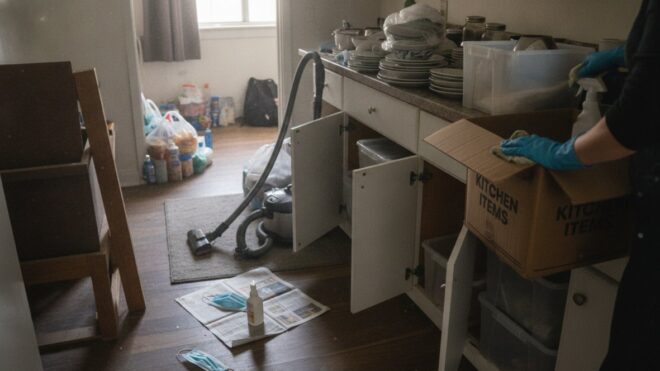
Table of Contents
- Why Proper Preparation Matters for Roach Treatment Success
- Step 1: Remove or Secure Food and Eliminate Food Residue
- Step 2: Clear Clutter and Eliminate Harborage Sites
- Step 3: Address Moisture Sources and Standing Water
- Step 4: Prepare Pets and Plan Your Absence
- How Long to Stay Out of House After Roach Spray
- Step 5: Seal Entry Points and Structural Gaps
- Cleaning After Roach Extermination: What to Do Next
How to Prepare Home for Roach Treatment: 7 Steps
Last Updated: July 1, 2026
Why Proper Preparation Matters for Roach Treatment Success
Proper preparation is the difference between complete roach elimination and temporary reduction. Homes prepared thoroughly see complete elimination within two weeks, while unprepared homes often experience re-infestation within 30 days. Cockroaches hide in harborage sites during the day and emerge at night to feed. If your home contains accessible food sources, standing water, and clutter when the exterminator arrives, roaches relocate to safe zones rather than encounter treatment. Research shows homes following a comprehensive preparation checklist achieve 95% treatment success, compared to 60% for homes with minimal preparation.
The single most important preparation step happens 24-48 hours BEFORE treatment: remove all food sources and secure anything edible in airtight containers. Roaches that cannot find food are forced to encounter the treatment rather than hide in safe spaces.
Step 1: Remove or Secure Food and Eliminate Food Residue
Food is the primary attractant for cockroaches. Without access to it, roaches become vulnerable.
What to Do With Food During Roach Treatment
All perishable food should be stored in sealed, airtight containers or in a cooler kept in a separate room, ideally a garage or basement. Non-perishable items like cereal, flour, pasta, and crackers must go into airtight plastic containers with locking lids, roaches can chew through cardboard and paper. Glass or heavy plastic containers with snap-tight lids are best.
Remove pet food bowls immediately after feeding and store pet food in airtight containers, never in opened bags. Take out all trash bags and dispose of them outside in a sealed bin. Clean garbage disposals thoroughly with hot water; roaches feed on decomposing food particles trapped in pipes.
Addressing Hidden Food Sources
Food residue accumulates behind and under appliances where roaches feed. Pull out your refrigerator, stove, and microwave, then vacuum and wipe the space behind and underneath each appliance. Clean inside your microwave, oven, and toaster. Wipe down exteriors where grease accumulates. Sweep out every cabinet and drawer, wiping them with a damp cloth. Pay special attention to gaps between stove and countertop, cracks in cabinet joints, and undersides of shelves, these collect food particles and become ideal harborage sites.
Roaches can survive weeks without food, but they cannot survive if they cannot access it. Eliminating hidden food sources forces them into contact with the treatment.
Step 2: Clear Clutter and Eliminate Harborage Sites
Clutter creates hiding places where cockroaches hide, breed, and shelter. Your second preparation step is to remove clutter aggressively.
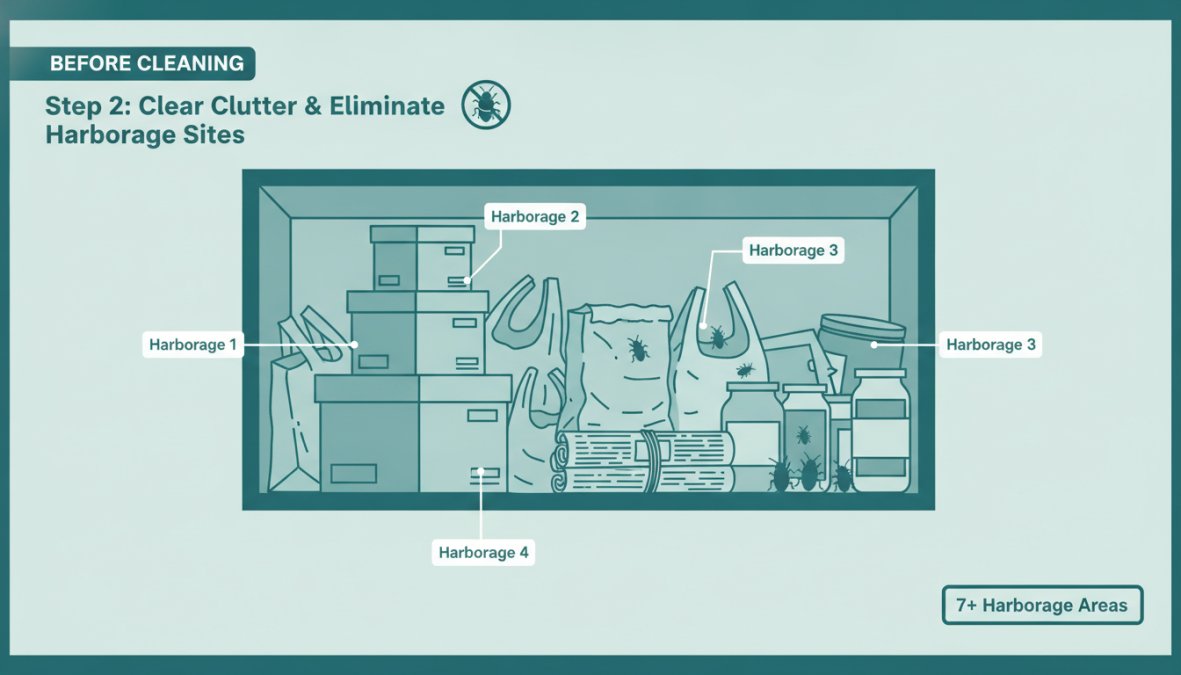
Start in the kitchen. Remove everything from under the sink and inspect the area. Roaches love the warm, moist space beneath kitchen sinks. Wipe down the cabinet interior, check for leaks or standing water, and store cleaning supplies in sealed containers.
Move to bedrooms and living areas. Remove stacks of newspapers, magazines, cardboard boxes, and piles of clothing. Stack items neatly off the floor or discard items you don’t need. Inspect closets carefully, removing items from floors and shelves, then vacuum thoroughly. Check walls and floors for cracks or gaps where roaches move between spaces.
Clear the bathroom of excess towels, bath mats, and personal items. In living room and dining areas, move furniture away from walls slightly (about 6 inches) to allow pest control treatment to reach spaces behind and underneath.
Step 3: Address Moisture Sources and Standing Water
Cockroaches need water to survive. Your third preparation step is to eliminate all moisture sources and standing water.
Check under kitchen and bathroom sinks for leaks. If you see dripping or pooling water, repair the leak before treatment. Inspect your dishwasher for leaks around the door seal and underneath. Check the area around your refrigerator, especially if it has an ice maker or water dispenser.
Pour boiling water down all drains, kitchen, bathroom, and laundry, 24 hours before treatment, followed by a drain cleaner to clear buildup. Roaches breed in drains where organic matter accumulates.
Check for standing water anywhere in your home. Empty plant saucers, pet water bowls, and any containers holding water. Wipe down areas where water collects, such as under air conditioning units or dehumidifiers. If your basement is damp, use a dehumidifier or improve ventilation.
Standing water in drains and under appliances is where roaches breed. If you don’t eliminate these moisture sources, roaches will continue to reproduce even after treatment, leading to re-infestation within weeks.
Step 4: Prepare Pets and Plan Your Absence
Pest control treatments are toxic to pets and humans. Remove all pets from your home at least 2 hours before the pest control service arrives. If you have fish tanks or aquariums, cover them completely or remove them from the treatment area.
Arrange pet care in advance with a friend, family member, or boarding facility. Do not leave pets in your car or outside during treatment. Prepare a pet care kit including food, water, medications, toys, and your veterinarian’s contact information.
Most standard roach sprays require 2-4 hours before re-entry is safe. Some treatments may require 6-8 hours. Always ask your pest control company for their specific re-entry time before they begin treatment. Do not return early; the treatment needs time to settle and dry.
After re-entry, ventilate your home thoroughly. Open all windows and doors for at least 30 minutes and turn on ceiling fans and exhaust fans. If you have young children, elderly family members, or are pregnant, consult your doctor about re-entry safety.
Step 5: Seal Entry Points and Structural Gaps
Cockroaches enter homes through cracks, gaps, and holes in walls, foundations, and around pipes. If you don’t seal these entry points, new roaches will continue to enter even after treatment.
Inspect your home’s exterior for cracks in the foundation, gaps around door frames, and holes where pipes or utilities enter the building. Check around windows, especially basement windows. Roaches can squeeze through gaps as small as 1/16 of an inch.
Inside your home, examine walls and baseboards for cracks. Check behind kitchen cabinets and under sinks. Seal all visible cracks with caulk designed for pest exclusion. Pay special attention to areas where pipes enter your home, using expanding foam or caulk to seal gaps completely.
Check door sweeps on exterior doors and install or repair them to eliminate gaps. Seal gaps around air conditioning units, dryer vents, and exhaust fans. This step is best done AFTER treatment, as you want to seal roaches inside where the treatment will kill them.
Cleaning After Roach Extermination: What to Do Next
Once the pest control treatment is complete and you’ve waited the recommended time before re-entry, post-treatment cleaning and maintenance are essential to prevent re-infestation.
Timeline for Safe Cleaning
Wait at least 24 hours after treatment before cleaning surfaces where the spray was applied. The treatment needs time to dry and cure fully. After 24 hours, vacuum carpets and rugs thoroughly, paying special attention to corners, under furniture, and along baseboards. Use a HEPA filter vacuum if possible.
Wipe down kitchen counters, appliances, and cabinet exteriors with a damp cloth. Use plain water or a mild soap solution, harsh chemicals can interfere with the residual treatment. Mop hard floors after 24 hours with a damp mop, not a soaking wet one. Do not wash walls or baseboards for at least 48 hours after treatment.
Preventing Re-infestation Through Post-Treatment Maintenance
Continue the sanitation practices you implemented before treatment. Remove food sources immediately after meals. Do not leave dirty dishes in the sink overnight. Wipe down counters and appliances daily. Take out garbage regularly.
Monitor moisture sources continuously. Fix any new leaks immediately. Keep bathrooms and basements dry. Maintain clutter-free spaces and store items in sealed containers off the floor.
Inspect your home regularly for signs of roaches: droppings (small black specks), egg cases (small brown capsules), or dead roaches. Seal any new gaps or cracks that appear. Schedule follow-up treatments if recommended by your pest control company. Many infestations require a second treatment 2-3 weeks after the first to eliminate roaches that hatch from egg cases after the initial treatment.
| Post-Treatment Task | Timing | Frequency |
|---|---|---|
| Wait before cleaning | 24 hours | One time |
| Vacuum thoroughly | After 24 hours | Once per week |
| Wipe surfaces | After 24 hours | Daily in kitchen |
| Monitor for signs | Ongoing | Weekly inspections |
| Seal new gaps | As discovered | Immediately |
| Follow-up treatment | 2-3 weeks | As recommended |
Post-treatment maintenance is where most people fail. You must maintain sanitation, moisture control, and clutter elimination indefinitely to prevent new roaches from establishing themselves.
Professional roach treatment works only when your home is properly prepared and maintained afterward. The steps outlined here, removing food sources, eliminating harborage, controlling moisture, preparing for treatment, sealing entry points, and maintaining sanitation, create an environment where cockroaches cannot survive. When combined with professional pest control, this approach delivers lasting results.
Zoifia Pest Control specializes in comprehensive roach elimination backed by a 90-day guarantee. Our licensed and insured team works with you to prepare your home properly and provides guidance on post-treatment maintenance. We serve the Metro Boston area with fast response times and flexible scheduling, with no long-term contracts required. Learn more about integrated pest management approaches to understand how professional treatment combines with your preparation efforts for maximum effectiveness. Contact Zoifia Pest Control today to schedule your treatment and eliminate roaches for good.
Frequently Asked Questions
Do I need to empty my cabinets and drawers before roach treatment?
Yes, you should remove or relocate items from kitchen cabinets, drawers, and pantries where cockroaches hide and where treatment will be applied. Seal food in airtight containers or move it to a separate location. Leave cabinet and drawer interiors accessible so the pest control professional can treat these critical harborage areas effectively. This preparation ensures the treatment reaches all potential hiding spots and maximizes the elimination of the infestation.
What should I do with my pets before professional roach treatment?
Remove pets from the home during treatment and keep them away for the duration specified by your pest control provider, typically 2-4 hours depending on the treatment method. Cover or remove pet food and water bowls, and wash pet bedding beforehand. If you have aquariums, cover them or turn off air pumps as directed. Once the treatment period ends and the home is ventilated, pets can safely return. Always confirm specific pet safety instructions with your pest control company before the appointment.
How long do I need to stay out of the house after roach spray treatment?
Most professional roach treatments require you to vacate for 2-4 hours immediately after application. Some treatments may require longer periods, especially for severe infestations using stronger formulations. Your pest control provider will give you exact timing based on the treatment method used. After the waiting period, open windows for ventilation before re-entering. If you have young children, elderly family members, or pregnant individuals in the home, confirm safety timelines with your pest control company beforehand.
How soon can I clean after roach extermination treatment?
Wait at least 24-48 hours before cleaning treated areas to allow the residual treatment to work effectively. This waiting period is critical because cockroaches need time to contact treated surfaces and for the insect growth regulators to disrupt breeding cycles. After this period, use a damp cloth to wipe surfaces gently rather than heavy scrubbing or vacuuming, which can remove residual treatment. Avoid using bleach or strong cleaners that may interfere with treatment efficacy. Your pest control provider will give specific cleaning instructions based on the products used.
This article was written using GrandRanker
