Table of Contents
- Why Identifying Rodent Entry Points Matters
- Common Rodent Entry Points in Homes
- Signs of Rodent Infestation in Walls and Hidden Spaces
- How to Inspect Your Home for Rodent Entry Points
- Best Materials to Seal Rodent Holes and Gaps
- DIY Rodent Proofing Checklist
- When to Call a Professional
- Conclusion
Last Updated: August 10, 2026
Why Identifying Rodent Entry Points Matters
Rodents enter homes through specific gaps, cracks, and openings you can find and seal. Identifying rodent entry points is the most effective way to prevent infestation before it starts. Most homeowners wait until they see droppings or hear scratching in walls, by then the problem has taken root.
Rodents, primarily mice and rats, need surprisingly small openings. A mouse can squeeze through a hole the size of a dime; a rat needs only a gap the width of a quarter. They follow predictable travel routes based on food sources, shelter, and ease of access. Once you understand these patterns, you can intercept them before they become a problem.
This guide walks you through identifying where rodents enter, what signs to look for in hidden spaces, and the best materials to seal those entry points.
Common Rodent Entry Points in Homes
Rodents enter homes through a consistent set of vulnerabilities. Understanding where these entry points typically occur helps you focus your inspection efforts on the highest-risk areas.
Foundation cracks and gaps
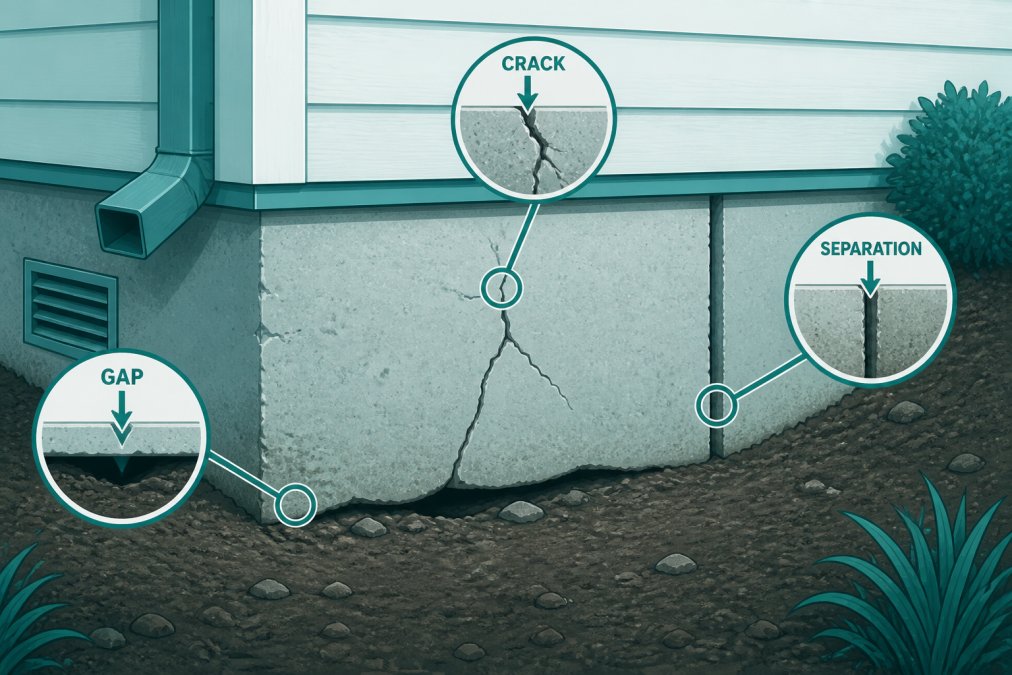
Foundation cracks are one of the most common entry routes, especially in older homes or those with settling issues. Inspect the perimeter where the foundation meets the soil, paying close attention to visible cracks, gaps, or areas where the foundation has separated from the sill plate.
Rodents exploit these openings because they’re often hidden from view and lead directly into crawl spaces or basements. Small cracks that seem insignificant are highways to a mouse. Check corners particularly carefully, these areas are often overlooked during casual inspections.
Roof and attic vents
Roof and attic vents are prime entry points because they’re designed to allow airflow, making them inherently open to the outside. Rodents climb onto your roof and access these vents easily, especially if covers are damaged, loose, or missing.
Inspect your roof line from the ground with binoculars if you can’t safely climb onto the roof. Look for gaps around vent covers, damaged screening, or vents that don’t sit flush. The attic is prime real estate for rodents because it’s warm, dark, and filled with insulation suitable for nesting.
Utility penetrations and pipe gaps
Utility lines, electrical, gas, water, and internet, enter your home through exterior walls. The gaps around these penetrations are often larger than necessary and frequently left unsealed.
Inspect where utilities enter from outside, including water supply lines, gas lines, electrical conduit, internet and cable lines, and HVAC ductwork penetrations. These gaps are often hidden behind landscaping or debris, which provides additional cover for rodents.
Gaps under doors and windows
Gaps under exterior doors and around window frames are easy entry points many homeowners overlook. A gap of even one-quarter inch under a door is enough for a mouse to squeeze through.
Inspect all exterior doors, including basement and garage entry doors. Check weatherstripping and door sweeps. Windows that don’t seal properly or have gaps around the frame are also vulnerable, particularly older windows with rotted frames or loose caulking.
Signs of Rodent Infestation in Walls and Hidden Spaces
Before sealing entry points, determine whether you already have an active infestation.
Droppings and urine stains
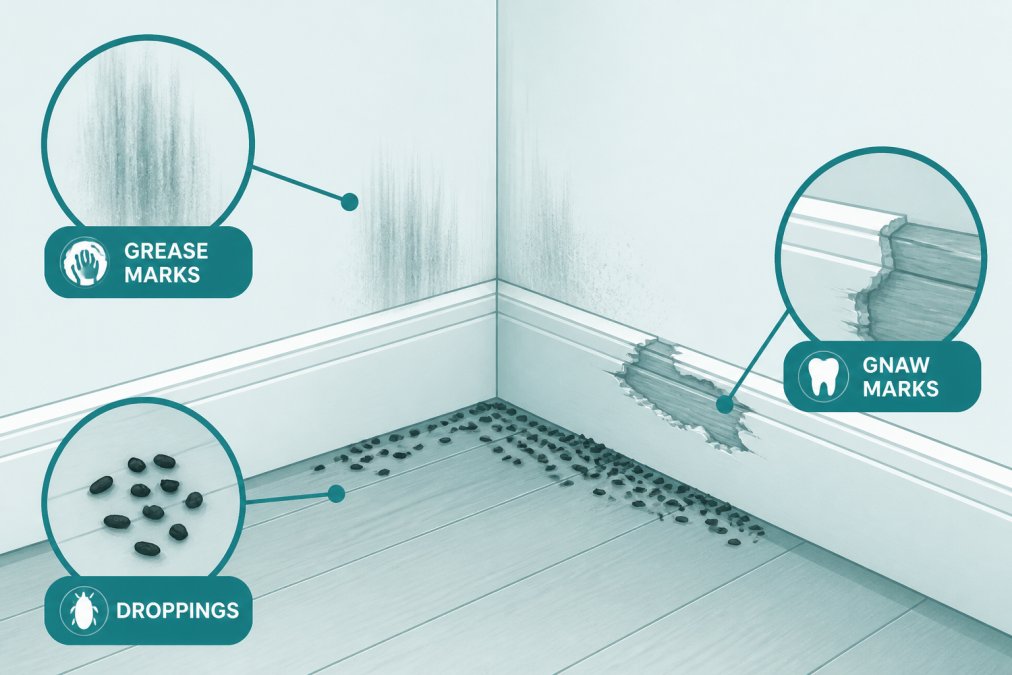
Rodent droppings are the most reliable indicator of active infestation. Fresh droppings are dark and moist; older ones are gray and crumbly. Mouse droppings are roughly the size of a grain of rice; rat droppings are about the size of a raisin.
Look for droppings along walls, in corners, under sinks, in cabinets, and in dark, undisturbed spaces. Rodents defecate repeatedly in the same areas, so clusters indicate established travel routes.
Urine stains are harder to spot but reveal themselves under ultraviolet light. Fresh urine has a strong ammonia smell, especially noticeable in enclosed spaces.
Gnaw marks and chewed wires
Rodents gnaw constantly to keep their teeth sharp and create passages through walls and materials. Look for gnaw marks on wood, drywall, insulation, and wiring. Fresh gnaw marks are lighter in color than aged ones.
Chewed wires are a serious hazard and can cause electrical fires. If you find chewed wiring in your attic or walls, this is an immediate safety concern and sign of active infestation.
Rub marks and grease stains
As rodents move repeatedly along the same routes, their fur leaves dark smudges and grease stains on walls and baseboards. These rub marks appear as dark lines running along the base of walls, around pipes, or in corners, marking established travel routes and indicating ongoing activity.
Nesting materials and insulation damage
Rodents tear up insulation, paper, cardboard, and fabric to create nests. Shredded insulation, torn paper, or fabric scraps in your attic, crawl space, or walls indicate active infestation. Nesting materials are often found in clusters in warm, protected areas behind appliances, in wall cavities, or under cabinets.
How to Inspect Your Home for Rodent Entry Points
A systematic inspection process helps you identify entry points you might otherwise miss. Break your inspection into three zones: exterior perimeter, interior basement and crawl space, and attic and roof.
Exterior perimeter inspection
Walk slowly around your foundation, looking at ground level first. Examine where the foundation meets the soil and siding for visible cracks, gaps, or separation. Check corners carefully, they’re common weak points.
Move your inspection up to where siding meets the foundation. Look for gaps where siding has pulled away, rotted areas, or holes. Check openings around utility lines at this level.
Inspect around all exterior doors, especially basement and garage entry doors. Look at the threshold and area beneath the door. Check weatherstripping and door sweeps for gaps or damage.
Examine all visible vents: soffit vents, gable vents, dryer vents, and range hood vents. Look for damage, gaps, or loose covers. Use binoculars to inspect roof vents from the ground.
Check around windows, particularly older windows or those with rotted frames. Document what you find with photos and notes on location and size of gaps or cracks.
Interior crawl space and basement inspection
Look along all baseboards for droppings, rub marks, and gnaw marks. Check behind and under stored items, appliances, or equipment. Move boxes to inspect areas beneath them.
Examine the sill plate, the wooden beam where the foundation meets the house structure. This is a common entry point for rodents. Look for gnaw marks, gaps, or damage.
Check around all utility penetrations from the inside, including water lines, gas lines, electrical conduit, and HVAC ducts. Inspect any visible insulation for damage or nesting materials.
Attic and roof inspection
Check all visible insulation for damage, nesting materials, or droppings. Look along rafters and beams for gnaw marks or damage. Inspect areas around roof penetrations, vents, chimneys, and skylights from the interior.
Look for entry points where rodents might access the attic. Check the condition of attic vents and screens for damage, gaps, or chewed areas. Evidence of rodents, droppings, nesting materials, or damage, indicates an active infestation and actively used entry points.
Best Materials to Seal Rodent Holes and Gaps
Once you’ve identified entry points, sealing them properly is critical. The right materials prevent rodents from chewing through or pushing past your repairs.
Hardware cloth and steel wool
Hardware cloth is heavy-gauge wire mesh that rodents cannot chew through. It’s the gold standard for sealing larger gaps and openings, typically available in 1/4-inch or 1/2-inch mesh sizes.
Use hardware cloth for gaps around pipes and utilities, vents and vent openings, foundation gaps larger than 1/4 inch, and areas where rodents have previously entered.
Steel wool is effective for smaller gaps and cracks up to about 1/2 inch. Stuff it firmly into the gap; loose steel wool is less effective. Steel wool should be combined with caulk or sealant for a permanent seal, as it can deteriorate over time, especially in damp environments.
Caulking and sealants
Caulk and sealants are essential for sealing smaller cracks and gaps. Use only rodent-resistant caulk; standard caulk can be chewed through. Look for products specifically labeled as rodent-resistant or pest-proof.
Silicone caulk is durable and flexible, ideal for areas experiencing movement or temperature changes. Polyurethane sealants are also effective and very tough.
For best results, clean the gap thoroughly before applying caulk, fill the entire depth of the gap, smooth with a wet finger or caulk tool, and allow adequate drying time. Caulk works best for gaps up to about 1/4 inch; larger gaps should be filled with hardware cloth first, then sealed with caulk.
DIY versus professional-grade materials
DIY-grade materials from home improvement stores are functional but have limitations. Professional-grade materials are often more durable and effective. For most homeowners, a combination approach works best: use professional-grade hardware cloth for major entry points and gaps, and DIY-grade materials for preventive sealing of smaller cracks.
DIY Rodent Proofing Checklist
Use this checklist to systematically seal entry points and rodent-proof your home.
Foundation and Exterior:
- Inspect entire foundation perimeter for cracks and gaps
- Seal foundation cracks larger than 1/4 inch with hardware cloth and caulk
- Seal gaps where siding meets foundation
- Inspect and repair all exterior door thresholds
- Install or repair door sweeps on all exterior doors
- Check and seal gaps around basement windows
Roof and Vents:
- Inspect all roof vents for damage or gaps
- Repair or replace damaged vent covers
- Seal gaps around vent penetrations with hardware cloth and caulk
- Inspect soffit vents and ensure screens are intact
- Check gable vents for damage or openings
- Inspect dryer vents and range hood vents for proper sealing
Utilities and Penetrations:
- Locate all utility penetrations (water, gas, electrical, internet)
- Seal gaps around pipes with hardware cloth and caulk
- Seal gaps around electrical conduit
- Seal gaps around HVAC ducts and ductwork penetrations
- Check where utilities enter the attic and seal any gaps
Interior Spaces:
- Inspect basement or crawl space for droppings or signs of rodents
- Seal gaps around sill plates with caulk
- Seal gaps around interior utility penetrations
- Inspect and seal gaps around basement windows from the interior
- Check attic for entry points and seal any openings
Ongoing Maintenance:
- Inspect sealed areas quarterly for damage or deterioration
- Replace damaged caulk or hardware cloth promptly
- Clear vegetation and debris from foundation perimeter
- Trim tree branches that overhang the roof
- Keep gutters clean to prevent water damage that creates new gaps
When to Call a Professional
While many homeowners can seal entry points themselves, certain situations call for professional expertise. Zoifia Pest Control brings licensed, insured technicians who can identify entry points you might miss and use professional-grade materials.
Call a professional if you’ve already found active rodents in your home, your home has extensive foundation damage or settling issues, you’re uncomfortable working at heights or on your roof, you’ve sealed entry points but continue to see signs of rodents, your home is older with numerous potential entry points, or you need a comprehensive inspection of a large property.
Zoifia Pest Control offers a 90-day guarantee on rodent exclusion work, meaning if rodents return after sealing, the service is covered. We serve the Metro Boston area and can typically schedule inspections quickly for urgent situations.
Rodent infestations spread fast, but they start with a single entry point. By identifying where rodents are entering your home and sealing those gaps with the right materials, you eliminate their access. The effort you invest in inspection and sealing now prevents weeks of dealing with an active infestation later. If you’re in the Metro Boston area and want professional confirmation that your sealing work is effective, or if you’ve already discovered an infestation, Zoifia Pest Control can help with fast, reliable rodent removal and exclusion backed by our 90-day guarantee. Get a quote today to protect your home.
Frequently Asked Questions
What size hole can a mouse fit through?
A mouse can squeeze through a hole as small as 1/4 inch in diameter, roughly the size of a dime. Rats need slightly larger openings, typically 1/2 inch or more. When sealing rodent entry points, close any gap this size or larger to prevent entry. Check foundation cracks, utility penetrations, and gaps around pipes carefully, as even tiny openings are enough for rodents to gain access to your home.
How do I find where mice are getting into my house?
Look for signs of rodent activity along your home's perimeter and interior. Check for droppings, gnaw marks, and rub marks near baseboards and walls. Inspect foundation cracks, gaps under doors, soffits, attic vents, and utility penetrations. Rodents typically follow the same travel routes, so look for grease stains on walls that indicate their paths. A thorough perimeter inspection during daylight and a careful check of crawl spaces and attics will reveal most common rodent entry points.
What are the most common rodent entry points in a home?
The most frequent rodent entry points include foundation cracks and gaps, gaps under doors and windows, roof and attic vents, weep vents, soffits, and utility penetrations where pipes or wires pass through walls. Older Boston-area homes are especially vulnerable due to settling and structural wear. Rodents also exploit gaps in crawl spaces and around the perimeter of the foundation. A complete inspection of these areas is essential to identify and seal all potential entry points before an infestation takes hold.
Should I seal entry points before or after trapping mice?
Seal entry points after you've confirmed the rodent population is gone. If you seal while rodents are still inside, they may become trapped and cause damage by chewing through walls or creating new entry points. First, trap and remove all visible rodents, then monitor for continued activity. Once you've confirmed no new signs of infestation appear for several days, seal all entry points using hardware cloth, steel wool, and caulking. This ensures rodents cannot re-enter while you address the existing population.
This article was written using GrandRanker
