Table of Contents
- Identify Signs of Rats in Your Crawl Space
- Locate Entry Points and Foundation Gaps
- Seal Crawl Space Vents and Foundation Cracks
- Install Galvanized Steel Mesh and Exclusion Barriers
- Use Snap Traps and Tamper-Resistant Bait Stations
- Clean Your Crawl Space After Rat Infestation
- Choose the Best Rat Repellent for Long-Term Prevention
- How to Keep Rats Out of Crawl Space: Prevention Maintenance
Last Updated: July 11, 2026
Rats in your crawl space pose serious structural and health risks. According to [pest control(/best-pest-control-for-property-managers/) industry data from the National Pest Management Association | npma.org], rodent infestations affect millions of homes annually, with crawl spaces being prime entry points. Keeping rats out requires a multi-layered approach combining identification, exclusion, and prevention. Below are seven proven methods addressing both immediate threats and structural vulnerabilities.
The most effective rat prevention strategy combines three elements: sealing entry points, removing attractants, and maintaining regular inspections. No single method works alone.
Identify Signs of Rats in Your Crawl Space
Detecting infestations early prevents structural damage and health hazards. Rat droppings appear as small, dark pellets roughly the size of a grain of rice, clustered in corners or along walls. Fresh droppings look shiny; older ones appear dull and crumbly. Gnaw marks on wood joists, insulation, and electrical wiring indicate constant activity. Grease marks along walls and pipes show regular travel routes.
A strong ammonia-like smell signals heavy urine accumulation. At night, listen for scratching, squeaking, or scurrying sounds. Rats shred insulation and fabric to build nests, so look for torn materials bundled in corners. The presence of even one rat indicates active infestation requiring immediate action.
Locate Entry Points and Foundation Gaps
Rats squeeze through openings as small as a dime. Finding entry points is essential to stopping the invasion at its source.
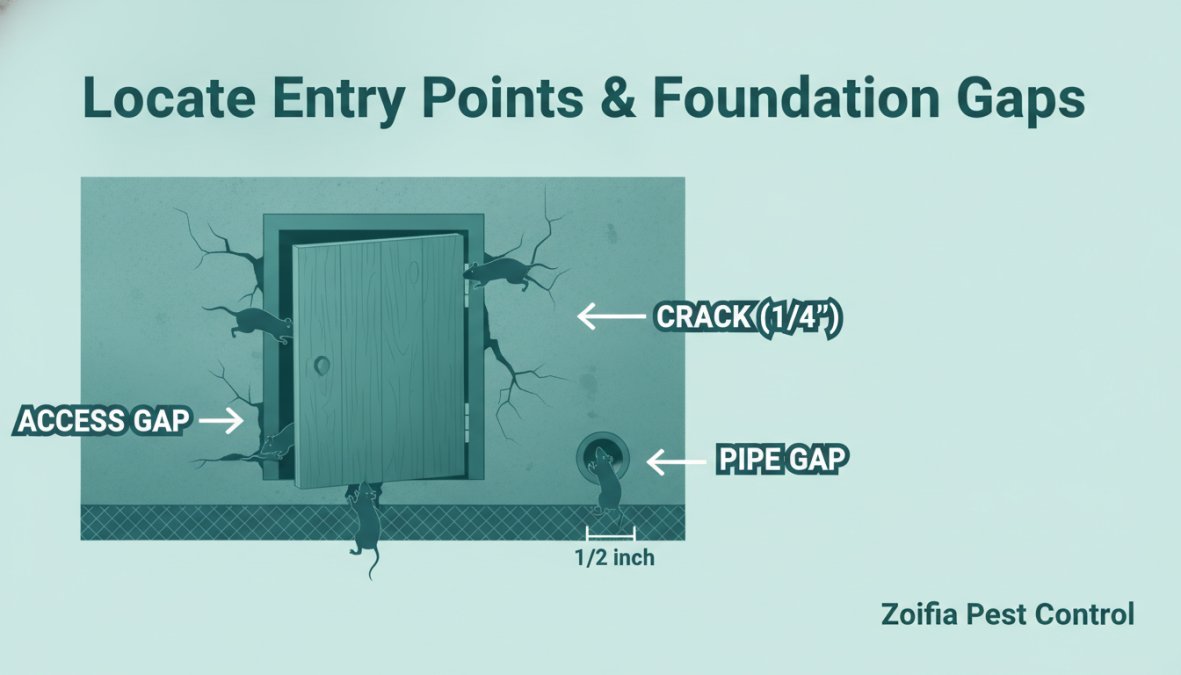
Common entry routes include foundation cracks, gaps around pipes and utility lines, damaged vents, and openings in skirting. Inspect the perimeter systematically, looking for droppings leading to specific gaps, these are active entry points.
Check all foundation vents for damage. Examine where pipes, electrical conduits, and HVAC ducts penetrate the foundation. Measure gaps precisely; even a 1/2-inch opening allows rat entry. Pay special attention to areas where different materials meet, as settling creates gaps over time.
Rats can compress their spines to fit through incredibly tight spaces. When in doubt, seal it.
Seal Crawl Space Vents and Foundation Cracks
Sealing entry points is the most critical step in rodent-proofing your crawl space. This exclusion method prevents new rats from establishing themselves.
Materials needed include galvanized steel mesh (hardware cloth), exterior-grade caulk, expanding foam, and basic hand tools. Galvanized steel mesh is superior to plastic or aluminum because rats cannot chew through it.
Step-by-step sealing process:
-
Prepare the area. Clear debris and old insulation. Use a wire brush to remove loose material, dust, and cobwebs for proper adhesion.
-
Apply expanding foam to large gaps. For openings larger than 1/4 inch, apply expanding foam first. Allow it to cure before trimming excess.
-
Cut and install hardware cloth. For openings larger than 1/2 inch, install galvanized steel mesh. Cut to size and press firmly into the gap, overlapping edges by at least 1 inch.
-
Seal with caulk or foam. Apply exterior-grade caulk around edges. Smooth with a wet finger for better adhesion.
-
Inspect and reinforce. After curing, look for gaps where caulk didn’t fully penetrate. Apply a second coat if needed.
Most crawl space sealing projects take 4-8 hours depending on entry points.
Install Galvanized Steel Mesh and Exclusion Barriers
Hardware cloth creates a permanent barrier against rodent infestation while allowing necessary ventilation.
Rats cannot chew through galvanized steel, making mesh effective indefinitely. Installing mesh at vents, foundation openings, and other access points creates complete exclusion.
Installation best practices:
- Use 1/4-inch mesh for maximum protection.
- Overlap all seams by at least 1 inch and secure with galvanized fasteners.
- Bury mesh at least 6 inches below ground level to prevent burrowing underneath.
- Install mesh covers over all foundation vents, securing with fasteners spaced every 2-3 inches.
- Extend mesh 12 inches above soil line for added protection.
- Ensure mesh doesn’t restrict necessary airflow.
Properly installed mesh lasts 15-20 years, making it one of the most cost-effective prevention methods. Combined with sealing, mesh creates redundant protection.
Inspect mesh installations annually for damage. Rust, tears, or loosened fasteners compromise the barrier. Tighten fasteners and replace damaged sections immediately.
Use Snap Traps and Tamper-Resistant Bait Stations
Trapping eliminates existing rats while you work on long-term exclusion. This dual approach addresses both immediate and future threats.
Position snap traps along walls where rats travel, perpendicular to the wall with the trigger facing inward. Space traps 3-5 feet apart in areas showing high activity. Use peanut butter or chocolate as bait in small amounts. Check traps daily and dispose of dead rats in sealed bags.
Tamper-resistant bait stations protect pets and children while effectively delivering rodenticide. Place stations along active travel routes, securing them to prevent movement. Replace bait according to product instructions, typically every 2-4 weeks during active infestation.
Keep all traps and bait stations in areas inaccessible to children and pets. Never place traps where children or pets sleep or play. Dispose of dead rats immediately in sealed trash containers.
Clean Your Crawl Space After Rat Infestation
Post-remediation sanitation prevents disease transmission and removes attractants. This critical step is often overlooked but essential for complete recovery.
Rat droppings can contain hantavirus, a serious respiratory pathogen. Never sweep or vacuum dry droppings. Instead, spray droppings lightly with a 10% bleach solution, allowing 5 minutes of contact time before removal. Wear gloves, an N95 respirator mask, and eye protection.
Remove all contaminated insulation and replace with new material. Wipe down surfaces with bleach solution, paying special attention to areas with visible droppings or grease marks. Inspect and replace vapor barriers if torn or contaminated. A functioning vapor barrier reduces moisture that attracts rodents.
Professional sanitation services ensure complete decontamination, including HEPA filtration, disinfection, and odor removal.
Choose the Best Rat Repellent for Long-Term Prevention
Repellents complement exclusion methods by making your crawl space less attractive to rodents. While no repellent is 100% effective alone, combining them with physical barriers improves prevention.
Natural repellents include peppermint oil and ammonia-soaked rags, though their effectiveness is limited and temporary. Chemical repellents like capsaicin-based products irritate rats’ sensory organs, lasting longer but still requiring reapplication every 2-3 months.
Repellents work best as supplementary tools, not primary solutions. Exclusion and sanitation prevent infestations far more effectively.
Vapor barriers and moisture control address underlying conditions that attract rats. Moisture promotes mold, wood decay, and pest activity. Installing a proper vapor barrier reduces humidity, making the space less hospitable. Improving drainage and installing sump pumps or dehumidifiers controls moisture in damp crawl spaces.
| Prevention Method | Effectiveness | Maintenance | Cost |
|---|---|---|---|
| Hardware cloth mesh | Very high | Annual inspection | Moderate |
| Foundation sealing | Very high | Every 5-10 years | Moderate |
| Snap traps | High (temporary) | Daily during use | Low |
| Vapor barriers | High (indirect) | Every 10-15 years | Moderate |
| Repellents | Low-moderate | Monthly reapplication | Low |
| Professional sanitation | Very high | After infestation | Moderate-high |
How to Keep Rats Out of Crawl Space: Prevention Maintenance
Long-term success requires ongoing vigilance. Even well-sealed crawl spaces need periodic inspection to catch vulnerabilities before rats exploit them.
Schedule crawl space inspections annually, or twice yearly in older homes where settling creates new gaps. Look for new cracks, damaged mesh, deteriorated sealing, or pest activity signs. Address structural issues promptly, small repairs now prevent expensive remediation later.
Ventilation, insulation, and encapsulation work together to create a hostile environment for rodents. Crawl space encapsulation, sealing the entire space with a vapor barrier and insulation, represents the gold standard for comprehensive protection. Benefits include improved energy efficiency, eliminated moisture problems, and complete rodent exclusion.
According to the Environmental Protection Agency guidance on crawl space management, proper encapsulation reduces energy costs by 10-20% while eliminating pest entry points.
Create a maintenance checklist covering foundation inspection, mesh condition, sealing integrity, moisture levels, and pest activity signs. Review quarterly, documenting changes. This proactive approach catches issues before they become infestations.
The most cost-effective rat prevention combines three strategies: seal all entry points with hardware cloth and caulk, maintain sanitation and moisture control, and conduct quarterly inspections to catch new vulnerabilities early.
Rat infestations in crawl spaces escalate quickly, turning manageable problems into costly structural damage and health hazards. Keeping rats out ultimately depends on combining exclusion, sanitation, and ongoing maintenance. Zoifia Pest Control specializes in complete crawl space remediation, from identifying entry points to professional sealing, decontamination, and long-term monitoring. Our licensed and insured team uses proven methods backed by a 90-day guarantee. The National Pest Management Association confirms that professional pest control combined with structural improvements provides the most reliable protection. Get a quote from Zoifia Pest Control today and secure your crawl space against future infestations.
Frequently Asked Questions
How do I know if I have rats in my crawl space?
Look for signs of rats in crawl space including droppings, gnaw marks on joists and insulation, and nesting materials made from shredded paper or fabric. You may also hear scratching sounds at night or notice a strong urine odor. Fresh droppings indicate active rodent infestation. If you find multiple signs, professional pest control assessment is recommended to determine the extent of the problem.
What is the best way to seal a crawl space against rodents?
Use galvanized steel mesh or hardware cloth to cover vents and openings, as rodents cannot chew through metal. Seal foundation cracks with concrete caulk or expanding foam. Install a vapor barrier to reduce moisture that attracts pests. Focus on entry points where pipes and utilities enter the crawl space. Combine sealing with snap traps and tamper-resistant bait stations for comprehensive rodent-proofing and pest exclusion.
What should I do after finding rats in my crawl space?
First, remove droppings and contaminated materials using proper safety precautions to avoid hantavirus exposure. Use snap traps and bait stations to eliminate remaining rodents. Then perform post-remediation sanitation by cleaning all surfaces with disinfectant. Finally, implement long-term prevention by sealing entry points, installing mesh barriers, and reducing moisture through ventilation or vapor barrier installation. Consider professional pest control for severe infestations.
Can I use mothballs or natural repellents to keep rats out of my crawl space?
Mothballs and ultrasonic devices have limited effectiveness for rodent infestation prevention. Physical exclusion methods, such as sealing gaps, installing galvanized steel mesh, and using snap traps, are far more reliable. While some homeowners use peppermint oil or ammonia-soaked rags, these deterrents work best as supplementary measures alongside structural pest exclusion and proper sanitation practices.
This article was written using GrandRanker
