Table of Contents
- Why Mice Thrive in Multi-Family Housing
- How to Seal Gaps for Mice: Entry Point Elimination
- Food Storage and Sanitation: Removing Attractants
- Landlord Responsibilities for Pest Control in Your Building
- Best Mouse Traps for Apartments: DIY vs. Professional
- Coordinating Prevention Across Your Building
- Identifying Signs of Rodent Activity Early
- Conclusion
Why Mice Thrive in Multi-Family Housing
Mice follow simple rules: shelter, food, and access. Multi-family homes provide all three in abundance. Shared walls mean a mouse infestation in one unit can spread to adjacent apartments within weeks. Common basements, heating ducts, and plumbing pathways create highways for rodent movement. As temperatures drop in fall and winter, mice seek warmth indoors, creating predictable pressure points: foundation cracks, gaps around pipes in shared walls, and openings where heating ducts penetrate building materials.
Many property managers and tenants treat mice as an individual problem rather than a building-wide issue. Sealing one apartment’s gaps while neighbors leave theirs open is like bailing water from a boat with a hole in the hull. Preventing mice in multi-family homes demands a systematic approach that addresses structural vulnerabilities across the entire building.
How to Seal Gaps for Mice: Entry Point Elimination
The most effective defense against rodent exclusion starts with identifying where mice actually enter. Mice can squeeze through openings as small as a dime, roughly 0.25 inches.
Foundation cracks and basement entry points
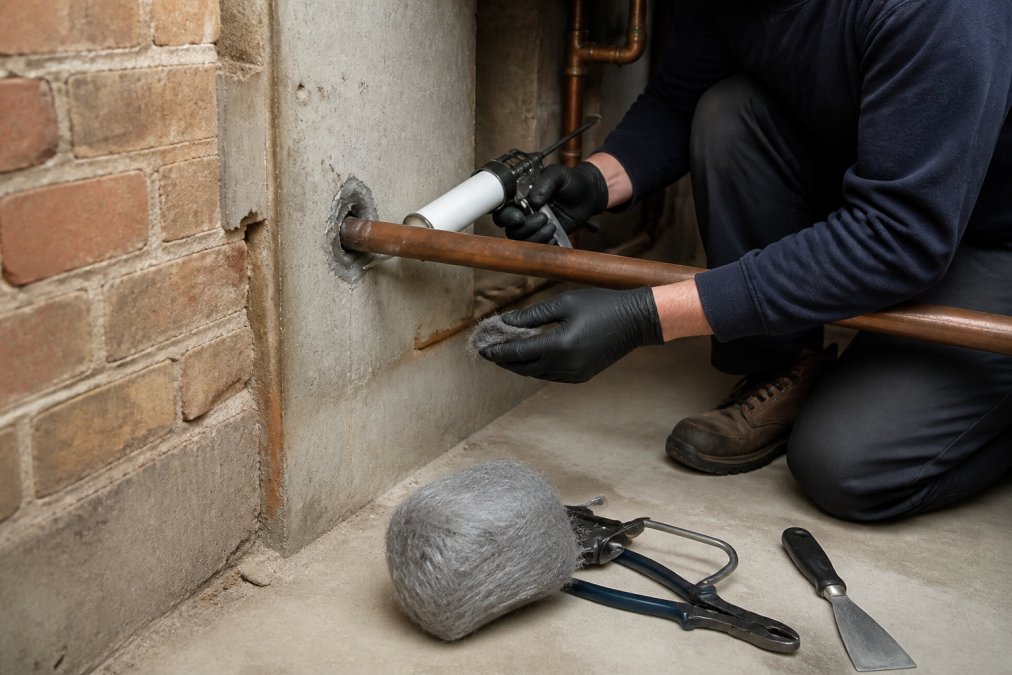
Foundation cracks are the most common entry point in older buildings. Water damage, settling, and freeze-thaw cycles create fractures that expand over time. Walk the perimeter of your basement with a flashlight and mark each crack wider than 1/8 inch, gaps around utilities, and openings around window wells.
For cracks under 1/4 inch, pack steel wool tightly into the gap, then seal with caulk. Steel wool is effective because mice cannot chew through it. For larger cracks (1/4 to 1/2 inch), pack steel wool first, then use concrete caulk or expandable foam rated for rodent exclusion. For cracks larger than 1/2 inch, professional assessment may be needed.
Pay special attention to where pipes, electrical conduits, and HVAC lines enter the building. Seal these penetrations with steel wool and caulk, ensuring no gaps remain.
Shared walls, heating ducts, and plumbing pathways
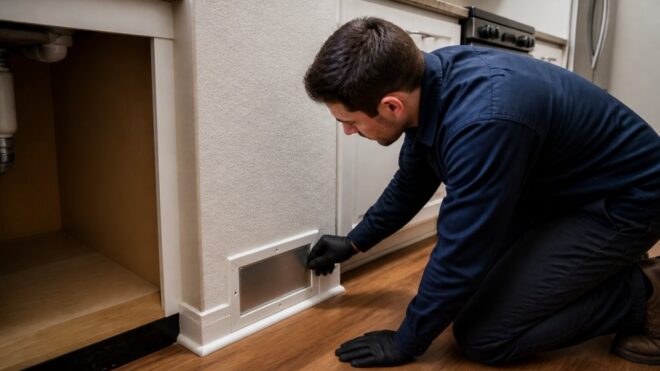
Shared walls create a critical problem: if your neighbor doesn’t seal their side, mice can still access your unit through the wall cavity. Heating ducts that run through shared walls are notorious rodent highways. If you hear scratching in walls during heating season, seal where ducts connect to your apartment using metal duct tape and steel wool around openings.
Plumbing pathways present a similar challenge. Where pipes penetrate walls to reach adjacent units, seal the gap with steel wool and caulk. For larger penetrations, use metal flashing or hardware cloth (1/4-inch mesh) secured with caulk.
Focus your sealing efforts on the boundary between your apartment and shared areas, basement walls, crawlspaces, and any wall cavities accessible from common areas.
Food Storage and Sanitation: Removing Attractants
Sealing gaps stops mice from entering, but food storage determines whether they stay. A mouse needs only 3-4 grams of food per day, which means crumbs most people wouldn’t notice are sufficient to sustain a colony.

Move all dry goods into airtight containers. Cereal boxes, flour bags, and pasta boxes are invitations; mice can chew through cardboard within hours. Use glass or hard plastic containers with locking lids. Clean up immediately after meals, vacuum frequently including under furniture, and wipe down counters and stovetops daily.
Use trash cans with tight-fitting lids and take garbage out regularly. Compost bins should be sealed and located away from building foundations. Store pet food in airtight containers and remove uneaten portions within a few hours. Check hidden areas behind stoves, under refrigerators, and inside cabinets regularly for droppings, which indicate active infestation.
Landlord Responsibilities for Pest Control in Your Building
Landlord responsibilities for pest control vary by jurisdiction, but property owners have a legal obligation to maintain habitable conditions. Rodent infestations violate habitability standards in most states.
If you’re a tenant, document the infestation with photos and written records of dates when you observed droppings, heard noises, or saw mice. Notify your landlord in writing. Most jurisdictions require landlords to respond within 7-14 days. If they don’t, you may have grounds to withhold rent or hire a pest control service and deduct costs from rent, but check local regulations first.
For property managers and landlords, conduct annual inspections of basements, crawlspaces, and mechanical areas. Identify and seal structural entry points before infestations occur. Many property managers partner with pest control services for quarterly inspections and preventive treatments. The 90-day guarantee offered by services like Zoifia Pest Control provides assurance that treatment is effective and shifts financial risk away from the property.
Best Mouse Traps for Apartments: DIY vs. Professional
When prevention fails and mice are already present, trapping decisions matter. Snap traps kill mice instantly and cost pennies per trap. Bait them with peanut butter or nesting material and place traps perpendicular to walls where you’ve observed droppings. Check traps daily and dispose of dead mice promptly using gloves and a sealed bag.
Electronic traps deliver a high-voltage shock and eliminate the unpleasant task of handling dead rodents. Glue traps work but cause suffering and are increasingly restricted. Live traps are labor-intensive and don’t address the underlying infestation.
When to call professional pest management
DIY trapping works for small infestations. If you’re catching multiple mice daily, if droppings appear in multiple rooms, or if you hear activity in walls, the infestation has progressed beyond DIY scope. Professional services identify entry points and nesting sites you might miss, use integrated pest management strategies, and provide accountability with guarantees. For apartments, professional treatment is often necessary because entry points may be in shared walls or common areas where tenants have no access.
Coordinating Prevention Across Your Building
Preventing mice in multi-family homes requires coordination because mice don’t respect apartment boundaries. If one unit has an infestation, notify neighbors so they can increase vigilance and seal entry points on their side of shared walls.
For property managers, create a building-wide prevention protocol. Conduct annual inspections of all common areas and seal structural entry points in basements, crawlspaces, and mechanical rooms. Schedule pest management services during high-risk seasons (fall and winter) rather than waiting for complaints.
Establish clear tenant expectations regarding sanitation standards outlined in the lease. Make it easy for tenants to report problems; a single unreported infestation becomes a building-wide problem within weeks. Consider shared pest management contracts for the entire building, which is more cost-effective than individual unit treatments. Document everything: inspections, treatments, tenant complaints, and corrective actions.
Identifying Signs of Rodent Activity Early
Early detection prevents small problems from becoming infestations. Fresh droppings are dark and moist; old droppings are dry and gray. If you find droppings, check back in a few days. If new droppings appear, mice are actively using that area. Gnaw marks on food packages, wood, or baseboards indicate recent activity. Mice leave greasy rub marks along walls where their fur repeatedly brushes against surfaces.
Listen for activity, especially at night. Scratching sounds in walls or attic spaces indicate movement through wall cavities. Squeaking or chirping sounds suggest nesting activity. Check hidden areas behind stoves, under refrigerators, inside lower cabinets, and in basement corners regularly. Early detection at this stage allows you to address the problem with trapping before it becomes a full infestation.
Preventing mice in multi-family homes is fundamentally different from single-family rodent control because structural vulnerabilities and shared spaces create unique challenges. The solution requires coordination between tenants and management, systematic sealing of structural entry points, and removal of food attractants. When these steps are implemented building-wide, infestations become rare.
Zoifia Pest Control offers fast, reliable, and affordable pest management solutions for both residential and commercial properties. Serving the Metro Boston area, our experienced team specializes in eliminating ants, roaches, rodents, bed bugs, and other household pests. We prioritize customer peace of mind by providing licensed and insured services backed by a 90-day guarantee, ensuring your property remains pest-free without the need for long-term contracts. Get a quote to discuss your building’s specific vulnerabilities and develop a prevention plan tailored to your property’s age, layout, and current risk level.
| Prevention Method | Best For | Effort Level | Effectiveness |
|---|---|---|---|
| Sealing gaps with steel wool and caulk | Foundation cracks, pipe penetrations | Low | High for entry point elimination |
| Food storage in airtight containers | Removing attractants | Low | High for reducing mouse survival |
| Snap traps | Small infestations (1-2 mice) | Medium | High for active control |
| Professional exclusion and sealing | Structural entry points, shared walls | Low (outsourced) | High for long-term prevention |
| Building-wide coordination | Multi-unit infestations | Medium | High for preventing spread |
| Professional pest management service | Large infestations, wall voids, attic spaces | Low (outsourced) | Very high with guarantee |
Frequently Asked Questions
What are the legal responsibilities of landlords regarding rodent control?
Landlords are required to maintain habitable premises, which includes controlling rodent infestations. Most states require landlords to address pest problems at their expense, including structural repairs that allow entry. Tenants must report infestations promptly. If your landlord refuses to act, document the problem and contact local housing inspectional services. The 90-day guarantee from Zoifia Pest Control ensures your space stays protected while you work through these responsibilities with your property manager.
How do mice enter multi-family buildings through shared walls and plumbing?
Mice exploit gaps around pipes, electrical conduits, and heating ducts that run between units. Shared walls with poor sealing allow rodent movement from one apartment to another. Foundation cracks and basement entry points are common in older buildings. Preventing mice requires sealing these pathways with steel wool and caulk, but coordinating with neighbors and your landlord ensures mice don't simply relocate to adjacent units. Professional inspections identify hidden entry points you might miss.
What's the difference between DIY mouse traps and professional pest control for apartments?
DIY traps work for catching individual mice but miss the root cause: entry points and nesting sites. Apartment-specific challenges like shared walls and limited access make professional integrated pest management more effective. Professionals identify all entry points, coordinate with building management, and use targeted methods suited to your space. Zoifia's 90-day guarantee covers recurring problems, giving you protection that DIY traps alone cannot match.
How quickly can pest control stop a mouse infestation in a multi-family building?
Initial response time depends on severity and building coordination. Professional pest control can address active infestations within days, but preventing recurrence requires sealing entry points and eliminating food sources, which takes longer. Multi-family buildings need tenant cooperation and landlord approval, adding coordination time. Zoifia's fast response and flexible scheduling work around your availability, with follow-up inspections ensuring the problem stays solved under our 90-day guarantee.
This article was written using GrandRanker
