Table of Contents
- Can Mice Chew Through Spray Foam Insulation?
- Rodent-Proof Insulation: Choosing the Right Material
- How to Seal Holes for Mice: Steel Wool Integration Techniques
- Does Steel Wool Stop Mice? Effectiveness and Durability
- Signs of Rodent Infestation in Spray Foam Areas
- DIY vs. Professional Application: What Works Best
- Preventing Mice from Chewing Through: Long-Term Strategies
- Conclusion
Last Updated: July 14, 2026
Can mice chew through spray foam insulation? Yes, mice can chew through spray foam, especially open-cell varieties. This is critical because spray foam has become one of the most popular insulation materials in North America. Understanding what makes spray foam vulnerable and how to reinforce it is essential for preventing costly infestations.
Can Mice Chew Through Spray Foam Insulation?
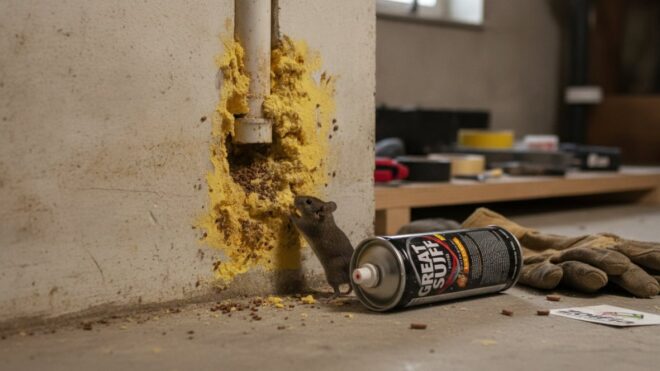
Yes, mice can chew through spray foam with relative ease, particularly open-cell spray foam. Rodents have continuously growing incisors requiring constant gnawing, and foam provides ideal material for this behavior. Open-cell foam is softer and more porous than closed-cell varieties, making it easier for mice to penetrate and create passages.
A single mouse can damage 15-20 feet of insulation in a month. Once mice establish a pathway, they leave scent markers encouraging other rodents to use the same route, creating multiple entry points. Closed-cell spray foam offers better resistance due to its denser composition, but even this material isn’t truly rodent-proof.
A single mouse can damage 15-20 feet of spray foam insulation in a month. Early detection of chewing damage is critical because infestations spread rapidly through insulation networks.
Why Mice Target Insulation
Rodents are attracted to insulation for warmth, shelter, and nesting material. Spray foam provides all three simultaneously, allowing mice to create tunnels and chambers within walls. Attics and basements with spray foam are particularly vulnerable because these quieter, darker spaces allow mice to establish extensive colonies without detection for weeks or months.
Closed-Cell vs. Open-Cell Foam Vulnerability
Open-cell spray foam has a softer, porous structure that’s significantly easier for mice to chew through. Open-cell foam is roughly 2-3 times easier for rodents to penetrate than closed-cell alternatives.
Closed-cell spray foam features sealed cells creating a denser, more rigid structure that resists initial penetration better. However, determined rodents will eventually break through. Closed-cell foam also provides superior moisture barriers.
If installing new spray foam insulation, closed-cell foam in high-risk areas combined with [steel wool reinforcement](/does-steel-wool-stop-mice-from-entering/) provides the strongest rodent defense.
Rodent-Proof Insulation: Choosing the Right Material
While no insulation is completely rodent-proof, some options resist damage significantly better than spray foam.
Fiberglass batts and blown-in fiberglass are less attractive to mice than spray foam because the material is itchy, though mice will still chew through to create passages. Mineral wool insulation is denser and more resistant to rodent damage than fiberglass. Rigid foam boards offer more resistance than spray foam because they’re harder and more uniform. Cork insulation is naturally resistant to rodent damage because mice find the texture and taste unpleasant, though it’s significantly more expensive than spray foam.
The most effective approach combines material selection with proper sealing and steel wool integration.
Spray Foam Density and Rodent Resistance
Spray foam density directly correlates with rodent resistance. Closed-cell spray foam typically ranges from 1.5 to 2.0 pounds per cubic foot, while open-cell foam ranges from 0.4 to 0.7 pounds per cubic foot. However, density alone doesn’t determine rodent-proofing effectiveness. Installation quality, sealing completeness, and integration with physical barriers like steel wool are equally important. For basement rim joists and band boards where rodent pressure is highest, 1.5+ lb/ft³ closed-cell foam is recommended.
Steel Wool as a Rodent Barrier
Steel wool is one of the most effective rodent barriers available because mice cannot chew through sharp metal fibers. Heavy-gauge steel wool (0000 grade) is most effective because it’s densely packed and difficult for rodents to displace. Steel wool must be tightly packed into gaps so mice cannot create openings by gnawing or pulling.
Steel wool alone, without securing caulk or foam, is vulnerable to displacement. After packing steel wool into a gap, seal it in place with exterior-grade caulk or spray foam. This prevents rodents from pulling the steel wool out and creating passages.
Steel wool stops mice because they cannot chew through sharp metal fibers. Effectiveness depends entirely on proper installation, loose or poorly secured steel wool will be bypassed.
Combining Steel Wool with Spray Foam
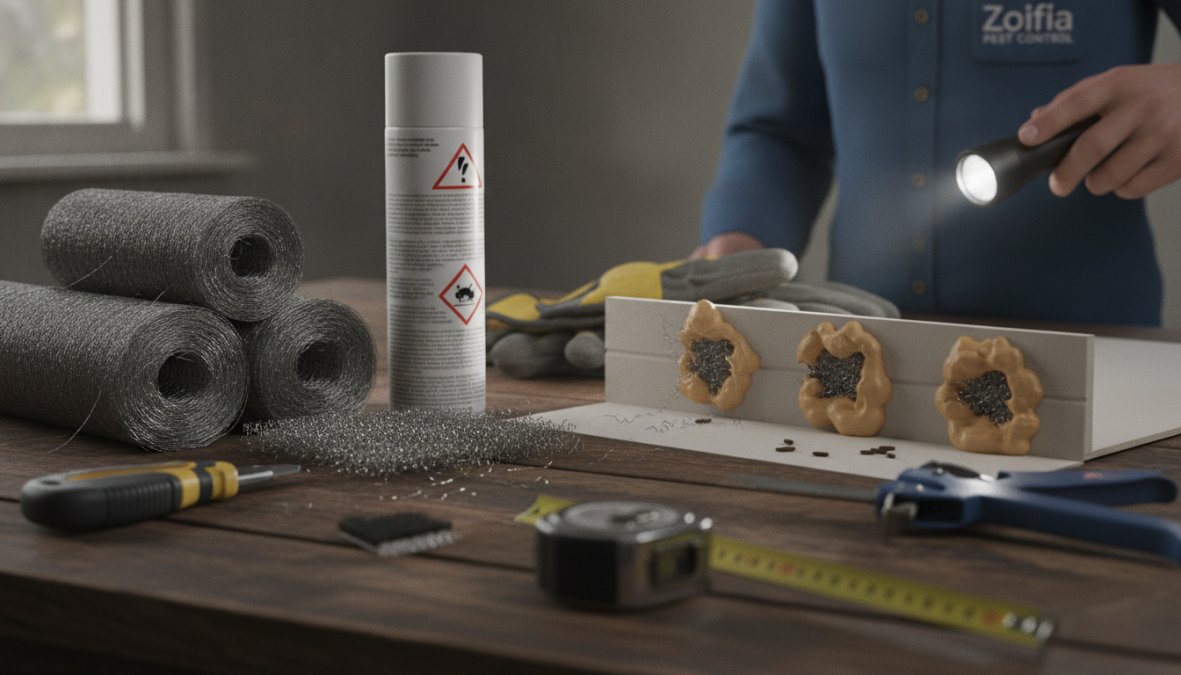
The most effective rodent-proofing approach combines steel wool barriers with spray foam. The recommended installation sequence is:
- Pack steel wool tightly into the gap or hole
- Spray foam over the steel wool, ensuring complete coverage
- After foam cures, caulk any remaining gaps with exterior-grade caulk
- Inspect for any exposed steel wool
This sequence ensures steel wool is embedded within the foam matrix, making it impossible for rodents to access or displace.
Proper Installation for Maximum Effectiveness
Professional installation requires attention to detail and understanding of rodent behavior. Surface preparation is critical, surfaces should be clean and dry before installing steel wool and foam. Compression technique determines barrier effectiveness; steel wool should be compressed firmly into gaps using a packing tool or gloved hand. Foam application should completely cover and embed the steel wool, extending at least 1/4 inch beyond steel wool edges. Caulking after foam cures provides final sealing using exterior-grade, paintable caulk.
Does Steel Wool Stop Mice? Effectiveness and Durability
Steel wool is highly effective at stopping mice when properly installed. The sharp metal fibers create a barrier that mouse teeth cannot penetrate, and the material cannot be compressed or displaced if tightly packed and secured. Field testing demonstrates that steel wool barriers remain effective for years when properly installed.
Steel wool barriers typically remain effective for 10+ years when properly installed. The material doesn’t degrade from rodent activity, moisture, or temperature changes.
Signs of Rodent Infestation in Spray Foam Areas
Early detection is critical for preventing extensive damage. Visible chewing damage appears as holes or tunnels in foam, typically 1/4 to 1/2 inch diameter with rough, ragged edges. Foam shavings or debris around foam areas indicate active chewing. Droppings in foam areas are definitive signs of rodent presence, mouse droppings are small (1/8 to 1/4 inch), dark, and typically found in clusters. Odors include a distinctive musky smell from rodent urine and feces. Rustling or scratching sounds in walls or attics, particularly at night, indicate active rodent movement.
Identifying Entry Points and Damage
Systematic inspection of your home’s exterior and foundation reveals potential rodent entry points. Mice can access homes through openings as small as 1/4 inch. Foundation cracks are common entry points, particularly in older homes. Gaps around pipes and utilities where they penetrate the foundation or rim board are frequent entry routes. Vents and louvers that lack proper screening allow rodent entry. Gaps at the rim board where the foundation meets the house frame are particularly vulnerable. Damaged or missing mortar in brick or stone foundations creates entry points.
Post-Infestation Cleanup Protocols
If rodent infestation has occurred in foam-insulated areas, cleanup requires careful attention to health and safety. Safety precautions are the first priority, wear N95 or P100 respirators when handling contaminated insulation, as rodent droppings can contain hantavirus. Contaminated foam removal may be necessary if rodent activity has been extensive. Disinfection of affected areas should be performed using a bleach solution (10% bleach, 90% water). Nesting material removal requires careful handling, do not vacuum rodent nesting material. HVAC system inspection is important after rodent infestation. Professional remediation is recommended for extensive infestations.
DIY vs. Professional Application: What Works Best
DIY sealing is appropriate for small-scale projects involving a few entry points. If you’ve identified 3-5 specific areas that need sealing and these areas are easily accessible, DIY application can be cost-effective.
Professional application is recommended for large-scale projects, extensive infestations, or difficult-to-access areas. Professional pest control companies have experience identifying vulnerable areas that homeowners might miss and provide warranty protection and follow-up inspections.
When DIY Sealing Is Sufficient
DIY sealing works well when you’ve accurately identified specific entry points and infestation is not yet established. The effectiveness of DIY sealing depends on thoroughness. If you seal one entry point but miss others, the rodent will simply use an alternate route. Comprehensive inspection is critical.
When to Call Professional Pest Control
Professional pest control becomes necessary when DIY efforts have failed, infestation is already established, or the scope exceeds your comfort level. Signs that professional intervention is needed include: multiple droppings in insulated areas, evidence of nesting, active rodent sounds in walls or attics, or unsuccessful DIY sealing followed by continued rodent activity.
Established infestations require professional removal and comprehensive sealing. Professionals identify all entry points, remove contaminated insulation if necessary, apply professional-grade sealing materials, and provide follow-up inspections. Professional pest control also addresses the rodent population itself through traps and bait stations while sealing prevents reinfestation.
Preventing Mice from Chewing Through: Long-Term Strategies
Effective long-term rodent prevention combines multiple strategies: exclusion (sealing entry points), environmental modification (removing attractants), and ongoing monitoring.
Exclusion methods are the foundation of prevention. Sealing all potential entry points with steel wool and foam prevents rodent access to your home’s interior. Environmental modification reduces the attractiveness of your home to rodents by securing food sources in sealed containers, removing clutter, and eliminating standing water. Ongoing monitoring through regular inspections allows early detection of new entry points or rodent activity.
Exclusion Methods and Sealing Best Practices
Comprehensive exclusion requires systematic inspection and sealing of your entire home’s exterior. Foundation perimeter sealing is the highest priority. Pipe and utility penetrations should be sealed with steel wool and foam. Vents and louvers require rodent-proof screens with 1/4-inch or smaller screening. Cracks in foundation or masonry should be sealed with caulk or foam. Door and window seals should be inspected and replaced if damaged.
Document sealing with photos and notes indicating the date and location of each seal.
Regular Maintenance and Inspection Schedules
Ongoing maintenance is critical because seals can fail and new gaps can develop. Quarterly inspections of high-risk areas should occur year-round. Seasonal inspections are particularly important in fall (August-October) when rodents actively seek winter shelter. Post-storm inspections should be performed after severe weather. Annual professional inspections by a pest control company provide expert assessment.
Maintenance of seals includes re-caulking if existing caulk has cracked, re-foaming if foam has shrunk, and replacing damaged weatherstripping.
Preventing mice from chewing through spray foam insulation requires understanding rodent behavior, selecting appropriate materials, and implementing comprehensive sealing strategies. The most effective approach combines closed-cell foam or mineral wool insulation with steel wool barriers and thorough sealing of all potential entry points. If your home shows signs of rodent activity, professional intervention becomes important. Contact a pest control professional for a comprehensive inspection and customized prevention plan tailored to your home’s specific vulnerabilities.
Frequently Asked Questions
Can mice chew through spray foam insulation?
Yes, mice can chew through spray foam insulation, particularly open-cell foam, which is softer and less dense. While closed-cell foam is more resistant, determined rodents can still penetrate it over time. The key is not relying on foam alone, combining it with steel wool, copper mesh, or professional exclusion methods creates a truly rodent-proof barrier that mice cannot breach.
What is the best rodent-proof insulation material?
Closed-cell spray foam offers better resistance than open-cell alternatives, but the most effective approach combines insulation with physical barriers. Steel wool and copper mesh are chew-resistant deterrents that work excellently alongside foam. Rigid foam boards with sealed edges and proper caulking also provide strong protection. For maximum effectiveness, pair any insulation with professional pest control and regular inspections to identify entry points before rodents establish themselves.
Does steel wool stop mice from chewing through gaps?
Steel wool is highly effective at deterring mice because they cannot chew through its sharp, woven metal strands. When properly packed into gaps and cracks alongside or before spray foam application, steel wool creates a physical barrier that rodents avoid. For best results, use grade 0000 steel wool, pack it densely into openings, and seal over it with caulk or expanding foam to prevent displacement and maintain long-term durability.
How do I know if mice are infesting my spray foam insulation?
Signs of rodent infestation include visible chewing damage on foam edges, droppings near insulation areas, unusual odors, and gnaw marks on electrical wiring or structural components. You may also hear scratching sounds in walls or attics, especially at night. If you suspect infestation, inspect gaps, entry points, and areas where foam meets other materials. Professional pest control can confirm activity and identify all entry points requiring sealing to prevent future problems.
This article was written using GrandRanker
