Table of Contents
- Why Non-Toxic Bed Bug Sprays Matter When Moving
- Bed Bug Spray for Travel: What Works and What Doesn’t
- Top Non-Toxic Bed Bug Sprays: Product Comparison
- Bed Bug Treatment for Luggage and Furniture Before Moving
- How to Move Without Transferring Bed Bugs: A Practical Timeline
- Bed Bug Prevention When Moving: Active Ingredients and Safety
- Limitations of Sprays Alone: When Professional Treatment Is Necessary
- Frequently Asked Questions
Last Updated: October 19, 2026
Why Non-Toxic Bed Bug Sprays Matter When Moving
Moving to a new home brings enough stress without the fear of accidentally transporting bed bugs. Non-toxic bed bug sprays for moving offer homeowners a practical way to treat belongings before packing, reducing the risk of carrying an infestation to a new property. Prevention during a move is far more effective than dealing with an established infestation at your destination.
The challenge with moving and bed bugs is timing. You have a narrow window to treat your belongings, furniture, and luggage without exposing yourself, your family, or your movers to harsh chemicals. Non-toxic sprays bridge that gap.
But here’s what most moving guides miss: a spray alone won’t guarantee you won’t move bed bugs. Sprays work best as part of a coordinated treatment plan that includes inspection, targeted application, and timing. Understanding which sprays actually work, how to apply them correctly, and when to call a professional is what separates a successful move from a costly mistake.
Below, we’ll break down the best non-toxic options available, show you how to apply them strategically before your move, and explain when DIY sprays reach their limits.
Bed Bug Spray for Travel: What Works and What Doesn’t
Not all bed bug sprays are equal, and bed bug spray for travel presents unique constraints. You need something portable, fast-acting, and safe for enclosed spaces like vehicles and temporary housing. The spray must kill on contact while remaining non-toxic enough to use near luggage and personal items.
Plant-based sprays tend to work faster on adult bed bugs but may require repeat applications to catch newly hatched nymphs. Essential oil-based formulations kill through direct contact but offer limited residual protection, meaning bugs that hide in seams or crevices may survive. Enzyme-based sprays work differently, breaking down the insect’s exoskeleton rather than using neurotoxins.
What doesn’t work: generic insect sprays labeled for other pests. Bed bugs have developed resistance to many older formulations, and a spray designed for ants or roaches won’t penetrate bed bug hiding spots effectively. Travel-sized sprays marketed as “all-purpose” are usually too diluted to be effective.
The most effective approach combines a targeted spray with heat treatment if possible. If you’re moving into temporary housing, spray your luggage and clothing immediately upon arrival, then monitor for three weeks with bed bug traps.
Top Non-Toxic Bed Bug Sprays: Product Comparison
When selecting a non-toxic bed bug spray for your move, consider the active ingredient, application method, and whether it targets eggs. Here’s how the leading options compare:
EcoVenger Bed Bug Killer by EcoRaider
EcoVenger stands out for its plant-extract formula designed to kill all life stages, including eggs. The 16-ounce spray is small enough for luggage but substantial enough to treat a mattress or several boxes. It’s marketed as child-safe and pet-safe, making it appropriate for homes with families or animals.
The spray works through contact and claims two weeks of residual protection. For moving purposes, this means you can treat your belongings a day or two before packing and still have protection during transport. Application is straightforward: spray directly on mattress seams, box exteriors, and furniture surfaces until slightly damp.
Pros:
- Plant-based formula with no harsh chemical odor
- Targets eggs, nymphs, and adults
- 16-ounce size fits in moving boxes
- Two-week residual window
Cons:
- Requires direct contact; hidden bugs may survive
- Residual effect diminishes over time
- Not a complete solution for heavy infestations
Best for: Homeowners treating mattresses, boxes, and luggage before a move who prioritize non-toxic ingredients.
Premo Guard Bed Bug Killer Spray
Premo Guard uses natural plant-based enzymes to target bed bugs. The 16-ounce bottle offers similar portability to EcoVenger but with a different active mechanism. Enzyme-based sprays work by degrading the insect’s protective outer layer rather than targeting the nervous system.
This approach appeals to users concerned about neurotoxin exposure, though efficacy depends on thorough application. The spray must make direct contact with the bug for the enzyme to work. Premo Guard is also labeled as eco-friendly and safe for use around children and pets.
Pros:
- Enzyme-based mechanism differs from typical insecticides
- Eco-friendly positioning and non-toxic formula
- 16-ounce convenient size
- No strong chemical smell
Cons:
- Slower action than some alternatives
- Requires complete coverage for effectiveness
- Limited data on residual protection duration
Best for: Movers seeking a plant-enzyme alternative who have time for careful, thorough application.
Bed Bug Patrol
Bed Bug Patrol rounds out the comparison as a natural spray option. While specific product details are limited in available sources, it’s recognized among eco-friendly bed bug control options. The spray is designed for direct application to infested areas and represents an alternative to more chemical-heavy formulations.
Pros:
- Natural formula positioning
- Recognized among eco-friendly options
- Suitable for environmentally-conscious users
Cons:
- Limited product specification data available
- Effectiveness varies by application technique
- May require multiple treatments
Best for: Users researching multiple natural options before deciding on a spray strategy.
| Spray Product | Active Type | Size | Targets Eggs | Residual Effect | Best For |
|---|---|---|---|---|---|
| EcoVenger by EcoRaider | Plant extract | 16 oz | Yes | 2 weeks | Mattresses, boxes, luggage |
| Premo Guard | Plant-based enzyme | 16 oz | Likely | Limited data | Thorough, careful application |
| Bed Bug Patrol | Natural formula | Varies | Unclear | Varies | Research and comparison |
Bed Bug Treatment for Luggage and Furniture Before Moving
The critical window for treating your belongings is 24-48 hours before packing. This timing allows the spray to dry and any residual effect to activate while still protecting items during transport.
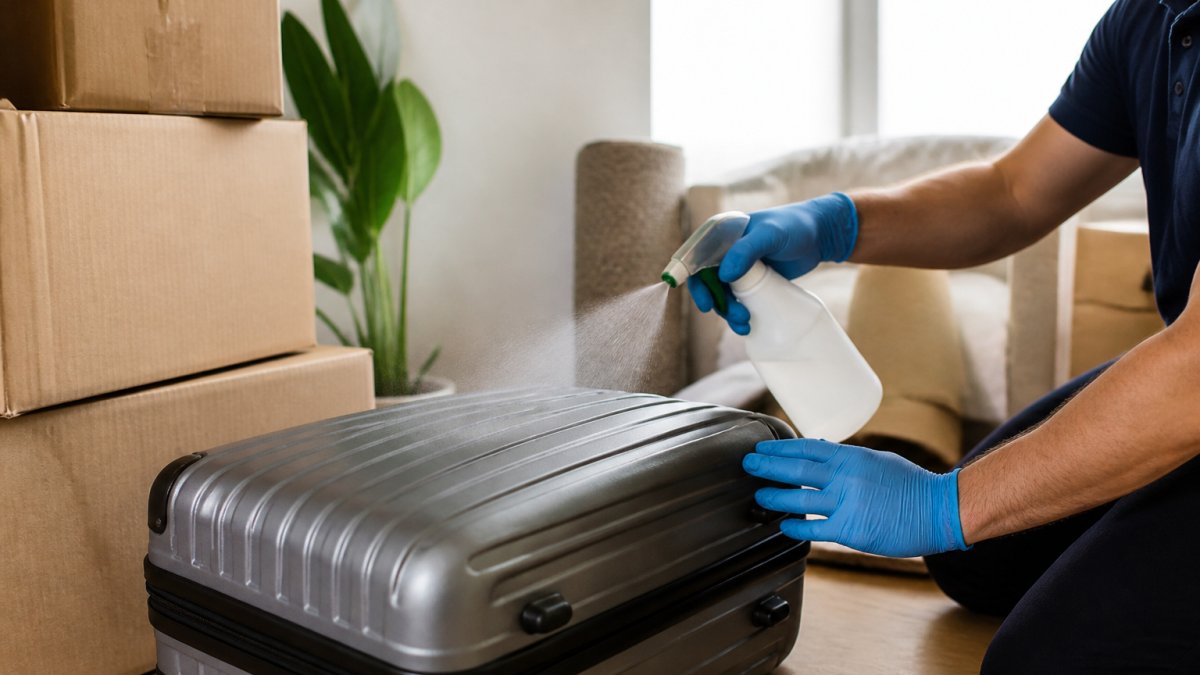
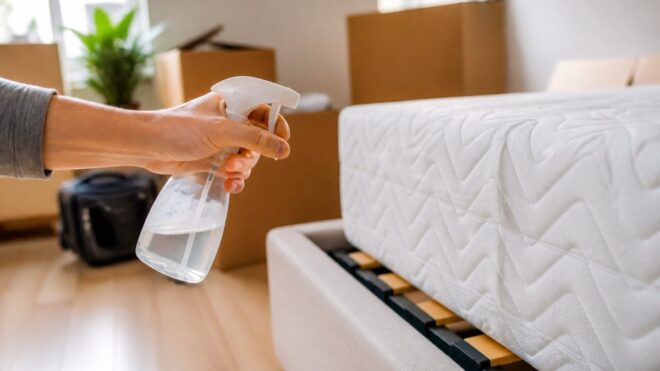
Start with a thorough inspection. Look for dark spots (fecal matter), shed skins, or live bugs in mattress seams, box corners, and furniture joints. Treat these areas first. For mattresses, spray all seams, piping, and the underside.
Apply the spray until surfaces are slightly damp but not soaking. Over-saturation wastes product and can damage some materials. Let everything dry completely before packing.
For furniture you’re moving, spray all crevices, underneath, and areas where legs meet the frame. If you’re moving a bed frame, treat the underside and all joints thoroughly. Headboards and footboards deserve the same attention.
One common mistake is spraying only the visible surfaces. Bed bugs hide in the smallest gaps. Spend extra time on seams, joints, and any area where two pieces of material meet.
How to Move Without Transferring Bed Bugs: A Practical Timeline
Moving logistics and bed bug prevention must align. Here’s a realistic timeline that maximizes protection:
Two weeks before moving: Inspect all belongings carefully. Look for signs of bed bugs in closets, under beds, and inside drawers. If you find evidence, contact a professional immediately. There’s no time for DIY treatment alone at this stage.
One week before moving: If your inspection found no bed bugs, you’re in a good position. Begin packing items you won’t need until after the move.
Three days before moving: Wash all bedding and clothing in hot water (120 degrees Fahrenheit or higher) and dry on high heat. This kills bed bugs and eggs in textiles.
Two days before moving: Treat all remaining furniture, mattresses, and boxes with your chosen non-toxic bed bug spray. Spray in the morning and allow 24 hours of drying before loading the truck.
Moving day: Load treated items into the moving truck. Keep mattresses and furniture in the center of the truck, away from the walls.
First week in new home: Do not unpack immediately. Place mattresses and furniture in rooms away from bedrooms if you can. Inspect each piece carefully before bringing it into sleeping areas.
Weeks two and three: Monitor your new home with bed bug traps. Place them under bed legs and near furniture. Check them every few days.
This timeline works best when combined with professional assessment. If you’re uncertain whether your current home has bed bugs, a professional inspection before moving removes doubt and prevents expensive mistakes.
Bed Bug Prevention When Moving: Active Ingredients and Safety
Understanding what’s actually in your spray matters. Non-toxic bed bug sprays use several different active ingredients, each with different safety profiles and effectiveness ranges.
Plant extracts (found in EcoVenger and similar products) come from seeds, leaves, or oils of plants like clove, rosemary, or thyme.
Enzymes (used in Premo Guard) attack the insect’s exoskeleton directly. They’re non-toxic because they target a biological structure insects have that humans don’t. Enzyme-based sprays work slower but leave no chemical residue.
Diatomaceous earth (food-grade) appears in some formulations as a drying agent. It dehydrates insects on contact. When properly applied, it’s safe for humans and pets because the particles are too large to be absorbed through skin.
For safety with children and pets, always follow label directions exactly. Even non-toxic sprays can cause irritation if misapplied. Avoid spraying directly on skin or in areas where children play. Allow treated surfaces to dry completely before allowing contact.
If you have pets or young children, inform any professional pest control service before they arrive. At Zoifia Pest Control, we discuss safety protocols with every customer and adjust our approach based on household composition.
Limitations of Sprays Alone: When Professional Treatment Is Necessary
Here’s the reality: non-toxic bed bug sprays are effective for prevention and light infestations, but they have hard limits.
Sprays work only where they make direct contact. Bed bugs hide in wall voids, electrical outlets, picture frames, and other spaces a spray can’t penetrate.
Heavy infestations require heat treatment or professional-grade insecticides applied by licensed technicians who understand bed bug behavior and hiding patterns.
If you’ve treated your belongings with a non-toxic spray but continue seeing bed bugs in your new home after three weeks, stop treating yourself. Call a professional. Repeated amateur treatments waste time and money while the infestation grows.
Zoifia Pest Control offers fast response for bed bug situations. Our licensed technicians inspect thoroughly, identify the infestation level, and recommend treatment that matches the severity. We back our work with a 90-day guarantee, so you’re protected if bed bugs return.
Moving without transferring bed bugs requires planning, the right tools, and realistic expectations about what sprays can accomplish.
Choose a spray based on its active ingredient and your comfort level with application. Treat your belongings 24-48 hours before packing. Monitor your new home for three weeks.
Frequently Asked Questions
What makes a bed bug spray non-toxic and safe for moving?
Non-toxic bed bug sprays use plant-based or enzyme-derived active ingredients instead of synthetic pesticides. These formulas target bed bug nervous systems without releasing harsh chemicals into your home or moving truck. Look for sprays labeled child-safe and pet-safe; they meet safety standards while still killing bed bugs on contact and, in many cases, their eggs. Always follow label directions carefully, even with non-toxic products, to ensure safe application on mattresses, luggage, and furniture during your move.
Can I use bed bug spray for travel on an airplane or in luggage?
Most bed bug sprays are not TSA-compliant for carry-on or checked baggage due to flammable propellants or pressure containers. However, you can pack non-pressurized, liquid-based plant formulas in checked luggage if they meet TSA guidelines for hazardous materials. The safest approach is to treat your belongings before packing at your current home, then use sealed bags to prevent re-infestation during transit. If you discover bed bugs at your destination, contact a licensed pest control service rather than attempting to spray in a hotel or rental.
How long does residual protection last after spraying for bed bug prevention when moving?
Plant-based bed bug sprays typically provide residual protection for 7 to 14 days, depending on the product and surface. This window is often enough to cover your move and initial settling period, but residual effectiveness decreases if surfaces get wet or heavily disturbed. For longer-term protection after moving, monitor your new space with bed bug traps for at least two weeks and reapply spray to high-risk areas like bed frames and furniture seams if needed. Professional heat or cold treatment offers more durable results if you suspect active infestation.
Will bed bug spray alone eliminate an infestation before moving?
Spray alone rarely eliminates an active infestation completely. Non-toxic sprays kill bed bugs on contact and newly hatched nymphs, but eggs may survive and hatch after treatment, requiring repeat applications. Bed bugs also hide in wall voids, electrical outlets, and furniture joints where spray cannot reach. For a moving situation with confirmed infestation, combine spray with professional treatment, heat treatment, or thorough inspection and bagging of all belongings. This multi-method approach prevents you from transferring live bugs or eggs to your new home.
