Table of Contents
- Build a Year-Round Bed Bug Prevention Schedule
- Bed Bug Inspection Checklist for Homeowners
- Signs of Bed Bugs in a Home
- Bed Bug Prevention After Travel
- How to Prevent Bed Bugs from Used Furniture
- Cleaning, Heat, and Encasement Tactics That Support Bed Bug Prevention
- Monitoring and Interpreting Early Detection Results
- Conclusion
- Frequently Asked Questions
Last Updated: October 18, 2026
Build a Year-Round Bed Bug Prevention Schedule
Bed bug prevention is a system of habits, not a one-time deep clean. The homeowners who avoid infestations treat inspection and heat treatment as routine maintenance, the same way they’d treat changing a furnace filter. A schedule only works if it is specific enough to follow on a busy week, so build yours around fixed triggers rather than good intentions.
A working annual rhythm looks like this:
- Weekly (10-15 minutes): Vacuum sleeping areas and high-traffic floors, then empty the canister into an outdoor trash bin. Check interceptors under each bed leg.
- Monthly (15-20 minutes): Inspect mattress seams, box spring edges, and bed frame joints with a flashlight. Re-zip and inspect encasements for tears.
- Seasonally (60-90 minutes): Wash all bedding on high heat, declutter closets and storage, and re-check any secondhand furniture. Spring and fall are the peak months for used-furniture and travel traffic, so schedule the deeper inspection then.
- After every trip: Run the full luggage routine before anything enters your bedroom.
The EPA guidance on bed bug control makes the same point: prevention and early detection beat chemical treatment every time.
Monthly and Seasonal Tasks That Keep Bed Bugs Out
Monthly inspections catch an infestation while it’s still small enough to isolate. Spend fifteen minutes checking seams, tufts, and screw holes on the bed frame, then vacuum the room and dispose of the bag outdoors. Seasonally, rotate your attention: spring and fall are when used furniture and travel traffic peak, so schedule a deeper inspection and a full high-heat laundry cycle around those months.
Tailor the Schedule to Your Household
A schedule that ignores how you live will get skipped. Adjust the cadence to your situation:
- Frequent travelers: Add a full luggage-and-laundry routine after every trip, and inspect the bed within 24 hours of returning home. Keep a dedicated unpacking zone (garage, laundry room, or bathtub) so bags never touch the bed.
- Families with kids in shared bedrooms or dorms: Inspect each bed monthly, and treat backpacks, sports bags, and dorm luggage as travel items, unpack and launder before they enter bedrooms.
- Renters and multi-unit building residents: Report suspected activity to your landlord in writing and keep a copy. Bed bugs can move between units through shared walls and plumbing chases, so a single-unit treatment may not hold if neighboring units are not addressed.
- Homeowners with guest rooms or frequent visitors: Inspect guest beds before and after each stay, and wash guest bedding on high heat between visitors.
A Simple Calendar You Can Actually Keep
Pick one recurring day per month for the inspection and one weekend per season for the deeper reset. Put both on a shared household calendar so the task does not depend on memory. Keep a one-page log, date, room, what you checked, what you found, near the laundry room. A written record turns a vague worry into a pattern you can act on, and it gives a professional something concrete to work from if you ever need a confirmation inspection.
Anchor the monthly inspection to something you already do, like changing the HVAC filter or paying a recurring bill. Habit stacking is what keeps a prevention schedule alive past the first month.
Bed Bug Inspection Checklist for Homeowners
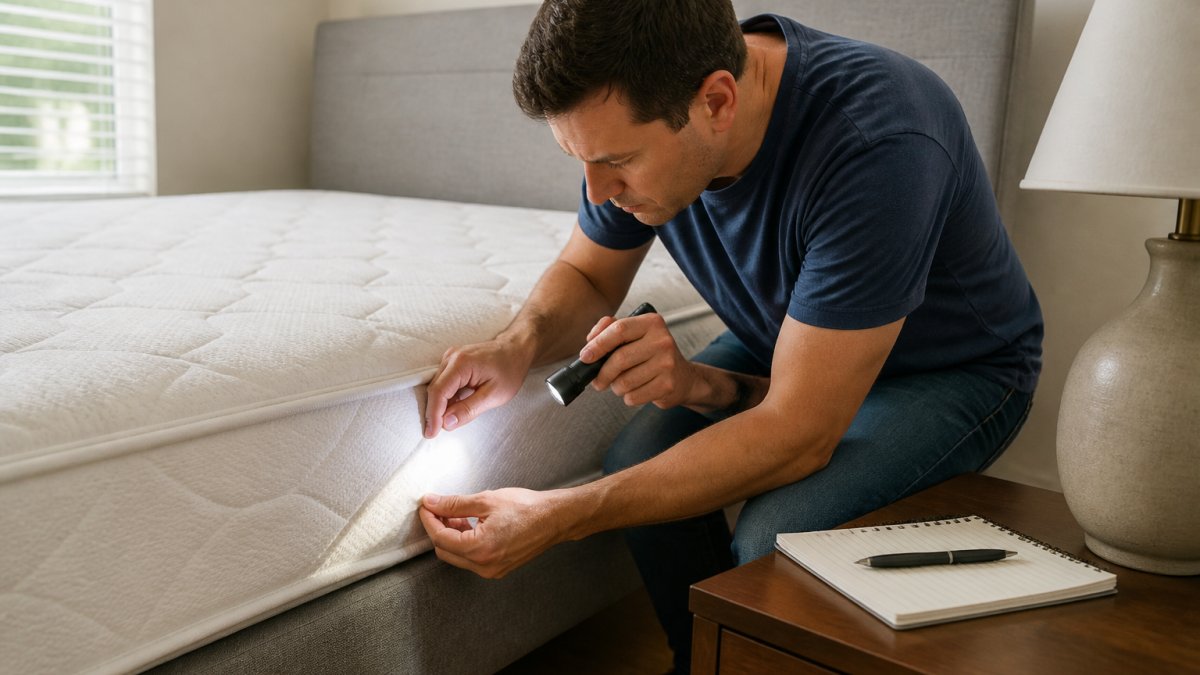
A bed bug inspection checklist for homeowners is a written list of the places bed bugs hide, checked in the same order every time so nothing gets skipped.
Work through this in order:
- Lift the mattress and check the seams, piping, and tag
- Inspect the box spring, especially the corners and underside
- Check the bed frame joints, headboard, and any screw holes
- Look along baseboards and the outlet plates near the bed
- Examine nightstand drawers and the seams of nearby upholstered furniture
Where to Look and What to Record
Record the date, the location, and what you found, even when you find nothing. A written log turns guesswork into a pattern. If you spot dark specks, shed skins, or live insects, note the exact spot. That record is the difference between a targeted treatment and a whole-house spray.
Signs of Bed Bugs in a Home
The clearest signs of bed bugs in a home are small rusty spots on bedding, tiny pale shed skins, and live insects about the size of an apple seed.
Look for these markers:
- Fecal spots: dark dots that bleed into fabric like a marker stain
- Shed skins: translucent shells left behind as nymphs grow
- Eggs: white, pinhead-sized, glued into seams and crevices
- A sweet, musty odor in heavy infestations
If you find live bugs or a cluster of eggs, don’t wait. Early detection is the whole game, and a licensed professional can confirm the identification before you spend money on treatments.
Bed Bug Prevention After Travel
Bed bug prevention after travel starts before you walk through your front door. Hotels, luggage racks, and airplane seats are common transfer points, and the insects hitchhike on fabric and hard-shell luggage alike.
A Step-by-Step Luggage and Clothing Routine
- Keep your suitcase zipped and off the floor and bed while traveling.
- Inspect the hotel mattress seams and headboard before unpacking.
- When you get home, unpack luggage in the garage, laundry room, or bathtub, never on the bed.
- Wash all clothing on the hottest setting the fabric allows, then dry on high heat for at least 30 minutes.
- Vacuum the suitcase interior and wipe hard surfaces.
- Store the empty suitcase away from sleeping areas.
The CDC guidance on bed bugs notes that heat is one of the most reliable ways to kill bed bugs at every life stage, which is why the dryer step matters more than the wash.
How to Prevent Bed Bugs from Used Furniture
The safest approach to used furniture is to assume it carries bed bugs until you’ve inspected it. That doesn’t mean skip the thrift store find. It means inspect before it enters the house, not after.
Follow these rules:
- Avoid upholstered items with tears, exposed stuffing, or a musty smell.
- Inspect seams, the underside, and any removable cushions with a flashlight before purchase.
- Never bring a used mattress or box spring indoors.
- Wipe down hard surfaces like wood and metal frames.
- Steam-clean upholstery before it goes into a bedroom.
Skipping the inspection on a single used couch is how many homeowners end up with a full-blown infestation. Once furniture is inside, treatment gets far more involved than a ten-minute check in the driveway.
Cleaning, Heat, and Encasement Tactics That Support Bed Bug Prevention
Cleaning removes the clutter bed bugs use as hiding places, and heat kills every life stage. Together they form the backbone of a nonchemical prevention plan.
Vacuuming, Steam, and High-Heat Laundry
Vacuum mattress seams, baseboards, and carpet edges weekly, then seal and discard the bag outside. Steam treatment reaches into seams and folds that a vacuum can’t, and it kills eggs as well as adults. For laundry, wash on the hottest setting the fabric allows and dry on high heat. Mattress encasements trap any bugs already inside and keep new ones from finding a foothold, so zip them on and check monthly for tears.
Monitoring and Interpreting Early Detection Results
Interceptors are small cups placed under each bed leg, and they’re the cheapest early-warning system a homeowner has. Place one under every leg of every bed, not just two, because bed bugs climb to the nearest food source and a partial ring of cups leaves an easy path around them. Check them weekly, on the same day you vacuum, and log what you find.
Interpret results like this:
- Empty interceptors: keep monitoring; no action needed.
- One bug, once: re-inspect the bed, frame, and headboard within 24 hours, then keep watching weekly.
- Bugs every week: call a licensed professional for confirmation before buying any treatment.
- Bugs in more than one room: treat it as an active infestation and get professional confirmation promptly.
Where to Place Monitors and How Often to Check
Put interceptors under every bed leg and, if you have a sofa bed or frequently used guest bed, under those legs too. Keep them flush against the leg so bugs cannot bypass them. Check weekly for the first month after any travel, move, or secondhand purchase, then monthly once you have a clean baseline. Replace or clean interceptors according to the manufacturer’s instructions, a dusty or debris-filled cup gives false negatives.
A Response Plan After Suspected Exposure
If a monitor or inspection turns up evidence, work through this sequence before you spray anything:
- Isolate: Bag the suspect luggage, clothing, or item in sealed plastic and keep it out of bedrooms.
- Launder: Wash on the hottest setting the fabric allows, then dry on high heat for at least 30 minutes, heat is what kills eggs and adults.
- Document: Photograph what you found, note the date and location, and keep the log.
- Confirm: Have a licensed professional confirm identification before spending money on treatment.
- Decide: If confirmed, choose a treatment plan and ask how follow-up and monitoring will be handled.
Do not move suspect items through the house to reach the laundry. Bag them where you find them and carry the sealed bag directly to the washer to avoid spreading bugs room to room.
When monitoring points to an active problem, professional pest control saves time and money over trial-and-error DIY treatment. Zoifia Pest Control offers licensed and insured service backed by a 90-day guarantee, with no long-term contract required.
Conclusion
Bed bugs spread quietly, and by the time bites or visible bugs show up, a small problem has usually become a room-wide one. A written schedule, a consistent inspection checklist, and heat-based cleaning close most of the gaps that let them in. Zoifia Pest Control brings licensed and insured technicians, fast response, and a 90-day guarantee to every job, with no contract necessary.
Frequently Asked Questions
How often should homeowners inspect for bed bugs?
Inspect sleeping areas and upholstered furniture once a month, and do a quick check after any travel, move, or used-furniture purchase. Focus on mattress seams, box springs, bed frames, headboards, and cracks and crevices within a few feet of the bed. Keep a simple log of dates and findings so you can spot changes over time. Early detection makes bed bug prevention far easier and cheaper than treating an established infestation.
What should I do with luggage after traveling to prevent bed bugs?
Keep luggage off beds and upholstered furniture while traveling, and inspect it before bringing it inside. At home, unpack on a hard surface, wash and dry all clothing on high heat, and vacuum the suitcase inside and out. Store luggage in a sealed plastic bag or a dry, isolated area. This routine is central to bed bug prevention after travel and reduces the chance of starting an infestation from a hotel stay.
Do mattress encasements help prevent bed bugs?
Yes. A quality mattress encasement traps any bed bugs already inside the mattress and box spring and prevents new ones from getting in. Choose a zippered, tear-resistant encasement and keep it on for at least a year, checking monthly for tears. Encasements are a core part of long term bed bug prevention strategies for homeowners because they protect the most common hiding place and make inspections faster.
How can I avoid bringing bed bugs home in used furniture?
Avoid upholstered items from curbs or unknown sources. If you buy used furniture, inspect every seam, cushion, and crevice with a flashlight before bringing it inside. Wipe hard surfaces, vacuum upholstery, and steam-treat where possible. For beds and sofas, consider professional heat treatment or skip the purchase. Learning how to prevent bed bugs from used furniture is one of the highest-value prevention steps because infested items are a common entry point.
When should I call a pest control professional about bed bugs?
Call a licensed professional if you find live bed bugs, repeated bites, or signs such as dark spots and shed skins in multiple rooms. Also call if DIY cleaning and monitoring do not resolve the issue within a few weeks. A professional can confirm identification, recommend nonchemical and chemical options, and set a treatment plan. For homeowners in the Metro Boston area, Zoifia Pest Control offers licensed, insured service with a 90-day guarantee and no long-term contract.
Get A Quote from Zoifia Pest Control and protect your home year-round.
