Table of Contents
- Is There Such a Thing as Truly Safe Pest Control for Pets and Children?
- Species-Specific Toxicity Risks You Need to Know
- Pet-Friendly Pest Control Methods That Actually Work
- Natural Pest Control for Home: Essential Oils, Diatomaceous Earth, and More
- How to Keep Pets Safe During Pest Control Treatments
- Integrated Pest Management (IPM): The Smarter Approach for Family Homes
- Emergency Response Protocols: What to Do If Exposure Happens
- When to Call a Professional for Safe Pest Control Around Pets and Children
Last Updated: June 4, 2026
Choosing safe pest control for pets and children is one of the most consequential decisions a homeowner makes, yet most guides bury critical safety details under product marketing. This guide from Zoifia Pest Control gives you a direct, practical framework for protecting your family while eliminating pests effectively, covering product evaluation, safe application, exposure response, and long-term prevention.
Here’s what most guides get wrong: they treat "natural" as synonymous with "safe." It isn’t. That single misconception leads families to misuse products that can seriously harm a toddler or a cat that grooms its paws after walking across a treated floor.
Is There Such a Thing as Truly Safe Pest Control for Pets and Children?
Truly "zero-risk" pest control doesn’t exist, but risk can be managed to an acceptably low level with the right product selection, application method, and timing. Safe pest control for pets and children means choosing EPA-registered formulations with low mammalian toxicity, applying them strictly per label instructions, and keeping sensitive family members away from treated surfaces until residue has fully dried.
The EPA’s registration process evaluates pesticide products for efficacy and toxicity before they reach store shelves. A product carrying an EPA registration number has cleared a defined safety threshold, assuming correct usage. The label is legally binding, not optional reading.
Understanding Pesticide Exposure Risks: Dermal Absorption and Inhalation
Pesticide exposure happens through three pathways: dermal absorption, inhalation, and ingestion. Children face higher relative risk because their body weight is lower, their skin surface-to-body ratio is higher, and they spend more time on floors where residue settles.
Cats groom constantly, meaning residue on their paws or coat moves directly into their digestive system. Dogs are more likely to lick treated baseboards or grass. Birds are acutely sensitive to airborne chemicals, including many products marketed as "natural."
Inhalation risk is highest immediately after application, particularly with aerosols and foggers. Dermal absorption risk persists until the treated surface is fully dry. These two windows are where most household exposures occur.
Natural vs. Synthetic: Is ‘Chemical-Free’ Actually Safer?
The "chemical-free" label is marketing language, not a toxicological category. The more useful distinction is between synthetic pesticides and plant-derived or mineral-based alternatives, and even that line blurs quickly.
Pyrethrins, derived from chrysanthemum flowers, are broadly low-risk for mammals but highly toxic to fish and can cause serious neurological reactions in cats. Diatomaceous earth is mechanically rather than chemically harmful, but fine-particle inhalation is a genuine concern during application. Essential oils like cedarwood and peppermint can cause skin irritation and, in concentrated form, liver stress in cats.
The honest answer: plant-derived products carry lower average risk for most mammals, but "natural" is not a safety guarantee. Read the active ingredients, not the branding.
Never apply essential oil-based sprays directly to pets or in enclosed spaces without ventilation. Cats lack the liver enzyme (glucuronyl transferase) needed to metabolize many plant compounds, making them far more vulnerable than dogs to essential oil toxicity.
Species-Specific Toxicity Risks You Need to Know
Most pest control guides treat "pets" as a single category. Cats, dogs, and birds have meaningfully different physiological responses to the same active ingredients, and treating them identically puts more sensitive animals at serious risk.
Why Cats, Dogs, and Birds React Differently to the Same Products
Cats are the most sensitive common household pet to pesticide exposure. Their liver lacks detoxification enzymes that dogs and humans use to break down pyrethroids, phenols, and many essential oil compounds. Products containing permethrin are outright dangerous to cats and should never be used in a home where cats live.
Dogs are generally more tolerant of pyrethrins at label-recommended concentrations, but organophosphate-based products remain a serious concern. Dogs also face higher ingestion risk from chewing treated wood, licking floors, or eating killed insects.
Birds are extraordinarily sensitive to airborne chemicals. Their highly efficient respiratory system processes airborne particles faster than mammalian lungs. Aerosol sprays and foggers should never be used in rooms where birds are housed; relocate birds to a well-ventilated area for at least 24 hours after any indoor treatment.
| Species | Highest Risk Ingredients | Safest Alternatives |
|---|---|---|
| Cats | Permethrin, pyrethroids, phenols, essential oils | Diatomaceous earth, boric acid (low concentration) |
| Dogs | Organophosphates, certain baits | EPA-registered pyrethrins at label dose |
| Birds | All aerosols, foggers, essential oils | Physical traps, sticky boards, boric acid |
| Children | Organophosphates, carbamates | EPA-registered, child-safe formulations |
Pet-Friendly Pest Control Methods That Actually Work
The best pet-friendly pest control methods combine targeted application, low-toxicity active ingredients, and physical barriers. The goal is precision: treat the pest, not the entire room.
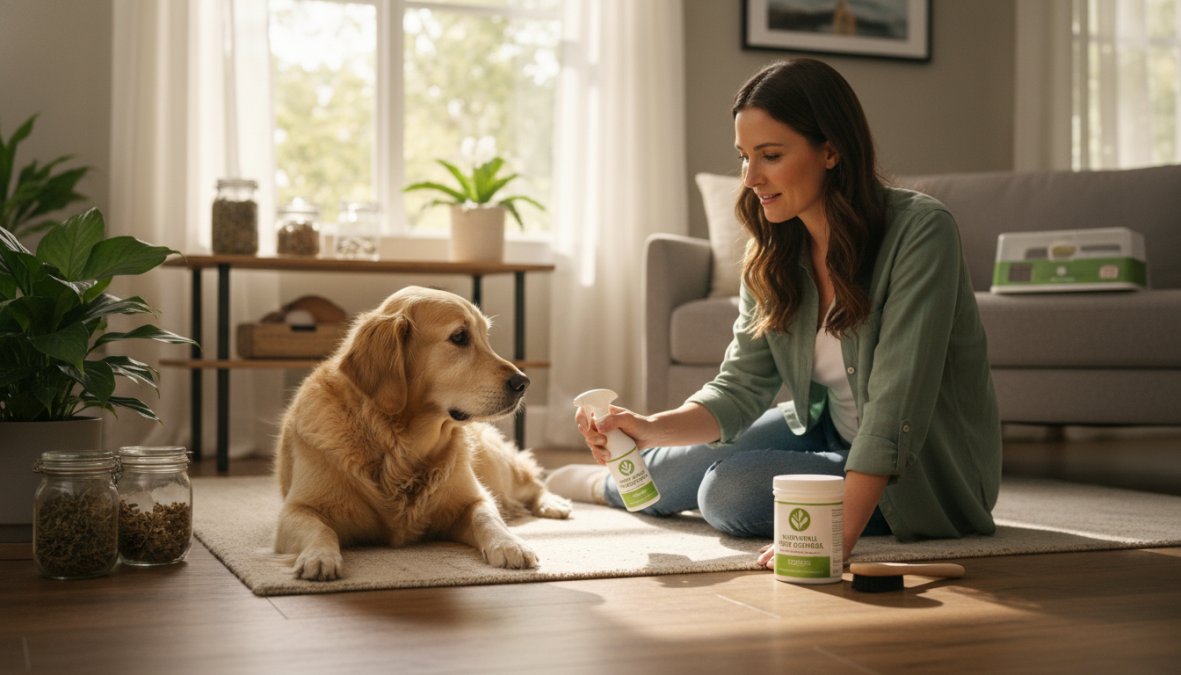
Gel baits for cockroaches and ants are among the most pet-safe options available, applied in tiny amounts inside cracks and crevices where pets and children cannot reach, at concentrations low enough that incidental contact carries minimal risk. Bait stations for rodents are similarly contained, though placement must be physically inaccessible to pets. Sticky traps are entirely non-toxic and effective for monitoring crawling insects.
EPA-Registered Products vs. DIY Concentrates: What to Choose
EPA-registered ready-to-use products are the safer default for households with pets and children. The dilution ratio has been set and tested by the manufacturer. DIY concentrates introduce a significant error variable: incorrect mixing produces either an ineffective solution or a dangerously over-concentrated one. If you use a concentrate, measure precisely, a stronger mix doesn’t reliably work faster and increases residue load on surfaces your pets walk across.
For indoor treatments, choose products specifically labeled “for indoor use” with the signal word “Caution” rather than “Warning” or “Danger.” Signal words directly correspond to acute toxicity levels, with Caution indicating the lowest tier.
Natural Pest Control for Home: Essential Oils, Diatomaceous Earth, and More
Natural pest control for home use has expanded significantly, and several options genuinely deliver results when applied correctly.
Cedarwood Oil, Pyrethrins, and Other Plant-Based Repellents
Cedarwood oil disrupts the octopamine system in insects while leaving mammals largely unaffected at typical concentrations. It works well as a perimeter repellent for ants, moths, and certain mites, but functions better as a preventive measure than an active infestation treatment.
Pyrethrins are extracted from chrysanthemum flowers and are among the most effective natural insecticides available. They break down rapidly in sunlight and air, a safety advantage outdoors, but indoor applications may require more frequent reapplication.
Diatomaceous earth (food grade) kills insects by abrading their exoskeleton and has no chemical toxicity to mammals. Wear a dust mask during application and keep pets and children out until dust settles.
Peppermint oil repels mice and certain insects but requires high concentrations that can irritate pet mucous membranes. Use it in sealed sachets rather than as a spray in living areas.
According to the EPA’s Biopesticides program overview, plant-incorporated protectants and biochemical pesticides undergo a separate registration process that still evaluates mammalian safety, providing a useful baseline for evaluating natural product claims.
How to Keep Pets Safe During Pest Control Treatments
The single most effective way to keep pets safe during pest control is to remove them from the treatment area before application and return them only after treated surfaces are fully dry and ventilated. This applies to both professional treatments and DIY applications.
Drying Time, Residue, and When It’s Safe to Return
Drying time varies by product type and conditions. Liquid surface treatments dry within 30 minutes to 4 hours indoors; high humidity extends that window. Granular outdoor treatments require watering in and drying, typically 24 hours minimum before pets access the area.
Residue is a separate concern from drying time. Some products intentionally leave an active residue that kills insects walking across it after application, the same residue a cat picks up on its paws. Check the label specifically for "residual activity" information.
A practical re-entry checklist for pets and children:
- Liquid sprays: surfaces dry to touch, minimum 30-60 minutes, ideally 2-4 hours
- Foggers or total release aerosols: minimum 2 hours with windows open after, wipe down hard surfaces
- Granular outdoor treatments: 24 hours and after one rain or watering cycle
- Bait stations: immediate return acceptable if stations are secured and inaccessible
- Diatomaceous earth: return after dust has fully settled, approximately 1-2 hours
Drying time and residual activity are not the same thing. A surface can feel dry but still carry an active pesticide film. Always check the label’s “re-entry interval” for the specific product you’re using.
Integrated Pest Management (IPM): The Smarter Approach for Family Homes
Integrated Pest Management prioritizes prevention, monitoring, and targeted intervention over routine chemical application. For families with pets and children, IPM is the most sensible long-term framework because it reduces overall pesticide exposure while maintaining effective pest control.
The IPM approach works in four stages:
- Inspection and identification: Determine which pest you’re dealing with and where they’re entering or nesting. Misidentification leads to the wrong treatment.
- Prevention: Seal entry points, eliminate food and water sources, reduce harborage areas.
- Monitoring: Use sticky traps and visual inspections to track pest activity. Treat when populations exceed a threshold, not on a fixed calendar schedule.
- Targeted intervention: Apply the least-toxic effective treatment to the specific location where pests are active. Avoid broadcast spraying when spot treatment will work.
According to the National Pesticide Information Center’s IPM resources, IPM programs consistently reduce pesticide use in residential settings without increasing pest populations. In practice, this means inspecting monthly, treating only when you find evidence of infestation, and focusing treatments on specific entry points rather than broad surface areas.
Emergency Response Protocols: What to Do If Exposure Happens
Pesticide exposure in pets or children requires a fast, calm, and specific response. The wrong move, like bathing a pet with dish soap when the label says flush with water, can make the situation worse.
Skin or coat contact:
- Remove the person or pet from the exposure area immediately.
- Check the product label for specific first aid instructions.
- Rinse the affected area with large amounts of lukewarm water for 15-20 minutes.
- Do not apply soap unless the label specifically directs it.
- Call Poison Control (1-800-222-1222 for humans) or the ASPCA Animal Poison Control Center (888-426-4435 for pets).
Ingestion:
- Do not induce vomiting unless specifically directed by Poison Control.
- Identify the product and have the label ready when you call.
- Call Poison Control or ASPCA Animal Poison Control immediately and note the time and estimated amount ingested.
Inhalation:
- Move the person or animal to fresh air immediately.
- If breathing is labored, seek emergency veterinary or medical care.
- Call Poison Control.
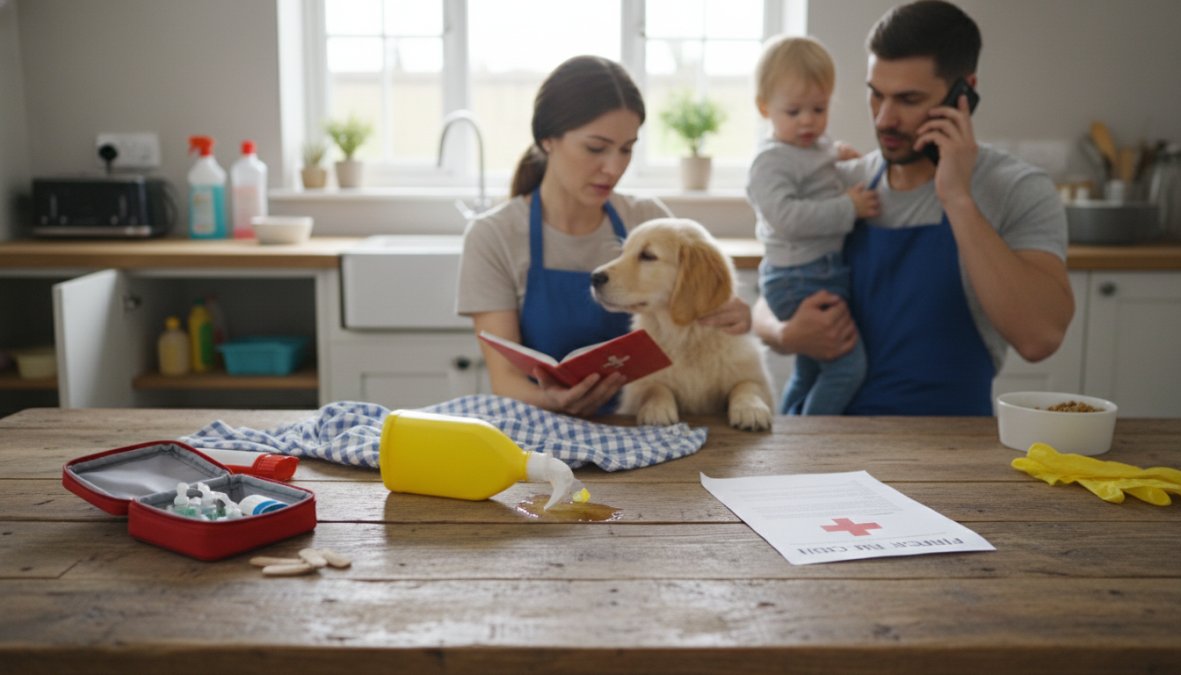
Keep the product label or a photo of it accessible during any emergency call, Poison Control operators need the active ingredient list, not the brand name. According to ASPCA Animal Poison Control Center resources, the most common household pesticide exposures in pets involve rodenticides and insecticide baits, both of which have specific treatments that depend on the exact active ingredient.
Never induce vomiting in a pet or child after pesticide ingestion without explicit instruction from Poison Control. Some formulations cause additional damage if vomited, and the correct response depends entirely on the specific active ingredient.
When to Call a Professional for Safe Pest Control Around Pets and Children
DIY pest control is appropriate for minor, isolated infestations where the pest is clearly identified and a targeted treatment is straightforward, a line of ants at a kitchen entry point, pantry moths, or a single mouse entry point.
Call a professional when:
- The infestation is large-scale or spread across multiple areas
- You cannot identify the pest or entry point
- Previous DIY treatments have failed
- The pest requires specialized equipment (bed bugs, termites, large rodent populations)
- You have multiple sensitive household members (infants, elderly, immunocompromised individuals, multiple pets)
A licensed professional brings access to commercial-grade products with better-defined safety profiles, precise application equipment that limits off-target exposure, and training to identify the least-invasive effective treatment. When evaluating a company, ask directly which active ingredients they plan to use, what the re-entry interval is, and whether they follow IPM principles. A company that answers those questions clearly is operating at a higher standard than one that defaults to "it’s safe once it dries."
Zoifia Pest Control serves the Metro Boston area with licensed and insured technicians who specialize in residential pest management for homes with families and pets. With a 90-day guarantee and no long-term contracts required, the service is structured around results rather than recurring fees.
For additional guidance on evaluating pest control safety claims, the EPA’s pesticide safety education resources provide a reliable, product-neutral reference for understanding active ingredient risk profiles and label requirements.
Managing pest problems in a home with children and animals is genuinely difficult, because the safest approach and the most convenient approach rarely align. Zoifia Pest Control provides licensed, insured residential pest management in the Metro Boston area, backed by a 90-day guarantee and no contract requirement, so you get effective treatment without committing to a service schedule that doesn’t fit your situation. Get a quote from Zoifia Pest Control and eliminate pests without compromising the safety of the people and animals who share your home.
Frequently Asked Questions
What is the safest pest control method for homes with pets and children?
The safest approach combines Integrated Pest Management (IPM) with EPA-registered, low-toxicity products applied correctly. This means sealing entry points, removing food sources, and using targeted treatments like bait stations or non-toxic surface treatments only where needed. Avoid broad chemical sprays indoors when possible. For persistent infestations, a licensed professional who specializes in safe pest control for pets and children can recommend the lowest-risk active ingredients for your specific situation.
How long should I keep my pets away after a pest control treatment?
Drying time varies by product type, but a general rule is to keep pets off treated surfaces for at least 30 to 60 minutes after the product has fully dried. For indoor residual sprays or concentrate applications, some manufacturers recommend 2 to 4 hours. Always read the application instructions on the product label and ask your pest control technician for the specific re-entry time. Cats are especially sensitive to residue and should be kept away longer than dogs.
Are natural or essential oil-based pest control products safer than synthetic ones?
Not necessarily. 'Natural' does not automatically mean non-toxic. Cedarwood oil and pyrethrins, for example, are plant-derived but can still cause toxicity in cats and fish at certain concentrations. The key factors are dilution ratio, application method, and the species in your home. Some synthetic EPA-registered products have well-documented safety profiles when used correctly. Always check labels for pet and child safety warnings regardless of whether a product is marketed as chemical-free or natural.
How can I get rid of household insects without harsh chemicals?
Several pet-friendly pest control methods reduce reliance on harsh chemicals. Diatomaceous earth (food-grade) can be applied along baseboards to target crawling insects. Bait stations for ants and roaches minimize surface exposure compared to sprays. Sealing cracks, fixing moisture issues, and removing clutter are core Integrated Pest Management strategies that prevent infestations before they start. Essential oils like cedarwood can act as repellents in low-traffic areas, though they should be kept away from pets, especially cats.
Is boric acid safe to use around pets and children?
Boric acid has low acute toxicity for humans and many pets when used in small, targeted amounts, such as inside wall voids or behind appliances where children and animals cannot reach. However, it should never be applied where pets or kids can directly contact it, as ingestion or repeated dermal absorption can cause harm. It is not a child-safe or pet-friendly option for open floor areas. If you use boric acid, follow dilution ratio instructions precisely and keep it strictly out of reach.
Are professional pest control services safe for babies and dogs?
Yes, when performed by a licensed and insured professional using EPA-registered products and proper application instructions, professional pest control can be safe for babies and dogs. The key is communication, tell your technician about infants, pets, and any sensitivities before treatment. A reputable company will advise you on preparation steps, drying time, and when to return home. Licensed professionals are trained to select the right active ingredients and dilution ratios that minimize pesticide exposure risk for vulnerable household members.
This article was written using GrandRanker
