Table of Contents
- Is Bed Bug Extermination Covered by Renters Insurance?
- Landlord Responsibility for Bed Bugs
- Tenant Rights During a Bed Bug Infestation
- Bed Bug Treatment Costs for Renters
- Steps to Take If You Find Bed Bugs
- Can You Get a Bed Bug Endorsement or Special Coverage?
- Conclusion
Last Updated: June 28, 2026
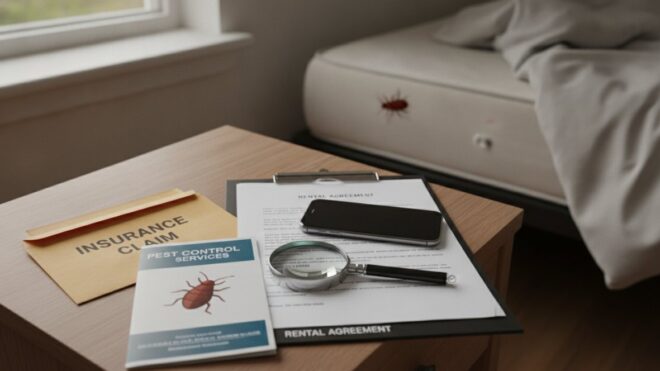
When bed bugs strike, most renters wonder if insurance will cover professional extermination. The short answer: in nearly all cases, no. At Zoifia Pest Control, we’ve worked with hundreds of tenants navigating this problem. This guide explains what your policy covers, what your landlord is legally responsible for, and how to protect your rights.
Most standard renters insurance policies treat bed bug infestations as maintenance issues rather than covered perils. Understanding this distinction determines whether you pay out of pocket or whether your landlord has a legal obligation to cover treatment.
Many renters don’t realize that state habitability laws often require landlords to maintain pest-free units, even when insurance won’t cover it. Knowing your state’s requirements can shift financial responsibility away from you.
Why Bed Bugs Are Typically Excluded
Bed bugs aren’t considered a sudden, accidental loss that renters insurance covers. Insurance companies classify them as gradual infestations, arriving through luggage, used furniture, or guest visits, rather than covered perils like fire or theft. Insurance protects against catastrophic, unexpected losses, not ongoing maintenance issues. This puts bed bugs in the same category as termites, rodents, or mold, all explicitly excluded from standard policies.
The frustration is real: you may have had zero control over how the infestation started, yet you face treatment costs of several hundred to several thousand dollars. From the insurer’s perspective, however, the gradual nature means it falls outside coverage. Claiming property damage if bed bugs damage clothing or furniture also fails, insurers treat bed bug damage as a pest-related exclusion, not property damage.
Understanding Covered Perils vs. Exclusions
A covered peril is an event your policy explicitly agrees to pay for: fire, lightning, theft, vandalism, sudden water damage. Exclusions are the opposite, specific situations the policy does not cover. Bed bugs fall squarely into exclusions; most policies contain explicit language stating that damage caused by insects, rodents, vermin, or infestation is not covered.
Even if your policy doesn’t mention bed bugs by name, the exclusion for "vermin" or "pest infestation" covers them. This explains why calling your insurance company results in a no, they’re following explicit policy language. This is also why bed bug endorsements are rarely available; the exclusion is considered fundamental to policy structure.
Standard renters insurance excludes bed bug infestations as a matter of policy design. The exclusion is intentional and nearly universal across carriers.
Landlord Responsibility for Bed Bugs
While renters insurance won’t cover treatment, landlord responsibility often will, depending on your state. Most states require rental properties to be maintained in habitable condition, and bed bug infestations typically violate that standard.
Habitability laws vary significantly by state. Some explicitly name pest-free conditions as a requirement; others require landlords to maintain properties free of conditions threatening health and safety. A few states treat bed bugs as the tenant’s responsibility if the tenant brought them in, though this is becoming less common. The most tenant-friendly states, California, New York, Massachusetts, and Illinois, have established clear legal precedent that landlords are responsible for treatment costs. A lease clause cannot override state law.
State-Specific Habitability Laws
California explicitly requires landlords to maintain rental properties in habitable condition, including freedom from pest infestations. Landlords must pay for bed bug treatment.
New York treats bed bugs as a habitability issue under the Housing Maintenance Code. Landlords must provide pest control services; tenants cannot be charged for extermination.
Massachusetts requires landlords to maintain premises in compliance with the sanitary code. Bed bug infestations violate this standard, making treatment a landlord responsibility.
Illinois considers bed bugs a breach of the implied warranty of habitability. Landlords must provide treatment at their own expense, and tenants can withhold rent or break the lease if treatment is not provided within a reasonable timeframe.
Texas has less explicit tenant protection. Bed bug responsibility depends on local ordinances and how courts interpret habitability standards.
For other states, research your specific state’s habitability statute or consult a local tenant rights organization. The National Housing Law Project provides state-by-state habitability summaries.
Sample Communication Template for Tenants
When you discover bed bugs, written communication is critical. Here’s a template you can adapt:
Subject: Urgent: Bed Bug Infestation in [Unit Number] – Immediate Treatment Required
Dear [Landlord Name],
I am writing to formally notify you of a bed bug infestation in my rental unit at [full address], which I discovered on [date]. I have observed [describe what you saw] in [locations].
[Your state] law requires landlords to maintain rental properties free of pest infestations as part of the implied warranty of habitability. This infestation violates that requirement, and I am requesting immediate professional pest control treatment.
I have attached photographs documenting the infestation. Professional treatment is necessary; DIY approaches are ineffective.
Please confirm receipt and provide a treatment schedule within 48 hours. If treatment is not scheduled within 5 business days, I will contact [local housing authority] to file a complaint and explore my legal options, which may include rent withholding or lease termination.
Thank you for your prompt attention to this matter.
Sincerely,
[Your Name]
[Date]
This documents the infestation in writing, cites your legal requirement, sets a deadline, and signals you understand your rights. Keep a copy for your records.
Never agree to pay for treatment yourself if your state law makes it the landlord’s responsibility. Once you pay, you’ve weakened your legal position and may struggle to recover the cost.
Tenant Rights During a Bed Bug Infestation
Your rights depend on your state, but several protections apply broadly. You have the right to a habitable unit, the right to request repairs without retaliation, and in many states, the right to withhold rent or break your lease if treatment is not provided.
Retaliation protection is critical. In most states, a landlord cannot evict you, raise rent, or reduce services in response to your complaint about bed bugs. If your landlord retaliates after you request treatment, you have legal recourse. Document the timeline: when you reported the infestation, when you requested treatment, and any negative actions the landlord takes afterward.
In some states, you can hire a pest control company yourself and deduct the cost from rent if the landlord refuses to act. This "repair and deduct" remedy is available in California, Illinois, and New York, but has strict requirements. You typically must provide written notice, wait a specified period (often 14-30 days), and follow specific procedures. Consult your state’s tenant rights organization before using this remedy.
Another option is contacting your local housing authority to request an inspection. If the inspector confirms the infestation violates housing codes, the landlord receives a citation and is ordered to remedy the violation.
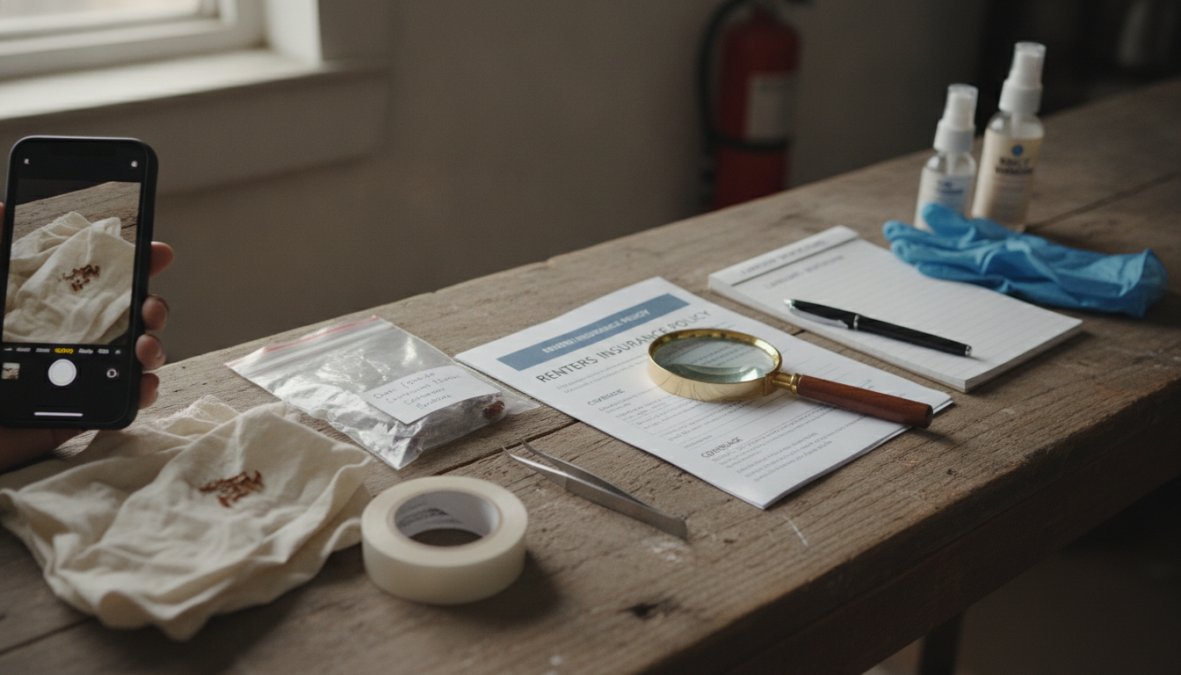
Documentation Checklist
Even though renters insurance won’t cover bed bug treatment, you may have other claims. If bed bugs damaged clothing or furniture, or if you temporarily relocated, you might claim that damage. Documentation is essential.
Photographic Evidence:
- Close-up photos of bed bugs, bites, or fecal spots
- Photos of affected areas showing the scope of infestation
- Date stamp all photos
Written Documentation:
- Date you first noticed the infestation
- Detailed description of what you observed and where
- Dates you reported the infestation to your landlord (in writing)
- Copies of all communication with your landlord
- Pest control inspection reports or quotes
- Medical documentation of bed bug bites, if applicable
Property Damage Records:
- Receipts or photos of discarded clothing, bedding, or furniture
- Estimated replacement value
- Proof of purchase if available
Pest Control Quotes and Invoices:
- Quotes from multiple companies showing treatment costs
- Final invoices and proof of payment
- Treatment reports documenting infestation extent
Communication Records:
- Copies of your written notice to the landlord
- Emails, texts, or letters from the landlord’s response
- Dates and notes from phone conversations
- Proof of delivery if you sent certified mail
This documentation supports any insurance claim for property damage, protects you if you file a complaint with your housing authority, and defends you if your landlord disputes your account.
Bed Bug Treatment Costs for Renters
Professional bed bug extermination costs vary widely. A single-room treatment for mild infestation might cost $300-$600. A full apartment treatment for moderate infestation typically ranges from $800-$1,500. Severe infestations can cost $2,000-$5,000 or more.
Most companies use heat treatment (heating the unit to 118°F or higher, killing all life stages) or chemical treatment (insecticides applied by a licensed technician, often requiring multiple visits). Heat treatment is more expensive but faster; chemical treatment is cheaper but requires more time.
| Approach | Cost Range | Success Rate | Time to Resolution |
|---|---|---|---|
| DIY (sprays, powders, traps) | $50-$300 | 5-10% | 2-6 months (usually fails) |
| Professional chemical treatment | $800-$1,500 | 85-95% | 2-4 weeks |
| Professional heat treatment | $1,500-$5,000 | 95%+ | 1 day |
| Combination (heat + chemical) | $2,000-$6,000 | 98%+ | 1-2 weeks |
DIY treatment typically fails because bed bugs develop resistance to over-the-counter pesticides. A $1,200 professional treatment that works in three weeks is far cheaper than a $200 DIY attempt that fails and leaves you treating an infestation for months.
If your landlord is responsible for treatment costs, they’ll hire a professional. If you’re paying out of pocket, professional chemical treatment offers the best balance of cost and effectiveness.
When requesting quotes, ask about follow-up guarantees. Many companies offer 30-60 day guarantees: if bed bugs return within that period, they’ll retreat at no charge.
Steps to Take If You Find Bed Bugs
Step 1: Confirm the Infestation (Day 1)
Look for actual bed bugs: small, flat, reddish-brown insects about the size of an apple seed. Check mattress seams, headboards, nightstands, and furniture. Photograph evidence immediately with date stamps.
Step 2: Notify Your Landlord in Writing (Day 1-2)
Send written notice documenting the infestation and requesting treatment. Include photos if possible. This creates a legal record of when you reported the problem.
Step 3: Avoid DIY Treatment
Do not buy over-the-counter pesticides or attempt treatment yourself. DIY treatment typically fails and can spread bed bugs to other units, potentially making you liable for neighboring apartment treatment costs.
Step 4: Prepare Your Unit for Professional Treatment
Follow the pest control company’s preparation instructions exactly: vacuum thoroughly, wash all bedding and clothing in hot water, declutter, move furniture away from walls, and seal items you want to keep in plastic bags.
Step 5: Be Present During Treatment
Stay nearby during treatment so you can answer questions and ensure thorough coverage. Follow all post-treatment instructions.
Step 6: Schedule Follow-Up Inspections
Most infestations require multiple treatments. A follow-up visit 7-14 days later targets newly hatched bugs.
How to Report to Your Landlord and Property Management
First Contact (Email or Certified Mail):
Use the template provided earlier. Keep a copy for your records.
Follow-Up (If No Response Within 48 Hours):
Send a second notice stating you will contact your local housing authority if treatment is not scheduled within 5 business days.
Escalation (If Still No Response):
Contact your local housing authority, tenant rights organization, or city inspector. File a complaint about habitability violations, which triggers an inspection and official citation to the landlord.
If You Must Relocate:
Document all relocation costs: hotel, airbnb, meals, transportation. In some states, you can claim these as additional living expenses against the landlord or deduct them from rent.
Can You Get a Bed Bug Endorsement or Special Coverage?
A bed bug endorsement is an add-on to a renters insurance policy that specifically covers bed bug treatment costs. In theory, this solves the coverage problem. In practice, bed bug endorsements are extremely rare and difficult to obtain.
Most major insurance carriers do not offer bed bug endorsements at all. The few that do typically include strict limitations: coverage caps of $500-$1,000 (far below actual treatment costs), exclusions if the infestation resulted from travel or guest visits, and requirements to use specific approved pest control companies.
If you want to explore whether your current policy offers an endorsement, contact your insurance agent directly. Be prepared to hear no. If coverage is available, review the coverage limits, exclusions, and cost carefully. A $500 endorsement costing $15 per year may seem worthwhile until you face a $1,500 treatment bill and realize you’re only covered for one-third of it.
A more practical approach is to budget for potential pest control costs the same way you’d budget for other maintenance expenses. If you live in an apartment building or shared housing, having $1,000-$2,000 set aside for potential treatment is wise financial planning.
The reality of bed bug extermination and renters insurance is frustrating but manageable once you understand the legal landscape. Your insurance won’t cover treatment, but your landlord likely will if you know how to assert your rights. Document everything, communicate in writing, and know your state’s habitability laws. If your landlord refuses to treat the infestation, tenant rights organizations and local housing authorities have tools to force compliance.
If you’re dealing with an active bed bug infestation and need professional treatment, Zoifia Pest Control specializes in fast, reliable bed bug elimination with a 90-day guarantee. Our licensed and insured team handles infestations of any severity without requiring long-term contracts. We provide detailed treatment plans, follow-up inspections, and documentation that supports your claims against your landlord. Get a quote today and take the first step toward resolving your infestation while protecting your tenant rights.
Frequently Asked Questions
Does renters insurance cover bed bug extermination?
No. Standard renters insurance policies do not cover bed bug extermination. Bed bugs are considered a pest infestation and a maintenance issue, which fall under policy exclusions rather than covered perils. Most insurers classify bed bug treatment as the landlord's responsibility under habitability laws. Some insurers may offer optional endorsements, but these are rare and typically come at additional cost.
Who is responsible for bed bug treatment, landlord or tenant?
In most jurisdictions, the landlord is legally responsible for bed bug extermination under implied warranty of habitability laws. Landlords must maintain the property in a habitable condition, which includes pest control. However, tenant rights and landlord responsibility vary by state and local housing authority regulations. Tenants should document the infestation and provide written notice to their landlord and property management immediately.
What should I do if I find bed bugs in my rental apartment?
First, document the infestation with photos and notes. Notify your landlord in writing immediately, use a template that includes the date, location, and severity. Request professional pest control treatment. Do not attempt DIY treatment without landlord approval, as it may interfere with professional extermination. Keep copies of all communications. If your landlord refuses to address the bed bug infestation, contact your local housing authority about your tenant rights and potential legal remedies.
Can I get insurance coverage for bed bug treatment costs?
Standard renters insurance policies exclude bed bug treatment from coverage. However, you may explore a bed bug endorsement through your insurer, though these are uncommon and often come with high deductibles or limited reimbursement. A better approach is to hold your landlord accountable for pest control costs under habitability laws. Document all out-of-pocket expenses and consider consulting legal advice if your landlord refuses to pay for professional extermination.
What's the cost difference between DIY and professional bed bug extermination?
DIY treatments typically cost $50-$300 using over-the-counter sprays and heat treatments, but often fail to eliminate the infestation completely. Professional pest control ranges from $300-$1,500+ depending on the infestation severity and treatment method. Professional extermination is more effective and usually comes with a guarantee. Since landlords are legally responsible for pest control, request professional treatment from your landlord rather than paying out-of-pocket for either option.
This article was written using GrandRanker
