Table of Contents
- How to Prevent Bed Bugs When Traveling: Essential Preparation
- How to Check Hotel Room for Bed Bugs: Step-by-Step Inspection
- Protecting Your Luggage: Using Luggage Racks and Protective Gear
- What to Do If You Find Bed Bugs in Your Hotel
- How to Get Rid of Bed Bugs After Traveling: Post-Trip Decontamination
- Common Mistakes Beginners Make When Preventing Bed Bugs
- Conclusion
How to Prevent Bed Bugs When Traveling: Beginner’s Guide
Last Updated: June 29, 2026
Bed bug infestations are increasingly common in all types of accommodations worldwide, from budget motels to five-star resorts. Learning how to prevent bed bugs when traveling is essential before your first trip. At Zoifia Pest Control, we’ve helped countless travelers avoid bringing these unwanted pests home. Below, we’ll show you exactly how to inspect your room, secure your luggage, and decontaminate your belongings after returning home, a complete three-phase protection system.
The biggest mistake beginners make is assuming bed bugs only exist in “dirty” hotels. They’re equally common in luxury properties and can hide in any accommodation, regardless of cleanliness or price point.
How to Prevent Bed Bugs When Traveling: Essential Preparation
Preparation starts with understanding what you’re looking for: bed bugs are small, reddish-brown insects about the size of an apple seed. They leave behind fecal spots (tiny dark marks), shed exoskeletons, and blood stains on bedding.
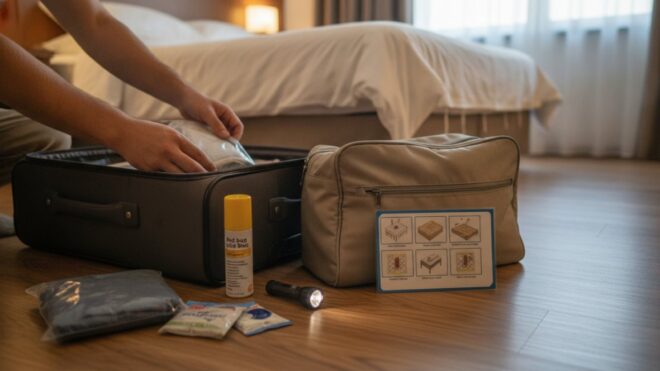
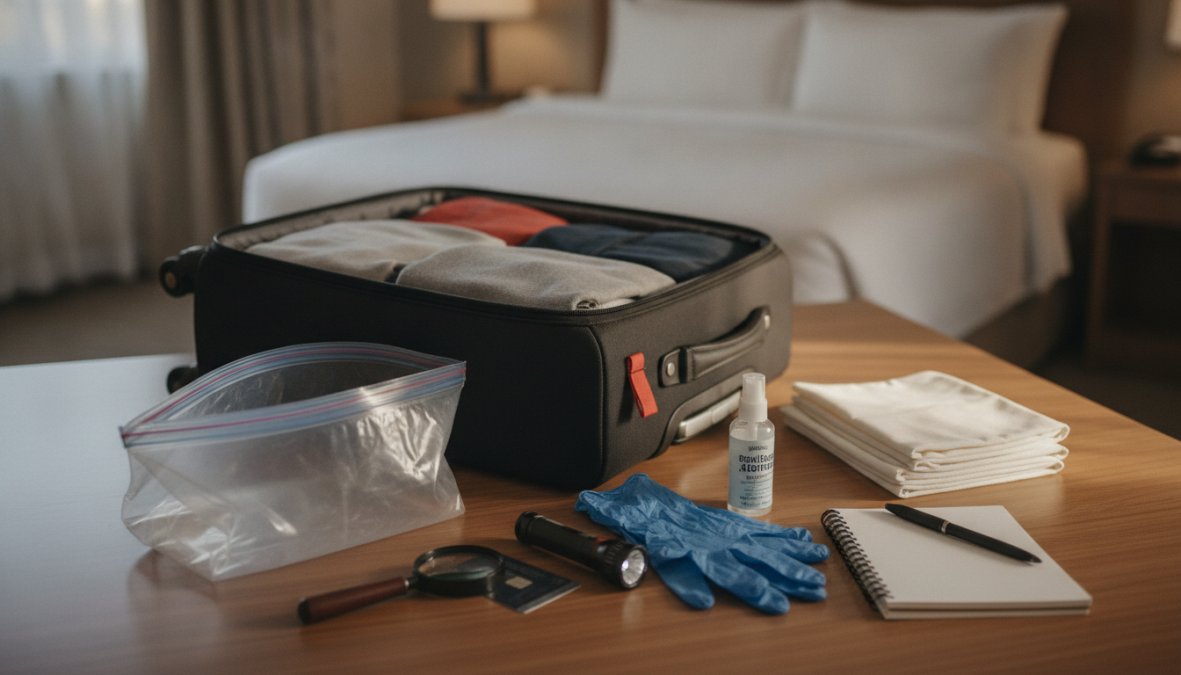
Pack a small inspection kit: a flashlight with a bright beam, a magnifying glass, and a few zip-top bags. Wear light-colored clothing during your hotel stay, bed bugs are easier to spot on light fabrics.
Research your accommodation ahead of time. Check review sites and travel forums for mentions of bed bugs or pest issues. If you find concerning reviews, consider changing your reservation.
Before packing your suitcase, wash all travel clothes in hot water (at least 120°F) and dry them on high heat. This eliminates any bed bugs that might already be in your luggage from previous trips.
What You’ll Need Before Your Trip
| Item | Purpose | Why It Matters |
|---|---|---|
| Flashlight (bright beam) | Illuminates dark crevices in beds and furniture | Bed bugs hide in shadows; proper lighting reveals them |
| Magnifying glass | Examines small insects and fecal spots | Confirms identification before panicking |
| Zip-top bags (gallon-size) | Isolates potentially infested items | Prevents spread to other luggage during travel |
| Light-colored clothing | Makes bed bugs visible if they crawl on you | Dark clothes hide evidence of bed bug contact |
| UV light (optional) | Highlights fecal spots and exoskeletons | Makes inspection faster and more thorough |
How to Check Hotel Room for Bed Bugs: Step-by-Step Inspection
The moment you enter your hotel room, conduct a systematic inspection before unpacking anything. Do not place your luggage on the bed or floor; use the luggage rack or bathroom counter instead. Your inspection should take 10-15 minutes.
Start at the bed. Pull back all bedding and examine the mattress seams, corners, and edges where bed bugs congregate. Look for small reddish-brown insects, dark fecal spots, or shed exoskeletons. Check both sides of the mattress and the box spring underneath.
Move to the headboard next. Bed bugs often hide in cracks, crevices, and upholstered fabric. Use your flashlight to peer into gaps and seams. Padded or fabric-covered headboards provide ideal hiding spots.
Inspect the nightstands, desk, and other upholstered furniture. Check the undersides of drawers and furniture backs. Examine baseboards, curtains, window frames, and picture frames.
If you spot any signs of bed bugs, request a room change immediately, preferably in a different building section, not an adjacent room.
Inspecting the Hotel Room Systematically
Perform this inspection in a logical order: start high and work downward, then move from one piece of furniture to the next.
Examine all bedding while on the bed. Pull sheets back completely and inspect fitted sheet edges where they attach to the mattress. Lift the mattress and inspect the underside, box spring, and space between them. Check the bed frame, including all wooden joints and crevices.
Move to surrounding furniture: nightstands, dressers, chairs, and sofas. Open drawers and check their undersides. Examine furniture legs and undercarriage.
Checking the Bed and Mattress Seams
Mattress seams are where bed bugs congregate most frequently. Use your flashlight and magnifying glass to examine every seam. Look for:
- Small reddish-brown insects (about the size of an apple seed)
- Dark fecal spots that look like tiny pepper specks
- Translucent, tan-colored exoskeletons
- A musty or sweet odor (in heavy infestations)
Check the piping along mattress edges and corners carefully. If you find anything suspicious, photograph it and inform the front desk immediately.
Examining Headboards and Upholstered Furniture
Inspect the seams and stitching on fabric headboards carefully. Use your flashlight to peer into gaps and crevices. Check around decorative buttons or tufting. Examine the back of the headboard as well.
For wooden headboards, check all joints, crevices, and carved details. Look for fecal spots on the wood.
Check any upholstered chairs, sofas, or accent furniture. Examine the underside of cushions, seams where fabric meets wood, and crevices in the frame.
If you find bed bugs in your room, do not attempt to kill them or collect them. This can cause them to scatter and spread to other areas of the hotel. Instead, notify the front desk immediately and request a room change in a different section of the building.
Protecting Your Luggage: Using Luggage Racks and Protective Gear
Your luggage is the primary vehicle for transporting bed bugs home. Never place your luggage on the bed or floor. Instead, use the luggage rack, which is typically made of metal and positioned away from the bed. Bed bugs struggle to climb smooth metal surfaces. If your room lacks a luggage rack, use the bathroom counter or bathtub.
Keep your luggage closed at all times when not actively packing or unpacking. Store your bags in the corner of the bathroom, away from any furniture or walls.
Strategic Luggage Placement and Storage
Position your luggage rack in the center of the room, away from walls, beds, and furniture. If using the bathroom, place your luggage in the bathtub rather than on the floor.
Inspect the luggage rack itself before placing your bags on it. Check for bed bugs or fecal spots on the metal frame.
Keep your suitcase zipped or latched at all times. When packing to leave, place all items in sealed bags before putting them in your suitcase.
Do not unpack your belongings into hotel drawers or closets. Keep everything in your sealed luggage. If you need clean clothes, remove them from sealed bags only as needed.
Bed Bug Luggage Protectors and Zip-Top Bags
Bed bug luggage protectors are specialized encasements designed to isolate your suitcase from bed bugs. Place your entire suitcase inside the protective bag before entering your hotel room. Keep the bag sealed throughout your stay.
For items you need to access during your trip, use gallon-size zip-top bags to store your clothes. Place clean clothes in sealed bags and remove them only as needed.
Consider using a silk liner or travel sheet, a lightweight, portable sheet that you can place on hotel beds. This creates a barrier between you and the mattress.
Pack several extra zip-top bags of various sizes for isolating potentially contaminated items.
Double-bag your items for extra protection. Place clothes in a zip-top bag, then place that bag inside another zip-top bag. This redundancy ensures that even if one seal fails, your items remain protected.
What to Do If You Find Bed Bugs in Your Hotel
Discovering bed bugs in your hotel room is alarming, but responding correctly is crucial.
Do not panic or attempt to kill the bed bugs. Crushing them can cause them to scatter and spread to adjacent rooms. Photograph any bed bugs you find to document the infestation.
Notify the front desk immediately. Be specific about the location and provide your room number. Ask for documentation of your report. This creates a record that protects you legally.
Request a room change in a different section of the building, not an adjacent room. Bed bugs can spread between adjacent rooms through walls and electrical outlets. Ideally, request a room several rooms away.
Before moving to your new room, inspect it thoroughly using the same systematic approach. Do not assume a different room is bed-bug-free.
If the hotel refuses to move you or if you discover bed bugs in your replacement room, consider checking into a different hotel entirely.
Document everything. Keep receipts, photos, and written notes about your experience. If you later discover bed bugs at home, this documentation can help prove that you acquired them during your hotel stay.
How to Get Rid of Bed Bugs After Traveling: Post-Trip Decontamination
The most critical phase of bed bug prevention happens after you return home. A rigorous decontamination protocol can eliminate bed bugs before they establish an infestation.
Do not bring your luggage into your bedroom. Place it in your bathroom, laundry room, or garage, away from where you sleep.
Begin decontamination immediately upon arriving home. Do not wait a day or two. This process takes several hours but is absolutely necessary.
Immediate Steps Upon Arriving Home
Remove all clothes and items from your suitcase directly into sealed bags or your washing machine. Do not dump everything onto your bed or floor.
Inspect your suitcase thoroughly before storing it. Check all seams, pockets, and crevices for bed bugs, fecal spots, or exoskeletons. If you find evidence of bed bugs, place the suitcase in a sealed bag or consider discarding it.
Place all clothing, bedding, and soft items directly into your washing machine. Wash everything in hot water (at least 120°F) using your washing machine’s hottest setting. Hot water kills bed bugs at all life stages.
Hard-sided items like shoes, toiletries, and souvenirs should be placed in sealed bags and left undisturbed for at least 48 hours.
Vacuum your suitcase thoroughly, including all seams, pockets, and crevices. After vacuuming, immediately seal the vacuum bag or empty the canister into a sealed trash bag and dispose of it outside your home.
Heat Treatment and Dryer Cycle Protocol
Heat is the most effective method for killing bed bugs at all life stages. A single exposure to 118°F (48°C) for 90 minutes kills all bed bugs and eggs.
Place all washable items in your dryer on the highest heat setting. Run the dryer for at least 45-60 minutes. This duration ensures that even items in the center of the load reach lethal temperatures.
For items that cannot be washed, place them in sealed bags and expose them to heat in other ways. Some travelers use a car parked in direct sunlight on a hot day, though a dryer is more reliable.
After heat treatment, inspect your items carefully. Look for any dead bed bugs, fecal spots, or exoskeletons. If you find evidence of bed bugs, repeat the heat treatment process.
Inspect your home for bed bugs after returning from travel. Check your bed, bedding, and bedroom furniture using the same systematic approach you used in your hotel room. Early detection is critical; if you catch an infestation in its first week, treatment is far simpler.
Consider calling Zoifia Pest Control if you discover bed bugs in your home. Our licensed and insured team specializes in bed bug elimination with a 90-day guarantee, ensuring your home remains pest-free without long-term contracts.
Post-travel decontamination is your final defense against bringing bed bugs home. The heat treatment process kills all life stages of bed bugs, making it the single most important step in preventing home infestation.
Common Mistakes Beginners Make When Preventing Bed Bugs
Assuming cleanliness prevents bed bugs. Bed bugs are not attracted to dirt or poor hygiene; they’re attracted to humans. A five-star hotel can have bed bugs just as easily as a budget motel.
Placing luggage on the bed immediately upon arrival. This exposes your luggage to any bed bugs present in the mattress or bedding.
Unpacking into hotel drawers and closets. This exposes your belongings to bed bugs hiding in furniture.
Skipping the decontamination process. Bed bugs can be present without being visible; they hide during the day and only emerge at night to feed.
Using cold water for laundry. Bed bugs survive cold water. Hot water (at least 120°F) is required to kill them.
Failing to seal items properly. Zip-top bags must be completely sealed to prevent bed bugs from escaping.
Ignoring warning signs in hotel reviews. If multiple recent reviews mention bed bugs, take them seriously and change your reservation.
Not inspecting replacement hotel rooms. Always conduct a thorough inspection of your replacement room before unpacking.
Bed bug prevention while traveling requires vigilance, but the effort is worth the peace of mind. By following the inspection, protection, and decontamination protocols in this guide, you significantly reduce your risk of bringing bed bugs home. If you do discover bed bugs in your home despite these precautions, professional treatment is your best option. Zoifia Pest Control offers fast, reliable bed bug elimination backed by a 90-day guarantee, with no long-term contracts required.
Frequently Asked Questions
How do I check for bed bugs in a hotel room?
Start by inspecting the mattress seams, headboard, and baseboards with a flashlight. Look for small dark spots (fecal marks), exoskeletons, or the bugs themselves. Check upholstered furniture, luggage racks, and drawer edges. Don't unpack immediately, keep luggage on the rack away from the bed. If you find any signs of infestation, request a different room or hotel. This systematic inspection is crucial when learning how to prevent bed bugs when traveling.
What's the best way to use bed bug luggage protectors when traveling?
Use zip-top bags and protective luggage covers to create a barrier between your suitcase and hotel surfaces. Place luggage on the rack rather than the floor or bed. Store clothes in sealed bags instead of unpacking directly into drawers. These bed bug luggage protectors prevent nymphs and eggs from entering your luggage. When packing to leave, inspect your suitcase thoroughly before sealing it, and keep it in protective gear during transport home.
How do I get rid of bed bugs after traveling if I bring them home?
Upon arriving home, place all clothes and fabric items directly into the dryer on high heat for at least 30 minutes, this kills all life stages including eggs and nymphs. Inspect your suitcase in a bathtub or isolated area. Wash and dry non-dryer items separately. Vacuum your luggage thoroughly. Consider professional heat treatment for the suitcase if infestation is confirmed. This rigorous post-trip decontamination protocol prevents a full home infestation and is essential for travelers concerned about bed bugs.
Can bed bugs really travel in my suitcase, and how do I prevent it?
Yes, bed bugs readily hide in luggage crevices, seams, and pockets. They can travel as eggs, nymphs, or adults. Prevention involves keeping your suitcase elevated on luggage racks away from beds and floors, using protective covers, and storing clothes in sealed bags. Inspect your luggage before and after travel. Upon returning home, use high heat treatment in your dryer and thoroughly vacuum your suitcase. These steps significantly reduce the risk of transporting bed bugs from hotels to your home.
This article was written using GrandRanker
