
Table of Contents
- How to Choose a Professional Bed Bug Exterminator: A Step-by-Step Guide
- Verify Credentials, Licensing, and Insurance
- Questions to Ask a Bed Bug Exterminator
- Bed Bug Treatment Methods Comparison
- Understanding Bed Bug Exterminator Cost Factors
- How to Prepare for Bed Bug Treatment
- Red Flags and Contractual Safeguards
- Requesting References and Reviewing Reputation
Last Updated: June 20, 2026
Choosing a professional bed bug exterminator is one of the most consequential decisions you’ll make as a homeowner or property manager facing an infestation. The wrong hire can cost you months of repeated treatments, unresolved problems, and serious financial loss. This guide walks you through exactly what to verify, what to ask, and what to watch out for before you sign anything.
Most guides focus almost entirely on price. Cost matters, but an unlicensed exterminator offering a low quote can leave you worse off than before treatment started. The smarter approach is to evaluate credentials first, then compare cost estimates from qualified candidates only.
What You’ll Need Before Starting
Before contacting any pest control provider, gather the following:
- Your property address and approximate square footage
- Photos or notes documenting where you’ve seen evidence of bed bugs (seams, mattresses, baseboards)
- A list of any prior treatments (DIY or professional)
- Your availability for inspection and treatment dates
- A basic understanding of your state’s pest control licensing requirements
Having this information ready speeds up the inspection process and helps exterminators give you accurate cost estimates.
Verify Credentials, Licensing, and Insurance
The first step in choosing a professional bed bug exterminator is confirming that the company holds valid credentials. This is non-negotiable, and it’s the step most people skip.

A Pest Management Professional (PMP) is a licensed technician who has completed state-required training and examinations in pest identification, treatment application, and safety protocols. Not every person calling themselves an exterminator holds this designation. All legitimate pest control providers must hold a current state-issued pesticide applicator license.
Check for Professional Certifications
Look for certifications from recognized industry organizations. The National Pest Management Association’s QualityPro certification program is one of the most recognized standards in the industry. Technicians who have completed entomologist-reviewed training programs demonstrate higher competence in pest identification and treatment selection.
Ask directly: "Are your technicians licensed pesticide applicators in this state?" Then verify independently. Most states publish online license lookup tools through their department of agriculture or environmental services.
Cross-reference the license number the company provides against your state’s public database before scheduling an inspection. This takes under five minutes and filters out unqualified operators immediately.
Confirm Liability Insurance and Bonding
Liability insurance protects you if a treatment damages your property or causes health issues. Bonding protects you financially if a technician causes theft or intentional damage. Ask for a certificate of insurance naming your address. A company that cannot produce one on request should not enter your home.
Questions to Ask a Bed Bug Exterminator
Most people interview exterminators by asking for a price and picking the lowest number. The questions you ask reveal far more about a company’s competence than any quote.
Inspection and Assessment Questions
A thorough inspection is the foundation of any effective treatment plan. Before discussing methods or pricing, ask:
- Do you conduct a free inspection, or is there an inspection fee? Reputable companies often charge for detailed inspections because they take time and expertise.
- How do you confirm a bed bug infestation versus other pests? Misidentifying bat bugs or spider beetles as bed bugs is more common than most consumers realize.
- Will you document the inspection findings in writing? A written report protects you and establishes a baseline for post-treatment monitoring.
- Do you use canine detection? Trained detection dogs can locate infestations with high accuracy, particularly in early-stage cases.
Treatment and Follow-Up Questions
Once inspection is confirmed, shift to treatment specifics:
- What treatment method do you recommend for my situation, and why?
- How many treatment sessions are included in the initial service agreement?
- What does your follow-up schedule look like after the first treatment?
- What is your policy if the infestation persists after treatment?
The follow-up question is the most revealing. Companies confident in their work will answer it directly.
Bed Bug Treatment Methods Comparison
Not all treatment approaches carry the same effectiveness. The right method depends on infestation severity, property structure, and chemical resistance concerns.
Heat Treatment vs. Chemical Application
Heat treatment is a non-chemical method that raises room temperatures to levels lethal to bed bugs at all life cycle stages, including eggs. Chemical application uses EPA-registered pesticides applied to harborage areas, cracks, and furniture surfaces.
| Treatment Method | Effectiveness | Treatment Time | Chemical Exposure | Cost Range |
|---|---|---|---|---|
| Heat Treatment | High (single session) | 6-8 hours | None | Higher |
| Chemical Application | High (multiple sessions) | 1-2 hours per visit | Low to moderate | Lower |
| Integrated Pest Management | High (combined approach) | Varies | Minimal | Moderate |
| Cryonite (CO2 freezing) | Moderate | 1-3 hours | None | Moderate |
Heat treatment eliminates the need for multiple visits in many cases, but it cannot be used in all property types. Chemical application is effective but typically requires two to three follow-up visits to address hatching eggs.
Chemical resistance is a real and growing concern with bed bug populations. If a previous chemical treatment failed, tell your exterminator before treatment begins.
Integrated Pest Management Approach
Integrated Pest Management (IPM) is a systematic approach that combines inspection, monitoring, non-chemical methods, and targeted chemical application based on pest lifecycle data. Rather than defaulting to broad chemical spraying, IPM-trained professionals select application methods based on what the specific infestation requires.
According to EPA guidance on bed bug control and Integrated Pest Management, IPM reduces unnecessary pesticide exposure while maintaining treatment effectiveness.
Understanding Bed Bug Exterminator Cost Factors
Cost is where most hiring decisions go wrong. The real mistake is treating cost as the primary filter rather than a secondary one.
What Affects Your Total Cost Estimate
Several variables drive the total cost of professional bed bug treatment:
- Property size: Larger spaces require more time, materials, and equipment
- Infestation severity: Early-stage infestations cost significantly less to treat than widespread ones
- Treatment method selected: Heat treatment equipment is expensive to operate
- Number of follow-up visits included: Some quotes cover a single treatment; others include multiple sessions
- Geographic location: Labor and overhead costs vary by market
A bed bug exterminator cost estimate should always be provided in writing after a physical inspection, not before.
Get at least three written cost estimates from licensed [pest control](/pest-control-vs-diy-extermination-methods/) providers after inspection. Compare what each estimate includes: number of treatments, preparation requirements, follow-up visits, and warranty terms.
Warranty and Service Guarantees
A service guarantee is the clearest signal of a company’s confidence in its own work. Ask for the guarantee terms in writing before treatment begins. Key questions:
- How long does the warranty period last?
- What conditions must be met for the guarantee to apply?
- Does the guarantee cover re-treatment at no cost, or only offer a discount?
- Are there exclusions that would void the warranty?
How to Prepare for Bed Bug Treatment
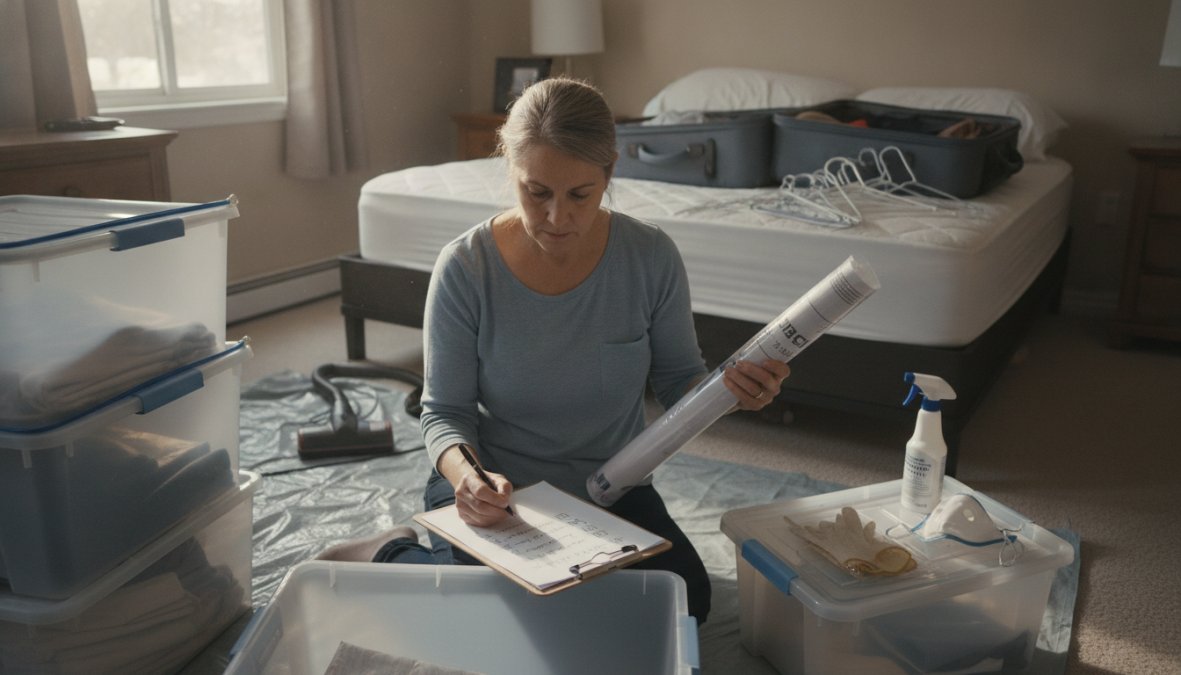
Preparation is where many treatments fail, and the failure is almost always the client’s, not the exterminator’s. Inadequate preparation reduces chemical penetration and can allow bed bugs to survive in untreated areas.
Pre-Treatment Preparation Checklist
Your exterminator should provide a preparation checklist specific to the treatment method selected. General preparation for most treatment types includes:
- Wash and dry all bedding, clothing, and curtains on high heat (at least 120°F for 30 minutes)
- Seal laundered items in plastic bags until treatment is complete
- Remove clutter from floors, under beds, and inside closets
- Pull furniture 18 inches away from walls
- Vacuum mattresses, box springs, and carpets, then immediately seal and dispose of the vacuum bag outside
- Notify your exterminator of any pets, fish tanks, or medical equipment requiring special handling
- Arrange alternative accommodations if heat treatment is scheduled (typically 6-8 hours)
Skipping preparation steps significantly reduces effectiveness.
Post-Treatment Monitoring and Follow-Up
After treatment, install mattress encasements rated specifically for bed bugs on all mattresses and box springs. Place bed bug interceptors under each furniture leg. Check interceptors weekly for the first 60 days. Any live bed bug activity after treatment should be reported to your exterminator immediately.
According to University of Minnesota Extension guidance on bed bug monitoring after treatment, continued monitoring for at least 30 days post-treatment is recommended to confirm eradication.
Red Flags and Contractual Safeguards
The pest control industry has operators who prioritize sales over results. Knowing what to watch for protects you before money changes hands.
Warning Signs of Unreliable Exterminators
Watch for these specific red flags:
- Unwillingness to provide a license number for verification
- Quoting a firm price without conducting an inspection
- Guaranteeing complete elimination after a single treatment without caveats
- Pressure to sign a service agreement on the first call
- No written documentation of treatment plan, chemicals used, or follow-up schedule
- Recommending only one treatment method regardless of infestation details
Contractual Red Flags to Avoid
Before signing any service agreement, read the full document. Contractual red flags that should prompt negotiation or withdrawal:
- Auto-renewal clauses that extend the contract without explicit written consent
- Cancellation penalties that exceed one month’s service fee
- Vague re-treatment language that says "at our discretion" rather than defining specific trigger conditions
- No liability clause that waives all company responsibility for property damage during treatment
- Exclusions broader than the coverage (e.g., warranty voided if you purchase any used item during the warranty period)
Requesting References and Reviewing Reputation
When a pest control provider gives you references, call them. Ask three specific questions: Did the treatment resolve the infestation completely? Were follow-up visits handled promptly? Would you hire this company again?
Check the company’s profile on the Better Business Bureau’s business directory and complaint history and read Google reviews with a focus on patterns rather than individual ratings. A company with consistent complaints about follow-up responsiveness tells you something important.
Verify membership in professional organizations. Membership in the National Pest Management Association or state-level pest control associations indicates a commitment to ongoing training and adherence to industry standards.
One final check: confirm that the company’s technicians, not subcontractors, will perform your treatment. Ask directly: "Will your own employees perform the treatment, or do you use subcontractors?" The difference between a professional bed bug exterminator who resolves your problem and one who extends it often comes down to this level of due diligence before you book.
Frequently Asked Questions
What should I look for when hiring a bed bug exterminator?
When choosing a professional bed bug exterminator, verify they hold current licensing and professional credentials as a Pest Management Professional (PMP). Confirm they carry liability insurance and can provide references from recent clients. Ask about their inspection process, treatment methods (heat treatment vs. chemical application), warranty coverage, and whether they follow EPA guidelines and Integrated Pest Management practices. Request a detailed cost estimate and service agreement in writing before committing.
What questions should I ask a bed bug exterminator before hiring?
Ask these critical questions: How will you inspect for bed bugs and identify the infestation level? What treatment methods do you recommend and why? Do you offer heat treatment, chemical application, or both? What is your service guarantee or warranty period? Will you provide post-treatment monitoring? What preparation is required from me? Can you provide references? Is your company licensed, insured, and bonded? What happens if bed bugs return within the warranty period? Request everything in writing as part of your service agreement.
How much does professional bed bug extermination cost?
Bed bug exterminator costs vary based on infestation severity, property size, treatment method chosen, and your location. Heat treatment typically costs more upfront but requires fewer visits. Chemical treatment may be less expensive initially but often requires multiple applications. Most professionals provide free cost estimates. Look for transparent pricing with no hidden fees. Compare quotes from at least three licensed providers. Many reputable exterminators offer service guarantees, if bed bugs return within the warranty period (often 30-90 days), they retreat at no extra charge.
How should I prepare my home for bed bug treatment?
Before treatment, follow your exterminator's preparation checklist carefully. This typically includes removing clutter, washing bedding and clothing in hot water, vacuuming thoroughly, and moving furniture away from walls. Declutter closets and drawers to allow access. Remove pets and children from treated areas as directed. After treatment, avoid vacuuming or cleaning for 7-10 days to allow chemicals to work. Keep monitoring for signs of bed bugs during the follow-up period. Implement post-treatment monitoring by inspecting mattress seams, furniture, and baseboards weekly. Report any new activity to your exterminator immediately for continued follow-up treatment if needed.
Bed bug infestations do not resolve on their own, and the gap between a qualified exterminator and an unqualified one is measured in months of repeated treatments and ongoing disruption. Zoifia Pest Control provides licensed and insured bed bug services in the Metro Boston area, backed by a 90-day guarantee and no long-term contract requirements. Get a quote from Zoifia Pest Control and resolve your infestation with a team that stands behind its work.
This article was written using GrandRanker
