
Table of Contents
- What Is the Average Cost of Bed Bug Extermination?
- Bed Bug Extermination Cost Per Room: A Realistic Breakdown
- Is Heat Treatment Better Than Chemical for Bed Bugs?
- How Long Does Bed Bug Extermination Take?
- Why Bed Bug Extermination Is So Expensive (And Worth It)
- How to Prepare for Bed Bug Extermination to Avoid Extra Costs
- What Does the Average Cost of Bed Bug Extermination Look Like for Tenants?
- Conclusion
Last Updated: June 18, 2026
Bed bug infestations are one of the most stressful and costly pest problems a homeowner or renter can face. If you’ve been searching for what is the average cost of bed bug extermination, the short answer is: it varies widely, but most treatments fall somewhere between a few hundred and several thousand dollars depending on the method, infestation size, and property type. This guide from Zoifia Pest Control breaks down every cost factor you need to understand before calling a professional, so you don’t get hit with surprises when the invoice arrives.
The real cost includes preparation, follow-up visits, and sometimes replacing infested furniture. Below, we’ll show you exactly how treatment method, room count, and tenant status affect your final bill, and where the hidden costs tend to appear.
What Is the Average Cost of Bed Bug Extermination?
Bed bug extermination cost covers inspection, treatment, and follow-up service. For most residential properties, the final price depends heavily on infestation severity and treatment method selected.
Many pest control professionals price treatments per room, per square foot, or as a flat rate. A single-room chemical treatment is the most affordable option; whole-home heat treatment sits at the premium end. The gap between these approaches is significant, which is why understanding your specific situation before committing to a quote matters.
A common mistake is calling one company and assuming that quote is the market rate. Prices vary considerably between providers, especially in metro areas like Boston where overhead and licensing costs are higher. Getting two or three quotes is standard practice.
Always ask whether the quoted price includes a follow-up inspection. Many chemical treatments require a second visit 10-14 days after the initial treatment to catch newly hatched eggs. If that visit isn’t included, you’ll pay extra.
Key Factors That Drive the Final Price
Several variables determine what you’ll actually pay:
- Infestation severity. A localized infestation in one bedroom costs far less than a whole-home spread that has reached furniture, baseboards, and electrical socket plates.
- Treatment method. Heat treatment commands a premium over chemical treatment. Integrated pest management approaches fall in between.
- Property size. More square footage means more labor, product, and time. Multi-unit housing adds complexity due to cross-contamination risk.
- Number of visits required. Chemical treatments almost always need at least two visits. Heat treatment is typically a single session.
- Geographic location. Urban markets with higher costs of living generally see higher pest control pricing.
- Preparation requirements. Some providers charge extra if the property isn’t properly prepared before treatment.
Bed Bug Extermination Cost Per Room: A Realistic Breakdown
Pricing bed bug extermination cost per room is the most transparent approach because room count directly correlates with labor time and product volume.
| Treatment Type | Single Room | 2-3 Rooms | Whole Home (4+ Rooms) |
|---|---|---|---|
| Chemical treatment | Lower range | Mid range | Higher range |
| Heat treatment | Mid-high range | High range | Premium range |
| Combined (IPM) | Mid range | High range | Premium range |
| Cryonite (freezing) | Mid range | High range | Premium range |
Get itemized quotes from licensed providers. Per-room pricing scales non-linearly: treating five rooms doesn’t cost five times what one room costs because setup, equipment transport, and inspection time are fixed costs spread across the job. Room size also matters, a large master bedroom with a walk-in closet and upholstered furniture costs more than a small spare room with minimal furnishings.
Avoid any exterminator who quotes a flat rate without inspecting the property first. Legitimate professionals need to assess hiding spots, infestation density, and access challenges before pricing accurately. A blind quote is almost always either too low (leading to surprise charges) or too high.
Is Heat Treatment Better Than Chemical for Bed Bugs?
Heat treatment is generally more effective than chemical treatment for eliminating bed bugs in a single visit, but it costs significantly more and isn’t always the right choice for every property. The best option depends on infestation size, budget, and property layout.
According to EPA guidance on bed bug treatment methods, heat treatment kills bed bugs at all life stages including eggs, which chemical treatments often cannot penetrate, the key advantage that makes heat the preferred choice for severe infestations.
Heat Treatment: Pros, Cons, and Typical Cost
Heat treatment raises interior temperatures to levels lethal to bed bugs and their eggs. Industrial heating equipment is brought in and the space is held at target temperature for several hours.
 professional in full uniform operating large industrial heat treatment equipment inside a bedroom, with flexible heating hoses running along the floor and protective barriers covering furniture, shot under bright interior lighting](https://cdn.grandranker.com/articles/bed-bug-extermination-cost-what-to-expect-in-2026-content-1-1781747393.jpg)
Pros of heat treatment:
- Kills bed bugs at every life stage, including eggs and eggshells
- No chemical residue left behind
- Typically completed in a single visit
- Reaches deep into mattress seams, baseboards, and furniture crevices
Cons of heat treatment:
- Higher upfront cost compared to chemical methods
- Certain items (candles, aerosols, pets, plants) must be removed before treatment
- No residual protection, so re-infestation is possible if the source isn’t addressed
- Not suitable for properties with heat-sensitive materials or certain electronics
Heat treatment is the better choice for severe infestations, tenants who need fast resolution, and anyone wanting to avoid repeated chemical applications.
Chemical Treatment: Pros, Cons, and Typical Cost
Chemical treatment uses insecticides applied to known hiding spots, mattress seams, baseboards, electrical socket plates, and carpet edges. Multiple visits are standard because most agents don’t kill eggs on contact.
Pros of chemical treatment:
- Lower upfront cost than heat treatment
- Residual protection can deter re-infestation for weeks after application
- Effective for mild to moderate infestations when applied correctly
- More accessible from a scheduling standpoint
Cons of chemical treatment:
- Requires at least two visits to address newly hatched eggs
- Bed bug populations in some areas have developed resistance to common insecticides
- Residents typically need to vacate for several hours post-treatment
- Non-compliance with preparation requirements leads to retreatment charges
For mild infestations caught early, chemical treatment is a cost-effective starting point. For anything beyond a single room or confirmed multi-room spread, heat treatment is worth the additional investment.
How Long Does Bed Bug Extermination Take?
Bed bug extermination takes anywhere from a few hours to several weeks depending on treatment method and infestation severity.
- Heat treatment: The active session typically takes 6-8 hours. You can usually re-enter the same day once temperatures normalize.
- Chemical treatment (first visit): Application takes 1-3 hours. Residents must stay out 4-6 hours afterward.
- Chemical treatment (follow-up): A second visit is scheduled 10-14 days after the first to treat newly hatched nymphs.
- Full clearance: A follow-up inspection is recommended 30 days after the final treatment to confirm resolution.
- Severe infestations: Some cases require three or more treatment cycles over 4-6 weeks.
The thing nobody tells you: the clock starts over if preparation wasn’t done correctly before the first treatment. Improperly prepared rooms force retreatment, adding both time and cost.
Why Bed Bug Extermination Is So Expensive (And Worth It)
The cost of professional extermination reflects the genuine complexity of the job. Bed bugs are among the hardest household pests to eliminate because of their nocturnal behavior, ability to survive months without feeding, and talent for hiding where standard sprays can’t reach.
According to National Pest Management Association industry resources, bed bugs are consistently ranked among the most difficult pests to control, which is reflected in treatment pricing across the industry. Licensing, insurance, specialized equipment, and multiple site visits all add legitimate overhead to every job.
There’s also the cost of getting it wrong. A failed DIY attempt or cut-rate treatment means the problem spreads further, requires more aggressive treatment later, and potentially contaminates neighboring units. Professional extermination also comes with guarantees, re-treatment clauses and documented service records that matter significantly in tenant-landlord disputes.
How to Prepare for Bed Bug Extermination to Avoid Extra Costs
Preparation is where most homeowners and tenants lose money unnecessarily. Many pest control companies charge for retreatment if the property wasn’t properly prepared. Follow this checklist before your exterminator arrives:
- Wash all bedding, clothing, and linens in hot water and dry on high heat for at least 30 minutes
- Seal washed items in airtight plastic bags and remove them from the treatment area
- Vacuum mattress seams, baseboards, and carpet edges thoroughly, then seal and discard the vacuum bag immediately
- Move furniture at least 12 inches away from walls to allow access to baseboards and hiding spots
- Remove items from closets, dressers, and nightstands and bag them separately
- Disassemble bed frames if possible to expose all crevice tool-accessible surfaces
- Notify the exterminator about any heat-sensitive items (electronics, candles, musical instruments) if heat treatment is planned
- Arrange for pets and plants to be removed from the property on treatment day
- Do not apply any DIY sprays or foggers before the professional visit, as these can scatter bugs and make treatment harder
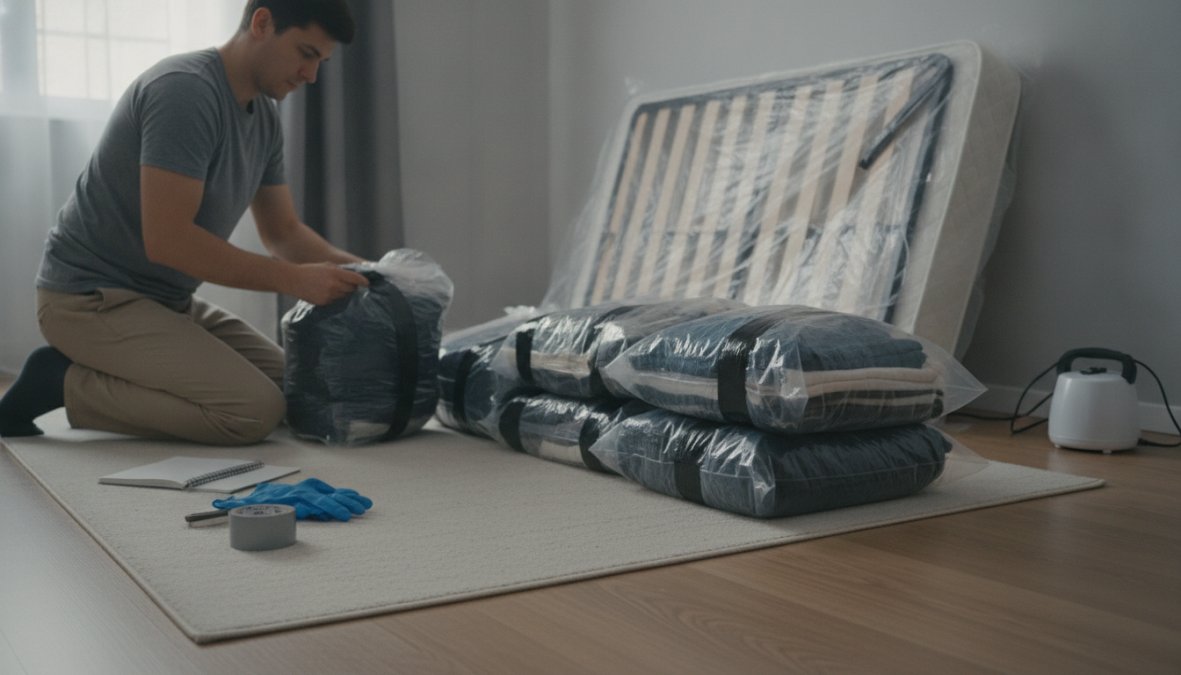
Preparation directly affects your final bill. Exterminators who find an unprepared property either reschedule (adding a trip charge) or treat anyway and return for a follow-up at your expense. Thorough preparation before the first visit is the single easiest way to control your total extermination cost.
What Does the Average Cost of Bed Bug Extermination Look Like for Tenants?
For renters, understanding what is the average cost of bed bug extermination is only half the equation. The other half is knowing who is legally responsible for paying it.
In most states, landlords are responsible for maintaining habitable, pest-free conditions. However, tenant behavior, such as bringing in used furniture or luggage with hitchhiking bugs, can complicate liability. The outcome often depends on how quickly the infestation is reported and documented.
Tenant Rights and Landlord Responsibilities
Most state housing codes require landlords to address bed bug infestations promptly once notified. Tenants who delay reporting risk being held partially responsible for the spread, especially in multi-unit housing where cross-contamination between adjacent apartments is a documented transmission risk.
As documented in HUD guidance on tenant rights and habitability standards, landlords in federally assisted housing have explicit obligations to maintain pest-free conditions. The general principle holds across most jurisdictions: report in writing, keep records, and follow up.
What tenants should do:
- Report the infestation in writing (email creates a timestamp) as soon as you identify signs like rusty stains on bedding, fecal spots on mattress seams, shed skins, or live bugs.
- Document everything with photographs before any treatment occurs.
- Review your apartment lease for any pest control clauses.
- Contact your local housing authority if the landlord fails to respond within a reasonable timeframe.
In Massachusetts, where Zoifia Pest Control operates across the Metro Boston area, landlords are legally required to maintain rental units free from pest infestations under the State Sanitary Code. Tenants have the right to request inspection and treatment without facing retaliation.
DIY vs. Professional Treatment: A Cost Comparison
DIY treatment is appropriate only for very early-stage, highly localized infestations. A single bug found on a mattress seam before any evidence of egg-laying is a scenario where careful DIY intervention might succeed. Anything beyond that, and the math shifts quickly.
According to CDC information on bed bug control and public health, bed bugs can survive for months without feeding and hide in places retail products can’t reach, which is why professional extermination exists as a category.
| Factor | DIY Treatment | Professional Extermination |
|---|---|---|
| Upfront cost | Lower | Higher |
| Effectiveness (severe cases) | Low | High |
| Residual protection | Limited | Included in service |
| Guarantee | None | Often 30-90 days |
| Risk of spread | High if incomplete | Low with proper treatment |
| Time investment | Significant | Minimal for the homeowner |
The hidden cost of failed DIY treatment is the one most people underestimate. A failed first attempt gives the infestation time to spread to additional rooms, neighboring units, and furniture, making the eventual professional job significantly larger and more expensive. Early professional intervention is almost always the more cost-effective path once an infestation is confirmed beyond a single isolated bug.
Bed bug infestations don’t resolve on their own, and the longer they go untreated, the more expensive and disruptive they become. If you’re dealing with an active infestation or want a professional inspection before the problem escalates, Zoifia Pest Control provides licensed and insured bed bug treatment across the Metro Boston area, backed by a 90-day guarantee with no long-term contracts required. Get a quote from Zoifia Pest Control and get your property back to pest-free with a team that responds fast and stands behind its work.
Frequently Asked Questions
Is it worth paying for professional bed bug extermination?
Yes, in most cases professional extermination is worth the cost. Bed bugs are notoriously difficult to eliminate because they hide in mattress seams, baseboards, and electrical socket plates. DIY treatments often miss hidden eggs and eggshells, allowing the infestation to rebound. A licensed pest control professional uses integrated pest management techniques and proven methods that address the full scope of the problem, reducing the risk of re-infestation and saving money over repeated failed DIY attempts.
How much does bed bug extermination cost per room?
Bed bug extermination cost per room generally ranges depending on the treatment method and severity of the infestation. Chemical treatments tend to be more affordable per room than heat treatments, which require specialized equipment. Heavily infested rooms or those with extensive hiding spots, such as rooms with lots of furniture or carpet, typically cost more. Getting a professional inspection first helps establish an accurate quote before any work begins.
How many treatments are usually needed for bed bugs?
Most chemical treatment plans require two to three visits spaced about two weeks apart to target newly hatched nymphs that survived the first application. Heat treatment can sometimes eliminate an infestation in a single session because the high temperatures penetrate hiding spots and kill all life stages, including eggs. The total number of treatments depends on the severity of the bed bug infestation, the size of the space, and how well the property was prepared beforehand.
Does homeowners insurance cover bed bug extermination?
In most cases, standard homeowners insurance does not cover the average cost of bed bug extermination. Insurers typically classify pest infestations as a maintenance issue rather than a sudden, accidental loss. Renters should review their apartment lease carefully, as responsibility may fall on the landlord depending on state tenant rights laws. In Massachusetts, landlords are generally required to maintain habitable conditions, which can include addressing a bed bug infestation in multi-unit housing.
Why is bed bug extermination so expensive?
Bed bug extermination costs more than many other pest treatments because of the complexity involved. Bed bugs have nocturnal behavior, reproduce quickly, and hide in dozens of hard-to-reach spots like mattress seams, baseboards, and behind electrical socket plates. Effective treatment requires specialized equipment, multiple visits, and licensed professionals trained in early detection and integrated pest management. Heat treatment in particular involves industrial equipment and precise temperature monitoring, all of which contribute to the higher price.
This article was written using GrandRanker
