Table of Contents
- One-Time Pest Treatment for Renters: What You Need to Know
- Landlord Pest Control Responsibilities in Rental Properties
- How to Request Pest Control From Your Landlord
- Documenting Pest Issues in Rental Units
- One-Time vs. Recurring Pest Control Services
- What to Expect During a One-Time Professional Treatment
- Your Rights When a Landlord Refuses Pest Control
- Conclusion
Last Updated: August 22, 2026
One-Time Pest Treatment for Renters: What You Need to Know
Living with a pest infestation is stressful, and as a renter, you face a unique challenge: you can’t simply hire a pest control company without landlord approval. One-time pest treatment for renters requires navigating landlord responsibilities, understanding your legal rights, and knowing what to expect from professional services.
At Zoifia Pest Control, we work with renters regularly who face infestations in older buildings. Many renters assume they’re stuck dealing with the problem themselves or that they’ll need to sign a long-term contract. Neither is true. You have legal protections, and one-time treatments are a viable solution for most situations.
Landlord pest control responsibilities are clearly defined by law, and tenants have specific rights when infestations occur. Understanding these protections is the first step toward getting your space treated.
Landlord Pest Control Responsibilities in Rental Properties
Your landlord is legally responsible for maintaining habitable rental units, and that includes addressing pest infestations. Habitability standards require that rental properties be free from significant pest problems that affect health and safety.
Most states recognize pest control as a landlord responsibility when the infestation is not caused by tenant negligence. If you’ve created unsanitary conditions that attracted pests, the landlord may argue it’s your responsibility. But if you inherited a pest problem or if the building’s structural issues allow pests to enter, that falls on the landlord.
Common pests covered under habitability standards include rodents, cockroaches, bed bugs, and other household pests that pose health risks (the CDC). An active infestation that affects your ability to safely occupy the unit is grounds for demanding landlord action.
The landlord’s obligation includes not just one-time treatment, but ensuring the problem doesn’t return. This might mean sealing entry points, improving sanitation in common areas, or arranging recurring maintenance if the building has systemic pest issues.
Document the date you first noticed the pest problem. This creates a timeline that strengthens your position if the landlord delays treatment or refuses to address it.
How to Request Pest Control From Your Landlord
The process of requesting pest control should be documented and professional. A formal written request creates a paper trail that protects you legally.
Written Notice and Documentation
Start with written notice. Email is acceptable and preferable because it creates a timestamped record. Your notice should clearly describe the pest problem, when you first observed it, and where in the unit you’ve seen evidence of infestation.
A basic template for your request might read:
Dear [Landlord Name],
I am writing to formally request pest control treatment for my unit at [address]. I have observed [type of pest] in [specific locations] on multiple occasions, most recently on [date]. This infestation affects my ability to safely occupy the unit and poses a health concern.
I request that you arrange professional pest control treatment within [7-14 days]. Please let me know your preferred timeline and the name of the pest control company you will hire.
Thank you for your prompt attention to this matter.
[Your name]
This approach is direct without being confrontational and establishes a formal request.
Follow-Up Communication
If your landlord doesn’t respond within 7 days, send a follow-up email referencing your initial request. If still no response after 14 days, you may need to escalate.
In most jurisdictions, landlords are prohibited from retaliating against tenants who request necessary maintenance or repairs (hud.gov). If your landlord raises rent, threatens eviction, or reduces services shortly after you request pest control, that may be illegal retaliation.
Do not attempt to hire a pest control company and deduct the cost from rent without explicit permission or a court order. This approach often backfires legally and can give a landlord grounds to claim you violated your lease.
Documenting Pest Issues in Rental Units
Documentation is your strongest tool when dealing with landlord resistance or when you need to escalate the situation.
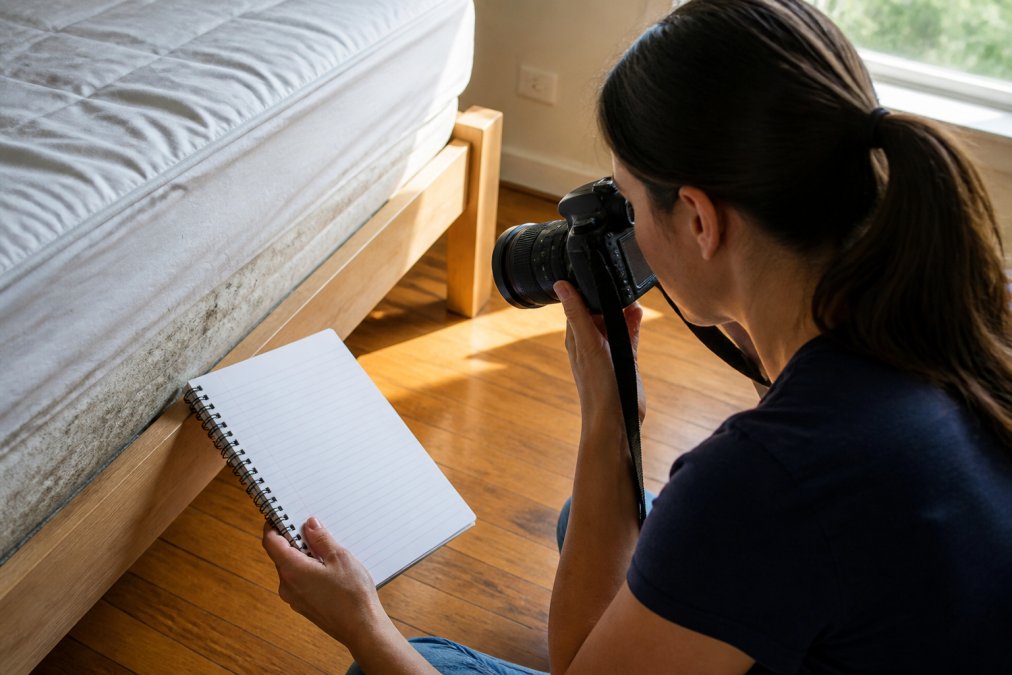
Begin by taking photographs and videos of any pest evidence. Capture clear images of droppings, damage to food packaging, pest sightings, or entry points. Include the date in your photos, many phones timestamp images automatically, but you can also write the date on a piece of paper and include it in the frame.
Keep a simple log documenting:
- Date and time of each pest sighting
- Location in the unit (bedroom, kitchen, bathroom, etc.)
- Type of pest if identifiable
- What you observed (live pest, droppings, damage)
- Any actions you took in response
Save all written communications with your landlord about the pest issue. Emails, text messages, and letters create a documented timeline showing when you reported the problem and how your landlord responded.
If your landlord agrees to treatment, take photos before and after the professional treatment. This creates a baseline for comparison if pests reappear.
A landlord’s failure to address infestation documentation creates legal liability for the landlord. Your detailed records make it impossible for them to claim they didn’t know about the problem or that it wasn’t serious.
One-Time vs. Recurring Pest Control Services
Understanding the difference between one-time and recurring pest control helps you choose the right approach for your situation.
One-time pest treatment for renters addresses an active infestation with a single professional visit. The technician identifies the pest species, locates entry points and nesting areas, applies targeted treatment, and provides recommendations for preventing future infestations. This approach works well when the infestation is caught early and the building doesn’t have systemic pest issues.
Recurring services involve monthly or quarterly visits to prevent infestations before they start. These are common in buildings with persistent pest problems or older structures with multiple entry points. Recurring service typically costs more overall but prevents the disruption of dealing with active infestations.
For renters, one-time treatment is often the better choice. You avoid long-term contracts, which may not be enforceable if you move. One-time service also places the responsibility clearly on the landlord.
However, if your building has a history of recurring pest issues, recurring service might be necessary. In that case, you could request that your landlord arrange and pay for quarterly maintenance.
What to Expect During a One-Time Professional Treatment
Professional pest control follows a predictable process. Understanding what happens during your appointment helps you prepare.
Pre-Treatment Preparation
Before the technician arrives, you’ll need to prepare your unit. Most pest control companies provide preparation instructions specific to the treatment they’ll use. Common preparation steps include:
- Removing or covering food, dishes, and cooking utensils
- Clearing clutter that might hide pests or block treatment access
- Moving furniture away from walls to allow inspection and treatment
- Securing pets in a separate room or arranging for them to be elsewhere during treatment
- Opening cabinets and drawers so the technician can inspect and treat interior spaces
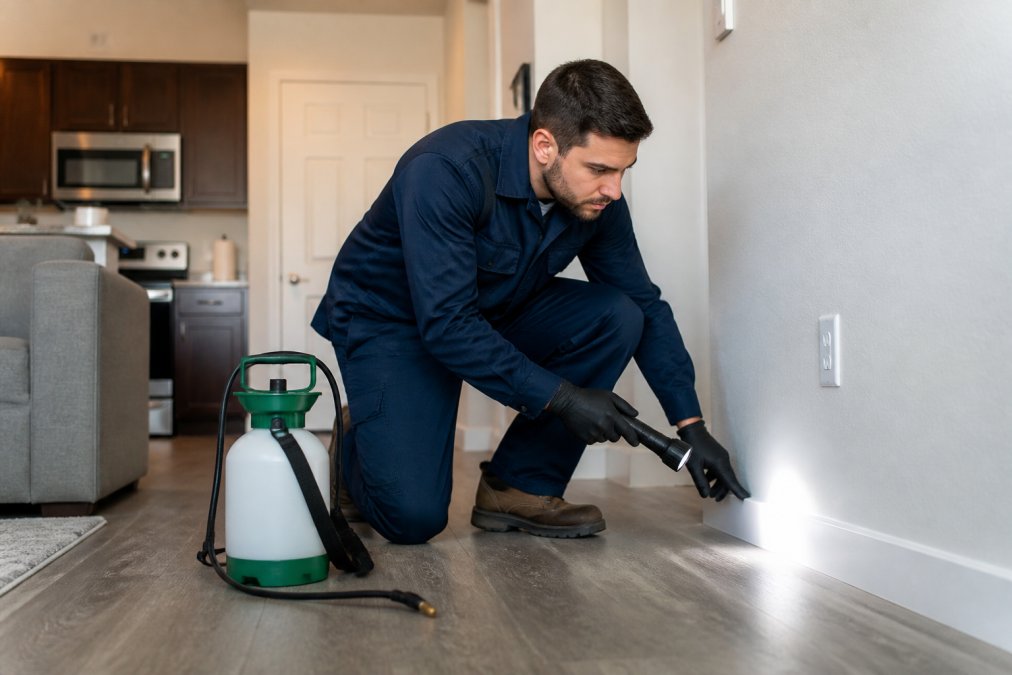
The technician will arrive at your scheduled appointment time and begin with a thorough inspection. They’ll examine common pest entry points: baseboards, under sinks, around pipes, window frames, and door seals. They’ll look for signs of activity, droppings, shed skin, and damage to identify the pest species and extent of infestation.
This inspection typically takes 20-30 minutes. The technician will explain what they found, what treatment they recommend, and what you should expect during and after the process.
The Treatment Process
The actual treatment depends on the pest type and severity. For cockroaches, the technician might apply gel baits in cabinets and under appliances, spray baseboards and entry points, and dust wall voids if necessary. For rodents, treatment might include snap traps or bait stations placed along walls where rodent activity is evident.
Modern pest control emphasizes integrated pest management, which combines chemical treatments with sanitation recommendations and structural repairs. A good technician won’t just spray and leave; they’ll address the conditions that allowed the infestation to develop.
Treatment typically takes 1-3 hours depending on the size of your unit and the severity of the infestation. You’ll need to stay out of treated areas during application, though most modern treatments dry quickly.
Post-Treatment Care
After treatment, follow the technician’s instructions carefully. This might include:
- Keeping children and pets away from treated areas for a specified time
- Not wiping down treated surfaces for several days
- Vacuuming or sweeping up dead pests after a few days
- Monitoring for pest activity over the following weeks
You may see increased activity for a few days as pests are flushed out by the treatment. This is normal and expected.
Most professional treatments include a follow-up inspection 7-14 days after the initial service. The technician returns to check whether the treatment was effective and apply additional treatment if necessary.
Ask about the pest control operator’s guarantee. Many companies, including Zoifia Pest Control, offer a 90-day guarantee on one-time treatments. If pests reappear within that period, they’ll return and retreat at no additional cost.
Your Rights When a Landlord Refuses Pest Control
If your landlord refuses to address a pest infestation despite your formal request, you have legal options.
Most jurisdictions allow tenants to withhold rent or repair-and-deduct when landlords fail to maintain habitability (nolo.com). This means you can pay for the treatment yourself and deduct the cost from your next rent payment. However, this approach requires following specific legal procedures.
The proper procedure typically involves:
- Providing written notice of the problem and requesting repair within a specified timeframe (often 7-14 days)
- Waiting for the landlord to fail to respond
- Notifying the landlord in writing that you will arrange repairs and deduct the cost
- Hiring a licensed pest control company and paying for service
- Providing documentation (receipt, invoice) to your landlord
- Deducting only the actual cost from rent
You can also file a complaint with your local housing authority or health department. Most jurisdictions have agencies that inspect rental properties and enforce habitability standards. A complaint triggers an official inspection, and if the inspector confirms the infestation, the landlord faces fines and orders to remedy the problem.
In severe cases, tenants can break their lease without penalty if the landlord refuses to maintain habitability. This is a last resort, but it’s an option if the infestation is severe and the landlord is unresponsive.
Before taking action like rent withholding or filing complaints, research your specific state and local laws. Tenant rights vary significantly by jurisdiction, and following the wrong procedure can backfire.
Conclusion
Dealing with a pest infestation as a renter is frustrating, but you’re not powerless. Your landlord has a legal responsibility to maintain a pest-free unit, and one-time pest treatment is an effective solution for active infestations. By documenting the problem, making a formal request, and understanding your rights, you can move from dealing with the infestation to getting it resolved.
If your landlord is responsive, the process is straightforward: document, request, and schedule treatment. If they’re unresponsive, you have escalation options including repair-and-deduct, housing authority complaints, or lease termination. The key is creating a paper trail that proves you’ve made a good-faith effort to resolve the problem through your landlord.
When you’re ready to move forward with professional treatment, Zoifia Pest Control specializes in one-time treatments without long-term contracts. Our licensed and insured technicians provide thorough inspections, targeted treatment, and a 90-day guarantee backing our work. Get a quote today and take the first step toward a pest-free apartment.
Frequently Asked Questions
Are landlords legally required to pay for one-time pest treatment?
Yes, landlords are responsible for maintaining habitable rental properties, which includes addressing pest infestations. Most states require landlords to handle pest control at their expense when infestations affect habitability. However, if an infestation results from tenant negligence or poor sanitation habits, some lease agreements may shift costs. Document the infestation and request treatment in writing to establish your landlord's responsibility and create a record of your request.
What should I include when requesting pest control from my landlord?
Send a written request that describes the specific pests you've seen, when you first noticed them, and which areas are affected. Include photos or videos if possible. Reference your lease agreement and local housing codes requiring pest-free conditions. Request a specific timeframe for treatment, typically 14-30 days. Keep copies of all communications. If your landlord doesn't respond, follow up in writing and consider sending a certified letter to create a documented trail.
Does a one-time pest treatment actually work, or will pests return?
One-time professional treatments are effective for addressing active infestations when performed by a certified pesticide applicator. However, success depends on identifying and sealing entry points, eliminating food sources, and maintaining sanitation. If your apartment has structural issues, unsealed cracks, or ongoing pest attractants, reinfestation is possible. A professional treatment combined with preventative measures and landlord repairs to entry points provides the best long-term results. Ask your pest control operator about guarantees on their work.
Can I hire my own pest control service if my landlord won't respond?
You have the legal right to hire your own pest control service in most cases, but check your lease first. Some agreements prohibit tenants from bringing contractors into the unit. If your landlord is unresponsive and local housing codes require pest-free conditions, you may have grounds to withhold rent or break your lease depending on your state's tenant protection laws. Document all attempts to contact your landlord in writing. Consider consulting your local tenant rights organization or small claims court if the infestation threatens habitability.
This article was written using GrandRanker
