Table of Contents
- Start With a Room-by-Room Attic Inspection
- Mouse Droppings in the Attic: What to Look For
- Mouse Noises in the Attic: Timing Tells You a Lot
- Gnaw Marks, Rub Marks, and Insulation Damage
- Urine, Odor, and Nesting Sites
- Mice vs. Rats in the Attic: Sorting Out the Evidence
- Entry Points: How Mice Get Into an Attic
- When to Call a Pest Professional for Mice in the Attic
- Frequently Asked Questions
Last Updated: October 12, 2026
Start With a Room-by-Room Attic Inspection
Learning how to tell if you have mice in your attic starts with a slow, careful inspection. Mice leave behind a trail of physical clues, and once you know what to look for, the evidence is hard to miss. You do not need special gear to start, but you do need patience, a good light, and a plan for staying safe.
What You’ll Need Before You Go Up
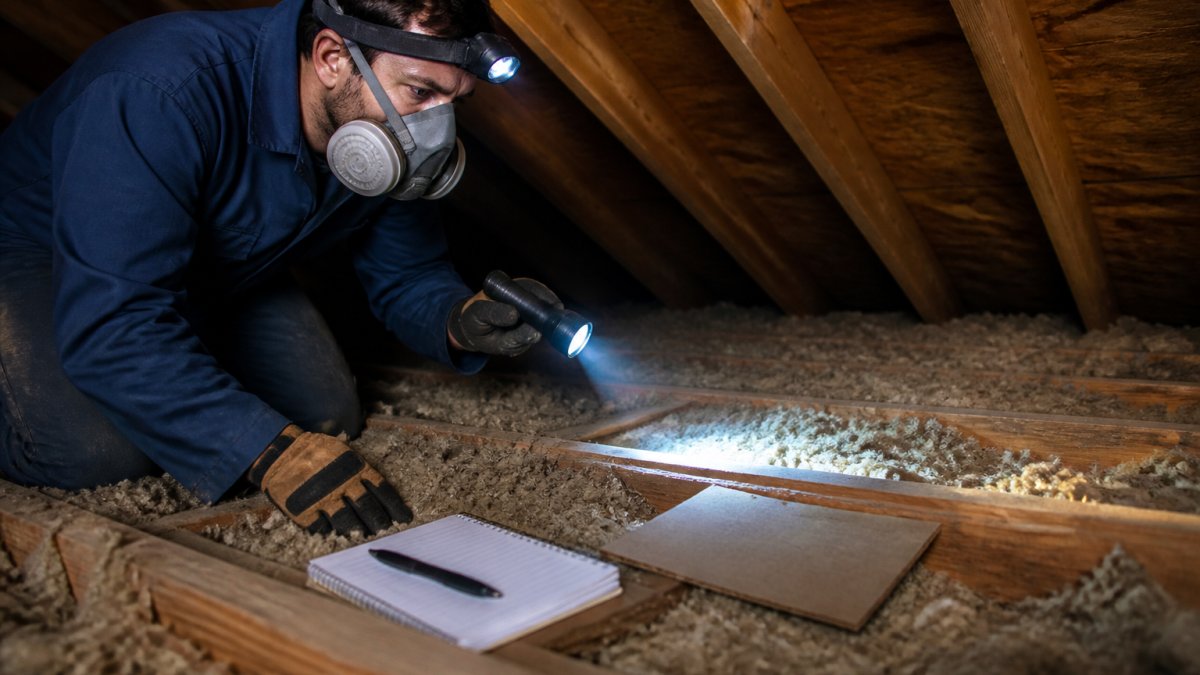
Gather these items before you climb up:
- A bright flashlight or headlamp (a headlamp keeps both hands free)
- Disposable nitrile gloves and an N95 or P100 respirator
- A notepad or phone for photos
- A screwdriver for opening access panels
- Closed-toe shoes, long sleeves, and pants you can wash afterward
- A spray bottle of disinfectant for any droppings you disturb
How to Inspect Safely
Attic inspections carry two real hazards: falls and contaminated dust. Never step onto insulation between joists, it looks solid but will not hold weight. Walk only on solid wood, and if you must cross a bay, lay a piece of plywood across the joists first.
Before you go up, tell someone in the house you are entering the attic and take a phone with you. Attic heat can climb well above outdoor temperatures in summer, so inspect in the morning or on a cool day, and come down if you feel dizzy or short of breath.
Move slowly and check each corner in this order:
- Scan the floor near the entry hatch first, mice often enter and exit through the same gap.
- Check along wall edges and joists, where mice travel rather than crossing open floor.
- Look inside stored boxes, holiday bins, and old furniture.
- Shine your light into dark corners and under insulation batts.
- Photograph anything suspicious with something for scale, like a coin or a pen.
Tell Fresh Evidence From Old Evidence
This is the step most homeowners skip, and it is the one that answers the real question: are mice here right now? Fresh mouse droppings are dark, glossy, and soft, and they smear if pressed.
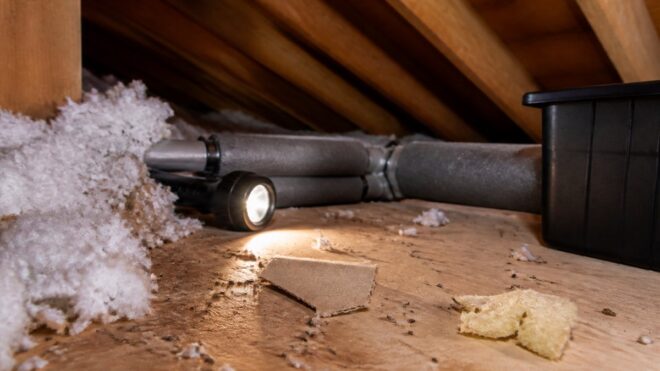
A practical trick: place a small piece of clean cardboard or a light dusting of flour along a suspected travel path, then check it 24 hours later. Fresh tracks, droppings, or smudges in that window confirm active mice.
Do not sweep, vacuum, or kick up dust in an attic with rodent evidence until you are wearing a respirator and have sprayed the area with disinfectant. Dry sweeping is the fastest way to breathe in contaminated particles.
Mouse Droppings in the Attic: What to Look For
Mouse droppings are the single most reliable sign of an active infestation. They look like dark grains of rice, roughly the size of a pencil tip. You will usually find them near food sources, along walls, and close to nesting spots. Fresh droppings are dark and soft. Old ones turn gray and crumble.
Check these spots first:
- Behind insulation rolls
- On top of stored cardboard boxes
- Along baseboards and joist edges
- Near any attic vents or pipes
Fresh vs. Old Droppings
Fresh droppings mean active mice right now. Old, dusty droppings could mean the problem passed, or that mice moved to another area. This distinction matters because it tells you whether you are dealing with a current infestation or leftover evidence. According to CDC guidance on rodent cleanup, never vacuum or sweep dry droppings, since this releases contaminated dust into the air.
Do not touch droppings with bare hands or sweep them dry. This spreads dust that can carry disease. Spray the area with a disinfectant first, then wipe with paper towels and dispose of them in a sealed bag.
Mouse Noises in the Attic: Timing Tells You a Lot
Mouse noises in the attic follow a predictable pattern. Mice are nocturnal, so scratching, scurrying, and squeaking usually start shortly after dark and settle before dawn. If you hear thumping during the day, you may be dealing with something larger. Listening carefully at night, with the house quiet, gives you the clearest read.
Common sounds and what they suggest:
- Light scratching: mice moving along walls
- Rapid scurrying: mice running across joists
- High-pitched squeaking: young mice or communication
- Loud thumping: possibly a larger animal like a rat or squirrel
Set your phone to record for ten minutes after lights out. Play it back the next morning. This is one of the simplest ways to confirm activity without climbing into the attic at night.
Gnaw Marks, Rub Marks, and Insulation Damage
Gnaw marks are a clear giveaway. Mice chew constantly to keep their teeth worn down, and they leave behind shallow, paired grooves on wood, plastic, and wires. Rub marks are greasy smudges left along walls where mice travel the same path again and again. Both signs point to regular traffic.
Inspect these materials closely:
- Electrical wires and cable sheathing
- Wooden joists and rafters
- Plastic pipes and conduit
- Cardboard storage boxes
- Insulation batts, which mice tunnel through and flatten
Damaged insulation loses its ability to hold heat. A Department of Energy guide to home insulation notes that compromised insulation reduces energy efficiency, so rodent damage has a real cost beyond the infestation itself.
Urine, Odor, and Nesting Sites
A strong, musty smell in the attic often means urine. Mouse urine has a sharp, ammonia-like odor that gets worse in warm weather. You may also spot dark staining on wood or insulation where urine has soaked in over time. This smell can drift down into living spaces through gaps around light fixtures and vents.
Nesting sites hide in soft, warm spots. Look for:
- Shredded paper, fabric, or insulation clumped together
- Small piles of nesting material in corners
- Nests tucked inside boxes, old furniture, or wall voids
- Dark greasy trails leading to and from the nest
Shine your flashlight at a low angle across surfaces. This side lighting makes urine stains and rub marks show up clearly, even when they are faint.
Mice vs. Rats in the Attic: Sorting Out the Evidence
Telling mice from rats comes down to size, shape, and the scale of the damage. House mice are small, with dusty gray-brown fur, large ears, a pointed nose, and a thin tail that is usually as long as their body. Rats are much bigger, with thicker tails and blunter snouts. Their droppings are also larger, closer to the size of a raisin versus a grain of rice. Getting this wrong changes your whole removal plan, because mice and rats behave differently and need different bait and trap setups.
Use this quick comparison:
| Feature | Mouse | Rat |
|---|---|---|
| Dropping size | Grain of rice, pointed ends | Raisin-sized, blunt ends |
| Tail | Thin, long, roughly body length | Thick, shorter than body |
| Snout | Pointed | Blunt |
| Noise | Light scratching, scurrying | Loud thumping, heavier movement |
| Gnaw marks | Small, shallow, paired grooves | Larger, deeper, wider spacing |
| Nest | Shredded paper and insulation, softball-sized | Larger, often outdoors or in wall voids |
| Travel | Along walls and joists, rarely seen | Often uses runs and burrows |
A Mouse-Specific Confirmation Checklist
Most guides lump rodents together. If you want to know whether the evidence points specifically to mice, work through this checklist and count how many boxes you can honestly tick:
- Droppings the size and shape of a grain of rice, with pointed ends, found in scattered piles rather than a single latrine
- Light scratching or scurrying sounds that start shortly after dark and taper off before dawn
- Small, shallow paired gnaw marks on wood, plastic, or wire sheathing
- Greasy rub marks along wall edges and joists at a low height
- Shredded paper, fabric, or insulation clumped into a softball-sized nest
- A faint, sharp, ammonia-like odor in a closed attic
- Tunnels or flattened runs through insulation batts
Three or more of these together strongly suggest mice rather than a single stray animal. One or two alone could be old evidence, a bat, a squirrel, or a rat.
Signs That Point Away From Mice
Some evidence argues against mice and toward another animal. Bat droppings look similar to mouse droppings but crumble to a shiny powder when crushed and are usually found directly below a roost rather than scattered along walls. Squirrel droppings are larger and often left in loose piles near a chewed entry hole.
If the evidence is mixed or you cannot tell mice from rats, a professional inspection settles the question before any bait or trap is set. Zoifia Pest Control handles rodent identification and removal across the Metro Boston area with licensed and insured technicians.
Entry Points: How Mice Get Into an Attic
Mice can squeeze through a gap the width of a pencil. That is why sealing entry points matters as much as removal. Common entry spots include gaps around eaves, soffits, vents, chimneys, pipes, and wires running into the house. Check the exterior too, since mice often climb up and slip in from outside.
Focus your inspection on:
- Gaps around roof and soffit lines
- Openings around vents and chimney flashing
- Holes where pipes and wires enter
- Damaged screens or loose siding
- Gaps under roof shingles
Seal small gaps with steel wool and caulk, since mice cannot chew through steel wool. Larger openings may need hardware cloth or professional exclusion work.
When to Call a Pest Professional for Mice in the Attic
Call a professional when you find active droppings, ongoing noises, or damage you cannot safely handle. Large infestations, contaminated insulation, and hard-to-reach entry points are all good reasons to bring in help. If you have tried traps and the activity continues, the problem is likely bigger than a few mice.
Signs it is time to call:
- Droppings in multiple rooms
- Noises that continue after trapping
- Chewed wires, which are a fire risk
- A strong odor that will not go away
- Entry points you cannot reach or seal
Zoifia Pest Control handles rodent removal across the Metro Boston area with licensed and insured technicians. We offer fast response, a 90-day guarantee, and no long-term contracts, so you get the problem solved without being locked in. If you are not sure whether the signs point to mice, we can inspect and confirm before any work begins.
Frequently Asked Questions
Is it normal for mice to be in the attic?
It is common, especially in older homes where gaps around eaves, soffits, vents, and pipes give mice an easy route in. Mice seek warmth, shelter, and nesting material, and an attic offers all three. One mouse can turn into a full mouse infestation quickly because females produce litters of five to six pups roughly every three weeks. Finding a single dropping does not confirm a problem, but consistent signs over several days do.
What do mouse droppings look like?
Mouse droppings are small, dark, and rod-shaped, roughly the size of a grain of rice, with pointed ends. They usually sit scattered along walls, in corners, or near nesting material rather than in one pile. Fresh droppings look dark and shiny; older ones turn gray and crumbly. Rat droppings are noticeably larger, about the size of a raisin. Always wear gloves and a mask when cleaning, and never vacuum dry droppings without protection.
What noises do mice make in an attic?
Mice produce light scratching, scurrying, and high-pitched squeaking, usually at night since they are most active after dark. Scratching near the eaves or walls often means mice moving along a run. Heavier thumping or loud scratching points more toward rats or squirrels. If you hear sounds during the day, that can still be mice, but it may also signal a larger animal. Note the time, location, and type of sound to help identify the source.
When should you call a pest control professional about mice in the attic?
Call a professional when you find droppings in multiple areas, hear noises nightly, spot gnaw marks on wires or framing, or smell a strong musty odor. These point to an established mouse infestation rather than a single visitor. A licensed technician can inspect the attic, identify entry points, remove the mice, and seal gaps so they cannot return. Zoifia Pest Control offers fast response, licensed and insured service, and a 90-day guarantee with no long-term contract required.
Mice in the attic rarely solve themselves, and the damage adds up the longer you wait. If you have spotted droppings, heard scratching at night, or found gnaw marks, Zoifia Pest Control can help. Our licensed and insured team offers fast response, a 90-day guarantee, and no long-term contracts, so you get clear answers and real results. Get a quote and take the first step toward a pest-free attic.
