
Table of Contents
- What Does a One Time Pest Control Service Cost in 2026?
- Key Factors Affecting Pest Control Pricing
- Hidden Fees and Surcharges to Watch Out For
- One Time Pest Control vs Recurring Service: Which Costs More Over Time?
- Is One Time Pest Control Effective Enough to Justify the Cost?
- One Time Pest Control Service Cost by Region: A Geographic Overview
- How to Save Money Without Sacrificing Quality
- Conclusion
Last Updated: June 11, 2026
Understanding the one time pest control service cost before you call a company is the smartest move you can make. At Zoifia Pest Control, we see homeowners overpay regularly, not because they chose the wrong company, but because they had no benchmark going in. This guide breaks down what drives pricing, what you should expect to pay by pest type and region, and where companies hide charges they don’t advertise. We’ll also show you how to evaluate a quote with confidence and decide whether a single treatment or a recurring plan actually serves you better.
Most guides publish a single average price and call it done. The reality is that pest control pricing varies enormously depending on infestation severity, treatment method, square footage, and geography. A spot treatment for a small ant problem in a studio apartment is a completely different product than a structural fumigation for a severe termite infestation in a 3,000-square-foot home. Lumping those into one number is useless.
What Does a One Time Pest Control Service Cost in 2026?
A one time pest control service cost typically falls between a few hundred dollars for a basic treatment and several thousand for severe or complex infestations. That range reflects real differences in what’s being treated, how, and where, not ambiguity.
For most residential situations, a standard single visit covers inspection, pest identification, and targeted treatment. The price reflects the technician’s time, pro-grade chemicals, and any follow-up guarantee included.
Average Cost by Pest Type
Different pests require fundamentally different treatment methods, and that drives cost more than almost any other factor. A general pest treatment for ants or cockroaches is far less resource-intensive than bed bug extermination or termite remediation.
| Pest Type | Typical One-Time Treatment Cost | Treatment Method |
|---|---|---|
| Ants | Lower range | Spot treatment, bait |
| Cockroaches | Lower-to-mid range | Gel bait, spray |
| Rodents | Mid range | Trap placement, exclusion |
| Bed Bugs | Higher range | Heat treatment or chemical |
| Termites | Highest range | Structural fumigation, baiting |
| Wasps/Stinging Insects | Lower range | Direct nest treatment |
| Fleas | Mid range | Spray + IGR treatment |
Note: Specific dollar amounts vary significantly by region, company, and infestation severity. Always request a service quote before assuming a price.
According to the National Pest Management Association’s industry overview, termite damage alone costs property owners billions annually, which is why termite inspection and treatment commands the highest fees in the category.
Inspection Fees vs. Treatment Fees: What You’re Actually Paying For
Some companies offer a free inspection and charge only for treatment. Others charge an inspection fee credited toward treatment. A few charge both separately.
A free inspection sounds like a win but often comes with pressure to upsell into a service agreement. A paid inspection from an independent local pest control specialist gives you an unbiased assessment before any treatment is applied. Treatment fees cover labor, pro-grade chemicals, equipment, and any guarantee on the work. Ask specifically whether the quoted price includes a re-treatment clause if the problem persists.
Always ask whether the inspection fee is credited toward treatment. Many companies say yes. Getting that confirmed in writing before the visit prevents billing disputes later.
Key Factors Affecting Pest Control Pricing
Most pricing surprises come from factors affecting pest control pricing that weren’t discussed upfront. Knowing these in advance puts you in a much stronger negotiating position.
Infestation Severity and Square Footage
The biggest driver of cost after pest type is infestation severity. A minor ant problem near a window is a spot treatment job; an infestation spread through wall voids across multiple rooms is a different scope entirely. Technicians assess severity during inspection, and that assessment directly determines product volume and visit length.
Square footage matters for whole-home treatments. Larger homes require more product and more technician time. Commercial properties are priced differently again, often on a per-visit or square-footage rate with a service contract attached.
Treatment Method and Pro-Grade Chemicals Used
Spot treatment, the most common approach for isolated pest problems, is the least expensive option. Whole-home barrier treatments cost more because they cover the entire perimeter and often include interior applications. Structural fumigation, used primarily for severe termite infestations, is the most expensive method, requiring tenting and evacuating occupants for 24-72 hours. Bed bug heat treatment falls in a similar premium range due to specialized equipment and extended technician time.
Pro-grade chemicals used by licensed exterminators are not available to the general public. These formulations are more concentrated, longer-lasting, and more precisely targeted than hardware store products. Their cost is embedded in your service quote.
Avoid any pest control company that cannot tell you exactly which products they plan to use and why. Reputable local pest control specialists will always disclose treatment materials and explain the application method before starting work.
Hidden Fees and Surcharges to Watch Out For
The quoted price is rarely the final price if you don’t know what questions to ask.
Common hidden fees include:
- Initial clean-out fee: Many companies charge a higher rate for the first visit to address an active infestation, then a lower rate for maintenance. Sometimes disclosed, sometimes not.
- Emergency service premium: Same-day or after-hours treatment carries a surcharge, sometimes significant.
- Re-treatment fees: Without a guarantee, if the problem returns, you pay again for a full visit.
- Travel surcharges: Companies serving large areas sometimes add fuel or travel fees for properties outside their primary zone.
- Specialty pest premiums: Bed bug extermination and structural fumigation often carry separate pricing tiers not included in a standard quote.
- Product upgrade charges: Some technicians offer "premium" formulations on-site at additional cost. Know what’s in your base quote before agreeing to upgrades.
The cleanest way to avoid surprises is to request an itemized quote in writing before any work begins. Any reputable company will provide one.
One Time Pest Control vs Recurring Service: Which Costs More Over Time?
One time pest control vs recurring service is not a simple comparison. The right answer depends on your property, your pest pressure, and your risk tolerance.
A single treatment costs more per visit than any individual visit within a recurring plan. Quarterly maintenance plans offer a discounted per-visit rate because you’re committing to consistent service frequency, a fair trade-off if your property has ongoing pest pressure. The math flips for a genuinely isolated incident: paying for quarterly maintenance to address a one-time ant problem is wasted money.
| Service Model | Typical Structure | Best For |
|---|---|---|
| One-time treatment | Single visit, no commitment | Isolated infestations |
| Quarterly maintenance | 4 visits/year, lower per-visit rate | Ongoing pest pressure |
| Monthly service | 12 visits/year, highest commitment | Severe or recurring problems |
| Annual contract | Variable visits, locked-in pricing | Homeowners wanting predictability |
Contractual Obligations and Service Agreements Explained
A service agreement is a contract, read it before signing. Many recurring plans require a minimum 12-month commitment with cancellation fees for early exit. Some companies waive the cancellation fee if the service doesn’t perform as promised, but that clause needs to be in writing.
One clear advantage of a no-contract model is flexibility: you pay for what you need, when you need it. Zoifia Pest Control operates on exactly this model, no long-term contract required, with a 90-day guarantee backing every treatment. That structure shifts risk from the homeowner to the company, where it belongs.
According to Consumer Reports guidance on home service contracts, homeowners should always request cancellation terms and any auto-renewal clauses in writing before signing any service agreement.
Is One Time Pest Control Effective Enough to Justify the Cost?
A single treatment is effective for the vast majority of residential pest situations. The caveat is that effectiveness depends heavily on treatment quality, not just whether it happened.
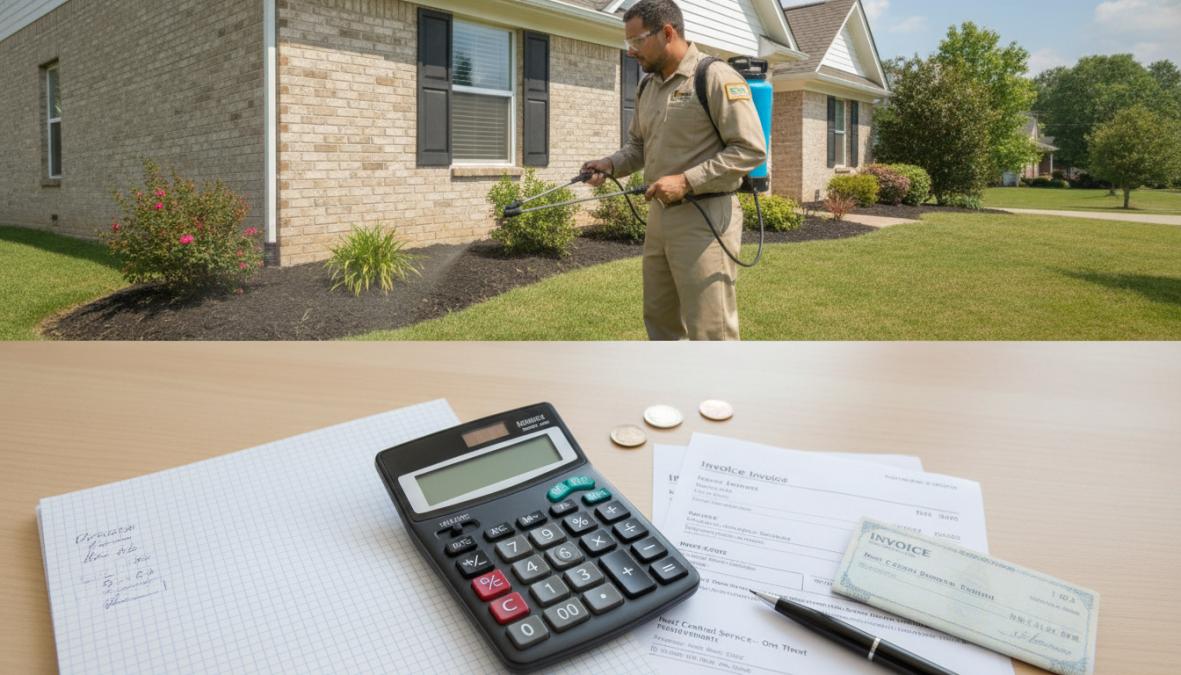
A properly executed one-time treatment from a licensed exterminator, using appropriate pro-grade chemicals at correct application rates, will eliminate active infestations and provide residual protection for weeks to months. The 90-day guarantee Zoifia Pest Control offers reflects that confidence: if the problem returns within that window, the treatment is repeated at no additional charge.
Where single treatments fall short is when ongoing environmental conditions continuously attract pests, persistent moisture issues, structural gaps, or adjacent infestation sources. In those cases, preventative measures and recurring service make more economic sense.
DIY vs. Professional Cost-Benefit Analysis
DIY pest control works for minor, surface-level problems and fails for anything moderate to severe. Hardware store products are diluted compared to what licensed technicians apply, and incorrect product placement can push pests deeper into wall voids rather than eliminating them.
The real cost of DIY isn’t the product price, it’s weeks spent treating ineffectively while the infestation grows, followed eventually by a professional call at a higher cost because the problem is now worse. For bed bugs, termites, and rodents specifically, professional treatment is not optional. According to EPA guidance on integrated pest management, a professional pest management plan using integrated pest management principles is consistently more effective than consumer-grade alternatives for moderate to severe infestations.
DIY is reasonable for a single ant trail near a door. For anything involving rodents, bed bugs, termites, or a multi-room infestation, professional treatment pays for itself in time saved and damage prevented.
One Time Pest Control Service Cost by Region: A Geographic Overview
Geography is one of the most underappreciated factors in pest control pricing. The one time pest control service cost in the Metro Boston area will differ from pricing in rural Midwest markets or high-cost urban centers like San Francisco or New York, for reasons unrelated to pest type.
Regional pricing differences are driven by:
- Local labor costs: Technician wages vary significantly by region, and labor is the largest component of service pricing.
- Local pest pressure: Areas with higher natural pest activity see more competitive pricing because there are more providers.
- Regulatory environment: Stricter licensing requirements and chemical use regulations increase operating costs for providers.
- Property values and market price expectations: Pest control companies price to local market conditions.
For Metro Boston specifically, older housing stock, harsh winters that drive rodents indoors, and dense urban areas create consistent demand for rodent control and general pest management. Seasonal demand spikes in spring and fall also affect availability and sometimes pricing.
Get at least three quotes from local pest control specialists before committing. National chains like Orkin and Terminix offer consistency and guarantees, but local providers often offer more competitive pricing and faster response times. Truly Nolen lists approximate starting prices around $375 for a one-time visit, while Orkin’s one-time visit range runs roughly $150 to $600 depending on pest type and scope, per their published pricing guidance.
How to Save Money Without Sacrificing Quality
Saving money on pest control means getting fair market value for the service you actually need, not choosing the cheapest quote.
Practical cost-reduction strategies:
- Get multiple quotes. Three quotes minimum gives you a real sense of local market price and exposes outliers on both ends.
- Ask about seasonal promotions. Many companies offer discounts during slower seasons or for first-time customers.
- Bundle services. A single visit addressing multiple pest concerns typically costs less than separate treatments.
- Act early. Minor infestations cost less to treat. The longer you wait, the worse the problem and the higher the cost.
- Ask what’s included. A quote with a re-treatment guarantee is worth more than a cheaper quote with no warranty. Calculate the true cost of each option.
- Avoid unnecessary upsells. A one-time spot treatment for a minor ant problem doesn’t require a quarterly maintenance plan.
- Check licensing. Unlicensed operators charge less for a reason. Always verify that any company you hire is licensed and insured in your state, uninsured work creates liability exposure for the homeowner.
According to the Environmental Protection Agency’s residential pest control guidance, hiring a licensed professional and requesting an integrated pest management approach often reduces the total number of treatments needed over time, directly reducing long-term cost.
The budgeting principle that works best: treat pest control as home maintenance, not an emergency expense. Addressing problems early and selectively, rather than reactively, is consistently the more cost-effective approach.
Frequently Asked Questions
How much does a one-time pest control service cost on average?
A one-time pest control service cost typically ranges from $150 to $600 or more, depending on the pest type, infestation severity, and your location. Simpler jobs like a spot treatment for ants may fall on the lower end, while bed bug extermination or structural fumigation can push costs significantly higher. Always request an itemized service quote so you understand exactly what is included before committing.
When should you choose a one-time service over a recurring plan?
One time pest control vs recurring comes down to the nature of your problem. A one-time treatment works well for isolated or minor infestations with low reinfestation risk. Recurring or quarterly maintenance plans make more sense if you live in an area with persistent pest pressure, have had multiple infestations, or want preventative measures year-round. If your pest problem is a single incident, a one-time service backed by a guarantee is often the more cost-effective choice.
Is one-time pest control effective for long-term infestations?
Whether one time pest control is effective depends on the pest and severity. For moderate infestations of ants, roaches, or rodents, a single professional visit using pro-grade chemicals and proper pest identification can resolve the issue completely. However, pests like termites or bed bugs with deep-set infestations may require follow-up treatments. A reputable provider will assess infestation severity upfront and recommend the right pest management plan rather than overselling recurring services.
Do pest control companies offer guarantees for one-time services?
Many local pest control specialists and national providers offer guarantees on one-time treatments, typically ranging from 30 to 90 days. For example, Zoifia Pest Control backs its one-time services with a 90-day guarantee, meaning if the uninvited guests return within that window, you are covered at no extra cost. Always confirm the guarantee terms before booking, and ask whether it covers re-treatment or only a refund.
What factors influence the price of a single pest control visit?
Several key factors affecting pest control pricing include the type of pest, the square footage of your home, the severity of the infestation, and your geographic location. The treatment method also matters, structural fumigation costs far more than a basic spot treatment. Additional charges may apply for emergency service, an initial clean out fee, or difficult-to-access areas. Getting multiple service quotes from local pest control specialists helps you gauge fair market value for your specific situation.
Dealing with uninvited guests in your home is stressful enough without the added uncertainty of not knowing what the service will cost or whether it will actually work. Zoifia Pest Control offers licensed and insured treatments backed by a 90-day guarantee, with no long-term contract required, so you pay for results rather than a commitment. Whether you’re dealing with ants, rodents, bed bugs, or roaches in the Metro Boston area, get a transparent service quote and let the work speak for itself.
This article was written using GrandRanker
