Table of Contents
- Why Your Mattress Is the First Place to Check for Signs of Bed Bug Infestation
- Physical Signs of Bed Bug Infestation in Your Mattress
- Where Bed Bugs Hide on and Around Your Mattress
- How to Inspect Your Mattress for Bed Bugs: DIY vs Professional Inspection Tools
- Bed Bug Bites vs Other Insect Bites: How to Tell the Difference
- How Long Do Bed Bugs Live Without a Host
- How to Get Rid of Bed Bugs in Your Mattress
- Best Bed Bug Mattress Encasement Options for Protection
Last Updated: June 7, 2026
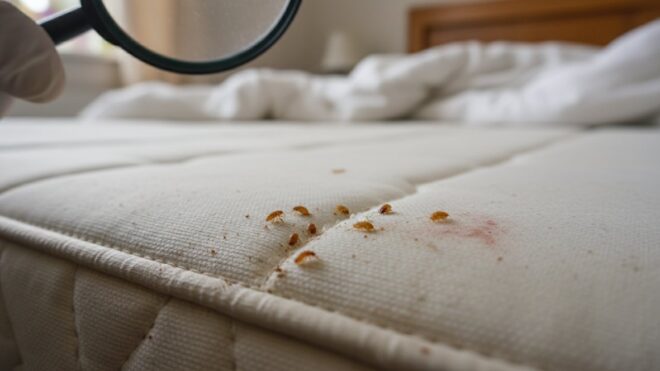
Bed bugs have made a quiet comeback in homes across the United States, and the signs of bed bug infestation in mattress surfaces are often missed until the problem has grown significantly. This guide from Zoifia Pest Control covers exactly what to look for, where to look, and what to do the moment you find it. Early detection requires knowing the specific physical evidence these insects leave behind, your mattress is the single best place to start.
Here’s what most guides get wrong: they describe what bed bugs look like, not what their presence looks like. The insects are nocturnal and hide during daylight hours. What you will actually find are the traces they leave: stains, droppings, shed skins, and eggs. Below, we show you how to identify each one, perform a thorough mattress inspection, and take immediate action if you find evidence.
Why Your Mattress Is the First Place to Check for Signs of Bed Bug Infestation
Your mattress is the primary feeding ground for bed bugs. These nocturnal insects feed while their host sleeps, positioning themselves as close as possible. Mattress seams, tufts, and tags create dozens of hiding spots within inches of where you rest each night.
A bed bug infestation in mattress fabric concentrates along seams and piping first, where folded fabric creates protected crevices. According to the EPA’s bed bug identification and control guidance, mattresses and box springs are among the most common hiding places identified during professional inspections.
Unlike bed frames or baseboards, a mattress can be physically moved and examined on all surfaces. Early detection at the mattress stage gives you the best chance of containing the infestation before it spreads to upholstered furniture, carpeting, and adjacent rooms.
Strip all bedding before inspecting the mattress. Wash and dry everything on the highest heat setting immediately. This removes any bed bugs or eggs clinging to fabric and prevents recontamination during inspection.
Physical Signs of Bed Bug Infestation in Your Mattress
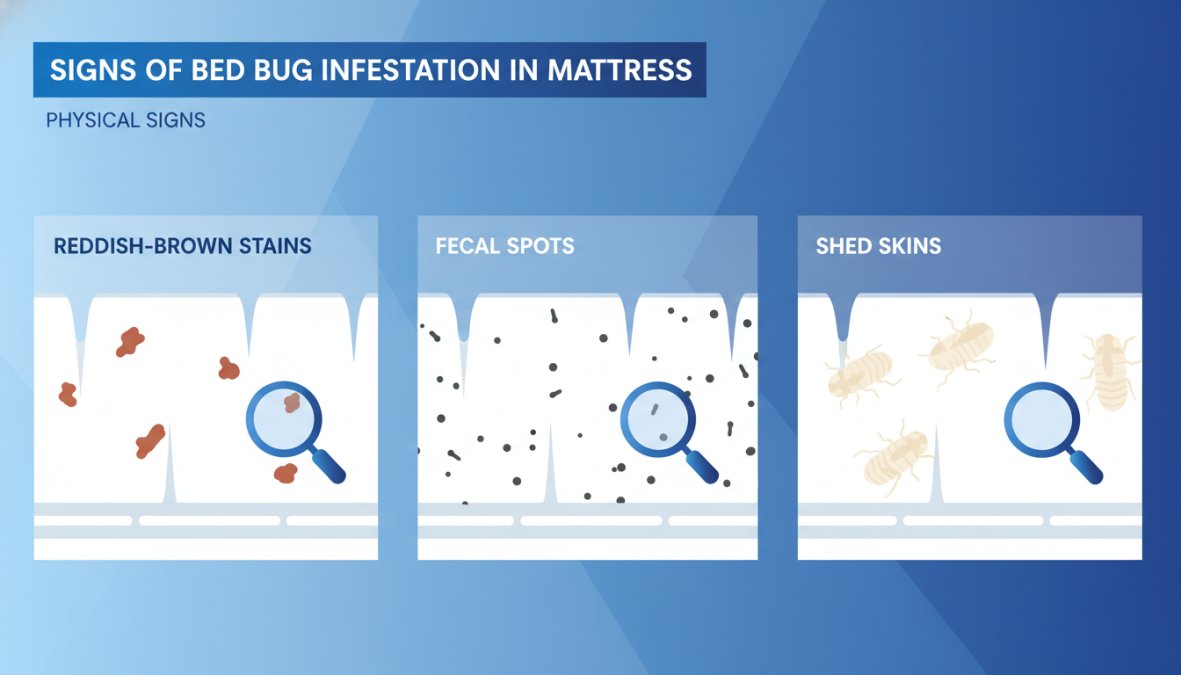
The physical signs of bed bug infestation in mattress fabric fall into four distinct categories. Even a single pregnant female can establish a new colony within weeks, so recognizing early-stage evidence matters.
Rusty or Reddish Stains on Mattress Fabric
Rusty or reddish stains are one of the most recognizable signs of bed bug activity. They occur when a bed bug is crushed during sleep or when a recently fed insect defecates blood-based waste. Fresh stains are bright red; older stains oxidize to a darker rust-brown.
Location matters as much as color. Reddish spots clustered along seams, near tags, or in corners are highly suspicious. Bed bug stains appear in groups near hiding spots, not as isolated single marks, which distinguishes them from iron-rich water stains or fabric dye discoloration.
Tiny Black Dots: Fecal Spots and What They Mean
Fecal spots are small dark marks that look like someone pressed the tip of a black felt marker against the fabric, digested blood excreted after feeding. They are typically 1-2 millimeters in diameter and bleed slightly into fabric fibers, giving them a fuzzy edge rather than a crisp dot.
Fecal spots concentrate along mattress seams, around tags, and at corners. A heavy infestation produces streaks and smears as population density increases. According to bed bug information from the University of Minnesota Extension, fecal spotting is present in virtually all confirmed infestations and is considered a primary diagnostic indicator.
Do not attempt to clean fecal spots before confirming the source. Removing the evidence before a professional inspection can make it harder to assess the infestation’s severity and extent.
Pale Yellow Eggs, Eggshells, and Shed Skins (Exoskeletons)
Bed bug eggs are roughly 1 millimeter long, pale white to translucent yellow, oval-shaped, and sticky, causing them to adhere to fabric. Eggshells are nearly transparent once hatched. Both are most commonly found in tight seam areas where adults hide.
Shed skins are perhaps the easiest evidence to identify. As bed bugs develop through five nymph stages, they shed their outer casing at each stage, leaving translucent hollow shells that retain the exact insect shape. Clusters of shed skins combined with fecal spots and staining constitute a near-certain identification.
Musty Odor: The Overlooked Warning Sign
A musty, sweet odor, similar to coriander or overripe raspberries, is produced by bed bugs through their scent glands. Most people don’t notice it in early infestations because the population is too small to generate a detectable concentration. By the time the odor becomes obvious, the infestation is typically well-established, making this a late-stage indicator rather than an early warning sign.
Its practical use is during close inspection: pressing your nose near a suspected harborage area and detecting a faint sweet-musty smell adds meaningful data to the evidence picture, but does not replace visual confirmation.
Where Bed Bugs Hide on and Around Your Mattress
On the mattress itself, primary hiding spots are:
- Mattress seams and piping along all four edges
- The label and tag area, where fabric layers overlap
- Tufts and buttons on pillow-top mattresses
- Any tears, holes, or loose fabric on the mattress surface
- The underside of the mattress, particularly near the foundation
Beyond the mattress, bed bugs quickly establish secondary hiding places. Bed frames are a major harborage site, especially in joints and screw holes. The box spring is often more heavily infested than the mattress because its interior is largely inaccessible. Upholstered furniture within six feet of the bed, baseboards, and electrical outlet covers are all documented hiding spots. In apartment buildings, they move through wall voids to adjacent units.
How to Inspect Your Mattress for Bed Bugs: DIY vs Professional Inspection Tools
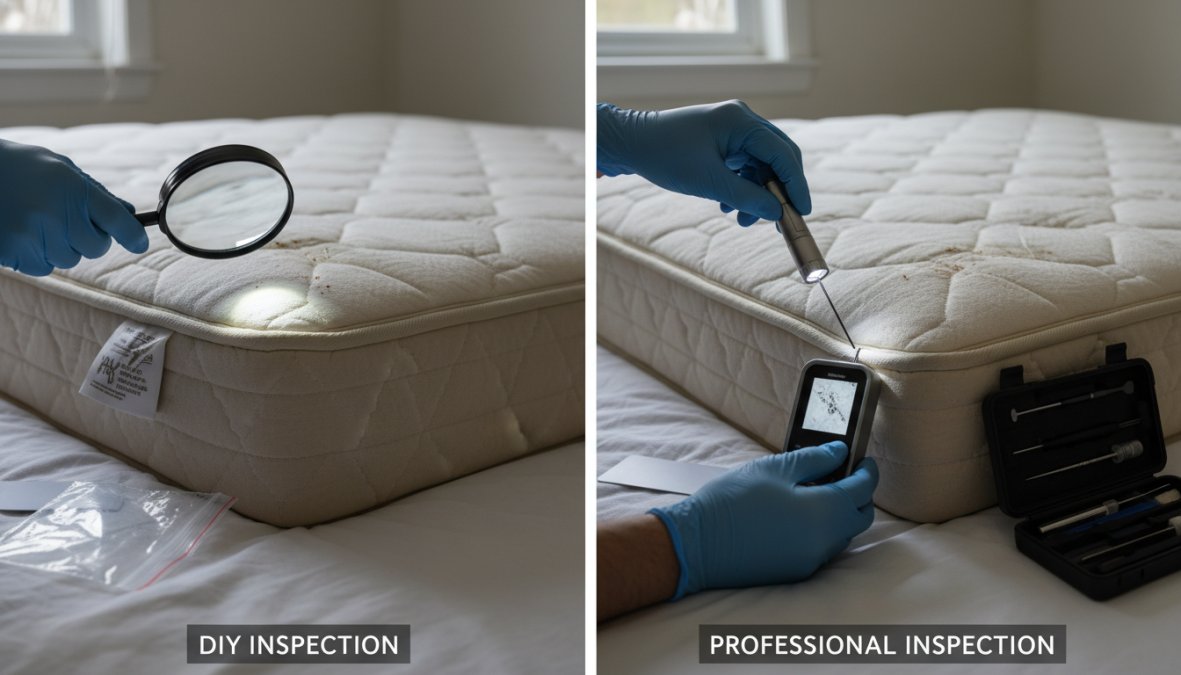
The basic DIY toolkit, a flashlight, a flat-edged card, and a magnifying glass, is genuinely effective for identifying moderate to heavy infestations.
Step-by-step DIY mattress inspection process:
- Strip all bedding and seal it in a plastic bag before moving it to the laundry
- Put on latex or nitrile gloves before touching the mattress surface
- Use the flat card to run along all seams, forcing insects or debris into the open
- Hold the flashlight at a low angle to make small spots and eggs more visible
- Examine the tag area, all four seams, and every corner systematically
- Flip the mattress and repeat the entire process on the underside
- Inspect the box spring separately, including its underside fabric
- Place any collected evidence in a sealed ziplock bag for identification
Mattress-Specific Inspection Techniques
The seam-scraping technique is the most effective DIY method: run the edge of a stiff card along the full length of each seam with moderate pressure to displace any hiding insects onto the mattress surface.
For professional inspections, technicians use tools beyond what a flashlight can reveal. Trained canine detection teams can identify infestations with high accuracy even in early stages when visual evidence is minimal. The honest comparison: DIY inspection reliably confirms a visible infestation but frequently misses early-stage problems. If you have unexplained itchy bites but cannot find visual evidence, a professional inspection is worth the cost, catching an infestation at ten insects versus ten thousand is the difference between minor treatment and full-room remediation.
DIY inspection tools are effective for confirming what you suspect. Professional tools, including canine detection, are necessary for ruling out what you cannot see. Use DIY as a first pass, not a final verdict.
Bed Bug Bites vs Other Insect Bites: How to Tell the Difference
Bed bug bites typically appear as small, red, raised welts in a line or cluster pattern, sometimes described as "breakfast, lunch, and dinner", on exposed skin areas like arms, shoulders, neck, and legs. The problem is that reactions vary dramatically between individuals: some develop visible welts within hours, others show no skin response at all.
According to dermatological guidance on insect bite identification from the American Academy of Dermatology, skin reactions to bed bug bites cannot be reliably distinguished from other arthropod bites based on appearance alone. Use bites as a reason to inspect, not as a diagnosis.
How Long Do Bed Bugs Live Without a Host
Bed bugs can survive without a blood meal for several months under normal room temperature conditions, longer in cooler environments. The common misconception is that leaving a room empty for a few weeks will starve out an infestation. It will not. Adult bed bugs are adapted to extended periods between blood meals, and nymphs, while requiring blood meals to develop, are similarly resilient. This survival capacity also explains why secondhand furniture can introduce infestations months after the original source was vacated.
How to Get Rid of Bed Bugs in Your Mattress
Getting rid of bed bugs in a mattress requires a multi-step approach. No single treatment eliminates an infestation reliably on its own.
Practical treatment options include:
- Heat treatment: Sustained temperatures above 120°F kill bed bugs at all life stages, including eggs. Professional heat treatment is the most reliable single-method approach.
- Encasement: After treatment, a bed bug-proof encasement traps any surviving insects and prevents mattress reinfestation.
- Vacuuming: Thorough vacuuming of all mattress surfaces and seams removes live insects and debris. Seal and dispose of the vacuum bag immediately.
- Chemical treatment: Registered pesticide applications by a licensed professional can be effective, but bed bugs have developed resistance to several common compounds.
Attempting to treat an infestation with over-the-counter sprays alone is one of the most common homeowner mistakes. These products rarely penetrate harborage areas and can cause insects to scatter, spreading the infestation to new areas.
Post-Inspection Protocol: What to Do Immediately After Finding Signs
Finding signs of bed bug infestation in mattress fabric requires immediate, systematic action. Speed matters because the population grows exponentially.
Follow this post-inspection protocol:
- Do not move the mattress or any furniture out of the room. Moving infested items spreads the infestation.
- Bag and launder all bedding at maximum heat immediately.
- Document the evidence with photographs before cleaning anything.
- Place bed bug interceptor monitors under all four bed legs to track insect movement.
- Contact a licensed pest control professional within 24 hours.
- Notify building management if you live in a multi-unit property, as adjacent units are likely affected.
- Do not sleep in another room. Doing so causes the bed bugs to follow you, spreading the infestation.
The Zoifia Pest Control team handles bed bug cases throughout the Metro Boston area and can typically schedule an inspection within a short response window. Licensed and insured treatment backed by a 90-day guarantee means you are not left wondering whether the problem has been resolved.
Best Bed Bug Mattress Encasement Options for Protection
A bed bug mattress encasement is a zippered cover that fully encloses the mattress, preventing bed bugs from entering or escaping. Encasements serve two functions: protecting a new or treated mattress from infestation, and trapping surviving insects on an already-infested mattress until they die.
Key specifications to look for:
| Feature | What to Look For | Why It Matters |
|---|---|---|
| Zipper seal | Bug-proof zipper with closure flap | Prevents escape through zipper teeth |
| Fabric bite resistance | Tested against bed bug biting | Insects cannot feed through the fabric |
| Seam construction | Double-stitched or heat-sealed | Eliminates gaps at seam intersections |
| Certification | Certified bed bug proof | Third-party verification of effectiveness |
| Coverage | Full six-sided enclosure | Partial covers leave exposed surfaces |
Encasements should remain on the mattress for a minimum of 18 months after treatment. Removing the encasement prematurely can allow surviving insects to re-establish. Inspect the encasement surface regularly for new fecal spots or staining, which would indicate insects are active inside.
According to bed bug control guidance from the National Pest Management Association, mattress encasements are a recommended component of an integrated pest management approach, not a standalone solution. Think of encasement as the final layer of protection in a comprehensive plan, not the first response to a confirmed infestation.
Discovering the signs of bed bug infestation in mattress fabric is unsettling, but acting quickly and correctly makes all the difference. Zoifia Pest Control offers fast, licensed, and insured bed bug treatment for residential and commercial properties throughout the Metro Boston area, backed by a 90-day guarantee and no long-term contracts required. Get a quote from Zoifia Pest Control and have a professional assess your situation before the infestation has time to spread.
Frequently Asked Questions
What do bed bugs look like on a mattress?
Adult bed bugs are small, flat, oval-shaped parasitic insects about the size of an apple seed, with a reddish-brown color that darkens after a blood meal. On a mattress, you are more likely to spot their evidence than the bugs themselves: rusty reddish stains, tiny black fecal spots, pale yellow translucent eggs or hollow shed skins along the seams. Live bugs may be visible in clusters near mattress seams or tufts, especially at night.
Can you see bed bugs on a mattress during the day?
Bed bugs are nocturnal by nature and prefer to hide during daylight hours, making daytime detection harder. However, a significant infestation means hiding spots become crowded, forcing some bugs into visible areas even during the day. Check mattress seams, piping, tags, and the box spring. Using a flashlight and a flat card to probe tight crevices improves your chances of spotting live bugs or their hollow exoskeleton shells during a daytime DIY inspection.
What are the first signs of bed bugs in a bed?
The earliest signs of bed bug infestation in a mattress are typically itchy cluster bites on exposed skin when you wake up, followed by small rusty or reddish spots on your sheets from crushed bugs or blood meals. Shortly after, you may notice tiny black fecal spots along mattress seams. Pale yellow eggs, eggshells, or shed skins (exoskeletons) along the piping are also early indicators. A faint musty odor can develop as the infestation grows. Early detection is critical to preventing a full infestation.
How do I check my mattress for bed bugs properly?
Strip all bedding and inspect sheets for reddish stains or black dots first. Then use a flashlight and magnifying glass to slowly examine every mattress seam, piping, tag, and handle. Pull back tufts and check folds carefully. Use a flat card or old credit card to scrape along seams to dislodge hiding bugs or eggs. Flip the mattress and repeat on the other side. Also inspect the box spring, bed frame joints, and nearby upholstered furniture. A bed bug mattress encasement after inspection helps contain any remaining activity.
Do bed bugs leave stains on mattresses?
Yes. Bed bugs leave two types of stains on mattresses. Rusty or reddish spots are caused by blood meals, either from biting or from being crushed while engorged. Tiny dark brown or black dots are fecal spots, which are digested blood excreted by the bugs. Both types of staining commonly appear along mattress seams, tufts, and edges. These stains are among the most reliable physical signs of a bed bug infestation and should prompt a thorough inspection and contact with a pest control professional.
How long can bed bugs survive without a host, and does it affect how I treat my mattress?
Bed bugs can survive several months without a blood meal under normal room conditions, and potentially longer in cooler environments. This is why simply vacating a room does not eliminate an infestation. It also means that sealing a mattress in a bed bug encasement traps bugs inside where they will eventually die, but this process can take many months. For active infestations, professional extermination combined with an encasement is far more effective than waiting out the bugs through host deprivation alone.
This article was written using GrandRanker
