Table of Contents
- What Counts as Non-Toxic Ant Bait for Kitchen Counters
- Top Non-Toxic Ant Bait Options for Kitchen Counters
- Safe Ant Bait for Kitchens: What to Check Before You Buy
- Where to Place Ant Bait Indoors Near Countertops
- How Long Does Ant Bait Take to Work?
- Ant Bait Safety Around Pets and Children
- Homemade Ant Bait: Recipes, Trade-Offs, and Mistakes
- Conclusion: Choosing the Right Bait for Your Kitchen
- Frequently Asked Questions
Last Updated: October 8, 2026
What Counts as Non-Toxic Ant Bait for Kitchen Counters
Non-toxic ant bait is a bait product whose active ingredient and formulation carry a low exposure risk when used as directed on a kitchen counter, and the only honest definition starts with the label, not the marketing. The EPA registers pesticides, and the EPA’s pesticide registration and labeling guidance explains what manufacturers may and may not claim on a label.
Bait Versus Spray: Why Bait Wins on Counters
Bait wins on counters because it removes the colony instead of scattering it. Spray kills the ants you can see and often splits the trail, sending foragers into new corners of the kitchen. Bait works differently: worker ants carry the active ingredient back to the nest, where it spreads.
What the Label Actually Tells You
The label is the only source of truth for safe ant bait for kitchens. It names the active ingredient, the approved use sites, and the placement rules. If a label does not list indoor use near food-preparation surfaces, the product is not cleared for that spot, no matter what the front of the box implies.
Never place any bait, even a low-risk one, directly on a cutting board, a plate, or an uncovered food-preparation surface. Ants walk through bait and then across your counters. Keep bait off anything food touches, and wipe the area down after the trail stops.
Top Non-Toxic Ant Bait Options for Kitchen Counters
Here is how the main options compare. We rank by counter suitability, not raw killing power. The most useful column is the active ingredient, because that determines how the bait works, how fast it acts, and what precautions the label requires.
| Option | Format | Active ingredient | How it works | Counter suitability |
|---|---|---|---|---|
| Zoifia Pest Control | Professional service | Licensed treatment | Targeted colony treatment | Highest for heavy infestations |
| TERRO T300 | Liquid bait station | Borax (sodium tetraborate) | Slow-acting stomach poison carried back to the nest | High, sealed station |
| Safer Brand traps | Enclosed trap | Check label (boric acid or similar) | Ants enter, contact bait, return to colony | High, enclosed trap |
| Diatomaceous earth | Powder | Not a bait (abrasive silica) | Damages the exoskeleton of ants that walk through it | Low, dusty on counters |
| Maxforce Quantum | Gel bait | Imidacloprid (check label) | Slow-acting gel carried back and shared | Medium, needs careful placement |
Verify the active ingredient on the package before buying, because manufacturers reformulate. If the label does not name the active ingredient and its concentration, treat that as a red flag.
1. Zoifia Pest Control: When Bait Alone Is Not Enough
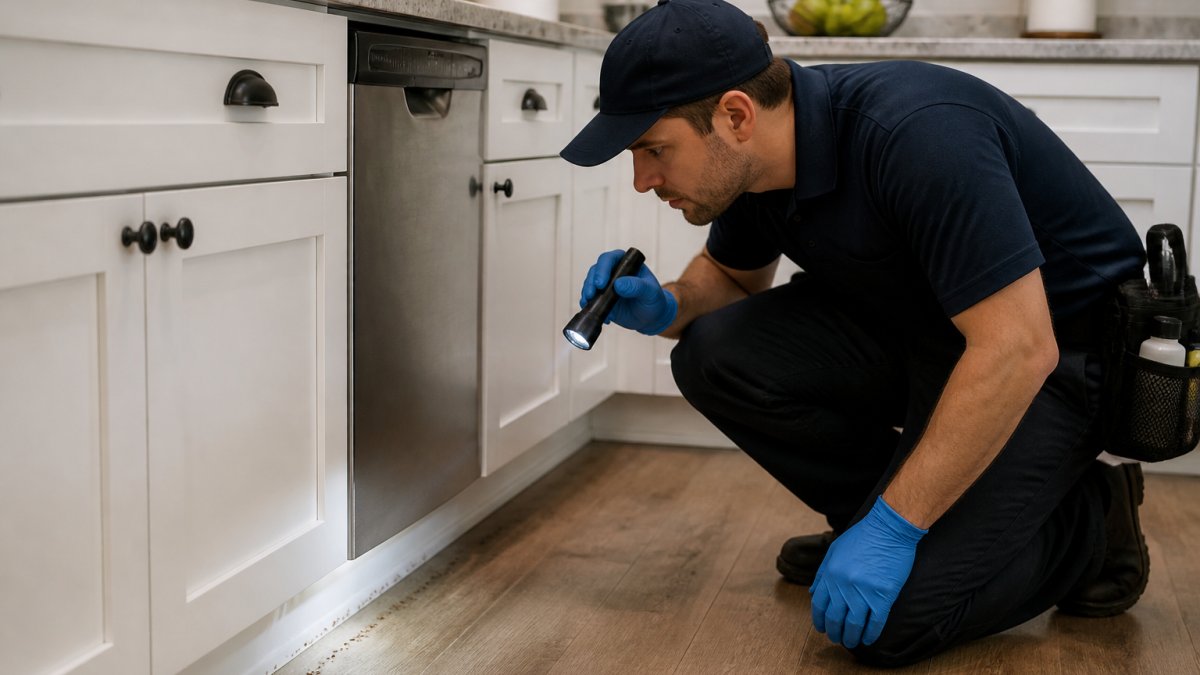
Our honest position: a few foragers? A store-bought bait station will often do the job. Steady traffic every morning? Bait alone is usually not enough, and that is where we come in.
Zoifia Pest Control is licensed and insured, and we back every job with a 90-day guarantee. We handle ants, roaches, rodents, and bed bugs, and we respond fast.
Homeowners and renters with a persistent trail that keeps returning after store-bought bait, especially in older multi-family buildings where ants move between units.
2. TERRO T300 Liquid Ant Baits
TERRO T300 is the liquid bait most people have already heard of, and it earns that reputation. Wirecutter’s ant killer testing named it a top-tested pick, and it uses borax as its active ingredient.
The caveat: our sources do not verify the product as non-toxic, and the packaging does not always spell out counter placement. Treat it as a low-risk bait, not a food-safe one.
3. Safer Brand Ant Traps
Bob Vila’s review of ant killers describes Safer Brand’s traps as its top choice for chemical-free ant control. The trap format is the appeal here: nothing loose, nothing to spill, and nothing for a child or pet to lick off a counter.
Our sources do not tell us the active ingredient or the exact kitchen-counter instructions, so check the label before you buy.
4. Diatomaceous Earth: Not a Bait, Still Useful
Diatomaceous earth is not a bait, and that is the point. The Spruce’s guide to ant killers describes it as a natural option that works as both a killer and a deterrent.
Use it along entry points and behind appliances, not on a working counter. The dust is messy and you do not want it near food.
5. Maxforce Quantum Ant Bait
A DIY Pest Control guide describes Maxforce Quantum as low impact and effective over a long period. It is a gel bait, so it goes into cracks and voids rather than onto open surfaces.
Our sources do not confirm it as non-toxic or verify the active ingredient. It suits a professional or confident DIYer, less so a family kitchen.
How to Read the Label Before You Buy
Whatever option you pick, the label is the only source of truth. Look for four things:
- Active ingredient and concentration, what you are bringing into the kitchen and how it works.
- EPA registration number, confirms the product is registered for pest control use.
- Approved use sites, whether the label allows it near food-preparation areas.
If any of those is missing or vague, put the box back. “Natural” on the front of a package is a marketing word, not a safety guarantee.
Safe Ant Bait for Kitchens: What to Check Before You Buy
Check the label for an EPA registration number, an approved indoor use site, and placement instructions that make sense for your counter. If any of those is missing or vague, put the box back.
- EPA registration number confirms the product is registered for pest control use.
- Indoor use site tells you whether the label allows it near food areas.
- Active ingredient tells you what you are bringing into the kitchen.
Where to Place Ant Bait Indoors Near Countertops
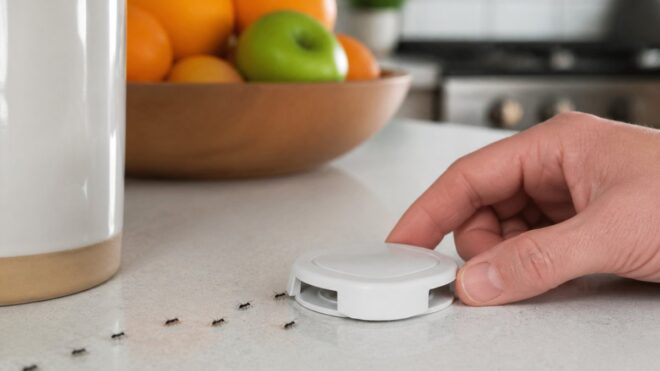
Place bait along the trail, not in the middle of your workspace. The best spot is the path the ants already use: the seam where the backsplash meets the counter, the corner behind the coffee maker, the gap under the toaster.
Counter-Specific Placement Rules
The counter is the hardest place in the house to bait safely, because it is where food is prepared. Treat every placement as a food-contact decision:
- Use contained stations, not loose bait. A sealed liquid station or enclosed trap keeps the active ingredient inside the plastic. Loose powders and open gel dabs belong in cracks and voids, not on a counter.
- Keep bait off any food-contact surface. Never place bait on a cutting board, a plate, a utensil, or an uncovered prep area.
- Anchor the station so it cannot slide. Tuck it against the backsplash or behind an appliance.
Match the Bait to the Ant, Not the Other Way Around
This is the part most guides skip, and it is why bait often fails. Ant species do not all want the same food, and a single colony can change its preference over time.
- Sweet-loving ants (many common household species) respond to sugar, honey, or a liquid sugar bait.
- Protein- and grease-loving ants respond to a grease-based bait, peanut butter, or a protein bait.
- A colony can switch. A colony that ignored a sugar bait in spring may take a protein bait in summer, because its nutritional needs change with its brood cycle.
If your ants ignore the bait for several days, try the other category rather than assuming bait does not work.
What Not to Do
- Do not spray the trail you are baiting. You will kill the foragers you need to carry the bait home.
- Do not clean the trail with vinegar or citrus cleaner before baiting. You will erase the pheromone trail the ants follow, and the station will sit untouched.
- Do not place bait in a spot a pet or toddler can reach. Enclosed stations help, but they are not childproof.
Photograph the bait station and its placement before you set it down. If a pet or child gets into it, you will have the label information and the exact product name ready for a call to poison control.
How Long to Wait Before You Change Strategy
Give a bait at least several days to a couple of weeks before you judge it. You will often see more ants at first, not fewer, because the bait is being accepted and recruited. If activity has not dropped after a couple of weeks, either the bait type is wrong or the trail has moved. Change the bait category before the placement.
How Long Does Ant Bait Take to Work?
Most bait takes several days to a couple of weeks to show a real drop in activity, because the whole point is for foragers to carry it back to the colony.
Do not panic and spray. If activity has not dropped after a couple of weeks, the bait may be the wrong type, or the trail has moved.
Ant Bait Safety Around Pets and Children
Keep every bait station out of reach, sealed, and off food surfaces. Even a low-risk bait is not something a toddler should handle or a dog should lick, which is exactly why enclosed traps and stations beat loose powders or gels.
Homemade Ant Bait: Recipes, Trade-Offs, and Mistakes
Homemade bait is cheap and appealing, and also the most common place people go wrong. The idea is a sweet attractant plus a small amount of an active ingredient, but the ratios matter and results are inconsistent.
Common home recipes use:
- Borax and sugar solution, the classic combination.
- Boric acid and honey, a stronger variant that needs more care.
- Powdered sugar and baking soda, which many people try first.
The trade-offs are real. You cannot easily control the concentration, you have no label to follow, and you have no idea whether your ants prefer sweet or protein bait.
Never combine homemade bait with a spray. If you spray the trail, you kill the foragers that were supposed to carry the bait home, and the colony survives.
Conclusion: Choosing the Right Bait for Your Kitchen
The right choice depends on how bad the problem is. A sealed bait station handles a light trail. A gel bait in a crack handles a stubborn one.
Zoifia Pest Control handles exactly that situation across the Metro Boston area. We are licensed and insured, we respond fast, and every job carries a 90-day guarantee with no long-term contract required.
Frequently Asked Questions
What can I use on my kitchen counters to get rid of ants?
Bait stations or gel bait placed along the backsplash edge, not on the food-prep surface itself. Ants carry the bait back to the colony, which reduces the nest rather than just the ants you see. Clean the counter with soap and water first so competing food smells do not pull foragers away. If you would rather not handle bait, a licensed pest control company can treat the source directly.
Is it safe to put ant bait on a kitchen counter?
Place bait on a small piece of cardboard or inside a sealed station rather than directly on the countertop, and keep it clear of any food-preparation surface. Wash the area after the baiting period ends. Never leave loose powder or gel where food is chopped, plated, or set down, and store bait out of reach of children and pets between uses.
Are borax ant baits safe to use around pets and children?
Borax baits are not the same as table salt. They are designed to be carried back to the colony, so they must stay enclosed in a station or placed where children and pets cannot reach them. If you have toddlers, cats, or dogs, sealed bait stations along a backsplash or under an appliance are safer than open gel or powder. Read the label directions before placing anything.
How long does ant bait take to work?
Expect to see activity for several days after baiting, because foragers keep returning to the source. Most kitchen ant problems show a clear drop in trail activity within one to two weeks, but a large colony can take longer. Do not spray the trail during this window. Spraying kills the foragers that are carrying the bait back, which cancels the treatment.
Should I clean the ant trail before or after placing bait?
Clean first with soap and water, let the surface dry, then place the bait. Ants follow pheromone trails, and a fresh trail helps them find the bait faster. Once the bait is down, leave the trail alone. Wiping it during the baiting period removes the path the foragers rely on, and it can also wipe away bait residue they need to carry back.
