Table of Contents
- Why Are Ants Coming Through My Window?
- Step-by-Step: How to Trace Ants to Their Exact Entry Point
- How to Seal Gaps Around Window Frames
- Best Ant Bait for Indoor Use
- Safe Treatment for Homes with Kids and Pets
- How to Prevent Ants from Coming Back
- When to Call a Professional for Window Frame Ants
- Frequently Asked Questions
Last Updated: October 8, 2026
Why Are Ants Coming Through My Window?
Ants come through window frames because the frame offers both a gap to squeeze through and a warm, sheltered path into your home.
University of Minnesota Extension guide to ant control
Most homeowners spray the ants they can see. That kills a few workers and leaves the colony untouched. The real fix is finding the entry point, sealing it, and removing what drew the ants there in the first place.
Common Attractants Around Windows
Windows are natural gathering spots for ants. Here is what pulls them in:
- Crumbs and food debris on the sill
- Condensation and damp wood near the frame
- Honeydew from aphids on outdoor plants
- Dead insects trapped in the track
- Pet food bowls placed near a window
How Ants Use Window Frames as Highways
A window frame is not just a door for ants. It is a road. Ants follow the frame edges, then slip into wall voids through the same gaps that let in drafts.
That distinction matters. If ants are nesting inside the frame, you will see sawdust-like debris or soft, spongy wood. If the frame is just a route, the ants vanish into the wall and reappear somewhere else.
Step-by-Step: How to Trace Ants to Their Exact Entry Point
Tracing ants to their entry point takes about 15 minutes with a flashlight and a roll of painter’s tape. Follow the trail backward instead of killing the ants you see.
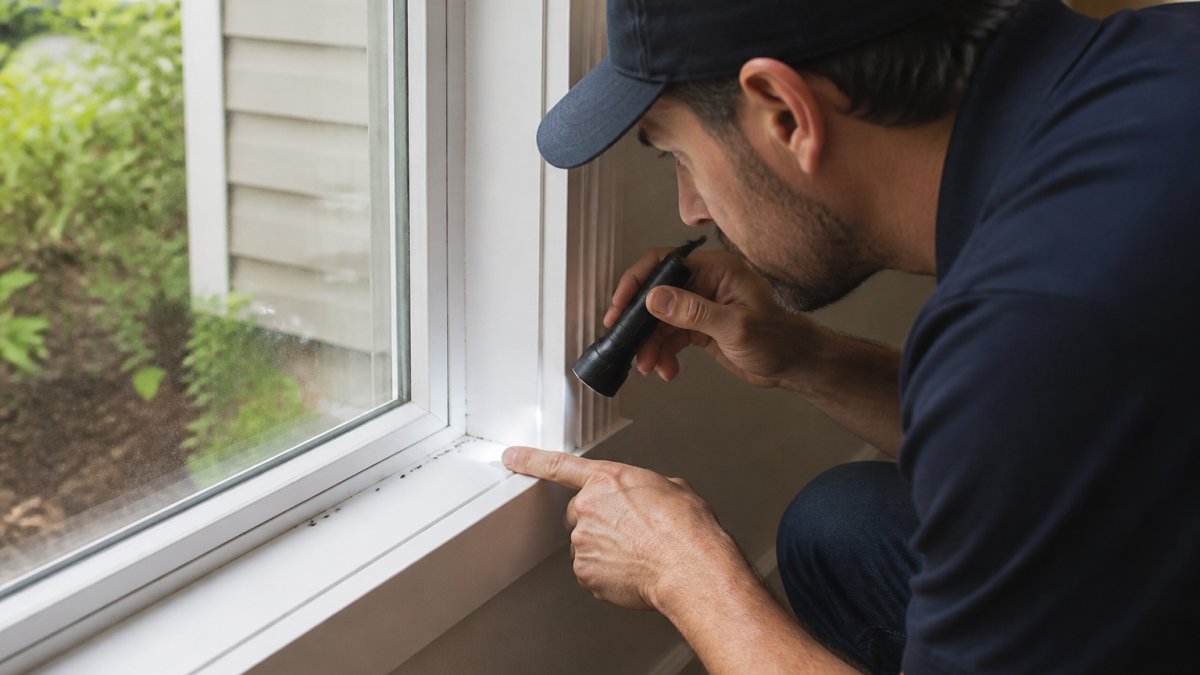
Tools You’ll Need for Inspection
- Flashlight or phone light
- Painter’s tape or sticky notes
- A small flathead screwdriver
- Gloves
- Notebook or phone camera
Following the Trail Without Disturbing It
- Wait until you see active ants, usually mid-morning or evening.
- Place tape markers along the trail every few inches.
- Watch where the line disappears into the frame.
- Check the interior sill, the exterior sill, and the track.
- Photograph the spot before you seal anything.
Ants often enter at the corner where the frame meets the sill, not the middle of the frame. That joint flexes with temperature changes and opens gaps over time. Check all four corners before you decide where the entry point is.
How to Seal Gaps Around Window Frames
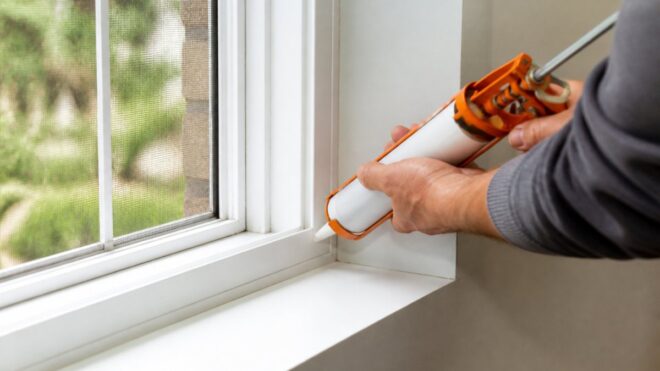
Sealing gaps around window frames stops the ants that use the frame as a route. Use exterior-grade silicone caulk for outside gaps and a paintable latex caulk indoors.
Most guides stop there. The problem is that a window frame is not one gap, it is a system of joints, channels, and drainage slots, and ants exploit the ones that stay damp.
Choosing the Right Caulk or Sealant
| Gap Location | Best Sealant | Why |
|---|---|---|
| Exterior frame to siding | Exterior-grade silicone caulk | Handles rain and temperature swings |
| Interior frame to drywall | Paintable latex caulk | Easy to touch up |
| Window track | Weatherstripping | Keeps the window movable |
| Screen frame | Screen spline | Holds mesh tight |
| Sill-to-frame corner joint | Exterior-grade silicone caulk | Flexes with temperature; the most common ant entry |
Seal the Joints, Not Just the Cracks
Ants rarely march through the middle of a frame. They slip through the joints where two pieces of the assembly meet, because those joints move. Check these four spots on every window:
- The corner where the frame meets the sill. This joint flexes with temperature changes and opens hairline gaps over a season. Run a thin bead of exterior silicone along the inside and outside of the corner.
- The sill-to-apron seam just below the interior sill. Ants follow it into the wall cavity.
- The vertical frame-to-jamb line on both sides. Look for a visible shadow line or a spot where a fingernail catches.
- The head joint at the top of the frame, where water often sits longest.
Before caulking, scrape out old, cracked sealant with a putty knife and wipe the surface with a damp rag. Caulk will not bond to dust or loose paint, and a bead that peels in a month is worse than no bead at all.
Do Not Caulk the Weep Holes
The small slots at the bottom of the exterior frame are weep holes, and they exist to let water drain out of the window assembly. Caulking them shut traps moisture inside the frame, which rots the wood and creates exactly the damp, soft conditions carpenter ants prefer. Cover weep holes with a fine stainless-steel mesh or a manufactured weep-hole screen instead. The mesh keeps ants out while letting water escape.
Fix the Moisture Before You Seal
Sealing a damp frame traps the problem. Before you caulk, check for:
- Condensation on the interior glass or frame during cold weather, which points to a failed seal or high indoor humidity.
- Soft, spongy, or discolored wood around the sill. Probe gently with a screwdriver. If the wood gives, the frame has water damage and caulk will not fix it.
- Peeling paint or a musty smell near the frame, both signs of trapped moisture.
If you find soft wood, the repair is a wood hardener or an epoxy filler for small areas, or frame replacement for larger damage. Sealing over rot hides the problem and gives ants a permanent, protected highway.
Repairing Weatherstripping and Screens
Worn weatherstripping is a common entry point. Peel back the old strip, clean the channel, and press in a new length. For screens, look for small tears along the edges. Patch holes with screen tape, or replace the spline if the mesh has pulled loose.
Caulk in dry conditions above 40°F. Silicone will not cure properly in cold or wet weather, and a failed bead leaves a gap you will have to redo next season.
Once the frame is sealed and dry, give the caulk a full 24 hours to cure before you check for new ant activity. If ants still appear at the same spot, the entry point is behind the frame, not at the surface, move to baiting and, if needed, a professional inspection.
Best Ant Bait for Indoor Use
The best ant bait for indoor use is a slow-acting gel or station bait placed near the trail, not on it. Ants carry the bait back to the colony, which is what actually kills the nest. Fast sprays do the opposite: they kill foragers and scatter the colony.
Clemson University Home and Garden Information Center on ant baits
Comparing Bait, Sprays, and Household Deterrents
- Bait stations: Best for nests. Slow, thorough, colony-level results.
- Sprays: Best for immediate knockdown. Do not use with bait.
- Diatomaceous earth: Works on dry, dusty surfaces. Needs reapplication.
- Household deterrents: Cinnamon, vinegar, lemon, paprika, salt, and turmeric can disrupt trails. They do not kill the colony.
Never spray insecticide where you have placed bait. Sprays kill the foragers that would carry the bait back to the nest, and you lose the whole treatment. Pick one method per trail.
Safe Treatment for Homes with Kids and Pets
Bait stations and sealed cracks are the safest options for homes with kids, pets, or sensitive occupants. Place enclosed bait stations where children and pets cannot reach them, and seal gaps so ants cannot return through the same opening.
If you use diatomaceous earth, choose food-grade and apply a thin dusting. Wear a mask during application. Wash hands after handling any pest product, and store everything in a locked cabinet.
How to Prevent Ants from Coming Back
Prevention comes down to three habits: seal, clean, and check. But the difference between a fix that holds and one that fails is the follow-up schedule. Ants are persistent, and a single treatment rarely ends an infestation. Here is a practical timeline you can actually keep.
The First Two Weeks After Treatment
Expect to see some ant activity for several days after baiting. That is normal, foragers are still carrying bait back to the colony. Do not spray them. Watch instead for these signals:
- Days 1-3: Activity may increase briefly as more ants find the bait. Leave the bait stations undisturbed.
- Days 4-10: Activity should drop noticeably. If it does not, the bait may be the wrong type for the species, or there is a second trail you have not found.
- Days 11-14: If ants are still streaming through the same gap, the colony is likely inside the wall or frame. Escalate to a professional inspection.
The Monthly Check
Once activity stops, switch to maintenance mode. Once a month, do a five-minute walkthrough:
- Wipe sills and window tracks with a vinegar-and-water solution.
- Look for new frass, sawdust, or tiny holes in the frame, signs of a new or returning nest.
- Check caulk lines for cracks, peeling, or gaps that reopened.
- Confirm bait stations are still sealed and out of reach of children and pets.
The Seasonal Refresh
Weather is what reopens window frames. Temperature swings expand and contract the frame, and rain and condensation soften the wood. Recheck and refresh barriers twice a year:
- Spring: Re-inspect caulk lines and weep-hole mesh after winter freeze-thaw cycles. Replace any bead that has cracked or pulled away.
- Fall: Clear dead insects and debris from tracks, trim branches and plants back from windows, and confirm screens and weatherstripping are intact before heating season raises indoor humidity.
Ongoing Habits That Starve the Trail
- Wipe sills with vinegar and water weekly
- Store food in sealed containers
- Fix leaks and condensation fast
- Trim plants and branches away from windows
- Recheck caulk lines each spring and fall
When to Stop DIY and Escalate
Persistent activity past two weeks, visible wood damage, or ants appearing in a different room are all signs the colony is not where you think it is. At that point, more caulk and more spray will not help. A professional can locate the nest, identify the species, and treat the source rather than the symptom.
The ants you see are less than 10% of the colony. Killing visible ants without sealing the entry point guarantees they come back within weeks, and a follow-up schedule is what keeps them from coming back at all.
When to Call a Professional for Window Frame Ants
Call a professional when ants return after sealing and baiting, when you see carpenter ants or soft wood damage, or when the colony is inside a wall.
U.S. Environmental Protection Agency guidance on choosing a pest control professional
At Zoifia Pest Control, we handle window frame infestations across the Metro Boston area with licensed and insured technicians. Our 90-day guarantee covers the treatment, and there is no contract required.
Frequently Asked Questions
Why are ants coming through my window frame?
Ants enter through window frames looking for food, water, or shelter. Cracks in the frame, worn weatherstripping, or torn screens give them easy access. Once inside, they follow pheromone trails to crumbs, pet food, or moisture around sinks. In older homes, wood rot or moisture damage can create even more entry points. Sealing these gaps and removing food sources stops the traffic.
How do I find where ants are entering around a window?
Place a small piece of tape over suspected gaps and check it after a few hours. Or set a bait station near the window and watch where ants emerge. At night, use a flashlight to follow the trail backward from the food source to the window frame. Look for live ants, sawdust, or small holes along the sill and edges.
What should I use to seal gaps in a window frame?
Use exterior-grade silicone caulk for gaps wider than a credit card. For smaller cracks, a bead of latex caulk works well. Replace worn weatherstripping with a tight-fitting strip. If you find wood damage, repair or replace the affected section before sealing. Always clean the area first so the caulk adheres properly.
When should I call a pest control professional for ants around a window?
Call a professional if you see carpenter ants (larger, black or red), find wood shavings, or hear faint rustling inside the wall. These signs suggest a nest in the structure, not just a trail. Also call if DIY baits and sealing fail after two weeks. A licensed technician can locate the colony and treat it safely, often with a guarantee.
Ants in a window frame rarely fix themselves. The colony keeps sending foragers until the entry point is sealed and the nest is treated. Zoifia Pest Control offers fast response, licensed and insured technicians, a 90-day guarantee, and flexible service with no long-term contract. Get a quote from Zoifia Pest Control and stop ants from coming through your window frames for good.
