Table of Contents
- The Real Reason Ants Keep Coming Back to Your Kitchen
- Why Killing Individual Ants Never Solves the Problem
- How to Find Ant Entry Points Around Your Kitchen
- Ant Pheromone Trails Removal: The Step Most People Skip
- A 7-Point Kitchen Inspection to Stop Ants for Good
- When to Call a Pest Control Professional for Ants
- Your Kitchen Can Stay Ant-Free
- Frequently Asked Questions
Last Updated: September 8, 2026
The Real Reason Ants Keep Coming Back to Your Kitchen
You scrub the counters, kill the visible ants, and within a week they are back in a new line. The frustration is real, and the answer lies in understanding how ants operate rather than just reacting to what you see. Most homeowners treat the symptom while the actual colony thrives undisturbed somewhere nearby. Ants keep coming back to your kitchen because a colony has established a reliable food source and a chemical map leading to it.
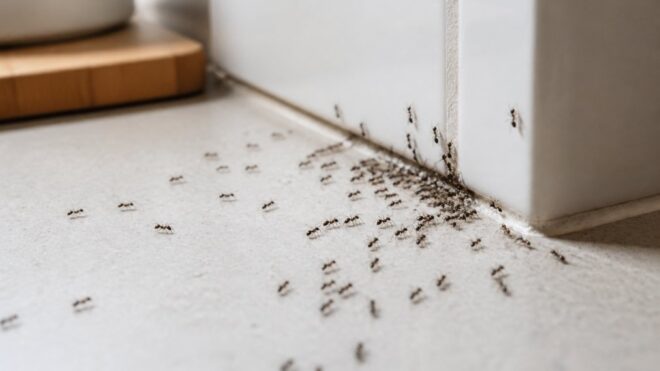
The core issue is that ants are not random wanderers. They are organized foragers following invisible signals we cannot see. A single scout ant that discovers a crumb will lay down a scent trail that hundreds of colony members can follow directly to your countertop. This is why ants keep coming back even after you clean: the chemical instructions remain until they are actively removed.
Below, we’ll walk through the biological reason your kitchen stays on the ant map, how to find where they enter, and the exact steps to break the cycle for good. The solutions we cover have helped many homeowners reclaim their kitchens.
Why Killing Individual Ants Never Solves the Problem
Killing the ants you see is the equivalent of trimming leaves off a weed while leaving the root untouched. The worker ants marching through your kitchen are foragers, typically making up a small fraction of the total colony population. The queen and the larvae remain safely tucked inside a nesting site, often in a wall void, under a slab, or in the soil near your foundation.
When you crush a few foragers, the colony simply sends out more. Worker ants are expendable by design, and their sole job is to bring food back to feed the queen and developing young. According to guidance from the University of California’s Statewide Integrated Pest Management Program, successful control requires eliminating the colony itself, not just the workers you happen to spot.
This is why ants keep coming back to your kitchen no matter how diligent you are with a paper towel. You are fighting a biological system with a temporary fix. The colony will keep sending replacements as long as the pheromone trail and food source remain viable.
How to Find Ant Entry Points Around Your Kitchen
Finding where ants enter is a detective job. They use gaps that are invisible to the casual eye, and a thorough inspection requires looking at your kitchen from an ant’s perspective. A gap of 1/16th of an inch is enough for most common household ants like the odorous house ant or the pavement ant (extension.umn.edu). Here is a structural inspection checklist that goes beyond the obvious cracks.
Step 1: Start at the Perimeter
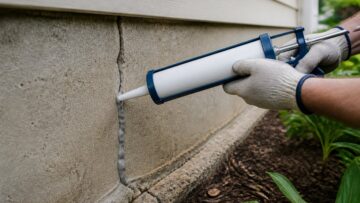
Begin your inspection at the exterior of your home, if accessible. Look for cracks in the foundation, gaps where utility lines (gas, electric, cable) enter the house, and spaces under exterior doors. Seal these with a silicone-based caulk or expanding foam. This is the first line of defense.
Step 2: Inspect the Plumbing Penetrations
Inside the kitchen, the most common entry points are where pipes penetrate the walls. This includes:
- Under the sink: Look for gaps around the P-trap and the water supply lines where they enter the wall or cabinet floor.
- Behind the dishwasher: There is often a gap where the drain line and electrical cord pass through the cabinet side or floor.
- Behind the refrigerator: Check the area where the water line for the ice maker connects to the wall.
Use a flashlight to examine these areas closely. You are looking for any opening larger than the width of a credit card. If you find a gap, fill it with a silicone-based caulk or a small amount of expanding foam.
Step 3: Examine the Baseboards and Floor Junctions
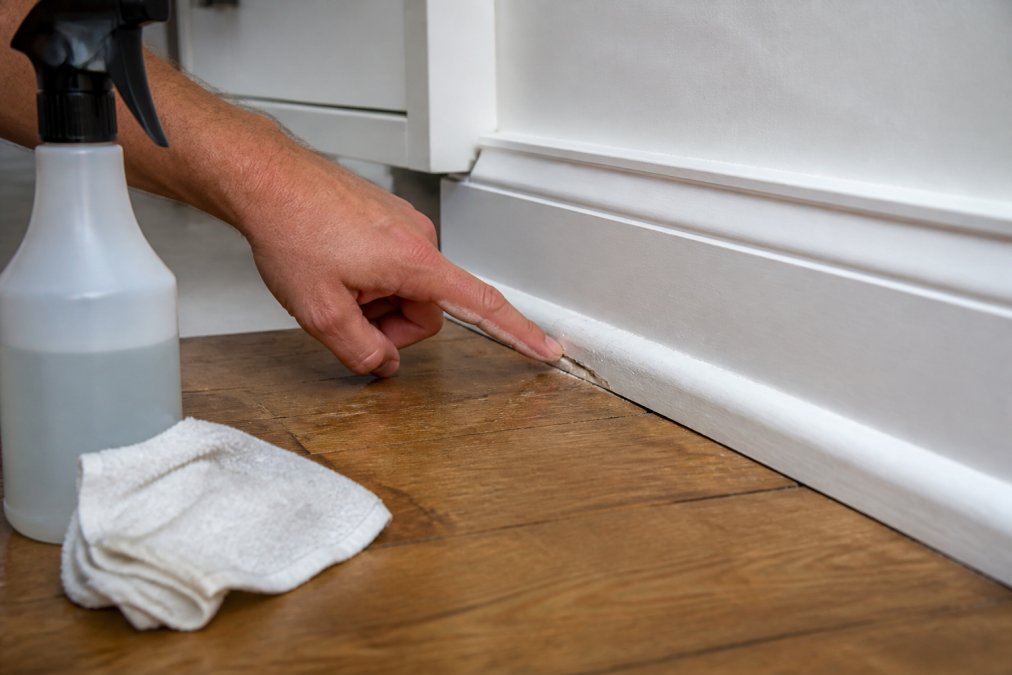
Ants often travel along the junction where the baseboard meets the floor or the wall. Run your finger along this seam. If you feel any give or see a visible crack, that is a potential entry point. Pay special attention to corners and areas where the floor has settled or shifted.
Step 4: Check Window Frames and Door Thresholds
Windows in the kitchen are a common entry point, especially if the frames are old or the caulking has dried out. Inspect the entire perimeter of each window. For exterior doors, check the weather stripping at the bottom. If you can see daylight under the door, ants can get in. Install a new door sweep if necessary.
Step 5: Look Behind Appliances and Cabinets
This is the hardest area to inspect but often the most critical. Pull out your stove and refrigerator if possible. Look for gaps where the appliances meet the wall or the floor. Also, check the toe-kick area under your cabinets. Ants can enter through a tiny crack in the back of a cabinet and then travel along the internal framing to reach your countertops.
Step 6: Use a Flashlight and a Mirror
A flashlight is essential. A small inspection mirror can help you see into tight corners and behind pipes. Do not rely on natural light; it will not reveal the dark, hidden gaps that ants prefer.
Do not seal up entry points with caulk if you have an active ant trail coming through that exact spot. The ants will simply find a new way in, and you may trap moisture inside the wall. First, neutralize the trail with a vinegar solution, then seal the gap.
Once you have identified and sealed all the entry points you can find, you have cut off the colony’s physical access. This is a critical step in the exclusion process. For the most persistent problems, consider using a baiting strategy near the suspected entry points before sealing them, which allows the foraging ants to carry the poison back to the nest.
Ant Pheromone Trails Removal: The Step Most People Skip
Ants navigate using chemical signals called pheromones. When a scout finds a food source, it secretes a trail pheromone from its abdomen as it returns to the nest. This trail is a precise chemical map that tells other foragers exactly where to go. The problem is that these pheromones are not water-soluble, which means a standard wipe-down with water or mild detergent often leaves the trail intact. The ants keep coming back because the chemical instructions are still there, even if the original food source is gone.
To effectively remove these trails, you need a cleaning agent that breaks down the hydrocarbon-based pheromones. A solution of equal parts white vinegar and water is a common and effective choice. The acetic acid in vinegar disrupts the chemical structure of the pheromones, effectively erasing the map. For a more robust approach, a degreasing dish soap mixed with water can also work, as it breaks down the oily residue that carries the pheromones.
Here is a step-by-step process for neutralizing trails:
- Identify the active trail: Follow the line of ants from the entry point to the food source. This is the path you need to clean.
- Apply the cleaning solution: Use a spray bottle filled with a 50/50 vinegar-water mix. Saturate the entire trail, including the entry point and any areas where ants have congregated.
- Wipe thoroughly: Use a clean cloth or paper towel to wipe down the surfaces. Do not just spray and leave it; the physical action helps remove the residue.
- Target hidden areas: Trails often run along baseboards, under cabinet edges, and inside drawers. Pay special attention to these less-visible paths.
- Repeat after cleaning: Even after you think the trail is gone, new scouts may find the same entry point. Re-apply the vinegar solution daily for a week to ensure any new pheromone deposits are neutralized.
Do not use bleach or ammonia-based cleaners for this task. They can be toxic in food preparation areas and are not as effective at breaking down the specific pheromone compounds ants use.
This step is critical because it addresses the root cause of why ants keep coming back. Without the chemical trail, scout ants cannot communicate the location of your kitchen to the rest of the colony. They will have to rediscover the food source by chance, which gives you time to implement the other prevention measures in this guide. For trails that have been established for a long time, the pheromone residue may be baked into porous surfaces like unsealed wood or grout. In these cases, a thorough cleaning followed by sealing the surface with caulk or paint is the most reliable way to permanently block the chemical signal.
A 7-Point Kitchen Inspection to Stop Ants for Good
A single cleaning session rarely solves an ant problem because colonies are persistent. You need a systematic inspection that addresses every condition attracting them. Work through this checklist methodically to identify and eliminate the factors that make your kitchen appealing.
- Check for standing water: Inspect under the sink, around the refrigerator, and near houseplants. Ants need moisture sources to survive, and even a small leak will sustain a colony (the CDC).
- Audit food storage: Move dry goods like flour, sugar, and cereal into airtight containers. Cardboard and plastic bags are no barrier to determined foragers.
- Clean crumb management zones: Focus on the toaster area, the space between counter and stove, and under appliances where food debris accumulates unnoticed.
- Wipe down sugary spills immediately: Ants have a strong preference for sweets, and a sticky residue on a countertop is an open invitation.
- Take out the trash regularly: Empty bins that hold food waste, and keep the bin area clean and dry.
- Inspect pet food bowls: Do not leave pet food out overnight. Wash bowls after each feeding to remove protein sources and residue.
- Seal cracks and gaps: Revisit your caulking and weather stripping. This final point reinforces the exclusion methods that keep ants from re-entering.
| Inspection Point | What to Look For | Why It Matters |
|---|---|---|
| Moisture sources | Leaks under sink, standing water | Ants need water to survive |
| Food storage | Unsealed dry goods | Provides accessible nutrition |
| Crumbs and spills | Debris near appliances | Creates a foraging target |
| Entry points | Cracks and gaps in walls | Physical access for colonies |
When to Call a Pest Control Professional for Ants
DIY methods work for small, localized problems. You should consider calling a pest control professional when you have sealed entry points, removed pheromone trails, and cleaned thoroughly, yet ants keep coming back to your kitchen anyway. Persistent infestations usually indicate a large, established colony or multiple nesting sites that are inaccessible to homeowners.
Professional pest management uses specialized baits and residual control products that are not available to the general public. These treatments are designed to be carried back to the colony by foraging ants, eventually eliminating the queen and the entire nesting population. A technician can also identify the specific ant species involved, which matters because different species require different control strategies.
If you are in the Metro Boston area, Zoifia Pest Control offers licensed and insured services to handle exactly this scenario. Our team responds quickly and provides effective removal backed by a 90-day guarantee, all without requiring a long-term contract. We understand that you want a permanent solution, not a temporary fix.
Do not spray over-the-counter repellents on ant trails if you plan to use baiting products. Repellents scatter the foragers and prevent them from carrying the bait back to the colony, which defeats the entire purpose of colony elimination.
Your Kitchen Can Stay Ant-Free
The reason ants keep coming back to your kitchen is rarely a single oversight. It is usually a combination of accessible food, available moisture, and an intact pheromone trail leading to a thriving colony. By working through the inspection points, neutralizing the chemical trails, and sealing the physical gaps, you remove the conditions that make your kitchen attractive in the first place.
Consistency is the key. Ant prevention is not a one-time event but an ongoing practice of hygiene and structural maintenance. Seasonal behavior patterns mean ants may push into your home more aggressively during certain times of the year, so staying vigilant with your inspection routine will keep you ahead of the problem.
When the infestation is beyond what DIY methods can handle, professional help is the most reliable path to a lasting solution. Zoifia Pest Control provides fast, reliable, and affordable pest management for homes across the Metro Boston area, with effective removal of ants and other household pests. Get a quote today and let our experienced team restore peace of mind to your kitchen.
Frequently Asked Questions
How to permanently get rid of ants in the kitchen?
Permanent ant control combines three actions: find and seal entry points, wipe away pheromone trails so scouts can’t recruit the colony, and remove moisture and food sources. Ants keep coming back when you only kill visible workers. Focus on the colony and the trails they leave, or call a pest control professional to apply residual treatments that reach the nest.
Why do I suddenly have a lot of ants in my kitchen?
A sudden swarm usually means scout ants found a reliable food or water source and left a pheromone trail for the colony to follow. Weather shifts, especially heavy rain or heat, also push colonies to seek new nesting sites indoors. Check for sugary spills, pet bowls, and standing water to identify what attracted them in the first place.
Do ants leave a scent trail that other ants follow?
Yes. Scout ants deposit a chemical pheromone trail between the food source and the nest. Worker ants follow this exact path, which is why you see a steady line. Wiping surfaces with soapy water or vinegar disrupts the trail temporarily, but the colony will send new scouts until you seal the entry point and remove the food source that triggered the original discovery.
Are kitchen ants a sign of a larger infestation?
Not always, but it can be. A few ants foraging from an outdoor nest is common. However, if you see consistent trails for weeks, find winged ants, or spot them emerging from cracks in walls, you may have a colony nesting inside the structure. At that point, DIY methods rarely work, and professional treatment is the fastest way to eliminate the nest.