Table of Contents
- Why Natural Deterrents Are Worth Trying First
- The 7 Best Natural Deterrents for Household Bugs
- Essential Oils for Pest Control: A Quick Guide
- How to Keep Ants Out of the House Naturally
- How to Get Rid of Wasps Without Harsh Chemicals
- Safety First: Protecting Pets and Kids
- When to Call a Professional Exterminator
- Frequently Asked Questions
Last Updated: September 9, 2026
Why Natural Deterrents Are Worth Trying First
Most homeowners reach for chemical sprays the moment they spot a single ant or spider, but that instinct often backfires. Synthetic pesticides can leave residues on surfaces where kids play and pets nap, and pests frequently build resistance to them over time. The best natural deterrents for household bugs offer a safer first line of defense, using scent-based and mechanical barriers that repel common invaders without introducing harsh toxins into your living space.
A thoughtful preventative approach can reduce repeat infestations. Natural deterrents are not a magic bullet, but they are an effective first layer for minor activity and ongoing maintenance. They work best when you understand their limitations: essential oils evaporate, powders wash away, and no botanical remedy will resolve an established colony.
Below, we’ll break down the seven most reliable options, explain how to use them properly, and show you exactly where natural deterrents stop working so you know when to call a licensed professional.
The 7 Best Natural Deterrents for Household Bugs
The most effective natural deterrents fall into two categories: mechanical barriers that physically harm pests and scent-based repellents that disrupt their navigation. Each option below targets specific pests, so matching the deterrent to your problem matters more than the number of remedies you try.
Diatomaceous Earth: The Mechanical Killer
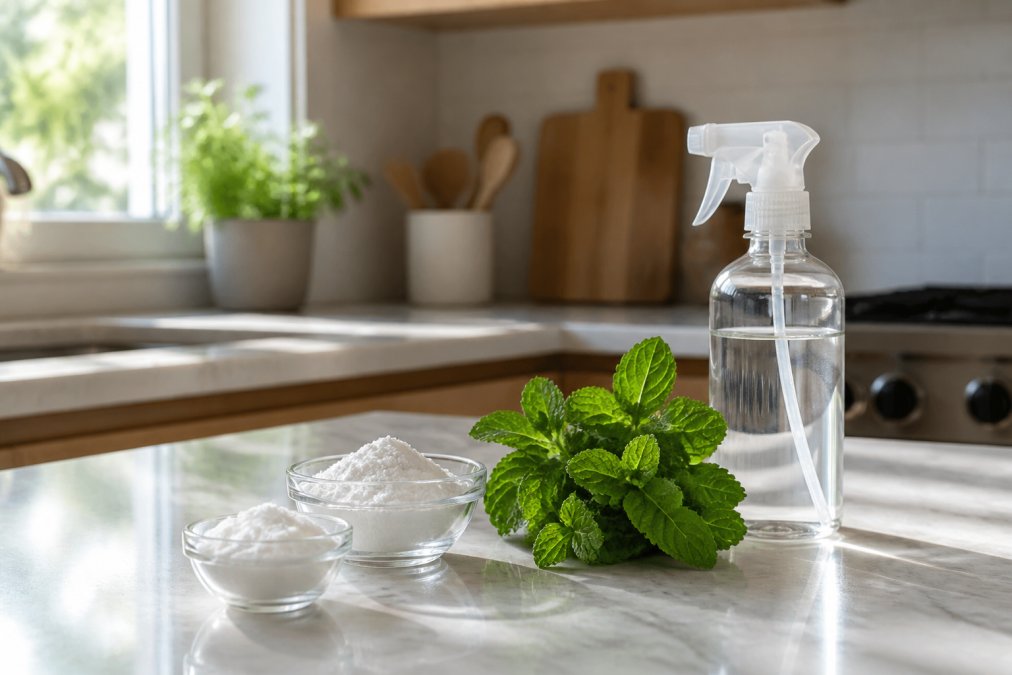
Diatomaceous earth is a fine powder made from fossilized algae that kills crawling insects by physically damaging their exoskeletons. Unlike poisons, it works through dehydration, making it effective against ants, roaches, and bed bugs without chemical residues. Food-grade diatomaceous earth is non-toxic to humans and pets, but it must stay dry to work, so apply it in cracks, crevices, and along baseboards where moisture won’t reach it (the EPA).
A light dusting is all you need. Pests walk through the powder, and the microscopic sharp edges cut their protective outer layer, causing them to dehydrate within 48 hours. The main drawback is messiness, and reapplication is necessary after cleaning or humid weather.
Peppermint Oil: The Spider and Ant Repellent
Peppermint essential oil is the most versatile scent-based deterrent for spiders and centipedes because its strong aroma disrupts their sensory receptors. Mix 10 to 15 drops of pure peppermint oil with water in a spray bottle and apply it around window frames, door thresholds, and baseboards. The scent overwhelms pests that navigate by smell, making your home unappealing.
The catch is that peppermint oil evaporates quickly, which means reapplication every few days is non-negotiable. It is also irritating to cats and dogs in high concentrations, so keep treated areas off-limits to pets until the spray dries or use it in spaces they cannot reach.
White Vinegar: The Ant Trail Eraser
White vinegar disrupts the pheromone trails ants leave for each other, turning a well-organized march into a confused scramble. Wipe down counters, floors, and entry points with a 50/50 mix of vinegar and water to erase the scent markers that recruit more ants to your kitchen. It is food-safe, costs almost nothing, and works on most surfaces without damage.
Vinegar is a cleaner, not a killer, so it will not eliminate the colony itself. Use it as part of a broader strategy that includes sealing cracks and removing food sources.
Essential Oils for Pest Control: A Quick Guide
Different pests respond to different scents, so matching the oil to the intruder is the key to success. Citronella oil masks the carbon dioxide and lactic acid that attract mosquitoes, while eucalyptus oil deters flies and roaches, and lavender repels moths and fleas. Each oil works by overwhelming the pest’s olfactory system, which is why the scent must remain fresh and consistent.
| Essential Oil | Primary Targets | Best Application | Frequency |
|---|---|---|---|
| Peppermint | Spiders, ants, centipedes | Spray around entry points | Every 3-5 days |
| Citronella | Mosquitoes, flies | Candles or diffusers near doors | Daily during peak season |
| Eucalyptus | Flies, roaches | Spray in kitchen and living areas | Every 2-3 days |
| Lavender | Moths, fleas, mosquitoes | Sachets in closets, spray on fabrics | Weekly refresh |
| Tea Tree | Ants, roaches, silverfish | Spray along baseboards | Every 3-4 days |
Dilution matters. Essential oils are highly concentrated, and applying them undiluted can damage surfaces and irritate skin. A safe ratio is 10 to 20 drops per 8 ounces of water, with a small amount of dish soap or witch hazel to help the oil disperse. Always test any spray on an inconspicuous area before treating visible surfaces.
A Critical Safety Note for Pet Owners
Before you mix your first spray, understand that “natural” does not mean “pet-safe.” The American Society for the Prevention of Cruelty to Animals (ASPCA) lists many essential oils as toxic to cats and dogs. Cats are especially vulnerable because they lack a specific liver enzyme (glucuronosyltransferase) needed to metabolize many of the phenolic compounds found in these oils (peer-reviewed research). This means even small amounts of certain oils can build up to toxic levels in a cat’s system.
- Extremely toxic to cats: Tea tree oil (melaleuca), oil of wintergreen, and pennyroyal oil. Even a few drops of tea tree oil applied topically or ingested can cause severe symptoms like muscle tremors, unsteadiness, and liver failure (aspca.org). Never use these in a home with cats.
- High risk for both cats and dogs: Peppermint, eucalyptus, clove, and cinnamon oils. Inhaling diffused peppermint oil can cause aspiration pneumonia in dogs, and eucalyptus can lead to drooling, vomiting, and depression in both species. If you use these, apply them only in areas that are completely inaccessible to your pets and allow the spray to dry thoroughly before letting them back in.
- Safer alternatives for pet homes: If you have pets, consider using cedarwood oil or lemongrass oil in very low dilutions (5 drops per 8 ounces of water) as a less hazardous option. However, even these can cause skin irritation in sensitive animals. The safest approach is to use physical barriers like diatomaceous earth in cracks and crevices that pets cannot reach.
If your pet shows any signs of distress after you apply an essential oil spray, such as excessive drooling, vomiting, coughing, or lethargy, remove them from the area immediately and contact your veterinarian or the ASPCA Animal Poison Control Center (888-426-4435). Do not wait for symptoms to resolve on their own.
Storage and Shelf Life: Why Your Spray Stops Working
A common reason natural deterrents fail is that the mixture has degraded. Essential oils are volatile organic compounds that oxidize when exposed to light, heat, and air. Once oxidized, they lose their repellent properties and can even become skin irritants.
- Shelf life of diluted sprays: A water-based spray with essential oils will stay effective for about 1 to 2 weeks when stored in a cool, dark place. After that, the oil separates and degrades. Always shake the bottle vigorously before each use, but if the scent has noticeably faded, it is time to make a fresh batch.
- Shelf life of undiluted oils: Pure essential oils in sealed amber or cobalt glass bottles can last 1 to 3 years. Once opened, they begin to oxidize, so replace them if the scent changes or becomes sharper.
- Proper storage: Keep all essential oil bottles and DIY sprays out of direct sunlight and away from heat sources like stoves or radiators. A dark cabinet is ideal. Never store them in plastic containers, as the oils can break down the plastic over time and leach chemicals into your mixture. Use glass spray bottles instead.
- The vinegar factor: If your spray contains vinegar, note that vinegar is acetic acid and will slowly break down the essential oils. A vinegar-based spray is best used within a week of mixing. For a longer-lasting option, use a base of witch hazel instead of vinegar, which can extend the shelf life to about a month.
How to Keep Ants Out of the House Naturally
Ants enter homes for two reasons: food and shelter. Eliminating the food trail is the fastest way to stop the flow. Wipe down counters daily, store pet food in sealed containers, and take out trash regularly to remove the attractants that bring ants inside.
Sealing entry points is the second half of the equation. Use caulk to close gaps around windows, doors, and utility lines, and apply a barrier of diatomaceous earth or a peppermint spray along the foundation. For persistent trails, follow the ants back to their entry point and treat that location directly.
A common mistake is spraying ants when you see them, which scatters the colony and forces it to split into multiple new nests. Instead, use a bait strategy: place a mixture of borax and sugar near the trail so workers carry it back to the colony, eliminating the source rather than just the visible scouts. This approach takes patience, but it resolves the problem rather than postponing it.
How to Get Rid of Wasps Without Harsh Chemicals
Wasps require a different strategy than crawling insects because they are aggressive when threatened and their nests can be high or hidden. For small, exposed nests early in the season, a soap and water spray can work: mix two tablespoons of dish soap with water in a spray bottle and saturate the nest at dusk when wasps are less active. The soap breaks the surface tension of their exoskeletons, causing them to drown.
Prevention is more reliable than treatment. Wasps return to familiar nesting sites, so seal gaps in eaves, soffits, and wall voids before spring arrives. Hang fake nests in early spring, since wasps are territorial and will avoid areas where another colony appears established.
Natural deterrents for wasps have a hard limit. Ground nests and large aerial nests are dangerous to approach, and disturbing them triggers swarming. If you cannot reach the nest safely or you are unsure of its location, do not attempt a DIY solution. A licensed exterminator has the protective equipment and experience to remove the threat without putting you or your family at risk.
Safety First: Protecting Pets and Kids
The phrase “natural” does not automatically mean safe. Several essential oils that repel insects are toxic to pets, particularly cats, whose livers cannot metabolize certain compounds. Eucalyptus oil is dangerous to cats even in small amounts, and peppermint oil can cause respiratory distress in both cats and dogs when used in high concentrations or diffused in enclosed spaces.
Keep all deterrents out of reach of children. Diatomaceous earth is safe to touch but should not be inhaled, so wear a mask during application and keep kids away from treated areas until the dust settles. Vinegar is food-safe but can irritate eyes, and undiluted essential oils can cause skin burns.
When applying any deterrent, follow the same logic you would with a chemical product: keep it away from food prep surfaces, store it out of reach, and monitor pets for signs of distress. If you have specific concerns about a product and your pet’s health, consult your veterinarian before use.
When to Call a Professional Exterminator
Natural deterrents have a clear ceiling, and recognizing it saves you time, money, and frustration. If you see consistent pest activity despite regular application of deterrents, you are likely dealing with an established infestation. Ant colonies can number in the hundreds of thousands, and a single roach sighting often indicates dozens more hiding in walls and cabinets.
Signs that you need professional intervention include: visible droppings, gnaw marks on wood or wiring, nests in walls or attics, and pests that return within days of treatment. Bed bugs are especially difficult to eliminate without professional help, as they hide in mattress seams and furniture joints where sprays cannot reach.
A professional service brings tools and knowledge that DIY methods cannot match. Licensed technicians identify the species, locate the nest or entry point, and apply treatments that address the source rather than the symptoms. For homeowners who want a guaranteed outcome without a long-term commitment, a one-time treatment backed by a 90-day guarantee offers peace of mind that a spray bottle cannot provide.
Natural deterrents earn their place in any pest management routine, especially for prevention and minor activity. They are safe, inexpensive, and effective when matched to the right pest and applied consistently. The limit comes when an infestation outgrows what a spray bottle can handle, which is where professional expertise matters.
Zoifia Pest Control provides licensed and insured pest management for homes and businesses, with fast response times and no long-term contracts required. Every service is backed by a 90-day guarantee, so you can be confident the problem is solved. Get A Quote today and let our team handle the pests that natural remedies cannot.
Frequently Asked Questions
What is the most effective natural bug repellent for homes?
Diatomaceous earth is among the most effective natural deterrents for crawling insects like ants, roaches, and bed bugs. It works mechanically by damaging their exoskeletons, leading to dehydration. For flying pests, essential oils like peppermint and eucalyptus offer strong repellent properties. Keep in mind that natural deterrents require consistent reapplication and work best as a preventative barrier rather than a cure for an active, heavy infestation.
What smell does every bug hate?
No single scent repels every pest, but peppermint oil is a broad-spectrum deterrent that spiders, ants, and rodents avoid. Citrus scents like lemon and orange repel spiders and ants, while citronella and eucalyptus effectively mask the scents that attract mosquitoes and flies. Lavender deters moths and fleas. Using a blend of these essential oils in a spray bottle creates a versatile, scent-based barrier around entry points.
Are essential oils for pest control safe to use around pets?
Some essential oils are toxic to pets, especially cats. Eucalyptus, tea tree, and citrus oils can cause serious health issues if ingested or absorbed through the skin. Peppermint oil is generally safer for dogs in low concentrations but should be kept away from cats. Always dilute oils properly and apply them in areas pets cannot access. Food-grade diatomaceous earth is a safer physical option for households with curious animals.
How often should I reapply natural pest deterrents?
Most natural deterrents lose their potency within a few days. Essential oil sprays should be reapplied every 2-3 days and after cleaning or dusting. Diatomaceous earth lasts longer, but only if it stays completely dry; moisture renders it ineffective. Vinegar solutions need reapplication after rain or heavy cleaning. For consistent protection, build reapplication into your weekly cleaning routine and refresh barriers around entry points regularly.
