Table of Contents
- Pest Control vs DIY Extermination Methods: How to Make the Right Call
- Pest-Specific Risk Assessment: Not All Infestations Are Equal
- Cost of Professional Pest Control vs DIY: A Total Cost of Ownership Breakdown
- Best DIY Pest Control Tools and Products Worth Considering
- Dangers of DIY Pest Extermination You Need to Know
- Effectiveness, Safety, and Long-Term Prevention: Comparing Both Approaches
- How to Choose a Pest Control Company That’s Actually Worth It
- When DIY Pest Control vs Professional Extermination Is the Clear Winner
- Conclusion
Last Updated: June 2, 2026
Pest Control vs DIY Extermination Methods: How to Make the Right Call
The question of pest control vs diy extermination methods comes down to one thing most homeowners get wrong: they decide based on cost first and severity second. At Zoifia Pest Control, we see the consequences of that backwards approach regularly. Homeowners who self-treat a termite colony with store-bought spray, or who scatter rodent poison without sealing entry points, often end up paying far more to fix the damage than they would have spent on professional service from the start. Below, we’ll walk through a clear decision framework that accounts for pest type, risk level, real costs, and what the DIY options can and cannot actually do.
The core argument running through this guide: not all pest problems are created equal, and the right answer depends on matching your response to the actual threat level. A few ants near the kitchen door is a different problem than a rodent colony in your walls.
The Core Decision Framework: Severity, Pest Type, and Risk Tolerance
Integrated pest management (IPM) is the systematic approach to pest control that evaluates pest pressure, identifies the pest species accurately, and selects the least-invasive effective treatment. It is the framework used by licensed technicians and, increasingly, by informed homeowners doing serious DIY work.
Before spending a dollar on anything, answer three questions:
- What pest is it, specifically?
- How large is the infestation?
- What is the structural or health risk if it goes untreated?
If you can answer all three confidently, you can make an informed choice. If you cannot identify the pest or gauge the colony size, you’re guessing. And guessing with pest control tends to delay effective treatment while the problem grows.
Pest-Specific Risk Assessment: Not All Infestations Are Equal
Pest type is the single biggest variable in the professional vs. DIY decision. Most guides treat all pests as roughly equivalent. They are not.
Low-Risk Pests: Ants, Spiders, and Minor Insect Activity
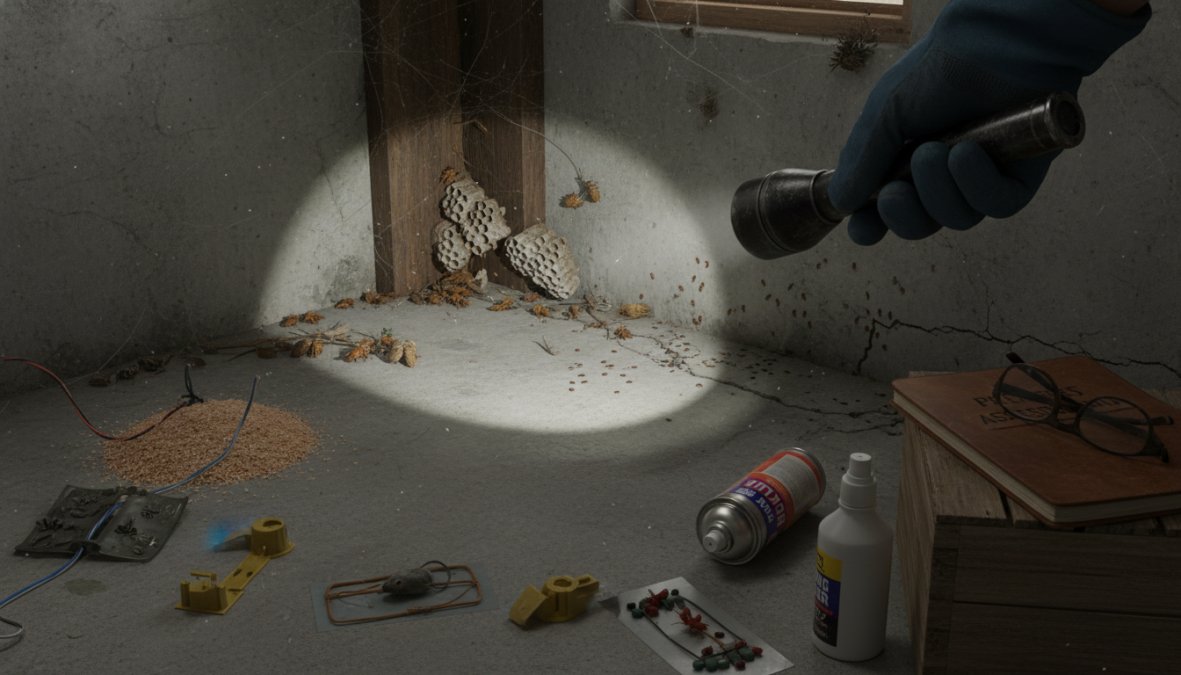
Ants, common house spiders, and occasional insect activity represent the clearest case for DIY pest control. These pests rarely cause structural damage, pose minimal health risk to most households, and respond well to EPA-registered baits, sprays, and monitoring devices available at retail.
Effective DIY strategies for low-risk pests include:
- Bait stations placed along ant trails and near entry points
- Diatomaceous earth applied along baseboards and under appliances
- Boric acid gel in cracks, voids, and cabinet interiors
- Barrier treatment sprays around the home’s perimeter
The key is correct pest identification first. Carpenter ants, for example, look like ordinary ants but excavate wood, making them a structural threat that warrants a professional inspection even if you handle treatment yourself.
High-Risk Pests: Termites, Bed Bugs, Rodents, and Vector-Borne Disease Carriers
Here is where the DIY calculus changes entirely. Termite control, bed bug elimination, and rodent exclusion are high-stakes problems where partial treatment is worse than no treatment. A missed termite colony continues destroying structural wood. A partially treated bed bug population rebounds within weeks. Rodents that aren’t fully excluded return and breed.
According to EPA guidance on integrated pest management, effective pest management for high-risk infestations requires accurate identification, understanding of pest biology, and selection of treatments appropriate to the infestation’s scope. That combination is difficult to replicate with DIY kits alone.
Vector-borne disease carriers, including certain tick and mosquito species, add a direct health dimension. These pests require colony elimination strategies, not just surface treatment.
Attempting to self-treat a termite or bed bug infestation with retail products frequently delays effective treatment by weeks or months, during which structural damage or re-infestation accelerates. The cost of that delay is rarely factored into DIY cost comparisons.
Cost of Professional Pest Control vs DIY: A Total Cost of Ownership Breakdown
The popular framing here is misleading. Most comparisons show a single DIY product price against a single professional service quote and declare DIY the winner. That comparison ignores the full cost stack on both sides. A genuine Total Cost of Ownership (TCO) analysis accounts for equipment, labor, retreatment frequency, failure costs, and the opportunity cost of your time.
DIY Cost Stack: What You Actually Spend
A realistic DIY cost breakdown for a moderate pest problem, say, a recurring cockroach issue in a mid-size home, involves more line items than most homeowners anticipate:
| Expense Category | What Drives the Cost | Notes |
|---|---|---|
| Retail pesticides and baits | Active ingredient, brand, formulation | Gel baits and professional-grade concentrates cost more upfront but outperform cheap sprays |
| Application equipment | Pump sprayer, duster, or fogger | A quality 1-gallon pump sprayer runs $20-$40; a hand duster for wall voids adds another $15-$25 |
| Personal protective equipment (PPE) | Gloves, N95 or P100 respirator, eye protection | Often skipped entirely, which is both a safety and a compliance issue |
| Retreatment product cost | Retail products have shorter residual windows | Most store-bought sprays require reapplication every 30-60 days vs. 90+ days for professional-grade formulations |
| Misidentification cost | Wrong product = zero effect | Treating for German cockroaches with a product formulated for outdoor perimeter pests produces no result and full product cost is wasted |
| Time investment | Research, application, monitoring, retreatment | A conservative estimate for a single DIY treatment cycle, identification, product selection, application, and follow-up monitoring, runs 3-6 hours for a first-time user |
| Structural repair exposure | Applies specifically to termites and rodents | Every week of delayed effective treatment is additional damage accumulation; this cost is rarely included in DIY comparisons but is the largest potential liability |
The retreatment multiplier is the most underestimated factor. Retail-grade products typically use lower concentrations of active ingredients than professional formulations, partly due to EPA label restrictions on what can be sold over the counter. Lower concentration means shorter residual efficacy, which means more frequent reapplication. A homeowner who retreats every 30 days for a season may spend more on product alone than a single professional treatment would have cost.
Professional Service Cost Stack: One-Time vs. Recurring Plans
Professional pest control pricing varies by pest type, property size, infestation severity, and geographic market. Rather than cite figures that vary widely by region, the more useful framework is understanding what you are actually buying at each service tier:
One-time treatment: Addresses a specific, confirmed, active infestation. Appropriate for isolated problems with no history of recurrence. The limitation is that it provides no ongoing monitoring or retreatment coverage, if the infestation rebounds, you pay again.
Recurring service plan (quarterly or monthly): Provides preventative maintenance, seasonal adjustments, and typically a service guarantee that covers retreatment at no additional cost if the pest returns within the coverage window. For homeowners in high-pest-pressure regions or with prior infestation history, recurring plans tend to deliver better cost-per-outcome than repeated one-time treatments.
Specialty treatments (termites, bed bugs): These are priced separately from general pest plans and reflect the higher labor, equipment, and product costs involved. Termite treatments in particular vary significantly based on treatment method, liquid barrier, bait station systems, or fumigation, and property size. These are not comparable to general pest service pricing.
The service guarantee is a meaningful financial instrument. A guarantee that covers retreatment within a defined window (30, 60, or 90 days) transfers the retreatment cost risk from you to the provider. A 90-day guarantee on a cockroach treatment, for example, means that if the population rebounds within that window, the company absorbs the retreatment cost. That risk transfer has real dollar value that does not appear in a simple price comparison.
Zoifia Pest Control structures its service without long-term contracts, which removes the risk of being locked into a plan that no longer matches your pest pressure. The 90-day guarantee means retreatment is covered if the problem persists.
The Hidden Cost Most Comparisons Ignore: Failure Cost
The most significant cost in the DIY vs. professional comparison is the one that only materializes when DIY treatment fails, and it is the one most comparison articles never model.
For low-risk pests like ants or spiders, DIY failure cost is low: you retreat, or you call a professional, and the delay causes no lasting harm.
For high-risk pests, the failure cost is a different category entirely:
- Termites: Structural wood damage accumulates continuously during an active infestation. A colony that goes undetected or undertreated for an additional season can cause damage that costs multiples of what professional treatment would have cost at first identification.
- Bed bugs: A partially treated bed bug population rebounds quickly due to egg survival. Eggs are resistant to most retail contact sprays. A failed DIY treatment that delays professional intervention by 4-8 weeks allows the population to re-establish, often requiring more intensive (and more expensive) professional treatment than would have been needed initially.
- Rodents: Rodents that are baited but not excluded continue to enter the structure. Bait without exclusion is a recurring cost, not a solution. The structural damage from gnawing and nesting, plus the health risk from droppings and urine, accumulates during the delay.
The true TCO of DIY pest control includes product cost, equipment, PPE, retreatment frequency, time investment, and, critically, the potential failure cost if the treatment does not work. For low-risk pests caught early, DIY TCO is genuinely favorable. For high-risk pests or established infestations, the failure cost alone frequently makes professional treatment the lower total-cost option, even before accounting for the service guarantee.
Best DIY Pest Control Tools and Products Worth Considering
DIY pest control works. For the right pest, at the right severity level, with the right products applied correctly, homeowners can manage many common infestations effectively. Here’s what’s actually worth using.
Baits, Traps, and Monitoring Devices
Baits are the most effective DIY tool for ants and cockroaches because they exploit pest biology: workers carry the bait back to the colony, achieving deeper elimination than surface sprays. Glue traps and snap traps remain the standard for rodent monitoring. Electronic monitoring devices add a layer of detection useful for ongoing pest pressure assessment.
What most guides miss: bait placement matters more than bait brand. Placing ant bait away from ant trails, or disturbing a bait station before the colony has time to feed, renders even good products ineffective.
Diatomaceous Earth, Boric Acid, and EPA-Registered Sprays
Diatomaceous earth is a mechanical insecticide that damages the exoskeleton of crawling insects, causing dehydration. It is effective against cockroaches, bed bugs, and ants when applied in dry conditions. It loses efficacy when wet.
Boric acid works similarly as a stomach poison for cockroaches and ants, and has a long residual efficacy when applied in low-traffic areas. Both products are EPA-registered and considered lower-toxicity options relative to synthetic pyrethroids.
For perimeter barrier treatment, EPA-registered concentrate sprays applied with a pump sprayer provide meaningful seasonal protection against common insects. Products from retailers like DIY Pest Control’s professional-grade product catalog give homeowners access to professional-strength formulations with application guides.
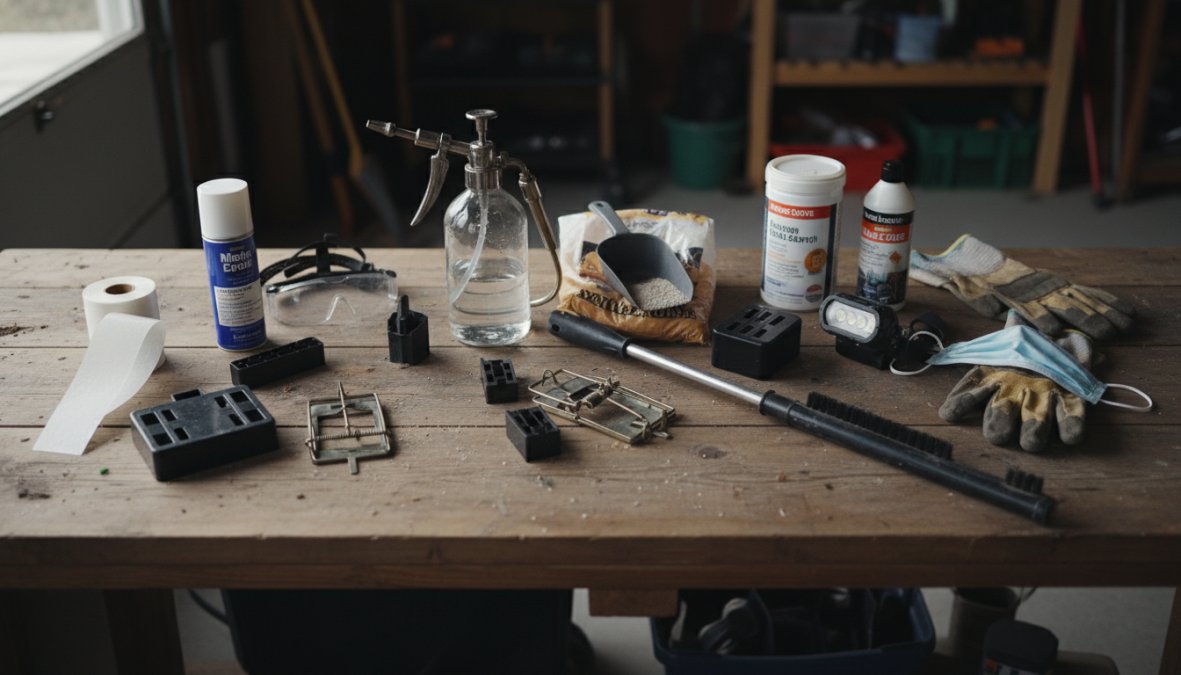
Apply diatomaceous earth in thin, barely visible layers. Heavy piles are less effective because insects walk around them rather than through them. A light dusting along baseboards and behind appliances is the correct application.
Dangers of DIY Pest Extermination You Need to Know
This is the part most DIY guides skip entirely, or cover in a single cautionary paragraph. The dangers of DIY pest extermination fall into two distinct and underexplored categories: health and toxicity risks from the products themselves, and legal and regulatory compliance risks that most homeowners never anticipate until they are already exposed to liability.
Health and Toxicity Profiles: How Retail and Professional-Grade Products Actually Differ
Not all pesticides carry the same risk, and the distinction between what you can buy at a hardware store and what a licensed technician applies is not just about effectiveness, it is about concentration, formulation, and the training required to apply the product safely.
Understanding the signal word system: Every EPA-registered pesticide label carries a signal word that indicates acute toxicity level. These are legally required and appear prominently on the label:
- CAUTION, lowest acute toxicity category (EPA Toxicity Category III or IV)
- WARNING, moderate acute toxicity (Category II)
- DANGER, highest acute toxicity (Category I); includes products that are highly toxic or corrosive
Most retail pest control products are formulated to fall in the CAUTION category, which is a deliberate regulatory choice, products available to unlicensed consumers are required to meet stricter label restrictions on concentration and application method. Professional-grade products, available only to licensed applicators, may use higher concentrations of the same active ingredients, or active ingredients not available in retail formulations at all.
The active ingredient classes and their specific risk profiles:
Synthetic pyrethroids (permethrin, bifenthrin, cypermethrin) are among the most common active ingredients in retail pest control products. They are generally considered low-mammalian-toxicity at label concentrations, but carry meaningful risk for aquatic organisms and are toxic to cats at concentrations that are safe for dogs. Permethrin-based products should never be applied in homes with cats or allowed to run off into storm drains. Respiratory irritation is a documented risk with aerosol application in enclosed spaces without ventilation.
Organophosphates (malathion, chlorpyrifos) work by inhibiting acetylcholinesterase, an enzyme critical to nerve function in both insects and mammals. Chlorpyrifos has been subject to significant regulatory action due to neurodevelopmental risk in children and is no longer registered for residential indoor use in the United States. If you encounter an older product in your garage or at a discount retailer, check the registration status before use, selling a cancelled pesticide is illegal, but it happens. The EPA’s pesticide registration database allows you to verify whether a specific product is currently registered.
Neonicotinoids (imidacloprid, dinotefuran) are systemic insecticides used in some retail ant and termite bait products. They carry well-documented risk to pollinators and should not be applied to flowering plants or in areas where runoff could reach water. Their mammalian toxicity is generally low at label concentrations, but the environmental risk profile is significant.
Boric acid and diatomaceous earth are the lowest-toxicity options in the DIY toolkit. Boric acid carries a CAUTION signal word and poses minimal risk to mammals at the concentrations used in pest control, but should not be applied where children or pets can directly contact treated surfaces in quantity. Diatomaceous earth poses a respiratory risk in its crystalline silica form, food-grade DE used in pest control is amorphous silica, which is significantly less hazardous, but inhalation should still be avoided during application.
The concentration and formulation gap: A professional technician applying a bifenthrin-based treatment may use a concentrate mixed to a specific dilution rate calibrated to the pest, the surface, and the application method. A retail bifenthrin product is pre-formulated at a fixed, lower concentration with a label that restricts application methods. The professional has the training to select the right concentration for the situation; the retail product removes that variable by limiting it. This is a safety design feature, not a conspiracy, but it also explains why professional treatments often have longer residual efficacy.
Exposure pathways homeowners underestimate:
- Dermal absorption during mixing and application without gloves, many active ingredients absorb through skin
- Inhalation during aerosol or fogger application in enclosed spaces without respiratory protection
- Secondary exposure for children and pets who contact treated surfaces before the product has dried or cured
- Contamination of food preparation surfaces from overspray or application in kitchen cabinets without removing food and dishware first
The National Pesticide Information Center’s chemical safety resources maintains active-ingredient-level toxicity data and can answer specific questions about products you are considering. This is a free resource staffed by toxicologists and is significantly more useful than reading the product label alone.
Never assume a ‘natural’ or plant-based label means the product is safe at any concentration or application rate. Essential oil-based products, including those containing clove oil, peppermint oil, or thyme oil, can cause skin and mucous membrane irritation, and some are toxic to cats. ‘Natural’ describes the ingredient source, not the toxicity profile. Apply with the same care as synthetic options.
Regulatory and Legal Compliance: The Liability Most Homeowners Never See Coming
This is the content gap that almost no pest control article covers in useful depth, and it represents real financial and legal exposure for homeowners who self-treat without understanding the regulatory framework.
Restricted-use pesticides (RUPs): The EPA classifies certain pesticides as restricted-use products, meaning they may only be purchased and applied by certified applicators or persons under their direct supervision. Using a restricted-use pesticide without a license is a federal violation under the Federal Insecticide, Fungicide, and Rodenticide Act (FIFRA). Restricted-use products are not available at retail, but homeowners sometimes obtain them through informal channels, from contractors, online marketplaces, or agricultural suppliers, without understanding the legal exposure. If a restricted-use product causes harm to a person, pet, or neighboring property, the unlicensed applicator bears full liability.
State-level pesticide regulations: Pesticide regulation operates at both the federal and state level. Some states impose restrictions on specific active ingredients that go beyond federal EPA registration. California’s Proposition 65, for example, requires warning labels for products containing chemicals listed as known carcinogens or reproductive toxins, a list that includes some common pesticide active ingredients. New York has specific restrictions on pesticide application in schools and on school grounds. Homeowners in states with stricter regulatory frameworks may be applying products that are federally registered but locally restricted without knowing it. Your state’s department of agriculture is the authoritative source for state-specific pesticide regulations.
Multi-family housing and rental property compliance: This is where DIY pest extermination creates the most significant legal exposure. Landlords and property managers who self-treat rental units face a layered compliance obligation:
- Many states require written notice to tenants before pesticide application, with a minimum notice period (commonly 24-48 hours, but varying by jurisdiction)
- Some jurisdictions require documentation of what product was applied, at what concentration, and by whom
- Lease agreements in some states require that pest control be performed by licensed professionals
- If a tenant or their pet experiences a health event following a landlord-applied pesticide treatment, the landlord’s liability exposure is substantially higher than if a licensed, insured professional performed the treatment
Condominium associations and HOAs may have their own rules governing pesticide application in common areas or shared wall units, independent of state law.
What a professional license actually covers: A licensed pest control technician has completed state-mandated training in pest biology, chemical safety, and application protocols, passed a certification exam, and carries both general liability insurance and workers’ compensation coverage. When a licensed technician applies a treatment, the liability for that application, including any adverse outcomes, rests with the licensed company, not the property owner. That regulatory and liability transfer is a meaningful part of what a professional service fee covers, and it is rarely factored into cost comparisons.
Before any DIY pesticide application in a rental property, multi-unit building, or any property you do not solely occupy, verify your state’s notification requirements and confirm that the product you intend to use is not restricted-use. Your state department of agriculture website is the correct starting point, not the product label alone.
Effectiveness, Safety, and Long-Term Prevention: Comparing Both Approaches
Effectiveness is not just about killing the pests you can see. Residual efficacy and colony elimination are what determine whether a treatment actually solves the problem.
Residual Efficacy and Colony Elimination
Professional-grade treatments maintain residual efficacy, meaning they continue killing pests that contact treated surfaces for weeks or months after application. Most retail products have shorter residual windows and require more frequent reapplication to maintain the same effect.
Colony elimination is the more important metric for social insects like ants, termites, and cockroaches. Killing visible individuals without reaching the colony source produces temporary results. Professional application equipment and pro-grade solutions are specifically formulated for deeper penetration and colony-level impact.
The real difference between a DIY treatment and a professional one often comes down to access: licensed technicians use formulations and application methods not available to the general public.
Integrated Pest Management (IPM) and Preventative Maintenance
Integrated pest management is the gold standard for long-term pest prevention. IPM combines inspection, pest identification, targeted treatment, and structural modifications to eliminate conditions that attract pests. It is the framework recommended by the EPA’s official IPM guidance for homeowners.
Preventative maintenance, whether self-managed or through a recurring service plan, is far more cost-effective than reactive treatment. Sealing entry points, eliminating moisture sources, and maintaining a barrier treatment perimeter are actions homeowners can take regardless of which service model they choose.
Seasonal pest activity patterns matter here. Different pests peak in different seasons, and a preventative maintenance schedule aligned to local pest biology will outperform reactive treatment every time.
How to Choose a Pest Control Company That’s Actually Worth It
Most pest control companies offer similar-sounding services. The differentiators that actually matter are licensing, insurance, service guarantees, and contractual flexibility.
Licensing, Insurance, Guarantees, and Contractual Obligations
A licensed technician has completed state-mandated training in pest biology, chemical safety, and application protocols. Licensing is verifiable through your state’s department of agriculture or environmental agency. Hiring an unlicensed operator is a risk to your property and your legal standing.
Insurance protects you if treatment causes property damage or health issues. Ask for proof of both general liability and workers’ compensation coverage before signing anything.
Service guarantees vary significantly. A 30-day guarantee on a bed bug treatment is inadequate; bed bug populations can rebound within that window. A 90-day guarantee, like the one Zoifia Pest Control backs its treatments with, provides meaningful coverage for reinfestation. Contractual obligations are equally important: long-term contracts lock you into a service relationship that may not suit your needs as pest pressure changes.
Checklist for evaluating a pest control company:
- State pest control license verified
- Proof of liability and workers’ comp insurance provided
- Service guarantee terms clearly stated in writing
- No mandatory long-term contract required
- Fast response time for active infestations
- Treatment plan specific to your pest type, not a generic package
When DIY Pest Control vs Professional Extermination Is the Clear Winner
The honest answer: both approaches have clear use cases, and the wrong choice in either direction costs money.
Choose DIY when:
- The pest is identified with certainty as a low-risk species (ants, spiders, minor insect activity)
- The infestation is early-stage and localized
- You have time to monitor, retreat, and adjust as needed
- No structural damage or health risk is present
- You are comfortable reading and following pesticide labels correctly
Choose professional extermination when:
- The pest is termites, bed bugs, rodents, or a vector-borne disease carrier
- The infestation is established, widespread, or of unknown extent
- Structural damage is suspected
- Previous DIY treatment has failed
- The property is a rental, multi-unit, or commercial space with compliance requirements
- You want a service guarantee backing the result
The pest control vs diy extermination methods decision is ultimately a risk assessment, not a budget decision. For low-severity, correctly identified pest problems, quality DIY products applied correctly work. For anything involving structural risk, health risk, or colony-level infestation, professional treatment is the more defensible choice. According to CDC guidance on pest-related disease prevention, certain pest species carry genuine public health risks that warrant professional-level response.
| Scenario | Recommended Approach | Key Reason |
|---|---|---|
| Minor ant activity, kitchen | DIY baits and barrier spray | Low risk, manageable with retail products |
| Confirmed termite damage | Professional only | Structural risk, colony elimination required |
| Bed bug sighting | Professional strongly recommended | High reinfestation risk with DIY treatment |
| Rodent droppings found | Professional inspection first | Entry point identification critical |
| Seasonal spider activity | DIY perimeter treatment | Low risk, high DIY success rate |
| Cockroach activity in kitchen | DIY baits + professional if spreading | Depends on severity and spread |
Frequently Asked Questions
Is DIY pest control effective for severe infestations?
DIY pest control can be effective for minor or early-stage pest activity using tools like bait stations, traps, and EPA-registered sprays. However, for severe pest infestations, especially termites, bed bugs, or rodent colonies, DIY extermination methods rarely achieve full colony elimination. Without professional-grade solutions and proper pest identification, you risk incomplete treatment, allowing the infestation to rebound. Severe cases almost always require a licensed technician with access to pro-grade solutions and inspection equipment.
How much does professional pest control cost compared to DIY?
The cost of professional pest control vs DIY varies significantly by pest type and infestation severity. DIY products typically range from $10 to $100+ per treatment, but hidden costs, repeat applications, application equipment, and failed treatments, add up. Professional one-time treatments can range from $150 to $500+, while recurring service plans may run $40 to $70 per month. When factoring in total cost of ownership, professional services often prove more cost-effective for moderate to severe pest pressure.
What are the dangers of DIY pest extermination?
The dangers of DIY pest extermination include improper chemical exposure, misidentification of pests leading to ineffective treatment, and failure to follow safety protocols. Many over-the-counter products are not child-safe or pet-friendly when misapplied. There are also regulatory and legal compliance risks, some pesticides require a licensed applicator by law. Incorrect use of sprayers or concentrated chemicals can create health and toxicity risks for your household and may void homeowners insurance coverage for related structural damage.
When should you hire a professional exterminator instead of doing it yourself?
You should call a licensed technician when facing termite control needs, bed bug infestations, rodent exclusion challenges, or any pest linked to vector-borne diseases. If a DIY kit has failed after one or two treatments, that's a strong signal the pest pressure exceeds what consumer-grade products can handle. Structural damage, large colonies, or pests in hard-to-reach areas also warrant professional application. A licensed exterminator brings pest biology expertise, barrier treatment capability, and residual efficacy that DIY methods typically cannot match.
How do I choose a reliable pest control company?
When learning how to choose a pest control company, verify that they are licensed and insured in your state, offer a clear service guarantee, and do not require long-term contractual obligations unless you want a recurring service plan. Ask about their integrated pest management (IPM) approach, whether treatments are EPA-registered, and if they provide a written inspection report. Local companies with fast response times and transparent pricing, like those offering a 90-day guarantee with no contract, often deliver better accountability than large national franchises.
Dealing with an active pest infestation or trying to prevent one is stressful, and the wrong treatment choice makes it worse. Zoifia Pest Control serves the Metro Boston area with licensed, insured service backed by a 90-day guarantee and no long-term contract requirement, so you get effective treatment without the commitment risk. Get a quote from Zoifia Pest Control and resolve your pest problem with a treatment plan matched to your actual situation.
This article was written using GrandRanker
