
Table of Contents
- Why Massachusetts Winters Drive Pests Indoors
- Common Household Pests in Massachusetts Winter You Need to Know
- Signs of Pest Infestation in Winter Every Homeowner Should Spot
- How to Get Rid of Mice in Winter: A Room-by-Room Approach
- Winter Pest Prevention Tips: Sealing and Protecting Your Massachusetts Home
- Common Household Pests in Massachusetts Winter: DIY vs. Professional Pest Control
- When to Call a Pest Control Professional in the Metro Boston Area
- Conclusion
Last Updated: June 3, 2026
Cold weather sends more than just humans scrambling for warmth. The common household pests in massachusetts winter are a genuine, year-round threat that peaks the moment temperatures drop below freezing across New England. This guide from Zoifia Pest Control covers every major winter pest you’re likely to encounter, how to identify an infestation early, and what actually works to keep your home protected, room by room, product by product, and when DIY stops being enough.
Here’s what most guides get wrong: they treat winter pest control as a seasonal afterthought. Rodents, spiders, silverfish, and cluster flies begin scouting entry points in late September, long before the first frost. By the time you see evidence inside, the infestation is already established.
Why Massachusetts Winters Drive Pests Indoors
Massachusetts winters regularly drop well below freezing from November through March, and that climate pressure is the primary engine behind winter pest activity in New England homes. Pests follow heat signatures, food sources, and moisture gradients, and your home produces all three. The gap between your foundation and siding, the unsealed pipe penetration in your basement, the poorly insulated attic: these are open invitations.
The New England climate creates a compressed timeline that warmer states don’t face. Pests have a narrow window to find shelter before the cold becomes lethal. A mouse that would ignore your home in October will squeeze through a dime-sized gap in November without hesitation.
According to the National Pest Management Association’s guidance on rodent prevention, rodents alone contaminate more food and cause more structural damage annually than most homeowners realize, making early intervention critical.
Don’t wait for visible pest activity before taking action. By the time you see a mouse in your kitchen or cluster flies on a south-facing window, the infestation has almost certainly been building for weeks. Proactive sealing and prevention before mid-October is far more effective than reactive treatment in January.
Common Household Pests in Massachusetts Winter You Need to Know
Identifying the specific pest you’re dealing with is the most important step in effective pest management. Treatment strategies differ significantly between rodents, insects, and arachnids. Getting this wrong wastes time and money.
Mice and Rats
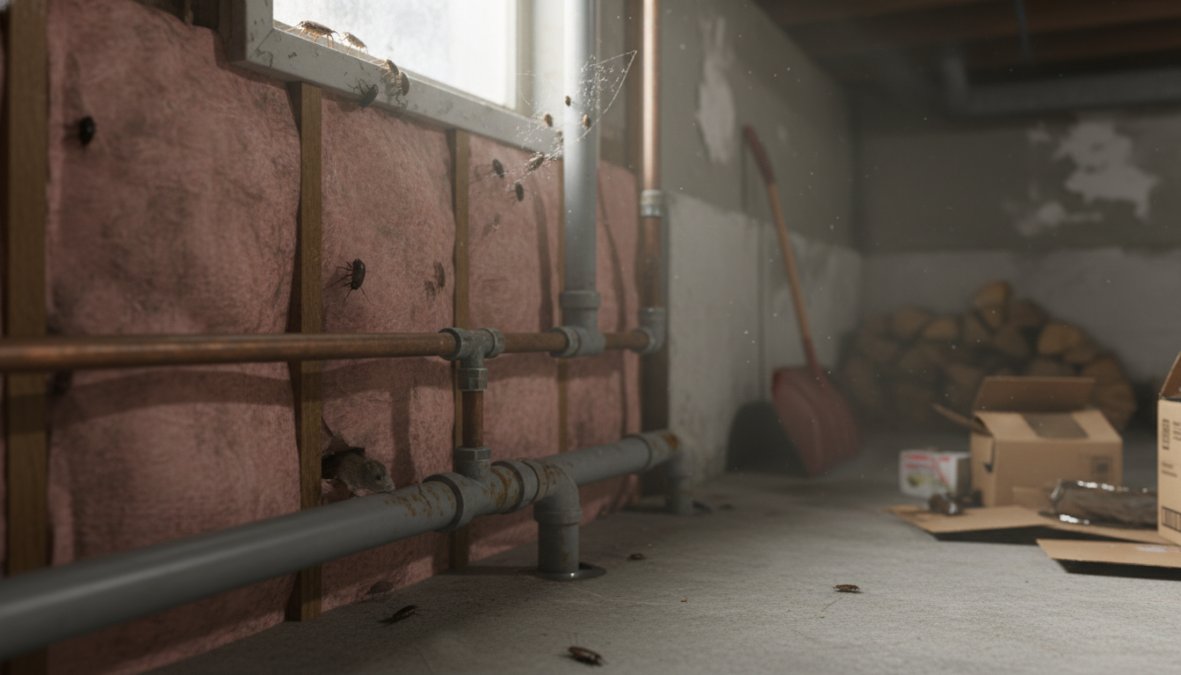
Mice and rats are the most destructive common household pests in Massachusetts winter. House mice compress their bodies through a gap as small as a quarter-inch. Norway rats, the dominant rat species in Metro Boston, are larger and cause serious structural damage by gnawing through insulation, wood, and electrical wiring.
Key identification markers:
- Droppings: mouse droppings are small, rod-shaped, about 3-6mm; rat droppings are larger, up to 20mm
- Gnaw marks on food packaging, baseboards, or wiring insulation
- Grease tracks along walls where rodents travel repeatedly
- Scratching or rustling sounds in walls and attics, particularly at night
Mice prefer to nest in insulation, behind appliances, and inside wall voids. Rats tend to burrow beneath foundations or nest in crawl spaces. Both become far more problematic as outdoor temperatures fall.
Spiders
Spiders are a persistent winter pest in Massachusetts homes, though most species found indoors are harmless. The common house spider and cellar spider are the two you’ll encounter most often. Their presence in large numbers is often a secondary indicator, a significant spider population in your basement or attic usually means you have an underlying insect problem feeding them. Address the root cause, not just the symptom.
Silverfish
Silverfish are small, wingless insects with a distinctive fish-like movement and silver-gray color. They thrive in humid, dark environments, making basements, bathrooms, and crawl spaces their preferred winter habitat. They feed on starchy materials including paper, wallpaper glue, book bindings, and fabric, and can quietly destroy boxes of stored documents or clothing over an entire winter without visible signs until the damage is done.
Cluster Flies
Cluster flies enter homes through tiny gaps around windows, siding, and rooflines in late summer and fall, then hibernate in wall voids and attic spaces. On warm winter days they migrate toward light, appearing suddenly on south-facing windows in large numbers. By the time you see them, sealing entry points for the current season is already too late.
Cockroaches
German and American cockroaches are active in Massachusetts homes year-round, but winter concentrates them indoors. They gravitate toward kitchens, bathrooms, and utility rooms where warmth and moisture overlap. Cockroaches reproduce rapidly, a small winter population becomes a serious infestation by spring if left untreated.
Signs of Pest Infestation in Winter Every Homeowner Should Spot
Catching an infestation early is the single biggest factor in how difficult and expensive it becomes to resolve. The signs of pest infestation in winter are often subtle, which is why most homeowners miss them until the problem is significant.
Rodent signs:
- Fresh droppings near food storage areas, under sinks, or along baseboards
- Gnaw marks on food packaging or structural wood
- Nesting material (shredded paper, fabric, insulation) in hidden corners
- Unexplained holes in walls, floors, or cabinetry
Insect signs:
- Silverfish damage to paper, wallpaper, or fabric stored in humid areas
- Cluster flies congregating on interior windows on warm days
- Cockroach egg casings (small, brown, capsule-shaped) behind appliances
- Musty or oily odors in confined spaces
Spider signs:
- Cobwebs accumulating rapidly in basement corners and ceiling joints
- Egg sacs attached to webs in undisturbed areas
Check behind your refrigerator, stove, and dishwasher monthly during winter. These appliances generate heat and moisture, making them prime real estate for cockroaches and mice. Most homeowners never look there until the problem is severe.
How to Get Rid of Mice in Winter: A Room-by-Room Approach
Knowing how to get rid of mice in winter requires a systematic approach. Random trap placement is one of the most common mistakes homeowners make, mice travel along walls and follow established routes, so traps placed in open floor space rarely catch anything.
Attic and Basement Rodent Control
The attic and basement are the two highest-risk zones for rodent activity in Massachusetts homes, offering insulation for nesting, low human traffic, and proximity to exterior entry points.
Attic approach:
- Inspect all soffit vents and roof penetrations for gaps
- Look for compressed or disturbed insulation, which indicates nesting activity
- Place snap traps along perimeter walls, perpendicular to the wall with the trigger end facing it
- Check and reset traps every 48 hours
Basement approach:
- Inspect all pipe penetrations through the foundation wall
- Check the sill plate for gnaw marks
- Place traps behind the water heater, along the base of walls, and near identified entry points
- Eliminate moisture sources, as standing water attracts rodents
Recommended Traps and Products
The Goodnature A24 Rat & Mouse Trap is the best option for homeowners dealing with persistent rodent pressure. Its self-resetting CO2-powered mechanism handles up to 24 kills per canister without daily attention, and its poison-free design eliminates secondary poisoning risk to pets. For budget-conscious homeowners, traditional snap traps placed correctly outperform poison bait stations in most residential settings, and avoid the secondary problem of rodents dying inside walls and causing odor issues lasting weeks.
| Product | Type | Best For | Price |
|---|---|---|---|
| Goodnature A24 | Auto-reset trap | Persistent, ongoing infestations | $179 |
| Traditional snap trap | Manual trap | Occasional activity, tight budgets | $5-15 |
| Diatomaceous Earth | Powder barrier | Cockroaches, silverfish in crevices | $12 |
| Alpine WSG Granule | Residual insecticide | Serious multi-pest infestations | $60 |
Winter Pest Prevention Tips: Sealing and Protecting Your Massachusetts Home
Prevention is where most homeowners lose the battle before it starts. Winter pest prevention tips are most effective when applied in September and October, before pest pressure peaks.
Sealing Entry Points and Winterization Essentials
Sealing entry points is the highest-return activity in any winter pest management plan. A mouse can enter through a gap the size of a dime; a cockroach needs even less.
Priority sealing locations:
- Gaps around utility pipes where they enter the foundation
- Spaces between the sill plate and foundation
- Damaged or missing soffit vents
- Gaps around window frames and door sweeps
- Openings around HVAC lines and dryer vents
Steel Wool (Grade 0000) is the most effective and affordable physical barrier for rodent exclusion, mice cannot chew through it. Pack it into gaps before sealing with caulk or expanding foam. The combination creates a barrier that holds long-term.
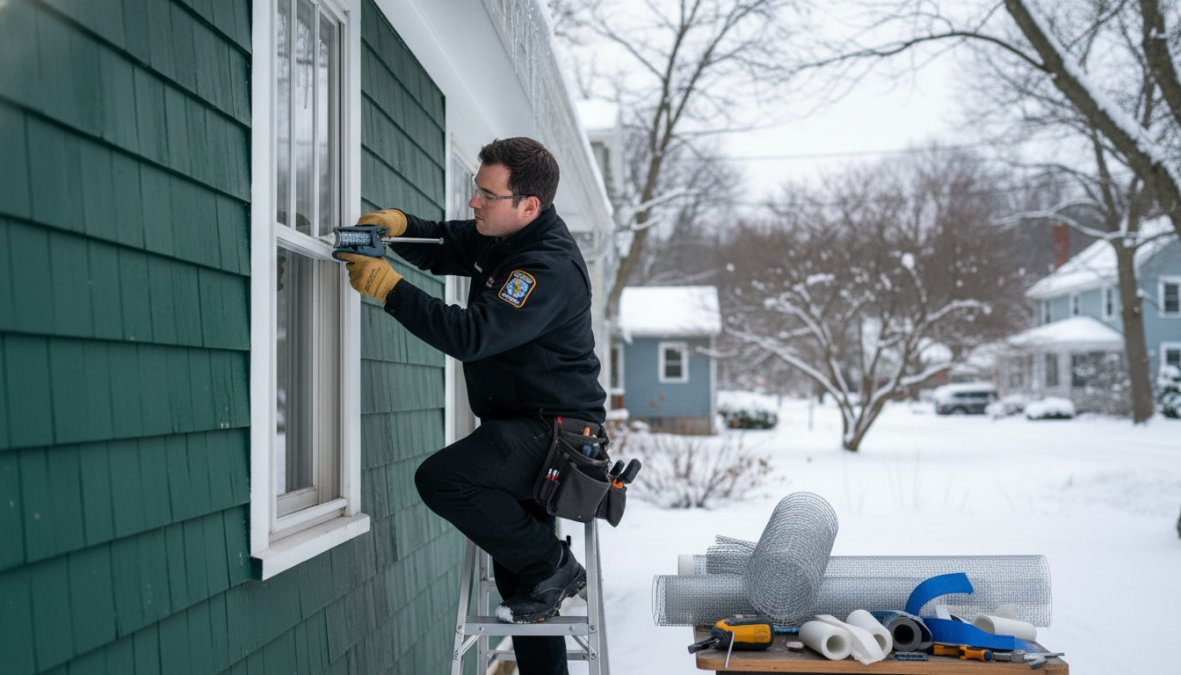
As documented in the EPA’s integrated pest management guidelines for homeowners, physical exclusion is consistently the most effective long-term strategy for preventing rodent entry, outperforming chemical treatments when applied correctly.
Steel wool packed into gaps and covered with caulk or foam is the single most cost-effective rodent prevention measure available to Massachusetts homeowners. At roughly $5 for a pack, it outperforms products costing ten times as much when applied at the right entry points.
Insulation, Storage, and Indoor Habits
Adequate insulation reduces the heat differential that attracts pests to your home’s interior walls. Damaged or compressed insulation in an attic or crawl space is also a primary nesting site for rodents, so both functions matter.
Indoor habits that reduce pest pressure:
- Store all dry goods in airtight containers, not cardboard boxes
- Keep firewood stored at least 20 feet from the home’s exterior and elevated off the ground
- Eliminate standing water under sinks and in basement areas
- Vacuum regularly, including along baseboards and behind appliances
- Store seasonal clothing and documents in sealed plastic bins, not cardboard
Diatomaceous Earth (Food Grade) is worth keeping on hand for treating cracks, crevices, and wall voids where silverfish and cockroaches hide. It works by physically damaging insect exoskeletons, is non-toxic and safe around children and pets, and insects cannot develop resistance to it. Keep it dry to maintain effectiveness.
Common Household Pests in Massachusetts Winter: DIY vs. Professional Pest Control
The DIY vs. professional debate comes down to scale, pest type, and timeline. For a single mouse sighted in a kitchen with no signs of widespread activity, correctly placed snap traps and steel wool at identified entry points is a reasonable starting point.
The calculation changes quickly in these situations:
- You’ve set traps for two weeks with no reduction in activity
- You’re finding droppings in multiple rooms or on multiple floors
- You’ve identified cockroaches or bed bugs (both require professional treatment to resolve reliably)
- You suspect a rodent nest inside a wall or ceiling void
- You have a cluster fly infestation already inside wall voids
Professional pest control provides access to products and application methods not available to consumers. Products like Alpine WSG Water Soluble Granule and Onslaught FastCap Spider & Scorpion Insecticide deliver professional-grade residual control, but require careful handling and correct application. Using professional-strength products incorrectly is worse than not using them at all. For eco-conscious homeowners, EcoVia EC offers professional-grade broad-spectrum control derived from botanical oils, a legitimate alternative for light-to-moderate infestations.
According to the University of Massachusetts Extension’s integrated pest management resources, a combination of physical exclusion, habitat modification, and targeted treatment consistently outperforms single-method approaches for residential pest control in New England.
When to Call a Pest Control Professional in the Metro Boston Area
Some situations are simply beyond the scope of DIY pest management. Calling a professional is the correct decision when the infestation has exceeded what consumer-grade products can address.
Call a professional when:
- Rodent activity persists after two weeks of correct trap placement and entry point sealing
- You find cockroaches anywhere in your home (they reproduce too quickly for most DIY approaches)
- You suspect a nest inside a wall void, ceiling, or structural cavity
- You have cluster flies in wall voids or attic spaces (requires professional application to treat effectively)
- You’re preparing to sell your home and need documented, guaranteed treatment
Zoifia Pest Control serves the Metro Boston area with licensed and insured pest management services covering rodents, cockroaches, bed bugs, and other household pests. The 90-day guarantee means that if pests return within that period, the treatment continues without additional contracts or long-term commitments.
For spiders, the Zevo Ant, Roach and Spider Spray is a reasonable consumer option for occasional sightings, and the Nisus Web Out Cobweb Eliminator helps break down existing webs and deter re-occupation in basements or crawl spaces. Neither product addresses an underlying insect population feeding a large spider presence. For homeowners who want to remove individual spiders without chemicals, the Katcha Spider Catcher provides a humane, non-toxic option that keeps the user at a safe distance.
As noted by the Massachusetts Department of Agricultural Resources’ pesticide bureau, licensed pest control applicators in Massachusetts are required to meet specific training and certification standards, which matters when selecting a provider for any serious infestation.
Winter pest pressure in Massachusetts is real, consistent, and starts earlier than most homeowners expect. The combination of a harsh New England climate and older housing stock creates ideal conditions for rodents, insects, and arachnids to establish themselves before you notice the signs. Zoifia Pest Control offers fast, reliable, and affordable residential pest management across the Metro Boston area, backed by a 90-day guarantee and no long-term contracts required. Get a quote from Zoifia Pest Control and go into next winter with your home fully protected.
Frequently Asked Questions
Do pests go away on their own in Massachusetts winters?
Most common household pests in Massachusetts winter do not go away on their own, they simply move indoors. Rodents like mice and rats actively seek warmth inside homes when temperatures drop. Spiders, silverfish, and cluster flies also shelter inside walls, attics, and basements throughout the cold season. Without active pest management and proper sealing of entry points, an infestation can grow significantly before spring arrives.
What are the most common signs of pest infestation in winter?
Key signs of pest infestation in winter include droppings near baseboards or in cabinets, gnaw marks on food packaging or structural wood, unusual scratching sounds in walls or ceilings at night, shed insect skins in dark corners, and unexplained musty odors. Cluster flies gathering near windows and silverfish damage to paper or fabrics are also strong indicators. Spotting these signs early makes pest control far more manageable.
How do I get rid of mice in winter without calling an exterminator?
To get rid of mice in winter, start by sealing all entry points, gaps as small as a dime, using steel wool and caulk. Place snap traps or a self-resetting trap like the Goodnature A24 along walls in the attic, basement, and crawl space where activity is highest. Remove food sources by storing pantry items in airtight containers. Check traps daily. If activity persists after two weeks of DIY effort, professional pest control is recommended.
When should I call a professional exterminator in Massachusetts?
You should call a licensed exterminator when DIY methods fail after two weeks, when you find multiple entry points you cannot seal, or when you notice signs of a large or spreading infestation. Rodent droppings throughout multiple rooms, persistent spider populations in your basement, or visible silverfish damage are all indicators that professional pest management is needed. Licensed services also offer guarantees that DIY products cannot match.
Are stink bugs a problem in Massachusetts homes during winter?
Stink bugs can enter Massachusetts homes in late fall seeking warmth and may remain dormant inside walls and attics throughout winter. They typically become visible again in spring as temperatures rise. While they do not cause structural damage or bite, large numbers can be a nuisance. Sealing cracks around windows, doors, and utility penetrations before the first frost is the most effective way to prevent them from overwintering inside your home.
This article was written using GrandRanker
