Table of Contents
- Best Effective Removal Methods for Ants, Roaches, and Rodents
- Identifying Signs of Pest Infestation in Your Home
- Integrated Pest Management for Homeowners
- DIY Pest Control vs. Professional Extermination Services
- Preventing Future Pest Infestations and Recurring Problems
- The Psychological and Financial Impact of Chronic Infestations
- Conclusion: Choosing the Right Approach to End Recurring Pest Problems
Best Effective Removal of Ants, Roaches & Rodents
Last Updated: July 22, 2026
When pests invade your home, it feels personal. A single roach sighting or the scratch of rodents in your walls violates your sanctuary. The best effective removal requires understanding that killing visible pests misses the real problem: the colony itself. At Zoifia Pest Control, we’ve spent years helping Boston-area homeowners break the cycle of recurring infestations by addressing what most DIY approaches ignore.
The difference between a one-time fix and permanent solution comes down to strategy. Most people spray, see results for two weeks, then watch the problem return. This guide explains why that happens and how to actually resolve it.
Best Effective Removal Methods for Ants, Roaches, and Rodents
Your instinct when spotting a pest is to kill it. That impulse is understandable but incomplete. Killing the ant on your counter does nothing to stop the 10,000 more marching from a nest in your walls.
Colony elimination versus surface-level killing represents the fundamental divide between temporary relief and lasting control. Spraying kills foragers, the workers you see. The colony continues reproducing. The queen keeps laying eggs. Within days or weeks, new workers emerge and the cycle restarts.
The solution is bait-based elimination. Baits work through a counterintuitive mechanism: they’re designed to be carried back to the nest before killing the pest. A worker ant finds the bait, feeds on it, and returns to the colony. The poison spreads through the nest. The queen dies. The colony collapses.
The key to colony elimination is patience. Baits take 3-7 days to fully eliminate a nest because the poison must circulate through the colony. If pests return after a week, the nest survived.
For ants, bait stations and gel baits are the industry standard. TERRO Liquid Ant Baits use a sweet-based formulation highly attractive to common household ants. A single 6-pack costs around $7.89 and handles small to moderate infestations.
For roaches, gel baits like Advion Cockroach Gel Bait represent professional-grade solutions. Advion uses indoxacarb, an active ingredient metabolized into a potent insecticide once inside the roach. A box of 4 tubes runs approximately $26.99 and works against German, American, and bait-resistant strains.
For rodents, tamper-resistant bait stations like Tomcat ($6.74-$24.99) provide secure feeding areas. Position stations along walls where rodents travel, not in open spaces.
Natural alternatives exist for those avoiding synthetic chemicals. Diatomaceous earth (Harris Food Grade, $8.48-$40.97) kills crawling insects through physical abrasion and dehydration. It’s non-toxic to humans and pets when used as directed, but effectiveness depends on dry conditions.
Chemical treatments offer broader spectrum control. Talstar P Professional Insecticide ($35.98-$63.43) contains bifenthrin and controls over 75 pest species with residual protection lasting up to three months.
Boric acid tablets like Harris Famous Roach Tablets ($3.97-$9.99) represent an older but still effective approach. Roaches carry tablets back to nesting areas, and the boric acid eliminates the colony.
| Treatment Type | Best For | Speed | Cost Range | Residual Duration |
|---|---|---|---|---|
| Liquid ant baits | Small to moderate ant colonies | 3-7 days | $7-15 | One-time application |
| Gel baits (roaches) | German, American, resistant roaches | 3-5 days | $25-35 | One-time application |
| Bait stations (rodents) | Mice, rats in accessible areas | 1-3 days | $7-25 | Varies by bait type |
| Diatomaceous earth | Crawling insects, chemical-averse households | 24-48 hours | $8-40 | Indefinite if kept dry |
| Liquid concentrates | Multiple pest types, large areas | 1-2 days | $35-65 | Up to 3 months |
| Boric acid tablets | Roaches in dry indoor areas | 24-48 hours | $4-10 | 2 years if kept dry |
Identifying Signs of Pest Infestation in Your Home
Catching an infestation early determines whether you’re dealing with a minor problem or a major one. The difference between 50 roaches and 5,000 roaches is often just a few weeks of undetected activity.
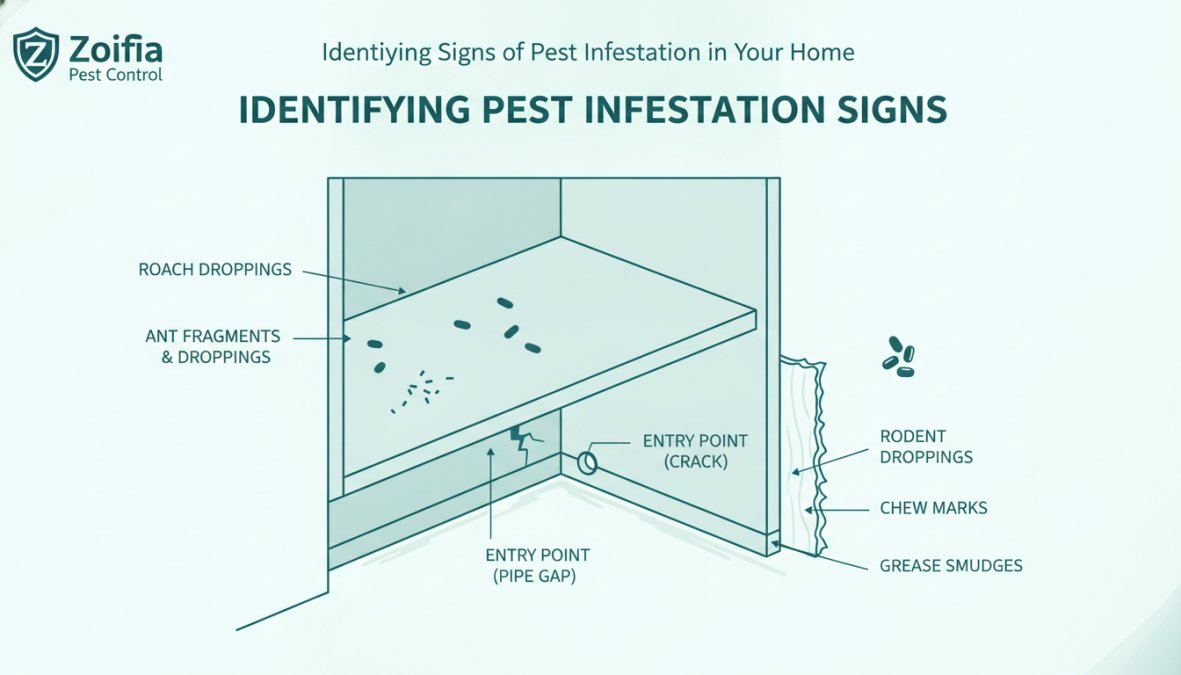
Early warning signs vary by pest type. Ants leave visible trails, highways of workers marching between food sources and nesting areas. If you see one ant, you’re seeing a scout. If you see a trail, you have an active foraging operation.
Roaches are nocturnal, making them harder to detect. A single roach suggests dozens more hiding in walls and under appliances during the day. Roach droppings, small, dark specks resembling ground pepper, found in corners and under sinks are more reliable indicators. A musty odor in areas where roaches congregate is another sign.
Rodents leave multiple evidence trails. Droppings appear as small, dark pellets along walls. Gnaw marks on food packaging, drywall, or wiring indicate active gnawing. Scratching sounds in walls at night suggest rodents moving through wall cavities. Grease marks along walls come from rodents rubbing their oily fur.
Assessing infestation severity requires counting evidence and understanding what numbers mean. A few ant trails suggest early-stage infestation; baiting will work quickly. Trails visible in multiple rooms indicate moderate infestation. Trails present in most areas indicate severe infestation requiring professional treatment.
For roaches, finding one during the day is more concerning than finding three at night. Multiple roach droppings in a small area indicates a harborage, a nesting site. With rodents, fresh droppings (dark and moist) versus old ones (dry and crumbly) tell you whether activity is current.
If you find evidence of infestation in multiple rooms, do not delay treatment. Infestations grow exponentially. A small roach population can triple in size within 30 days.
Integrated Pest Management for Homeowners
Integrated Pest Management (IPM) combines monitoring, prevention, and targeted treatment into a system that stops infestations before they start and eliminates them permanently when they occur.
The IPM framework: prevention, monitoring, and treatment operates as a three-layer defense. Prevention removes the conditions that attract pests. Monitoring detects problems early. Treatment eliminates infestations when prevention fails.
Prevention focuses on three factors: food, water, and shelter. Ants need accessible food and water, store food in airtight containers and fix leaky pipes. Roaches thrive in warm, humid environments with hiding spots, reduce humidity and seal cracks. Rodents need entry points and nesting materials, seal holes larger than a dime and remove clutter.
Monitoring means regular inspection. Walk through your home weekly looking for pest evidence. Check under sinks, behind appliances, and along exterior walls. Treatment happens only after prevention and monitoring reveal a problem.
Sealing entry points and reducing harborage areas forms the structural backbone of IPM. Rodents enter through holes as small as a dime. Ants and roaches slip through invisible cracks. Common entry points include gaps around pipes, foundation cracks, holes in siding, and gaps under doors. Caulk works for small cracks. Expanding foam fills larger voids. Steel mesh or hardware cloth (1/4-inch or smaller) blocks rodent entry.
Sanitation and moisture control address the attractants that draw pests in the first place. Daily sanitation includes wiping counters, sweeping floors, and washing dishes immediately. Weekly sanitation includes cleaning under appliances. Moisture control means fixing leaks and reducing humidity. Roaches and ants need water. A single leaky faucet can sustain a roach population.
IPM prevents infestations through prevention and early detection, then eliminates them with targeted treatment. This approach uses fewer pesticides, costs less over time, and prevents recurring problems.
DIY Pest Control vs. Professional Extermination Services
The decision to handle pest control yourself or call a professional depends on infestation severity, your comfort level with pesticides, and your budget.
When DIY solutions work and when they fall short comes down to three factors: infestation size, pest type, and treatment access. Small, early-stage infestations of common pests often respond to DIY baits and sprays. A few ants in one area can be eliminated with TERRO baits.
DIY approaches struggle with established infestations. Once roaches colonize multiple areas or rodents nest in walls, DIY treatments rarely reach all the pests. Roaches hiding deep in wall voids aren’t exposed to surface sprays. Professional exterminators spend years learning pest biology, behavior, and treatment strategies. This expertise matters.
Cost-benefit analysis: DIY vs. professional treatment requires calculating total cost of ownership. A DIY bait kit costs $20-$40. If it works, you’ve solved the problem cheaply. If it doesn’t, you’ve spent money plus the cost of professional treatment weeks later while the infestation grows.
Professional treatment costs more upfront but often costs less overall. Zoifia Pest Control provides licensed and insured service backed by a 90-day guarantee. If pests return within 90 days, treatment is free. This guarantee shifts the risk to the professional, who has incentive to eliminate the problem completely.
For a moderate roach infestation, professional treatment might cost $300-$500 for initial service plus follow-up visits. DIY might cost $50-$100 in baits, but if it fails, you’ll spend another $300-$500 on professional treatment anyway.
| Factor | DIY Treatment | Professional Treatment |
|---|---|---|
| Upfront cost | $20-100 | $300-600 |
| Time required | 2-4 hours | 30-60 minutes |
| Expertise | Limited | Extensive |
| Treatment coverage | Accessible areas only | Entire property including hidden areas |
| Follow-up | Your responsibility | Professional’s responsibility |
| Guarantee | None | Typically 30-90 days |
| Success rate (early infestation) | 60-70% | 95%+ |
| Success rate (established infestation) | 20-30% | 95%+ |
Preventing Future Pest Infestations and Recurring Problems
Prevention is cheaper and easier than treatment. A few simple habits eliminate most pest problems before they start.
Seasonal pest calendars and timing help you stay ahead of predictable pest cycles. Spring brings ants searching for food after winter dormancy. Summer brings increased roach and rodent activity. Fall brings rodents seeking shelter. Winter brings concentrated rodent populations in heated buildings.
Knowing these patterns lets you implement prevention before pests arrive. In early spring, seal entry points and eliminate food sources before ants become active. In fall, focus on rodent exclusion.
Maintenance routines that eliminate re-infestation create conditions where pests cannot establish themselves. A weekly routine takes 15 minutes and prevents 90% of pest problems: wipe counters, sweep floors, check for pest evidence, and inspect entry points. Monthly, deep clean under appliances and seal any new gaps. Quarterly, inspect your home’s exterior for new vulnerabilities.
The best time to seal entry points is before infestation occurs. Once pests are inside, sealing holes traps them in your home where they continue breeding. Always eliminate the infestation first, then seal to prevent re-entry.
The Psychological and Financial Impact of Chronic Infestations
Recurring pest infestations damage more than your property. They damage your peace of mind and your finances.
Why recurring infestations demand comprehensive solutions becomes clear when you understand the psychological toll. Seeing a roach at 2 AM creates anxiety. Hearing rodents in walls causes sleep disruption. Homeowners with chronic infestations report stress levels comparable to those with chronic health conditions.
Financially, recurring infestations are expensive. Each treatment costs money. Each failed treatment costs more. Pest damage to wiring, insulation, and structure adds up. The cumulative cost of multiple treatments plus damage often exceeds the cost of a single comprehensive professional treatment with prevention follow-up.
A comprehensive solution, professional treatment plus IPM implementation, costs more upfront but restores peace of mind and prevents future costs. This is why the 90-day guarantee matters. It’s not just about pest elimination. It’s about confidence that the problem is truly solved.
Recurring pest infestations persist because homeowners treat the symptom (visible pests) rather than the cause (colony nesting and entry points). Breaking this cycle requires a shift from reactive killing to proactive elimination through baits, exclusion, and sanitation.
Zoifia Pest Control specializes in this comprehensive approach. Our licensed and insured team identifies entry points, eliminates colonies with targeted baits, and implements prevention strategies to stop re-infestation. The 90-day guarantee means if pests return, we retreat at no cost. You get the peace of mind that comes with knowing the problem is truly solved. Get a quote today and stop the cycle.
Frequently Asked Questions
What is the most effective way to stop a recurring pest infestation?
The most effective approach combines three elements: identifying and sealing entry points, eliminating food and water sources through sanitation, and using targeted treatments like bait stations or gel baits that kill entire colonies rather than just visible pests. For recurring infestations specifically, professional pest removal services offer 90-day guarantees and follow integrated pest management principles to prevent re-infestation. DIY solutions often fail because they don't address the root cause, the colony, making professional extermination more reliable for chronic problems.
How does integrated pest management help prevent recurring infestations?
Integrated Pest Management (IPM) for homes uses a multi-layered strategy: monitoring for early signs, using exclusion techniques to seal entry points, reducing harborage areas and moisture, and applying targeted treatments only when needed. This comprehensive approach addresses the conditions that allow pests to thrive, not just the visible pests. IPM prevents recurring infestations by treating the environment itself, making it inhospitable to future colonies. It's more sustainable than repeated chemical sprays alone.
Should I try DIY pest control or call a professional for severe infestations?
For severe or recurring infestations, professional extermination is typically more cost-effective and reliable. DIY solutions work best for minor, isolated problems, but recurring infestations indicate a systemic issue, missed entry points, hidden colonies, or environmental factors, that professionals are trained to identify. Licensed exterminators use professional-grade treatments, provide guarantees (like Zoifia's 90-day guarantee), and offer follow-up visits if pests return. The upfront cost of professional service often saves money compared to repeated failed DIY attempts.
What are the early signs of a pest infestation I should watch for?
Early signs vary by pest type. For ants, look for visible trails and small piles of debris. For roaches, watch for droppings (dark specks), musty odors, and egg casings in hidden areas. For rodents, listen for scratching sounds, find gnaw marks on food packaging or wood, and look for small droppings. Detecting these signs early allows you to treat the problem before it becomes a severe, recurring infestation. Regular monitoring is a key part of preventing infestations from taking hold.
What preventative maintenance stops pests from coming back?
Effective preventative maintenance includes: sealing cracks and crevices around entry points, storing food in airtight containers, eliminating standing water and excess moisture, removing clutter and debris where pests hide, and maintaining regular cleaning routines. Seasonal pest calendars help you anticipate when specific pests are most active in your region, allowing you to treat preventatively. Annual inspections by professionals can identify vulnerabilities before infestations start. Consistent maintenance is far cheaper than treating recurring infestations.
How long does it take to eliminate a pest infestation completely?
Timeframe depends on infestation severity and treatment method. Bait-based treatments (like gel baits for roaches or liquid baits for ants) typically take 3-5 days to eliminate entire colonies as worker ants and roaches carry poison back to nests. Professional treatments often show results within 1-2 weeks, though a 90-day guarantee period ensures complete elimination and prevents re-infestation. DIY methods may take longer or fail entirely. Patience is critical, rushing to declare victory before the colony is fully eliminated leads to recurring problems.
What makes professional pest control better than DIY for recurring problems?
Professional exterminators offer licensed expertise, access to restricted-use products, structural inspections to find hidden entry points, and written guarantees. For recurring infestations, professionals identify why pests keep returning, often missed entry points or environmental factors DIY attempts overlook. Services like Zoifia Pest Control provide 90-day guarantees without long-term contracts, meaning if pests return during the guarantee period, follow-up treatment is covered. This accountability and comprehensive approach make professionals more effective for chronic infestations than repeated DIY cycles.
This article was written using GrandRanker
