Table of Contents
- 1. Implement Regular Inspections and Maintenance
- 2. Seal Entry Points and Gaps (Exclusion Methods)
- 3. Establish Proper Waste Management and Sanitation
- 4. Control Moisture and Eliminate Pest Habitats
- 5. Educate Tenants on Pest Control Responsibilities
- 6. Deploy Integrated Pest Management (IPM) Practices
- 7. Partner with Professional Pest Control Services
- Understanding Common Apartment Pests and Prevention
7 Best Pest Prevention Strategies for Apartment Buildings
Last Updated: July 21, 2026
Managing pest infestations in apartment buildings requires a comprehensive approach combining regular maintenance, tenant communication, and professional oversight. Multi-unit residential properties experience pest problems at significantly higher rates than single-family homes due to shared walls, common areas, and tenant turnover. This guide covers the 7 best pest prevention strategies that actually work, combining preventive measures that stop pests before they arrive with active management practices that catch problems early. Property managers who implement all seven strategies report significantly fewer tenant complaints and lower long-term treatment costs.
1. Implement Regular Inspections and Maintenance
What to Look For During Inspections
Regular inspections create a baseline of your building’s condition and alert you to vulnerabilities before pests exploit them. Look for droppings (rodent droppings resemble grains of rice; cockroach droppings resemble ground pepper), dead insects, egg casings, and pest damage to food packaging. Check for moisture accumulation, which attracts cockroaches and termites. Examine baseboards, corners, under sinks, and behind appliances where pests hide and travel.
Document everything with photos, dates, and detailed notes. This documentation becomes invaluable if you need professional pest control services or must address tenant disputes. EPA guidance on pest inspection best practices recommends systematic documentation as core to Integrated Pest Management.
Look for small grease marks along walls and baseboards, these are rodent runways showing exactly where pests travel through your building.
Creating an Inspection Schedule
For apartment buildings, inspect common areas monthly and individual units quarterly (with proper tenant notice). High-risk areas like basements, crawl spaces, around dumpsters, and near food storage should be inspected monthly. Units with previous pest activity should be inspected every two months until fully resolved.
Assign clear responsibility and create a simple checklist specific to your building. Consistency matters more than complexity.
2. Seal Entry Points and Gaps (Exclusion Methods)
Pests enter through gaps, cracks, and openings you may not notice. Exclusion, sealing these entry points, is one of the most cost-effective long-term pest prevention strategies. Once sealed, these barriers remain effective for years.
Door Sweeps and Weatherstripping
Gaps under doors are highways for rodents and insects. A gap as small as one-quarter inch allows mice to enter. Door sweeps and weatherstripping eliminate these passages.
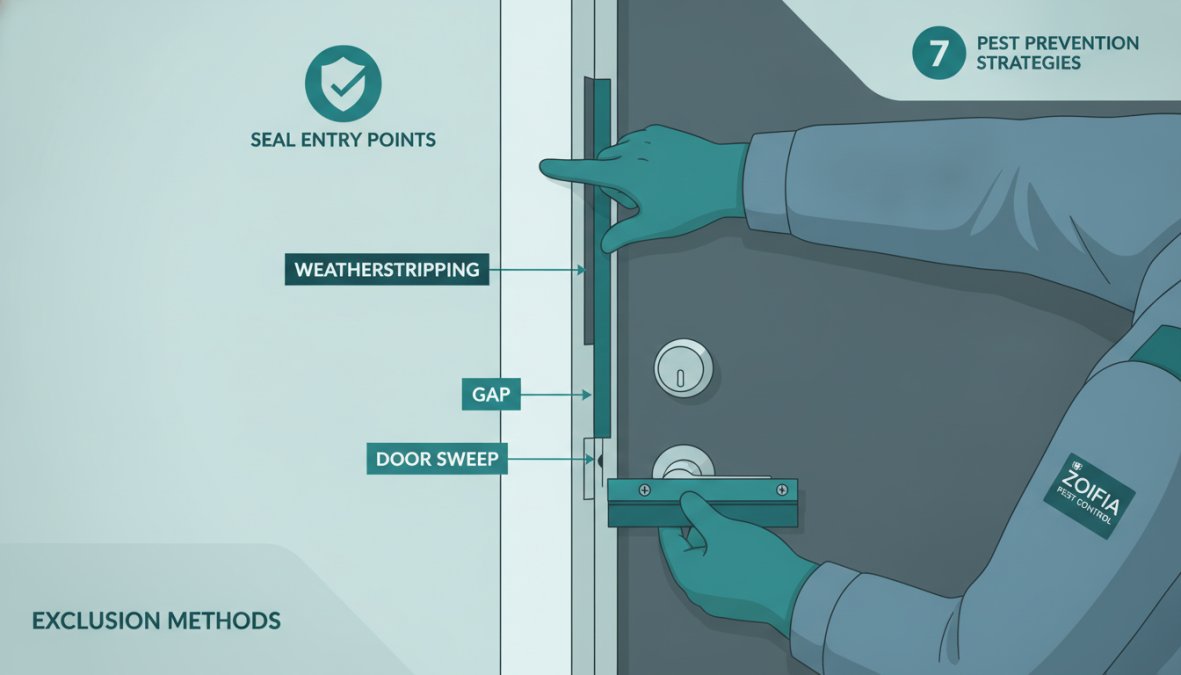
Xcluder Rodent Proof Door Sweeps use specialized fill fabric that rodents cannot gnaw through, making them more durable than standard sweeps. Installation takes 15-20 minutes per door and requires only basic tools. Focus on exterior doors first, then interior doors leading to common areas like laundry rooms, storage, and trash areas.
Sealing Cracks and Utility Passages
Pests enter through cracks in walls and gaps around pipes where utilities pass through. GREAT STUFF Pestblock Insulating Foam Sealant expands to fill gaps up to three inches and contains an EPA-registered pesticide protecting the foam from pest damage. For smaller cracks, GE Advanced Silicone 2 Window & Door Sealant provides a waterproof, flexible seal that lasts longer than caulk.
Walk the exterior perimeter systematically and note every gap. Check where pipes enter the building, where cables pass through walls, and where the foundation meets the structure.
Do not seal entry points without first confirming no pests are currently inside. If you seal pests into a wall cavity, they’ll find new routes or cause damage trying to escape. Always inspect and treat first, then seal.
3. Establish Proper Waste Management and Sanitation
Garbage is a pest magnet. Pests need food, water, and shelter, your building’s waste management system provides all three if not properly controlled. A single overflowing dumpster can sustain a rodent population for months.
Dumpster and Trash Receptacle Management
Dumpsters should be located at least 25 feet from the building entrance with tight-fitting lids that close completely. Inspect lids daily; broken or missing lids are invitations for pests. Schedule pickups frequently enough that trash never overflows, weekly minimum for most buildings.
Keep the area around dumpsters clean. Sweep weekly and power-wash monthly. Remove vegetation within 10 feet of dumpsters; pests use overgrown plants as cover while accessing food.
Individual trash receptacles in units should have tight-fitting lids. Establish a rule that trash must remain in sealed containers until pickup day.
Unit-Level Food Storage and Cleaning
Tenant behavior directly impacts building-wide pest risk. Require tenants to store food in sealed, pest-proof containers. Open boxes of cereal, bags of flour, and pet food left on shelves are pest attractants. Establish a clear cleaning standard in your lease requiring daily kitchen sweeping and wiping, regular trash removal, and immediate pest reporting. Some buildings require professional cleaning of units after tenant turnover, eliminating food residue and pest harborage.
4. Control Moisture and Eliminate Pest Habitats
Pests need water as much as they need food. Controlling moisture eliminates half of what attracts them. Cockroaches can survive weeks without food but only days without water.
Fix leaks immediately, even small ones. A slow drip under a sink or poorly sealed window creates the moisture pests seek. Inspect bathrooms and kitchens monthly for water damage or mold indicating moisture problems.
Improve ventilation in bathrooms and laundry areas. Ensure exhaust fans are vented to the exterior, not into attics. Reduce clutter and storage that creates harborage, pests hide in cardboard boxes, stacks of newspapers, and stored furniture. Encourage tenants to minimize unnecessary storage.
Check crawl spaces, basements, and attics for standing water or excessive moisture. Ensure gutters drain away from the building and downspouts extend at least 4-6 feet from the foundation.
5. Educate Tenants on Pest Control Responsibilities
Your building’s pest prevention is only as strong as tenant participation. Education and clear communication set expectations and protect your property.
Communication Strategies and Lease Clauses
Include pest prevention requirements in your lease. State that tenants must report pest sightings immediately, maintain clean units, store food properly, and not bring in used furniture without inspection. Make clear that infestations caused by tenant negligence may result in charges to the tenant.
Provide written guidance with photos of common pests, signs of infestation, and clear reporting instructions. When a tenant reports a problem, respond quickly and document every report and follow-up.
Consider quarterly emails reminding tenants about proper food storage, reporting sightings, and the building’s pest management schedule.
Tenants who understand why pest prevention matters and feel heard when reporting problems are your best allies in keeping the building pest-free.
6. Deploy Integrated Pest Management (IPM) Practices
Integrated Pest Management combines multiple methods to manage pests while minimizing pesticide reliance. IPM works because it targets pests at multiple lifecycle points and adapts based on observations.
Monitoring, Traps, and Non-Chemical Methods
Use sticky traps or pheromone traps to detect pest activity before infestation. Place traps along baseboards, in corners, under sinks, and near food storage. Check weekly and document findings. Increasing trap counts indicate growing problems requiring professional treatment.
For rodents, snap traps and electronic traps like the Victor Electronic Mouse Trap are more effective than poison in apartment buildings. Poison risks dead rodents in walls causing odor problems. Place traps perpendicular to walls where rodents travel, using peanut butter or nesting material as bait.
For cockroaches, gel baits like Advion Cockroach Gel Bait are highly effective. The slow-acting bait allows roaches to return to their colony and spread the active ingredient. Apply small dots along baseboards, under sinks, and in cabinets.
For bed bugs, SenSci Volcano Bed Bug Detector Systems use pheromone attractants to capture bed bugs, enabling early detection. Place detectors under bed legs and along baseboards in affected units or adjacent units.
Non-chemical methods include heat treatment for bed bugs, which kills all life stages without pesticide residue. Food-grade diatomaceous earth can be applied to cracks and crevices, though it’s less effective in humid climates.
| IPM Method | Best For | Frequency | Effectiveness |
|---|---|---|---|
| Sticky/pheromone traps | Monitoring all pests | Weekly checks | Early detection |
| Gel baits (cockroaches) | German cockroach colonies | Monthly reapplication | 80-90% colony elimination |
| Electronic traps (rodents) | Individual rodent removal | As needed | Immediate removal |
| Bed bug detectors | Early detection | Continuous | Detects 1-2 weeks before visible signs |
| Heat treatment | Bed bug infestations | One-time treatment | 100% effective when done correctly |
7. Partner with Professional Pest Control Services
Some infestations are too large for DIY methods, some pests require licensed pesticide application, and some situations need expertise beyond property manager capabilities. Professional pest control services using IPM approaches provide the expertise and accountability that protect your property.
Licensed and insured technicians bring systematic knowledge of pest biology and targeted treatment methods. They identify building conditions you might miss. When selecting a service, ask about their IPM approach: Do they inspect before treating? Do they use targeted methods rather than broad-spectrum pesticides? Will they provide detailed reports? Do they offer follow-up monitoring?
A 90-day guarantee means the service stands behind their work. If pests return within 90 days, they retreat at no charge, ensuring they’re motivated to solve problems thoroughly. For apartment buildings, regular quarterly or bi-monthly professional service is often more cost-effective than dealing with tenant complaints, emergency treatments, and potential legal issues from uncontrolled infestations.
Understanding Common Apartment Pests and Prevention
Cockroaches, Rodents, and Bed Bugs
German cockroaches thrive in warm, damp environments and reproduce rapidly. Prevention focuses on eliminating moisture, sealing cracks, and maintaining sanitation. Once established, infestations typically require professional gel bait treatment.
Rodents enter buildings seeking food and shelter. Mice need only a quarter-inch gap; rats need half an inch. Prevention is primarily exclusion and eliminating food sources. Regular inspections and monitoring traps catch activity early.
Bed bugs spread through movement, tenants bringing infested furniture, luggage, or clothing. Once in a unit, they spread to adjacent units through wall cavities. Prevention requires tenant education about inspecting used furniture and reporting bites immediately. Treatment typically requires professional heat treatment or insecticide application across multiple units.
Ants, Flies, and Termites
Ants are attracted to food and moisture. Carpenter ants damage wood; odorous house ants follow scent trails. Finding and eliminating the food source is more effective than killing individual ants.
Flies breed in organic matter, garbage, and drain buildup. Drain flies are common in buildings with poor drain maintenance. Prevention requires keeping drains clean and maintaining sanitation.
Termites require soil contact and moisture. Prevention includes maintaining proper drainage and fixing wood-to-soil contact. If detected, professional treatment is essential.
Pest prevention in apartment buildings is an ongoing commitment requiring systematic inspections, tenant cooperation, and professional oversight. Buildings implementing all seven strategies see dramatic reductions in pest complaints, lower treatment costs, and higher tenant satisfaction. If persistent pest problems persist despite prevention efforts, professional pest control services backed by guarantees can assess your building’s vulnerabilities and create customized treatment plans.
Frequently Asked Questions
What are the 7 best pest prevention strategies for apartment buildings?
The seven key strategies include: regular inspections and maintenance, sealing entry points and gaps, proper waste management and sanitation, controlling moisture, educating tenants on pest control responsibilities, deploying Integrated Pest Management (IPM) practices, and partnering with professional pest control services. Together, these create a comprehensive approach to prevent infestations before they start and minimize property damage and health risks.
What are the most common apartment pests and how do I prevent them?
Common apartment pests include cockroaches, rodents, bed bugs, ants, flies, and termites. Prevention varies by pest: exclude rodents with door sweeps and sealed cracks; control cockroaches through sanitation and bait stations; detect bed bugs early with monitoring devices; manage ants by eliminating food sources; reduce flies with proper waste management; and prevent termites through moisture control and regular inspections. An Integrated Pest Management approach targets each pest species specifically.
Who is responsible for pest control in a rental apartment?
Responsibility varies by region and lease terms. Generally, landlords must maintain habitable conditions and control pest infestations, while tenants must report sightings promptly and maintain cleanliness. Many states require landlords to provide pest control services, though some allow tenants to pay for treatments. Check your local tenant rights laws and lease agreement. Clear communication between property managers and tenants about pest control responsibilities prevents disputes and ensures faster response to infestations.
What is Integrated Pest Management (IPM) for apartment buildings?
IPM is a comprehensive pest management approach that combines monitoring, habitat modification, exclusion, and targeted pesticide use only when necessary. For apartment buildings, IPM involves regular inspections, sealing entry points, reducing moisture and clutter, educating tenants, using traps and bait stations, and employing professional services as needed. This strategy minimizes chemical use while effectively preventing infestations, reducing health risks, and lowering long-term pest control costs.
How can tenants help prevent pests in their apartments?
Tenants play a critical role by: storing food in sealed containers, cleaning regularly and removing clutter, reporting pest sightings immediately to management, fixing water leaks, decluttering to eliminate hiding spots, disposing of garbage properly, and not bringing in infested items. Tenant education and communication are essential, property managers should provide clear guidelines on pest prevention responsibilities, include requirements in leases, and maintain open channels for reporting. Cooperation between tenants and management prevents infestations from spreading across shared walls and utility passages.
This article was written using GrandRanker
