Table of Contents
- Do Roaches Travel Between Apartments? The Short Answer
- How Roaches Travel Between Apartments in Multi-Family Housing
- Common Entry Points Roaches Use to Enter Your Unit
- Signs of a Roach Infestation Coming From Neighboring Units
- How to Seal Your Apartment From Roaches: Practical Exclusion Techniques
- What to Do If Your Neighbor Has Roaches: Your Rights and Options
- Best Roach Killer for Apartments: Treatment Options and Integrated Pest Management
- Preventing Roach Migration: Integrated Pest Management for Tenants
Last Updated: July 3, 2026
Do Roaches Travel Between Apartments? The Short Answer
Yes, roaches travel between apartments in multi-family housing through shared walls, plumbing, and structural gaps. German cockroaches, the most common species in apartment buildings, are particularly adept travelers, moving through wall voids and utility penetrations with ease. A single pregnant female can establish a new colony within weeks. Understanding roach migration patterns is essential for anyone living in shared housing.
Why German Cockroaches Are the Primary Concern
German cockroaches dominate apartment infestations because they thrive in warm, humid residential environments and are small enough to navigate tiny structural gaps. Measuring only 0.5 to 0.6 inches, they squeeze through cracks as thin as a credit card. A single female produces 200-300 offspring in her lifetime, causing infestations to explode exponentially if unchecked.
German cockroaches seek warmth, moisture, and food sources abundant in kitchens and bathrooms. They establish satellite colonies when primary populations become overcrowded or food-scarce.
German cockroaches can survive two weeks without food and one week without water. Hidden populations in wall voids can persist for extended periods, making them extremely difficult to eradicate without professional intervention.
How Roaches Travel Between Apartments in Multi-Family Housing
Roaches follow predictable routes determined by building structure, utility placement, and environmental conditions.
Hitchhiking in Luggage, Cardboard Boxes, and Personal Belongings
Roaches hide in cardboard boxes, luggage, used furniture, and grocery bags. A single pregnant female transported into your apartment can establish an infestation within weeks. Cardboard is particularly attractive because it provides shelter and a cellulose-based food source.
This risk extends to deliveries. Packages from retailers and online purchases can harbor roaches if stored in infested warehouses. Prevention is straightforward: inspect secondhand items before bringing them inside, break down cardboard boxes immediately, and consider storing incoming packages in a sealed container before bringing contents inside.
Migration Through Wall Voids and Structural Gaps
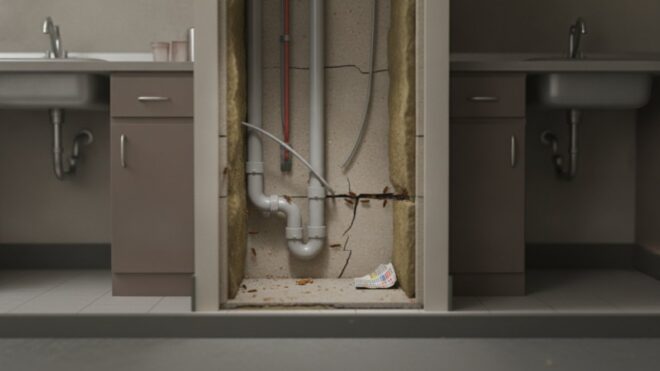
The most common pathway for roach migration is through wall voids, the hollow spaces between interior and exterior walls. Roaches navigate these spaces by following electrical wiring, plumbing runs, and HVAC ducts. In older buildings, wall voids may be completely open. In newer buildings, roaches still find gaps around outlet boxes and utility penetrations.
Roaches exploit gaps as small as 1/8 inch, making comprehensive sealing essential. The severity varies by building age and construction quality.
Walk through your apartment with a flashlight and look for light coming through baseboards, electrical outlets, and wall seams. Any visible light indicates a gap large enough for roaches to pass through.
Movement via Plumbing Penetrations and Utility Lines
Plumbing penetrations represent significant roach migration pathways. Where pipes pass through walls to connect neighboring units, gaps inevitably exist. Roaches are attracted to plumbing because condensation and slow leaks provide moisture, a critical survival resource.
Electrical conduit, HVAC ducts, and gas lines also facilitate roach movement. HVAC returns are particularly problematic because air movement can carry roach pheromones between units. Water damage and deteriorating caulk around plumbing accelerate the problem.
Common Entry Points Roaches Use to Enter Your Unit
Cracks, Baseboards, and Electrical Outlets
Baseboards are the primary entry point for roaches at ground level. Gaps between baseboards and walls or flooring provide direct access. Electrical outlets, particularly in kitchens and bathrooms on shared walls, are critical vulnerabilities.
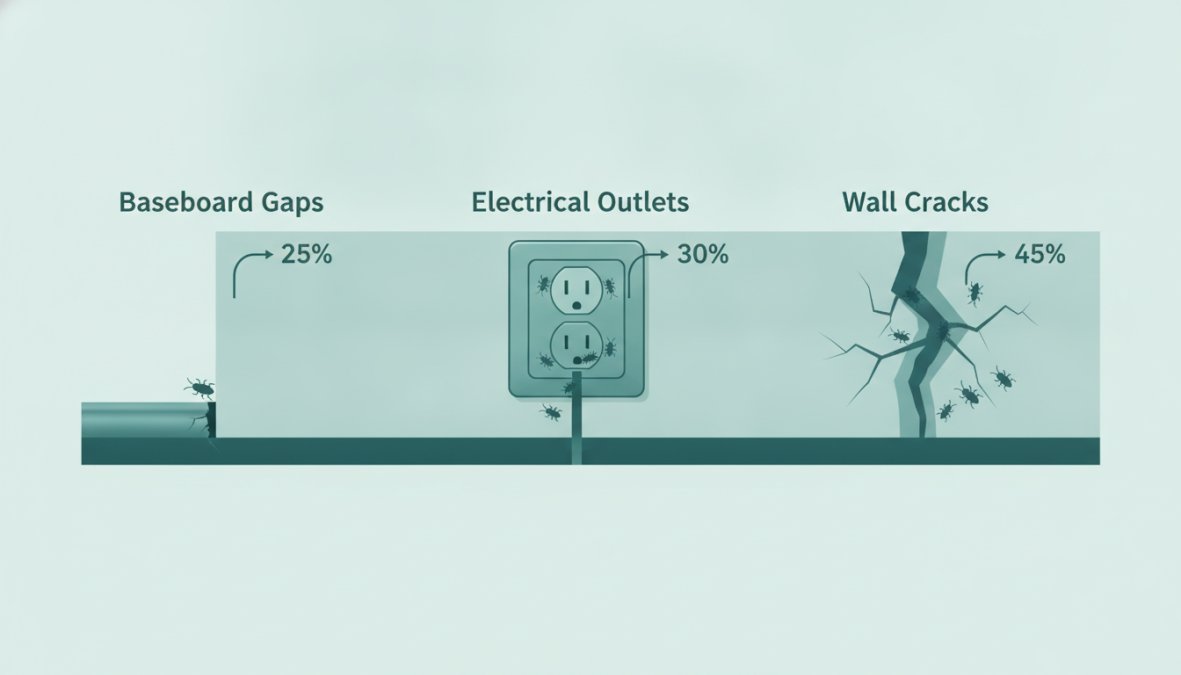
Cracks around window frames, door frames, and where different materials meet are equally important. Kitchen and bathroom baseboards are highest-priority sealing areas because these rooms attract roaches with moisture and food.
Appliance Vents and HVAC Returns
The space behind and under refrigerators attracts roaches seeking heat. Gaps around refrigerator water lines and drains provide entry pathways. Dishwasher vents and water connections are similarly vulnerable.
HVAC returns can transport roaches between units if screens are damaged or sealing is loose. Bathroom exhaust fans and kitchen range hoods that vent outside can become entry points if dampers are broken.
Signs of a Roach Infestation Coming From Neighboring Units
Live roaches during daylight hours are the most obvious sign. Roaches are nocturnal, so daytime sightings suggest a large population or recent entry.
Roach droppings appear as small dark specks the size of a grain of rice in corners and along baseboards. Concentrated droppings near baseboards or outlets on shared walls indicate roaches are using that pathway.
Roach egg cases (oothecae) are tan or brown capsules about 0.5 inches long. Finding these indicates breeding activity. An unexplained musty or oily odor can indicate infestation, particularly in kitchens and bathrooms.
If neighbors have disclosed an infestation or roaches appear in common areas, assume roaches will attempt entry to your unit.
How to Seal Your Apartment From Roaches: Practical Exclusion Techniques
Exclusion, physically preventing roaches from entering, is your most effective defense against migration.
Caulking and Sealing Gaps
Use paintable acrylic latex caulk rated for kitchen and bathroom use. Start with baseboards, running a continuous bead where the baseboard meets the wall and floor. Pay special attention to corners and door frames.
Seal electrical outlets and switch plates on shared walls. Remove the outlet cover, caulk around the outlet box where it meets drywall, then reinstall. For gaps larger than 1/4 inch, use foam backer rod before caulking.
Seal gaps around window frames, door frames, and trim work. Allow caulk to cure fully (typically 24 hours) before exposing it to moisture.
Caulking baseboards and sealing outlets on shared walls prevents 60-70% of roach entry points. This single step, completed in one weekend, dramatically reduces infestation risk.
Installing Door Sweeps and Weather Stripping
Install a door sweep on your apartment’s entry door. Self-adhesive door sweeps are easy to install and require no tools. Ensure the seal makes firm contact with the threshold across the entire width.
Apply adhesive-backed foam weather stripping to the door frame where the door closes. Install door sweeps on interior doors to bedrooms and bathrooms as well. Check door sweeps annually and replace when they lose effectiveness.
Securing Plumbing and Utility Penetrations
Where pipes enter your apartment, inspect the gap. If larger than 1/8 inch, roaches can pass through. Use foam pipe insulation or backer rod to fill the gap, then seal with caulk rated for plumbing use.
For multiple pipes or utilities, use minimal-expansion foam sealant. Trim excess foam after it hardens, then caulk for a finished appearance. Seal under sinks where supply lines and drains penetrate cabinets, but ensure you don’t block access for maintenance.
What to Do If Your Neighbor Has Roaches: Your Rights and Options
Understanding Landlord Responsibilities in Multi-Unit Buildings
In most jurisdictions, landlords bear legal responsibility for maintaining habitable premises, which includes pest control. A roach infestation violates this standard, and tenants have legal grounds to demand action.
Send formal written notice to your landlord via email or certified letter. State clearly that you’ve observed roaches, describe what you’ve seen, and request professional pest control treatment for your unit and neighboring affected units.
If your landlord refuses to act, research local tenant rights. Many jurisdictions allow tenants to withhold rent, hire pest control and deduct costs, break leases without penalty, or file complaints with housing authorities. Consult local tenant advocacy organizations for jurisdiction-specific guidance.
Document everything. Take photos of roaches, droppings, and entry points. Keep records of all communications with your landlord and treatments applied.
Do not withhold rent or break a lease without understanding local laws. Some jurisdictions require specific procedures and timelines. Violating lease terms without legal justification can result in eviction.
Documenting Cross-Contamination and Building Your Case
Photograph roach droppings, egg cases, and live roaches near entry points like baseboards and electrical outlets. Include location in photos and timestamp if possible.
Keep a log of roach sightings with date, time, location, and what you observed. A pattern concentrated near shared walls indicates migration from neighboring units.
If roaches continue appearing after you’ve implemented exclusion measures, this demonstrates the problem originates outside your unit. Request that your landlord treat all affected units simultaneously, as treating one apartment while leaving neighbors infested guarantees reinfestation.
Best Roach Killer for Apartments: Treatment Options and Integrated Pest Management
Once roaches enter your apartment, exclusion alone won’t eliminate them. Professional pest control using Integrated Pest Management (IPM) strategies combines multiple approaches for maximum effectiveness.
Bait Stations and Insect Growth Regulators
Bait stations contain slow-acting insecticides that roaches consume and carry back to nesting sites, poisoning entire colonies. Professional-grade baits are significantly more effective than consumer products and are placed strategically along roach travel routes.
Insect growth regulators (IGRs) disrupt roach reproduction by preventing nymphs from developing into adults. Combined with bait stations, IGRs eliminate infestations faster than baits alone. Treatment typically takes 2-4 weeks, with dramatic reduction in activity within the first week.
Sanitation and Nesting Site Elimination
Sanitation is the foundation of roach control. Roaches need food, water, and harborage. Clean your kitchen after every meal, wipe counters and stovetops, and store food in sealed containers. Don’t leave pet food out overnight.
Fix leaky pipes and dripping faucets. Dry sinks before bed. Remove standing water from under appliances. Roaches survive weeks without food but only days without water.
Declutter your apartment, particularly kitchens and bathrooms. Remove stacks of paper, cardboard boxes, and unnecessary items providing hiding places. Vacuum regularly, particularly in corners and under appliances. Seal gaps in cabinets and drawers.
A combination of sanitation, exclusion, and professional bait treatment eliminates roach infestations in 4-6 weeks in most cases.
When to Call a Professional Exterminator
Call a professional if you’ve observed roaches for more than a week, roaches continue appearing after exclusion measures, you’ve noticed roaches in multiple rooms, or you want to establish preventive treatment.
Professional services provide access to professional-grade baits more effective than consumer products. They understand roach behavior and building structure, placing treatments strategically. Most treatments require 2-3 visits over 2-4 weeks. Professional treatment typically ranges from $150-$400 for initial service, with follow-up visits at similar rates.
Preventing Roach Migration: Integrated Pest Management for Tenants
Integrated Pest Management combines exclusion, sanitation, monitoring, and targeted treatment. For tenants in multi-unit buildings, IPM is the most effective long-term strategy.
Start with exclusion, sealing entry points to prevent roaches from entering. Second is sanitation, eliminating food, water, and harborage. Third is monitoring, regularly checking for signs of roaches with visual inspections and sticky traps. Fourth is targeted treatment, using baits only when monitoring indicates roaches are present.
Implement IPM by sealing all entry points, establishing a sanitation routine, placing sticky traps monthly, inspecting traps weekly, and contacting your landlord immediately if you find roaches.
Living in an apartment where roaches can travel between units is stressful, but you have effective tools to prevent and eliminate infestations. Exclusion through sealing entry points, combined with sanitation and professional treatment when needed, creates comprehensive defense. If you’re dealing with an active infestation or suspect roaches are entering from neighboring units, professional pest control can help. Licensed teams specializing in apartment pest management offer fast response times and typically back work with guarantees. Get a quote today and take control of your roach problem.
Frequently Asked Questions
Do roaches travel between apartments through walls and pipes?
Yes, roaches commonly travel between apartments through wall voids, plumbing penetrations, and utility lines in multi-family housing. German cockroaches are particularly skilled at navigating structural gaps and can move between units through shared plumbing, HVAC ducts, and cracks in walls. Professional pest control treatment often requires addressing these pathways to prevent reinfestation.
Can roaches hitchhike in luggage and cardboard boxes?
Absolutely. Roaches frequently travel between apartments by hitchhiking in luggage, cardboard boxes, grocery bags, and used furniture. A single pregnant female can start an infestation in your apartment. When traveling or bringing secondhand items home, inspect them carefully and consider isolating new items in a sealed container before bringing them into your living space.
What is my landlord's responsibility if my neighbor has roaches?
In most jurisdictions, landlords have a legal responsibility to maintain habitable premises, which includes pest control. If roaches are migrating from a neighboring unit, you can typically request that management treat the source apartment and common areas. Document the infestation with photos and written complaints, and check your local tenancy laws, many areas require landlords to address pest issues within a specific timeframe.
What's the best roach killer for apartments?
Integrated Pest Management (IPM) combining bait stations, insect growth regulators, and sanitation is most effective for apartments. Bait stations target roaches at nesting sites, while insect growth regulators prevent reproduction. However, professional exterminators are often necessary for severe infestations, especially when roaches are migrating from neighboring units. A licensed pest control service can identify entry points and treat wall voids that DIY methods cannot reach.
This article was written using GrandRanker
