Table of Contents
- Why Roaches Target Kitchen Cabinets
- Signs of Roach Infestation in Cabinets
- Step 1: Deep Clean Your Kitchen Cabinets
- Step 2: Remove Food Sources and Control Moisture
- Step 3: Use the Best Roach Bait for Kitchen Cabinets
- Step 4: How to Seal Gaps in Kitchen Cabinets
- Step 5: Seal Entry Points and Baseboards
- Step 6: Organize Cabinets to Eliminate Hiding Spots
- Frequently Asked Questions
Last Updated: October 2, 2026
Why Roaches Target Kitchen Cabinets
Roaches target kitchen cabinets because they offer food, water, and shelter in one place. Cabinets provide hiding spots in tight gaps, trap moisture from pipes and leaks, and store the food sources roaches need to survive. Once established, they multiply quickly and become harder to eliminate.
In older apartment buildings, shared walls allow roaches to travel between units. Thin cabinet backing and gaps around pipes create easy entry points, so neighbor infestations can spread to your space.
To keep roaches out of cabinets is critical, prevention stops the problem before it starts. Below are seven proven steps to keep roaches out of cabinets in your apartment.
Signs of Roach Infestation in Cabinets
Catching an infestation early makes elimination much easier. Look for these warning signs inside your cabinets:
- Droppings: Small black specks that look like pepper or coffee grounds
- Egg cases: Brown, capsule-shaped objects about the size of a grain of rice
- Musty odor: A strong, unpleasant smell that indicates a large population
- Shed skin: Brown or tan shells left behind as roaches grow
- Live roaches: Seeing them during the day means the infestation is severe
Check corners, under shelves, around hinges, behind appliances, and under the sink. Roaches often travel through plumbing areas to reach cabinets.
If you spot any signs, act immediately, a few roaches become hundreds in weeks. For severe infestations or those spreading across units, professional pest control is necessary. Zoifia Pest Control offers licensed and insured services backed by a 90-day guarantee.
Step 1: Deep Clean Your Kitchen Cabinets
Start with a thorough cleaning. This removes food residue and eliminates the primary food source roaches depend on.
Remove everything from your cabinets. Wipe down each shelf with hot soapy water. Pay special attention to corners and crevices where crumbs collect. Use a brush to scrub away grease buildup on the inside of doors and cabinet walls.
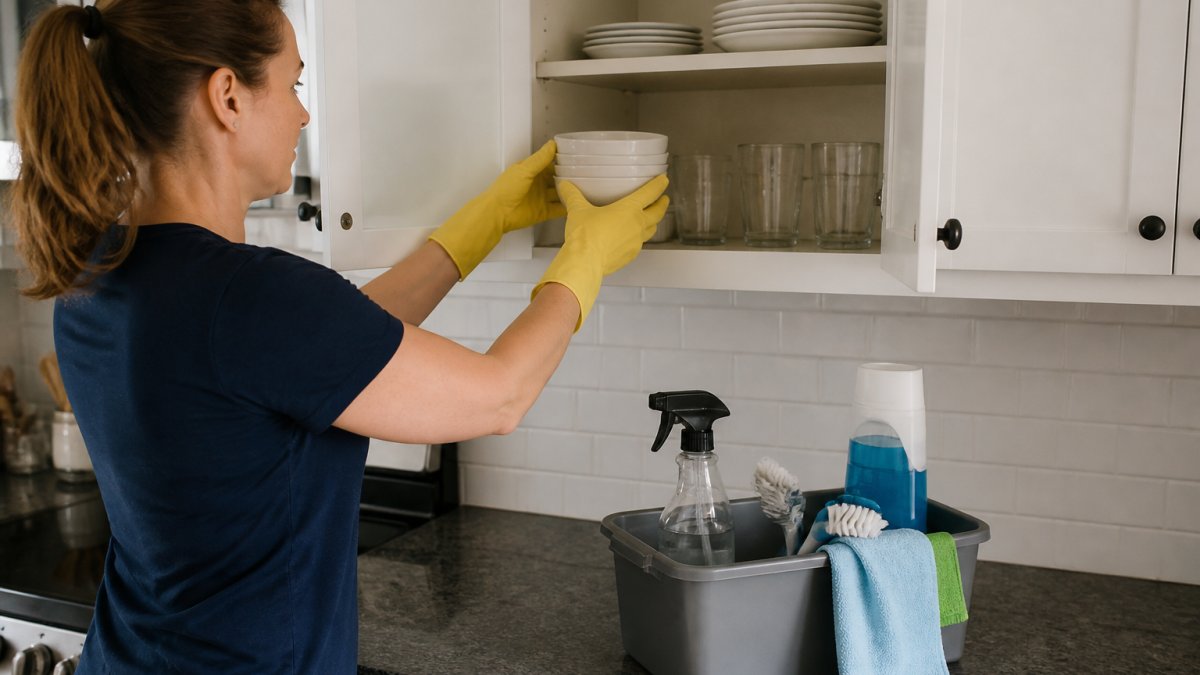
Clean the exterior too, roaches hide in dust and grime. Wipe the front, sides, top, and area above cabinets.
Inspect for damage: cracks, gaps where cabinets meet walls, and moisture. Let everything dry completely before restocking, moisture attracts roaches.
Step 2: Remove Food Sources and Control Moisture
Store all dry goods in airtight containers. Roaches can chew through cardboard and paper, so sealed plastic or glass containers make food inaccessible.
Keep cabinets dry by checking under the sink for leaks, fixing plumbing issues immediately, and wiping pipes to remove condensation.
Remove garbage daily, don’t leave dirty dishes overnight, and clean spills immediately. Organize cabinets to minimize clutter, use shelf dividers and stackable containers to create clear sight lines, making roaches easier to spot.
Step 3: Use the Best Roach Bait for Kitchen Cabinets
Gel baits are the most effective tool, roaches consume the poison and carry it back to their colony. Place baits in corners, along edges, near entry points, and in areas of activity.
Replace baits every two weeks, effectiveness drops as they dry out. Results take two to three weeks; be patient and consistent. Combining baits with other steps accelerates results.
Use roach traps to monitor activity levels and determine if the infestation is improving. Sticky traps catch roaches but don’t eliminate the colony, use them alongside baits.
Step 4: How to Seal Gaps in Kitchen Cabinets
Sealing gaps eliminates shelter and prevents roaches from moving between compartments. The most effective approach combines interior sealing with structural modifications.
Interior Sealing
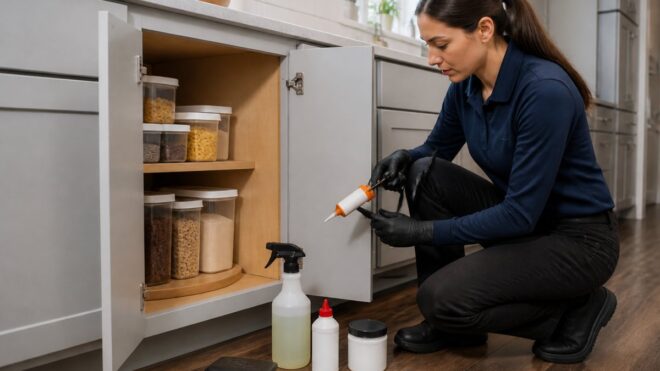
Inspect for gaps between shelves and walls, where backing meets sides, and cracks in wood. Use caulk for small gaps and expanding foam for larger ones (especially around pipes). Leave small gaps for ventilation, focus on sealing where roaches travel, not every opening.
Cabinet-Specific Structural Modifications
Most renters overlook structural improvements that dramatically reduce roach access.
Cabinet Door Sweeps: Install door sweeps on the bottom of cabinet doors. These rubber or silicone strips seal the gap between the door and the frame, preventing roaches from entering when doors are closed. Self-adhesive door sweeps are easy to install and removable, making them renter-friendly.
Mesh Screens for Cabinet Vents: If your cabinets have ventilation holes or decorative grilles, cover them with fine mesh screening. Roaches cannot penetrate mesh smaller than 1/16 inch. Use adhesive-backed mesh or secure it with small screws.
Backing Panel Replacement: The thin cardboard or particle board backing on many apartment cabinets is not roach-proof. If your cabinets have damaged or missing backing, request that your landlord replace it with solid plywood or hardboard. Solid backing eliminates the cavity between the cabinet and wall where roaches hide and travel.
Pipe Penetration Sealing: Where plumbing or electrical lines pass through cabinet walls, gaps often remain even after caulking. Use foam sealant followed by a trim ring or escutcheon plate (a decorative collar that covers the hole). This prevents roaches from using pipes as highways into your cabinets.
When to Request Landlord Assistance
If your cabinets have structural damage, missing backing, large gaps around pipes, or deteriorated frames, document it with photos and request repairs in writing. Under most state housing codes, landlords must maintain habitable conditions, which includes pest-proofing. Structural cabinet repairs fall under this obligation.
Keep records of all requests and follow-ups. If the landlord doesn’t respond within a reasonable timeframe, check your state’s tenant protection agency website for specific procedures.
Step 5: Seal Entry Points and Baseboards
Roaches enter cabinets from outside. Sealing entry points stops them at the source.
Check where pipes and utilities pass through walls and cabinets. These are common entry routes. Seal gaps around pipes with caulk or foam. Make sure the seal is tight with no openings.
Inspect the baseboards behind and below cabinets. Gaps between the baseboard and the wall or floor are entry highways for roaches. Caulk these gaps completely. Roaches can squeeze through openings as small as a credit card. Leave no gaps unsealed.
Check cabinet legs and feet. Roaches climb up from the floor. Seal any gaps between the cabinet base and the floor. Use caulk or foam depending on the gap size.
Examine the back of cabinets where they meet the wall. Gaps here allow roaches to move between the cabinet interior and the wall cavity. Seal these gaps from the inside if accessible.
Pest exclusion means blocking roaches before they enter your space. This is one of the most effective long-term strategies. Combined with food removal and baiting, sealing entry points creates a multi-layered defense.
Step 6: Organize Cabinets to Eliminate Hiding Spots
Organization reduces the places roaches can hide. Fewer hiding spots make roaches easier to spot, eliminate, and prevent from establishing populations. Roaches thrive in cluttered cabinets because clutter creates darkness, shelter, and protection from predators and treatments.
Why Clutter Enables Roach Infestations
Roaches are nocturnal and prefer tight spaces where they can touch surfaces on multiple sides, this reduces their stress and makes them feel secure. Cluttered cabinets with stacked boxes, bags, and miscellaneous items create countless crevices and dark pockets. When items are crammed together, roaches can hide deep inside stacks where baits and sprays never reach them. They can also move freely between items without being exposed. An organized cabinet with clear sight lines and minimal items eliminates these refuges, forcing roaches into the open where treatments work and you can spot them.
Implementing a Roach-Resistant Organization System
Remove items you don’t use. Roaches hide in clutter. The more empty space you create, the fewer places they can shelter. Donate or discard items taking up unnecessary cabinet space.
Use clear, stackable containers for all dry goods. Transparent containers serve two purposes: you can see inside them instantly, and roaches cannot hide in opaque bags or boxes.
Create vertical organization zones. Assign each shelf or section to a specific category: breakfast items on one shelf, baking supplies on another, canned goods on a third.
Use shelf liners and dividers strategically. Shelf liners should be wipeable plastic, not paper or fabric, which roaches can hide under and chew through.
Keep cabinets dry and inspect regularly. Wipe down the interior weekly with a dry cloth. Remove any standing water or condensation, especially under the sink.
Label containers with contents and dates. This helps you rotate stock and use older items first.
Establish a weekly inspection routine. Set a specific day each week to open cabinets and visually inspect them. Look for droppings, egg cases, or live roaches. Check the corners, under shelves, and around hinges.
Pet-Safe Organization for Households with Animals
If you have cats, dogs, or other pets, avoid storing toxic roach baits and sprays in cabinets where pets might access them. Instead, organize your cabinets to be so clean and clutter-free that roaches have no reason to establish themselves there in the first place. Use only food storage and organization, no chemical treatments, in accessible cabinets. Reserve chemical baits for areas completely inaccessible to pets, such as behind the refrigerator or in wall voids (with landlord permission). This approach makes organization your primary defense against roaches in pet-friendly households.
Frequently Asked Questions
How do roaches get into kitchen cabinets?
Roaches enter cabinets through gaps around pipes, cracks in cabinet frames, and spaces between cabinet units and walls. They’re attracted to food residue, grease, and moisture. Once inside, they hide in dark harborage areas and reproduce quickly. Sealing entry points and removing food sources are your best defenses against infestation.
What’s the best roach bait for kitchen cabinets?
Gel baits are most effective for kitchen cabinets because they target roaches where they hide. Place baits along the back corners and edges of cabinets, away from children and pets. Baits work by attracting roaches to poison they carry back to their colony, eliminating the population over time. Replace baits every 2-3 weeks or as directed on the package.
Do I need to empty my cabinets to treat for roaches?
Yes, you should remove all food items, dishes, and pantry goods before treating. This prevents contamination and allows you to inspect items for roaches or eggs. Store food in airtight containers in a different room. Once treatment is complete and baits are placed, you can return items, but keep food sealed in containers to prevent future infestations.
What should I do if I find roaches in my apartment cabinets as a renter?
Document the infestation with photos and notify your landlord immediately in writing. Most state housing codes require landlords to maintain pest-free conditions. Keep copies of all communications. If your landlord doesn’t respond within a reasonable timeframe, check local tenant rights. Professional treatment is often faster than waiting for landlord action.
