Table of Contents
- Understanding Bed Bug Behavior and Hiding Patterns
- What You’ll Need: Bed Bug Inspection Tools
- Step-by-Step Bedroom Inspection Checklist
- Signs of Bed Bugs in Mattress and Surrounding Areas
- What Do Bed Bug Eggs Look Like and Where to Find Them
- Common Mistakes to Avoid During Inspection
- Post-Detection Immediate Action Plan
- Conclusion
Last Updated: June 24, 2026
Knowing how to find bed bug nests in your bedroom is the first step toward reclaiming your sleep and peace of mind. At Zoifia Pest Control, we’ve inspected hundreds of infested bedrooms across the Metro Boston area and found that most people discover the problem weeks or months after it starts, simply because they don’t know what to look for. A bed bug nest is not a single structure but a cluster of insects, shed skins, fecal spots, and eggs concentrated in a tight hiding spot close to a sleeping host.
Most guides focus on identifying bites, which is unreliable because reactions vary widely from person to person. The physical evidence in your bedroom is far more definitive. This guide covers the tools you need, a step-by-step inspection checklist, the specific signs to look for, and what to do when you find something.
Understanding Bed Bug Behavior and Hiding Patterns
Bed bugs are nocturnal insects that feed almost exclusively at night, typically in the hour or two before dawn, then retreat to a hiding spot within a few feet of where you sleep. Their nesting sites are almost always within 5-8 feet of the bed.
Bed bugs prefer tight, dark spaces where they can press their flat bodies against a surface on multiple sides. Cracks and crevices in bed frames, mattress seams, and box spring recesses are the most common harborage sites. They cluster together, which is why you’ll often find dozens or even hundreds of insects, nymphs, and eggs concentrated in a single spot.
Most people search too broadly. Early-stage infestations start within inches of the mattress and only spread to furniture, baseboards, and electrical outlets after the population grows. Start at the bed and work outward methodically.
According to the EPA’s official bed bug guidance, bed bugs can hide in locations as thin as a credit card, which explains why so many infestations go undetected until the population is substantial.
Inspect at night with a flashlight rather than flipping on overhead lights. Bed bugs scatter quickly when disturbed. Catching them during or just after feeding hours gives you the best chance of spotting live insects.
What You’ll Need: Bed Bug Inspection Tools
Effective detection requires the right equipment. Most of what you need is inexpensive and available at any hardware store.
Core inspection kit:
- A bright LED flashlight
- A magnifying glass (10x magnification)
- Disposable gloves
- A credit card or thin plastic card for probing cracks
- A white paper towel or sheet
- Sticky traps or interceptors for bed legs
DIY vs. Professional Detection Tools
The difference between DIY and professional detection comes down to sensitivity. Most homeowners can conduct a thorough visual inspection with the kit above. Professional exterminators add canine detection (trained dogs that smell live bugs and viable eggs) and active monitors that use heat and CO2 to lure insects.
| Tool | Best For | Cost Range | Detection Sensitivity |
|---|---|---|---|
| LED flashlight + magnifying glass | Early-stage DIY inspection | Under $30 | Moderate |
| Bed leg interceptors | Ongoing passive monitoring | $15-$30 | Moderate |
| Sticky traps | Confirming presence | $10-$20 | Low |
| CO2 active monitors | Larger rooms, hard-to-access areas | $100-$300 | High |
| Canine detection | Confirming full scope of infestation | Professional cost | Very High |
For most homeowners, a thorough DIY visual inspection is the right first move.
Step-by-Step Bedroom Inspection Checklist
A structured approach prevents missed spots. Work from the bed outward and document everything you find.
- Strip all bedding and place in sealed bags
- Inspect mattress seams, tufts, and handles on all sides
- Check the box spring, including the underside fabric
- Examine all surfaces of the bed frame, including joints and screw holes
- Inspect the headboard, including cracks and upholstered sections
- Check nightstands and dressers, especially drawer slides
- Examine baseboards along walls adjacent to the bed
- Check electrical outlets and switch plates within 5 feet of the bed
- Inspect any upholstered furniture in the room
- Check carpet edges along the room’s perimeter
Total inspection time: 30-60 minutes for a thorough sweep of one bedroom.
Inspect Mattress Seams and Box Spring
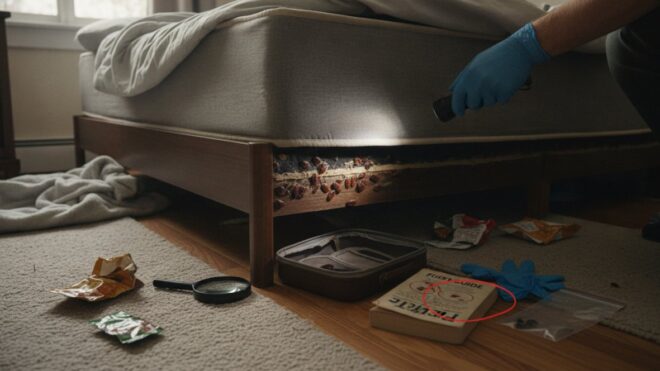
The mattress is the single most common location for an early-stage bed bug nest. Run your gloved fingers slowly along every seam, tuft, and handle while using the flashlight to illuminate the fold. Look for dark fecal spots, pale shed skins, white eggs (about 1mm long), or live insects.
The box spring is equally important and frequently overlooked. Flip it on its side and remove the thin fabric covering the underside if possible. The wooden frame inside provides exactly the kind of crevice environment bed bugs prefer. Probe every joint and corner with your credit card.
Do NOT move the mattress or box spring to another room during inspection. Moving infested furniture spreads the infestation. Inspect in place, then seal items in plastic covers before moving them.
Check Bed Frame and Headboard Cracks
Bed frame joints, screw holes, and any cracks in wood or metal are prime harborage sites. Disassemble the frame where possible. Use the flashlight at a low angle to cast shadows into crevices, which makes fecal spotting easier to see.
Headboards deserve particular attention, especially upholstered ones. The fabric backing, internal frame, and decorative tufting all create protected spaces. For wooden or metal headboards, focus on any crack, joint, or gap where the headboard meets the wall.
Examine Baseboards and Electrical Outlets
Once a bed bug infestation grows beyond the immediate sleeping area, insects migrate along baseboards and into electrical outlets. Use a screwdriver to remove outlet covers and shine the flashlight inside. Look for fecal spotting on the inside of the cover plate.
Carpet edges along the baseboard are another common hiding spot. Use your credit card to lift the edge slightly and inspect with the flashlight.
Signs of Bed Bugs in Mattress and Surrounding Areas
The most reliable evidence of bed bug activity is physical trace evidence, not bites. Knowing what signs look like will make your inspection far more productive.
Identifying Fecal Spots and Shed Skins
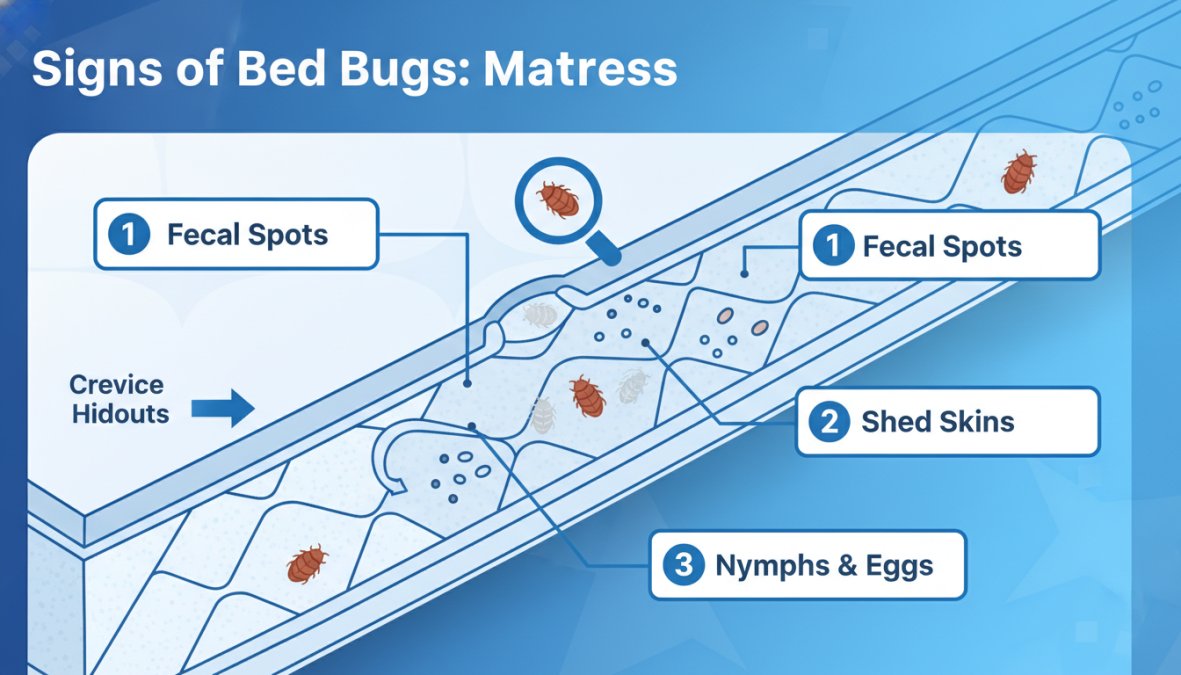
Fecal spots are the most consistent indicator of bed bug activity. They appear as small dark brown or black dots, roughly the size of a ballpoint pen tip, and they bleed into fabric like a felt-tip marker. On hard surfaces, they appear as raised dark specks. You’ll typically find them clustered near the harborage site.
Shed skins, or exoskeletons, are the pale translucent casings that nymphs leave behind as they molt through five growth stages. Finding multiple shed skins in one location is a strong indicator of an established nest.
According to University of Minnesota Extension’s bed bug identification resources, fecal spotting and shed exoskeletons are the most reliable physical evidence of a bed bug infestation.
Blood Stains and Musty Odor Indicators
Small rust-colored blood stains on sheets or pillowcases occur when a feeding bed bug is crushed by a sleeping person. These stains are typically smeared rather than round.
A musty odor is a significant indicator of a heavy infestation. Bed bugs produce pheromones that, in large concentrations, create a sweet, musty smell sometimes compared to coriander. If you notice an unexplained odor in your bedroom, treat it as a warning sign worth investigating.
What Do Bed Bug Eggs Look Like and Where to Find Them
Bed bug eggs are white, oval-shaped, and approximately 1mm in length, about the size of a sesame seed. They have a slight sheen and a small cap on one end. Freshly laid eggs are sticky, which causes them to adhere to surfaces.
Eggs are often laid in batches of 10-20 in a single sheltered location. A single female can lay 200-500 eggs over her lifetime.
Find eggs by focusing your magnifying glass on locations where you find fecal spots and shed skins: deep in mattress seams, in wood grain crevices on the bed frame, and along box spring joints. Eggs in electrical outlets or baseboards indicate a more advanced infestation.
If you find eggs, you have an active infestation. Eggs mean a female has been present long enough to feed and reproduce. Professional treatment is almost always necessary to fully eliminate the colony.
Common Mistakes to Avoid During Inspection
Inspecting with poor lighting. A dim flashlight will cause you to miss nymphs and eggs entirely. Use a bright LED flashlight held at a low angle to create shadows.
Skipping the box spring. Most people inspect the mattress and stop there. The box spring is often more heavily infested because it’s darker and provides more structural hiding spots.
Moving furniture between rooms before inspecting it. This is how infestations spread from a single bedroom to the rest of the house.
Confusing other insects for bed bugs. Carpet beetles, bat bugs, and spider beetles are commonly mistaken for bed bugs. The key distinguishing feature of a bed bug is its flat, oval body, reddish-brown color, and the absence of wings.
Treating before confirming the full scope. DIY treatments applied to one area without mapping the full infestation rarely work. Bed bugs simply relocate to untreated areas.
Post-Detection Immediate Action Plan
Finding evidence of a bed bug nest requires a specific, ordered response to prevent the infestation from spreading.
Step 1: Contain. Place mattress and box spring in zippered bed bug-proof encasements immediately. This traps any remaining insects and prevents new ones from entering or escaping.
Step 2: Launder. Wash all bedding, curtains, and clothing from the room in hot water (above 120°F) and dry on the highest heat setting for at least 30 minutes. Place items directly into sealed bags before carrying them through the house.
Step 3: Document. Photograph every piece of evidence you found: fecal spots, shed skins, eggs, live insects. This documentation helps a professional exterminator assess severity and plan treatment.
Step 4: Avoid spreading. Do not sleep in another room. Relocating causes bed bugs to follow you, spreading the infestation. Stay in the original room while treatment is arranged.
Step 5: Call a professional. DIY treatments for confirmed infestations have a poor track record. Heat treatment, chemical treatment, or a combination, applied by a licensed exterminator, is the most reliable path to full elimination.
When to Call a Professional Exterminator
Call a professional exterminator immediately if you find live insects in multiple locations, eggs in areas beyond the immediate bed, fecal spotting on baseboards or electrical outlets, or evidence in multiple rooms. These signs indicate the infestation has passed the point where DIY methods are practical.
Zoifia Pest Control provides licensed and insured bed bug treatment for residential properties throughout the Metro Boston area, backed by a 90-day guarantee with no long-term contracts required. Fast response matters because every day without treatment is another reproductive cycle.
As documented in CDC guidance on bed bug control, professional pest control is the most effective approach for confirmed infestations, particularly when multiple life stages are present.
Bed bug infestations are stressful, but they’re manageable when caught early and handled correctly. The challenge is that most homeowners don’t know what to look for until the problem is already significant. Zoifia Pest Control specializes in bed bug detection and elimination for Metro Boston residents, offering fast response times, licensed and insured service, and a 90-day guarantee with no contract required. Get a quote from Zoifia Pest Control and have a professional assess your bedroom before a small problem becomes a large one.
Frequently Asked Questions
What does a bed bug nest look like?
Bed bug nests don't look like traditional nests, they're clusters of bugs hiding in cracks and crevices. You'll find groups of bed bugs, eggs, shed skins (exoskeletons), and fecal spots clustered together in dark areas like mattress seams, box spring corners, and headboard cracks. The nest area often has a musty odor and may contain a mix of nymphs at various stages and adult bed bugs.
Where is the most common place to find bed bugs in a bedroom?
The most common hiding spots are mattress seams, box spring edges, and bed frame joints, anywhere close to where you sleep. Bed bugs are nocturnal and prefer dark, tight spaces near their food source. They also hide in headboards, baseboards, electrical outlets, and upholstered furniture. Always inspect these areas first during your detection process.
How do I know if I have a bed bug infestation?
Signs of bed bug infestation include bite patterns (clusters of small red welts), blood stains on sheets, musty odor, fecal spots (dark specks), and shed skins in mattress seams and cracks. Use a flashlight and magnifying glass to inspect hiding spots. If you find multiple bed bugs, eggs, or nymphs in cracks and crevices near your bed, you have an infestation requiring immediate professional pest control attention.
What should I do if I find a bed bug nest?
First, don't panic or move your mattress to other rooms, this spreads the infestation. Document the location with photos and note the severity. Avoid DIY treatments unless very minor; bed bugs are difficult to eliminate without professional help. Contact a licensed exterminator immediately for treatment. Wash all bedding and clothing in hot water, and follow your pest control provider's preparation instructions carefully.
This article was written using GrandRanker
