Table of Contents
- Understanding the Bed Bug Treatment Timeline for Total Eradication
- Bed Bug Lifecycle and How It Affects Treatment Duration
- Bed Bug Preparation Checklist: Getting Ready for Treatment
- Heat Treatment vs Chemical Treatment for Bed Bugs
- How Many Treatment Sessions Are Needed for Complete Eradication
- How to Monitor for Bed Bugs After Extermination
- Signs of Bed Bugs After Treatment: Confirming Success
- Apartment and Multi-Unit Building Timelines
Last Updated: June 25, 2026
Understanding the Bed Bug Treatment Timeline for Total Eradication
The bed bug treatment timeline for total eradication ranges from four to twelve weeks, shaped by infestation severity, treatment method, and preparation quality. Most infestations that drag past twelve weeks share a common thread: incomplete preparation or skipped follow-up sessions. The actual eradication window depends on the bed bug life cycle, which is the single biggest variable in your timeline.
Why Timeline Varies by Infestation Level
Infestation level is the primary driver of treatment duration. A light infestation confined to a single bedroom responds faster than a heavy infestation spread across multiple rooms and hidden in baseboards, cracks, and furniture joints. Apartment units with shared walls add complexity because re-infestation from adjacent units can reset progress entirely.
| Infestation Level | Estimated Timeline | Typical Sessions Required | Key Challenge |
|---|---|---|---|
| Light (1-2 rooms) | 4-6 weeks | 2 sessions | Eggs surviving first treatment |
| Moderate (3+ rooms) | 6-10 weeks | 2-3 sessions | Chemical resistance in adults |
| Heavy (whole property) | 10-16 weeks | 3-4 sessions | Re-infestation from adjacent units |
| Multi-unit building | 12-20 weeks | 4+ sessions | Coordinated access and timing |
Bed Bug Lifecycle and How It Affects Treatment Duration
One treatment does not kill everything. This assumption is the most common reason treatments fail.
Bed bugs develop through five nymph instars before reaching adulthood, with the full life cycle spanning six to ten weeks at normal room temperature. Eggs are the hardest to eliminate: most residual pesticides and even some heat treatments do not reliably kill eggs on the first pass. Those eggs hatch within six to seventeen days, and newly emerged nymphs feed and mature, causing infestations to resurface within two to three weeks if follow-up treatment is skipped.
Eggs, Nymphs, and Adult Bed Bugs: What You Need to Know
Adult bed bugs are flat, reddish-brown insects roughly the size of an apple seed and visible to the naked eye. They are the easiest stage to kill with both chemical and heat treatments.
Nymphs are juvenile bed bugs progressing through five instars before adulthood. Young nymphs are nearly translucent and extremely small, making them easy to miss during inspection.
Eggs are the most treatment-resistant stage. They are tiny, pearl-white, and typically deposited in cracks, mattress seams, and behind baseboards. According to [EPA guidance on bed bug(/average-cost-of-bed-bug-extermination/) biology and control | epa.gov], eggs hatch within six to seventeen days depending on temperature, which is why follow-up treatment sessions are non-negotiable.
Your treatment protocol must account for the full egg-to-adult development window. Two sessions spaced two weeks apart target adults from the first session and newly hatched nymphs from the second. Skipping that second session separates temporary reduction from actual eradication.
Do NOT assume the infestation is resolved after the first treatment session, even if you stop seeing live bed bugs. Eggs are dormant and invisible until they hatch. Stopping treatment early is the most common reason infestations return within a month.
Bed Bug Preparation Checklist: Getting Ready for Treatment
Preparation is where most treatments fail. A technician cannot treat surfaces buried under clutter. Complete every item at least 24 hours before the scheduled service.
Pre-Treatment Steps and Sanitation Requirements
Laundering and heat exposure:
- Wash all bedding, clothing, and soft items on the highest heat setting safe for the fabric
- Dry on high heat for a minimum of 30 minutes
- Seal clean items in plastic bags immediately after drying to prevent re-contamination
Vacuuming:
- Vacuum mattress seams, box springs, bed frames, baseboards, and upholstered furniture
- Dispose of the vacuum bag in a sealed plastic bag outside the home immediately after use
Furniture and clutter:
- Pull all furniture at least 18 inches from walls to allow access to baseboards
- Remove items stored under beds
- Disassemble bed frames if possible
Mattress encasement:
- Install bed bug-rated mattress encasements on all mattresses and box springs before treatment
- Encasements trap any surviving bugs and prevent new harborage
Sanitation:
- Reduce clutter throughout affected rooms; clutter creates hiding spots that pesticides cannot reach
- Do not move items from infested rooms to unaffected rooms
Bag all treated clothing and linens in clear plastic bags so your technician can visually confirm they have been processed. This prevents re-infestation from untreated soft items.
Heat Treatment vs Chemical Treatment for Bed Bugs
The choice between heat and chemical treatment depends on matching the method to your specific situation.
Speed, Effectiveness, and Cost Comparison
Heat treatment raises the entire treatment space to a temperature lethal to all life stages, including eggs. A single session typically takes six to eight hours and can achieve eradication across all life stages simultaneously, compressing the overall timeline. The limitation is that heat leaves no residual effect, so bed bugs re-entering from adjacent units face no ongoing barrier.
Chemical treatment uses residual pesticides applied to baseboards, cracks, furniture joints, and harborage areas. The residual effect continues working for weeks after application, addressing newly hatched nymphs between sessions. Multiple sessions are required because eggs are not reliably killed on contact. Chemical resistance is also a concern in heavily treated urban areas, which is why integrated pest management (IPM) protocols rotate between chemical classes.
According to NPMA [bed bug(/why-bed-bug-infestations-require-immediate-treatment/) best practices guidelines | npmapestworld.org], IPM approaches combining chemical treatment with non-chemical methods consistently outperform single-method protocols for long-term eradication.
Heat treatment typically costs more per session but may require fewer visits. Chemical treatment costs less per session but requires two to three visits. Total costs often land in a similar range.
How Many Treatment Sessions Are Needed for Complete Eradication
Two sessions is the minimum for any bed bug infestation. Three sessions is standard for moderate to heavy infestations.
No single treatment method kills 100% of eggs on the first pass. The second session, scheduled two to three weeks after the first, targets nymphs hatched from surviving eggs. A third session at four to six weeks confirms eradication and addresses stragglers.
Professional vs. DIY Treatment Approaches
Professional pest control operators have access to commercial-grade residual pesticides and application equipment that reaches deep into cracks, wall voids, and harborage areas that consumer products cannot penetrate. They also follow EPA guidelines for safe application in homes with children and pets.
DIY treatment using over-the-counter products carries a higher failure rate for moderate to heavy infestations. Common mistakes include under-treating by applying product only to visible areas and using a single product type repeatedly, which accelerates chemical resistance.
For light infestations caught early, a rigorous DIY approach combined with professional monitoring can work. For moderate to heavy infestations, professional treatment is more cost-effective when factoring in time and product costs of repeated failed DIY attempts.
The CDC guidance on pest control and public health notes that bed bug infestations are a public health concern, particularly in multi-unit housing, reinforcing the case for professional pest control in anything beyond early-stage infestations.
How to Monitor for Bed Bugs After Extermination
Monitoring is the only way to confirm eradication versus temporary suppression. The monitoring phase begins immediately after the final treatment session and should continue for a minimum of four weeks. If no live bugs or new bites appear during that window, eradication is considered successful.
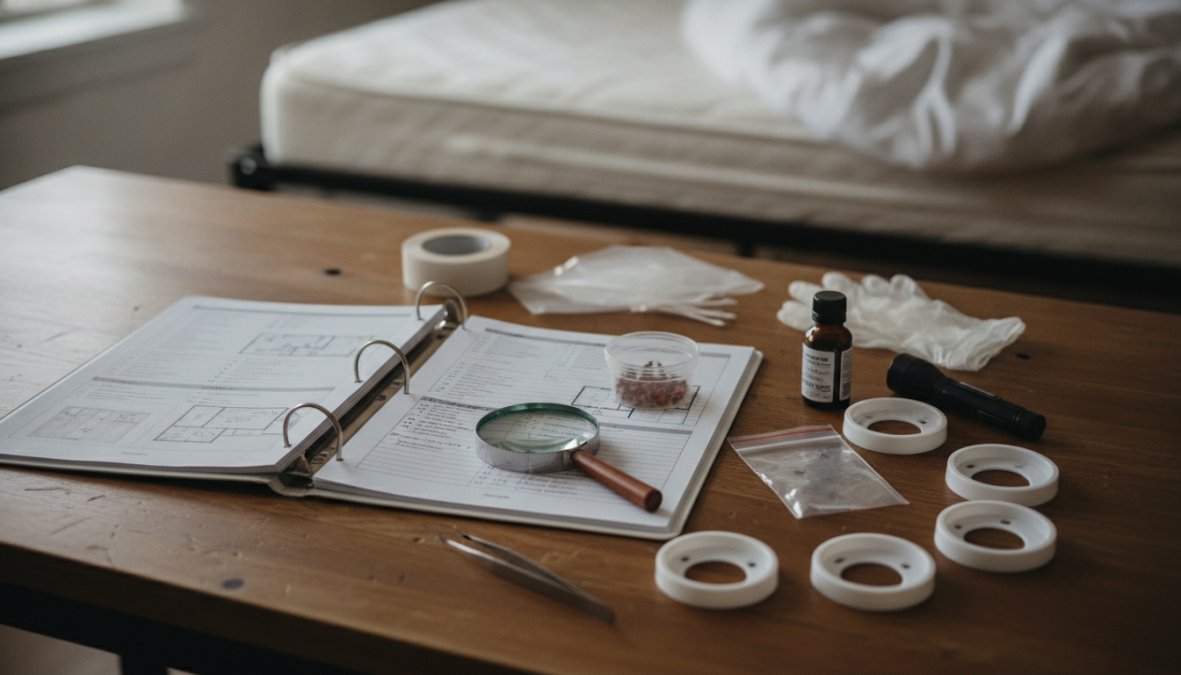
Using Interceptor Cups and Inspection Techniques
Interceptor cups (also called monitoring devices or climb-up interceptors) are passive traps placed under each bed leg. Bed bugs attempting to climb up fall into the smooth-walled cup and cannot escape. Checking interceptors weekly provides objective confirmation: either bugs are present or they are not.
Effective monitoring also includes:
- Visual inspection of mattress seams, box spring fabric, and bed frame joints using a flashlight and credit card to probe cracks
- Sticky traps placed along baseboards near sleeping areas
- CO2 lure traps for active monitoring between inspection visits
- Mattress encasement inspection for signs of activity on the exterior surface
Finding a single nymph in an interceptor cup three weeks after treatment does not necessarily mean treatment failed. It may indicate a newly hatched egg from the original infestation. Document the find, report it to your pest control provider, and schedule a follow-up inspection.
Signs of Bed Bugs After Treatment: Confirming Success
Signs of bed bugs after treatment fall into two categories: evidence of surviving infestation and evidence of successful eradication.
What Complete Eradication Looks Like
Signs the treatment is working:
- Dead adult bed bugs and nymphs visible in treated areas immediately after treatment
- No new bites appearing after the first week post-treatment
- Interceptor cups remaining empty across multiple weekly checks
- No fresh fecal staining on mattress seams or baseboards
Signs the infestation may persist:
- Live nymphs appearing in interceptor cups more than three weeks after final treatment
- New bites continuing beyond the first two weeks post-treatment
- Fresh fecal staining or blood smears on bedding
- Molted skins appearing in new locations
Bites alone are not reliable indicators in the first one to two weeks after treatment, as bite reactions can continue from prior bites. Use interceptor cups and visual inspection as primary confirmation tools.
Complete eradication is confirmed when interceptor cups remain clear, visual inspection finds no live bugs or fresh evidence, and no new bites appear over a full four-week monitoring period.
Apartment and Multi-Unit Building Timelines
Apartment buildings present the most challenging version of the bed bug treatment timeline. Bed bugs move between units through shared walls, electrical conduits, plumbing chases, and under door gaps. Treating a single unit while adjacent units remain untreated is temporary at best.
Why Coordinated Treatment Takes Longer
Effective multi-unit treatment requires:
- Inspection of all adjacent units (above, below, and side-by-side) before treatment begins
- Coordinated treatment scheduling so all affected units are treated within the same cycle
- Building management cooperation to ensure access and tenant compliance with preparation
- Shared-wall treatment targeting wall voids and conduit paths that bed bugs use to travel between units
The timeline for coordinated multi-unit treatment typically runs twelve to twenty weeks from initial inspection to confirmed eradication. A common mistake is treating only the unit where the complaint originated. Bed bug infestations in multi-unit buildings are almost always present in multiple units by the time the first complaint is filed.
Building managers should implement ongoing monitoring with interceptor cups in common areas and high-turnover units as a permanent part of their IPM program. According to HUD guidance on bed bug management in public housing, proactive IPM programs in multi-unit housing significantly reduce the frequency and severity of bed bug outbreaks compared to reactive-only approaches.
Bed bug infestations are manageable with a structured approach and realistic timeline expectations. Attempting to shortcut the process, by skipping preparation steps, stopping treatment after one session, or treating a single unit in a multi-unit building, almost always extends the total eradication timeline rather than shortening it. Zoifia Pest Control provides licensed and insured bed bug treatment across Metro Boston, backed by a 90-day guarantee and no long-term contracts required. If you are dealing with a bed bug infestation and need a clear plan, get a quote from Zoifia Pest Control for a professional assessment of your specific situation.
Frequently Asked Questions
How long does a complete bed bug treatment timeline typically take from start to total eradication?
Complete bed bug treatment timeline for total eradication typically ranges from 2-4 weeks for a single infestation, though severe cases may require 6-8 weeks. The duration depends on infestation level, treatment method chosen, and how well preparation steps are followed. Professional heat treatment can achieve eradication in 1-2 days, while chemical treatments with multiple sessions usually take 3-4 weeks. Monitoring continues for 2-3 weeks after final treatment to confirm success.
Why do bed bugs sometimes return after professional treatment, and how long until I know treatment failed?
Bed bugs may return due to incomplete preparation, hidden eggs that weren't affected by initial treatment, or re-infestation from neighboring units in apartments. The bed bug lifecycle means eggs can hatch 6-10 days after treatment, which is why follow-up sessions are scheduled. You'll typically know if treatment failed within 2-3 weeks if you spot live bed bugs or fresh bites. Using interceptor cups and monitoring devices during this period helps catch any survivors early before they reproduce.
What should I include in my bed bug preparation checklist before professional treatment arrives?
Your bed bug preparation checklist should include: laundering all bedding and clothing in hot water, vacuuming baseboards and cracks and crevices thoroughly, decluttering to eliminate hiding spots, moving furniture away from walls, and sealing cracks in walls and baseboards. You should also use mattress encasements on all beds and remove clutter from under beds. Clear access to all rooms and inform your technician about any areas of concern. Proper preparation directly impacts treatment effectiveness and the overall timeline.
How do I know if signs of bed bugs after treatment mean eradication failed?
True signs of bed bugs after treatment include live insects, fresh bites appearing more than 2 weeks post-treatment, or new bed bug fecal spots on bedding. However, old fecal marks and shed skins (from instars) may remain visible for weeks. Use interceptor cups under bed legs, if you catch live bed bugs in traps after 3 weeks, treatment likely failed and re-treatment is needed. Work with your pest control provider; most reputable services offer follow-up treatments at no extra cost within their service guarantee period.
This article was written using GrandRanker
