Table of Contents
- Why Timing Matters: How Long to Wait After Pest Control Spray
- Safety Precautions Before You Start Cleaning
- Is It Safe to Mop After Pest Control?
- How to Clean Kitchen Cupboards After Roach Treatment
- Step-by-Step Cleaning Process for Different Surfaces
- Managing Post-Treatment Air Quality and Ventilation
- Common Mistakes That Undermine Your Treatment
- Frequently Asked Questions
Last Updated: September 18, 2026
Why Timing Matters: How Long to Wait After Pest Control Spray
The most common mistake homeowners make is not knowing how to clean after professional pest control, often cleaning too soon. You’ve just paid for a treatment. Your instinct is to wipe down surfaces and get back to normal. But that urgency can actually undo the entire treatment.
Professional pest control treatments work through residual pesticide that sits on surfaces. This active ingredient needs time to do its job. When you mop, vacuum, or wipe surfaces immediately, you’re removing the very barrier designed to eliminate pests.
Most pest control professionals recommend waiting 24 to 48 hours before cleaning after treatment. Some treatments require longer. Always check the label instructions or ask your technician for the specific re-entry time. This waiting period lets the pesticide settle and create a protective barrier on baseboards, cupboards, and other application areas.
Zoifia Pest Control provides clear guidance on timing with every treatment. Our team explains exactly when it’s safe to clean and which surfaces need the most protection.
Ask your pest control technician for a written timeline before they leave. Don’t rely on memory, different treatments have different waiting periods. Write it down or take a photo of the label.
Safety Precautions Before You Start Cleaning
Protective gear and ventilation
Before you touch anything in the treated area, gear up properly. Your safety comes first, even after the waiting period has passed.
Wear disposable gloves when handling any surfaces that received treatment. These gloves protect your skin from residual pesticide. Nitrile gloves work well and are inexpensive. Change them frequently, especially if you’re cleaning multiple rooms.
A respirator or N95 mask is wise if you’re cleaning a large treated area or if you have respiratory sensitivity. The mask filters airborne particles and chemical residue that may still be present. Don’t skip this step if anyone in your home has asthma or allergies.
Open all windows in the treated area. Ventilation is critical. Fresh air reduces chemical concentration and helps residual pesticide settle rather than linger in the air. Run ceiling fans if you have them. Cross-ventilation works best, open windows on opposite sides of the room.
Avoid touching your face while cleaning. Wash your hands thoroughly with soap and water when you’re done. Don’t eat or drink in the treated area until ventilation is complete.
Keeping children and pets safe
Children and pets are more vulnerable to chemical exposure than adults. Their smaller body size means even trace amounts have a bigger impact.
Keep kids and pets out of treated areas during the waiting period. This is non-negotiable. If you have a small apartment, stay with family or friends for 24 to 48 hours if possible. If that’s not realistic, confine children and pets to one untreated room.
Once you start cleaning, don’t let children help. Even with precautions, cleaning treated surfaces carries risk. Do this task yourself while kids are occupied elsewhere or at school.
For pets, wash their paws if they’ve walked through treated areas. Use plain water and a cloth. Don’t use soap unless your vet recommends it. Keep pets away from baseboards and treated surfaces for at least 48 hours.
Never let children play on treated floors or surfaces until cleaning is complete and the area has been ventilated for several hours. Chemical residue can cause skin irritation, respiratory issues, or worse.
Is It Safe to Mop After Pest Control?
Mopping is safe only after the waiting period specified by your pest control professional. The timing depends on the type of pesticide used and the surfaces treated.
For most residential treatments, mopping is safe 24 to 48 hours after application. However, some products require longer. Always verify before you mop. Using hot water is fine, but avoid using harsh chemical cleaners that might interact with residual pesticide.
Use a damp mop rather than a soaking wet one. Excess water can strip away the protective residual pesticide layer on baseboards and lower walls. A light pass with a damp mop is enough to remove dust and debris without compromising the treatment barrier.
Focus your mopping on the center of the room first. Baseboards and corners where pesticide was applied should be mopped last and more gently. These areas hold the active ingredient that protects against future infestations.
If you have hard floors in the kitchen or bathroom, these typically receive heavier pesticide application. Wait the full recommended time before mopping these areas. The treatment barrier in kitchens is especially important because pests like roaches are attracted to food residue.
Damp mopping is acceptable after the waiting period, but light pressure and timing matter. Never mop aggressively or immediately after treatment.
How to Clean Kitchen Cupboards After Roach Treatment
Roach treatment often targets kitchen cupboards because that’s where roaches hide and feed. Cleaning these areas correctly ensures the treatment works and keeps your family safe.
Wait the full recommended time, typically 48 hours, before opening cupboards. Roaches hide deep inside, and the pesticide needs time to reach them. Opening cupboards early disrupts the treatment.
When you’re ready to clean, remove all items from the cupboards first. Place dishes, glasses, and food containers on the counter. Wipe down the interior surfaces with a damp cloth. Use plain water or a mild dish soap solution. Avoid bleach or strong disinfectants that might neutralize the active ingredient.
Pay special attention to corners, seams, and the back of shelves. These are where pest droppings accumulate and where roaches hide. Wipe these areas thoroughly but gently. Don’t scrub aggressively.
After wiping, let the cupboards air dry with the doors open. This removes moisture and any lingering chemical odor. Once dry, replace items carefully. Don’t stack dishes tightly, leave some air circulation.
For the cupboard exterior, a damp cloth is fine. The outside doesn’t typically receive heavy pesticide application, so standard cleaning is safe immediately after the waiting period.
Check your cupboards weekly for the next month. Look for dead insects or pest droppings. This tells you the treatment is working. If you see live roaches after two weeks, contact your pest control provider.
Step-by-Step Cleaning Process for Different Surfaces
Non-porous surfaces and baseboards
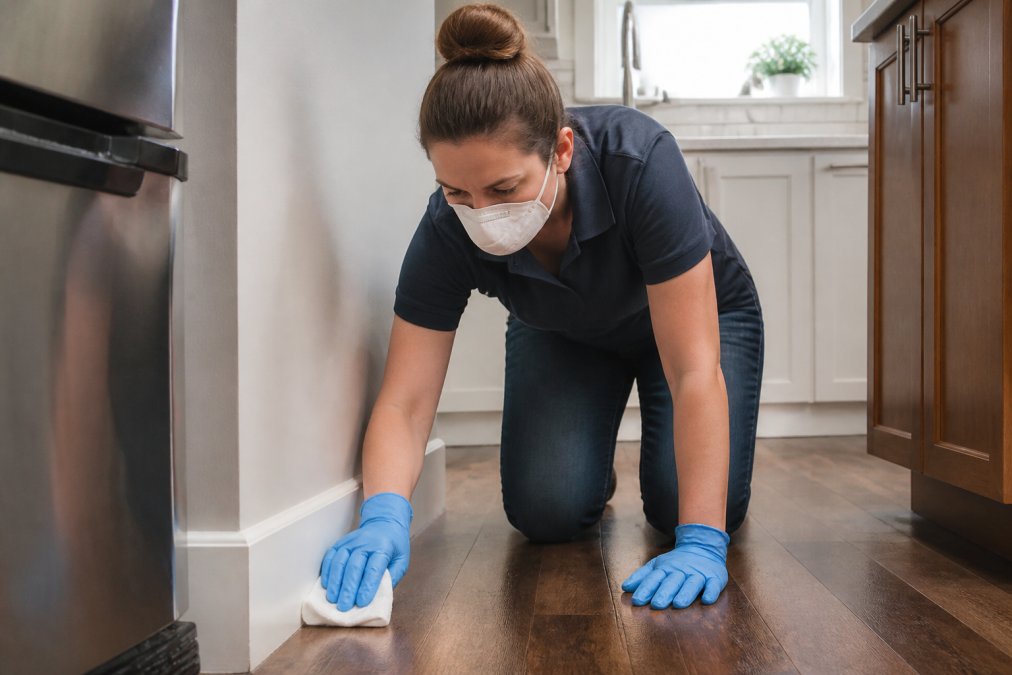
Non-porous surfaces like tile, laminate, and sealed wood are easier to clean than porous materials. They don’t absorb pesticide, so the active ingredient sits on top where it works.
For baseboards, use a damp cloth with plain water. Wipe gently along the entire length. Don’t oversaturate the cloth, moisture can seep into cracks and remove protective residue. A light, deliberate pass is better than aggressive scrubbing.
Kitchen and bathroom counters can be cleaned with a damp cloth or mild dish soap solution. Wipe in one direction to avoid pushing residue around. Let surfaces air dry.
For sealed tile floors, damp mopping is fine after the waiting period. Use plain water or a diluted vinegar solution if you want disinfection. Avoid bleach-based cleaners for at least one week after treatment.
Painted walls and trim should be wiped gently if needed. Most walls don’t receive direct pesticide application, but if they do, a damp cloth works. Let them air dry completely.
Porous materials and textiles
Porous materials like carpet, upholstered furniture, and unsealed wood absorb pesticide. These areas need special care.
Carpeted areas should not be vacuumed for at least 48 to 72 hours after treatment. Vacuuming removes the protective residue layer. When you do vacuum, use a HEPA filter vacuum if possible. This captures fine particles and chemical residue without releasing them back into the air.
For upholstered furniture, don’t wash covers or deep clean for at least one week. If the furniture received direct pesticide application, avoid sitting on it for 48 hours. After that, light surface dusting with a dry cloth is fine.
Curtains and drapes should stay in place during the waiting period. Don’t wash them for at least one week. Washing removes the protective barrier that’s working against pests.
Unsealed wood furniture or shelving should be wiped gently with a barely damp cloth if needed.
Handling contaminated items and clothing
Any clothing or linens in the treated area may have trace pesticide residue. Wash these items separately from other laundry.
Managing Post-Treatment Air Quality and Ventilation
Air quality matters after pest control treatment. Ventilation removes lingering chemical odors and reduces exposure risk.
Keep a window open in the bedroom during sleep if possible. Fresh air while sleeping helps your body process any chemical exposure naturally.
Common Mistakes That Undermine Your Treatment
Cleaning too soon is the biggest mistake. You’ve invested in professional treatment. Don’t waste it by mopping baseboards the next day. Patience for 48 hours protects your investment.
Frequently Asked Questions
How long do I need to wait before cleaning after pest control?
Most pest control treatments require a waiting period of 24 to 48 hours before cleaning. During this time, the active ingredient needs to settle and create an effective treatment barrier. Always follow the specific label instructions provided by your pest control professional, as different pesticides have different re-entry times. Cleaning too early can wash away the residual pesticide and reduce the treatment’s effectiveness.
Is it safe to mop after pest control treatment?
You should avoid mopping for at least 48 hours after pest control application. Mopping can remove surface contamination that the treatment relies on, especially in areas like baseboards and corners where pests travel. When you do clean, use minimal water and avoid pushing water into treated areas. Dry cleaning methods like vacuuming with a HEPA filter or sweeping are safer alternatives during the initial post-treatment period.
How do I clean kitchen cupboards after roach treatment without damaging the treatment?
Wait at least 48 hours before opening cupboards. When cleaning, wipe interior surfaces with a dry cloth first to remove pest droppings and debris. For deeper cleaning, use a slightly damp cloth with mild soap, but avoid saturating surfaces. Focus on corners and crevices where roaches hide. Do not use harsh chemicals or excessive water, as this can neutralize the active ingredient. Allow cupboards to dry completely before storing food items.
What should I do if I accidentally cleaned up pesticide spray too soon?
Contact your pest control professional immediately. They can assess whether the treatment was compromised and schedule a follow-up application if needed. Your professional can determine the best course of action based on the specific treatment used and how much was removed.
