Table of Contents
- Why Heavy Roach Infestations Demand Different Bait Strategies
- Identifying Severe Infestation Levels
- Professional-Grade Baits That Work Against Resistant Populations
- Where to Place Roach Bait for Maximum Coverage
- How Long Does It Take for Roach Bait to Work
- Roach Bait Rotation Strategy to Prevent Aversion
- Critical Safety and Application Mistakes to Avoid
- When to Call a Professional
- Frequently Asked Questions
Last Updated: September 17, 2026
Why Heavy Roach Infestations Demand Different Bait Strategies
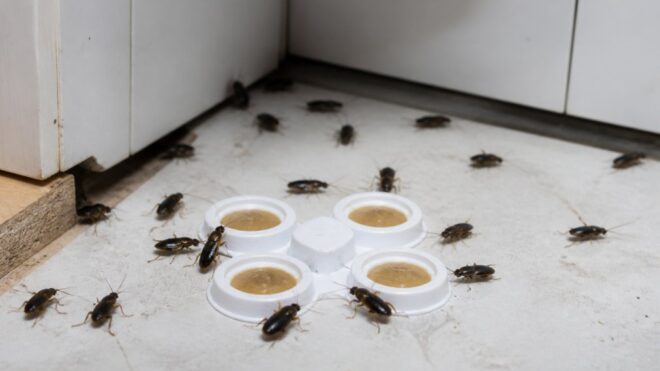
Heavy roach infestations require a fundamentally different approach because population dynamics, resistance patterns, and behavior shift at scale. Standard consumer-grade baits fail because they’re designed for prevention, not elimination of established colonies.
Large populations develop bait aversion faster because survivors communicate danger through pheromones. Professional-grade formulas use non-repellent active ingredients that roaches consume without avoidance, spreading the toxicant throughout the colony.
Heavy infestations involve multiple generations simultaneously: adults, nymphs, and ootheca in hidden locations. The best roach bait for heavy infestations combines multiple active ingredients or rotation strategies to target different life stages.
Heavy infestations often hide in wall voids, under appliances, and inside electrical outlets, places homeowners can’t see. Bait placement strategy becomes as critical as bait selection when dealing with severe populations.
Identifying Severe Infestation Levels
A severe infestation shows visible roaches during daylight hours, roaches in multiple rooms, and established colonies in harborage areas. Daytime activity signals the population has exceeded hiding capacity.
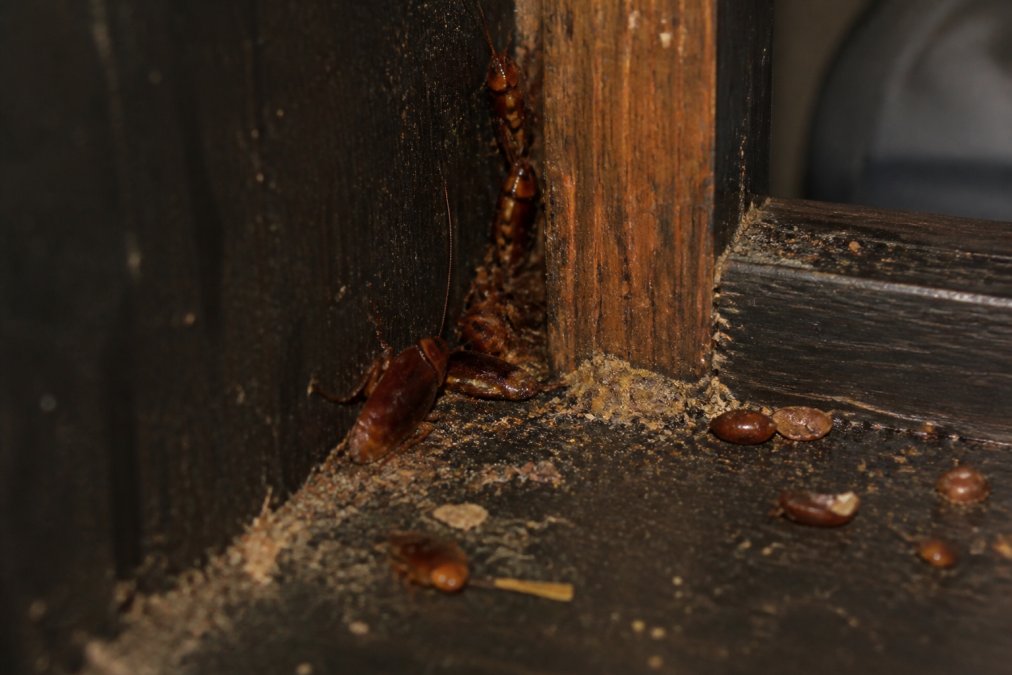
Markers of severity include fecal specks in drawers, musty odor, roach clusters in harborage zones, nymphs (indicating reproduction), and ootheca (egg cases). Heavy infestations show all these signs across multiple locations.
Daytime roach presence is the clearest indicator of severity. Roaches are nocturnal and only emerge during daylight when population pressure forces them out of hiding, signaling the need for professional-grade intervention.
If you see roaches in your kitchen during daylight hours or find evidence of them in multiple rooms, do not delay treatment. Heavy infestations grow exponentially once they reach this stage. Each week of delay can double the population size.
Professional-Grade Baits That Work Against Resistant Populations
Professional-grade formulations differ in active ingredient selection, concentration, and non-repellent delivery. The best roach bait for heavy infestations uses compounds chosen for efficacy against populations that may have encountered other treatments.
Indoxacarb-Based Gels for Maximum Efficacy
Indoxacarb activates only in the roach’s midgut, making it highly selective. Advion Cockroach Gel Bait uses this ingredient in a non-repellent formula that roaches consume readily and carry back to the nest.
Indoxacarb-based gels excel against German cockroaches, the most resistant species. High palatability ensures consumption even with alternative food sources. Apply small dots (grain of rice size) every 12 inches along baseboards, under sinks, and in wall voids.
Indoxacarb gels last 2-3 weeks, but heavy infestations may require reapplication within 7-10 days to catch newly emerged nymphs. Eggs hatch every 10-14 days, so strategic reapplication prevents survivors from reestablishing the population.
Dual-Active Ingredient Formulas for Resistance Management
Dual-active formulas combine two toxicant classes to overcome aversion and resistance. Fuse and Nisus Dual Strike target multiple physiological pathways simultaneously, providing a reset when populations have adapted to single-active baits.
If roaches develop resistance to one ingredient, the second still works. Rotate formulas every 2-3 weeks before the population establishes widespread resistance.
Heavy infestations benefit from rotation because large populations produce survivors. Rotation prevents survivors from becoming breeding stock for resistant subpopulations. Professional 33-gram tubes allow thorough coverage across multiple zones.
The best roach bait for heavy infestations combines high palatability with a non-repellent delivery system and an active ingredient the population hasn’t encountered before. Rotation between different active ingredients prevents resistance from becoming the limiting factor in control.
Where to Place Roach Bait for Maximum Coverage
Bait placement must intercept roach travel routes between harborage areas and food sources.
Place bait along baseboards, under appliances, inside cabinet kick spaces, under sinks, around plumbing, and in wall voids. For heavy infestations, treat every harborage area, bathrooms, bedrooms, and interior walls, not just the kitchen.
Place bait every 12 inches along continuous surfaces and every 6 inches in high-activity areas. Heavy infestations may require 40-60 placements in a typical apartment.
Harborage areas (gaps behind refrigerators, between stove and counter, hollow cabinet frames, wall voids) are highest-priority zones. Bait placement here ensures roaches consume it before returning to feed the colony.
Remove alternative food sources to amplify bait efficacy. Sanitation alone won’t solve heavy infestations, but combining bait with removal of food, grease, and water access significantly improves results.
How Long Does It Take for Roach Bait to Work
Initial knockdown of adults occurs within 24-48 hours, but initial knockdown is not the same as control.
Expect 2-3 weeks for visible reduction. Eggs laid before treatment continue hatching, and surviving nymphs require second or third applications. Single applications rarely achieve complete control.
Weeks 2-4 are critical: newly hatched nymphs encounter bait and rotation typically occurs. Survivors develop aversion, making a formula switch essential.
Professional services schedule follow-ups at 7-10 day intervals with re-evaluation after 2-3 weeks, targeting each generation before reproductive maturity.
Station-based baits take 3-4 weeks because roaches consume less per visit. Gel baits work faster with higher doses and greater consumption.
Roach Bait Rotation Strategy to Prevent Aversion
Bait rotation, switching formulations every 2-3 weeks, prevents populations from developing aversion or resistance. This is non-negotiable in heavy infestations because large populations generate survivors faster.
Rotation cycle: Weeks 1-3 indoxacarb gel (Advion), weeks 4-6 dual-active (Fuse or Nisus Dual Strike), weeks 7-9 return to indoxacarb or different ingredient. This prevents adaptation to any single toxicant.
Aversion develops when survivors communicate danger through pheromones. Non-repellent baits slow this, but aversion still develops after repeated exposure. Rotation resets the process with a new stimulus.
Rotation addresses different roach subpopulations with varying susceptibilities, ensuring each encounters a toxicant it hasn’t adapted to.
Environmental factors influence rotation timing. Warm, humid conditions accelerate roach lifecycles, requiring rotation every 10 days. Cooler conditions allow 3-week intervals.
Track which bait you applied and when. A simple calendar or notebook prevents accidental re-application of the same formula, which is one of the most common mistakes homeowners make when managing heavy infestations.
Critical Safety and Application Mistakes to Avoid
Improper application reduces efficacy and creates safety risks. Common mistakes: placing bait in accessible locations, using excessive quantities, and ignoring product labels.
Place baits where roaches access them but children and pets cannot, inside wall voids, under appliances, or in sealed stations. Never leave gel baits on countertops or in pet-accessible areas.
Overapplication wastes product and increases exposure risk. Follow label rates: typically a grain-of-rice-sized dot every 12 inches.
Sanitation mistakes compound failure. Remove food debris, grease, and standing water; otherwise roaches ignore bait. Heavy infestations require simultaneous bait and sanitation.
Heavy infestations require multiple applications over 3-4 weeks. Plan for 2-3 follow-ups spaced 7-10 days apart; single applications miss nymphs and eggs.
Place bait where roaches travel, not randomly. Concentrate in harborage areas and high-traffic zones, wall voids, under appliances, inside cabinets.
When to Call a Professional
If consumer-grade baits show no improvement after 2-3 weeks or roaches appear in multiple rooms, professional intervention is warranted.
Professional services offer access to professional-grade ingredients, species and resistance identification, and placement in hidden areas. They understand building-specific factors, older Boston-area buildings with shared walls often require different strategies.
Zoifia Pest Control’s licensed technicians assess severity and develop tailored strategies. Our 90-day guarantee covers re-treatment at no additional cost, with no long-term contract required.
For landlords and property managers, professional service prevents spread to adjacent units. For renters, it eliminates solo management or landlord negotiation.
The best roach bait for heavy infestations requires proper placement, rotation, and realistic timelines. Professional assessment after 3 weeks of failed DIY treatment typically saves time and money.
Heavy roach infestations require a different approach than standard pest control. The combination of professional-grade bait, strategic placement, rotation to prevent resistance, and realistic timelines dramatically improves your chances of actual elimination rather than temporary suppression. If you’re struggling with a severe infestation in the Metro Boston area, Zoifia Pest Control offers fast, licensed, and guaranteed solutions without long-term contracts. Get a quote today and let our experienced team handle the heavy lifting.
Frequently Asked Questions
Do roach baits work on heavy infestations or just light ones?
Roach baits are effective for heavy infestations when you use professional-grade products and apply them strategically. Heavy infestations require indoxacarb or dual-active ingredient formulas, proper placement in harborage areas, and bait rotation to prevent aversion. Consumer-grade baits alone rarely resolve severe cases. Combining baits with sanitation and exclusion work accelerates results, though professional treatment often becomes necessary for the fastest resolution.
How often should you reapply roach bait during an infestation?
During a heavy infestation, refresh bait placements every 7-14 days as roaches consume the bait and populations decline. Monitor stations and gel applications weekly to ensure fresh bait is always present. Once you stop seeing roach activity, continue baiting for another 2-3 weeks to eliminate remaining nymphs and ootheca. Rotate to a different active ingredient every 3-4 weeks to prevent bait aversion and resistance.
What is the most effective cockroach bait for large populations?
Indoxacarb-based gel baits like Advion deliver the highest efficacy against large cockroach populations because they work as a non-repellent, allowing roaches to consume the toxicant before it takes effect. Dual-active ingredient formulas like Fuse and Nisus Dual Strike provide resistance management for populations that have shown aversion to standard treatments. Professional-grade baits outperform consumer-grade options in severe cases because of higher active ingredient concentrations and better palatability matrices.
How to get rid of a heavy roach infestation fast?
Speed requires a multi-pronged approach: use professional-grade gel baits in every harborage area, apply bait rotation every 3-4 weeks to prevent aversion, eliminate food and water sources through sanitation, seal cracks and crevices to reduce hiding spots, and monitor results weekly. Expect 2-4 weeks for visible population decline with baits alone.
