Table of Contents
- Why Roaches Return After Professional Spraying
- How Long Does Professional Roach Spray Last
- How to Seal Roach Entry Points and Prevent Re-Infestation
- Best Practices for Kitchen Sanitation After Pest Control
- Natural Deterrents and Essential Oils for Long-Term Prevention
- Integrated Pest Management for Renters and Apartment Dwellers
- Maintaining Your Defense: Schedules and Monitoring
- Frequently Asked Questions
Last Updated: September 19, 2026
Why Roaches Return After Professional Spraying
Professional pest control treatments kill roaches on contact, but they don’t stop new ones from entering your home or breeding in hidden areas, which is why you need to prevent roaches after spraying. This is why roaches return after spraying.
Roaches hide in walls, under appliances, and cracks where spray can’t reach. Female roaches lay eggs in protective cases called oothecarae, which are resistant to many chemicals. These eggs hatch weeks after treatment, causing re-infestation.
Spray is only one part of the solution. You need to combine professional treatment with prevention methods to stop roaches from returning.
The best defense is layered: spray handles the immediate infestation, while sealing entry points, cleaning, and using deterrents prevent roaches from coming back.
Most roaches return within 2-3 weeks after spraying because professionals spray visible areas, not the hidden spaces where eggs are developing. Your follow-up actions determine whether the infestation truly ends.
How Long Does Professional Roach Spray Last
Professional roach spray remains effective for 7 to 14 days on treated surfaces. After that, the residual chemical breaks down and roaches may return.
Duration depends on spray type (pyrethroids and neonicotinoids persist 10-14 days on porous surfaces), surface treated (porous surfaces hold chemicals longer), roach population size, and moisture/temperature (heat and humidity reduce effectiveness).
One spray visit rarely solves roach problems completely because roaches breed fast, a single female can produce hundreds of offspring in weeks.
Many pest control companies recommend follow-up visits 2-3 weeks after the initial treatment. This targets roaches that hatch from eggs after the first spray. Skipping follow-ups is why homeowners see roaches return.
Critical: Do not apply natural repellents during the spray’s active window (first 7-10 days). Natural repellents cause roaches to flee deeper into wall voids and inaccessible areas, allowing them to escape the spray’s lethal contact and hide where eggs are developing.
Wait until day 10-14 after professional treatment before introducing natural deterrents. By then, the spray has done its primary work on exposed surfaces, and roaches are less likely to flee into deeper hiding spots when they encounter repellent odors.
If you see roaches 10+ days after professional spraying, the spray may have lost effectiveness, or new roaches have entered from outside. Waiting longer without action allows the population to rebuild quickly. Do not immediately apply natural oils, contact your pest control provider first to assess whether a follow-up treatment is needed.
How to Seal Roach Entry Points and Prevent Re-Infestation
Sealing entry points is one of the most effective ways to prevent roaches after spraying. Roaches are tiny. They fit through cracks as small as 1/8 inch. Common entry points include gaps around pipes, cracks in baseboards, holes near electrical outlets, and spaces under doors.
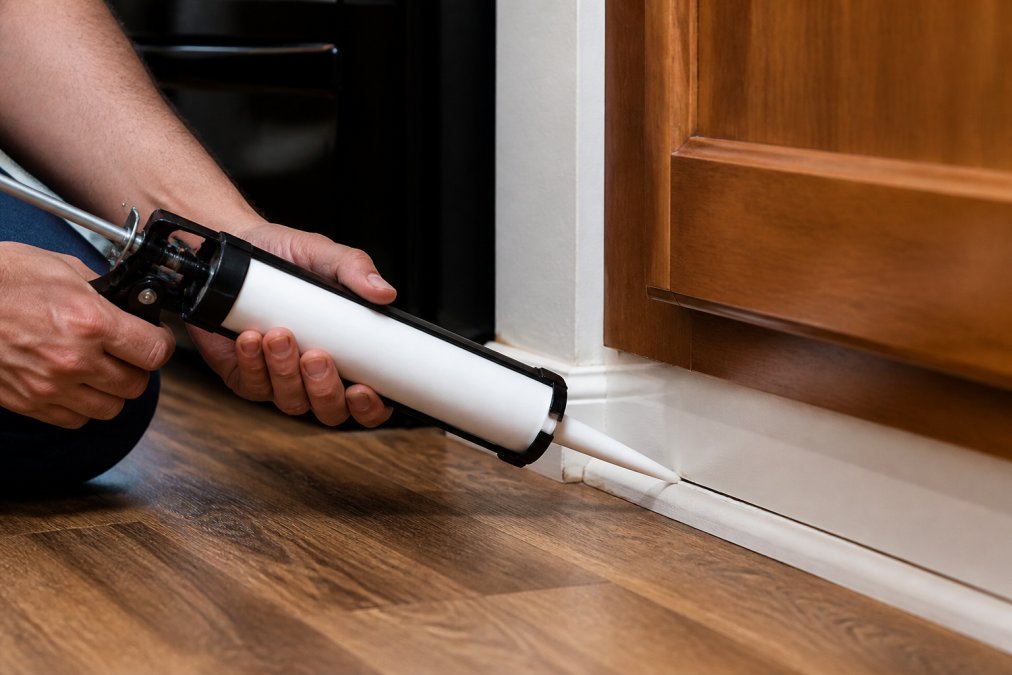
Inspect your home for cracks in walls, gaps around plumbing, and utility openings.
Use these materials to seal gaps:
- Caulk, Best for small cracks and gaps (under 1/4 inch)
- Expandable foam, Works for larger gaps around pipes and vents
- Steel wool plus caulk, Roaches can chew through caulk alone, so pack steel wool first, then caulk over it
- Door sweeps, Install under exterior doors to block gaps
The single most effective prevention step after spraying is sealing entry points. This stops roaches from returning from neighboring units or outdoor areas, which is where most re-infestations originate.
Best Practices for Kitchen Sanitation After Pest Control
Roaches need food, water, and shelter. Professional spraying removes shelter temporarily, but if food and water remain available, roaches will return.
Follow these steps immediately after treatment:
Clean thoroughly:
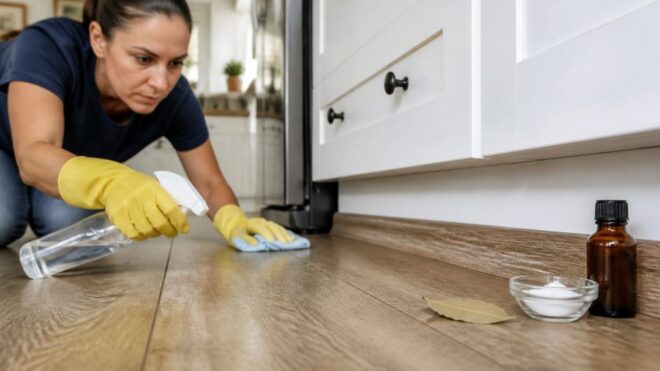
- Wipe down all surfaces, including under appliances
- Clean inside cabinets and drawers
- Remove crumbs from under the stove and refrigerator
- Wash dishes immediately after meals
Eliminate water sources:
- Fix leaky pipes under sinks
- Dry the sink completely before bed
- Wipe down bathroom counters and fixtures
- Remove standing water from under appliances
Store food properly:
- Keep all food in sealed containers
- Don’t leave pet food out overnight
- Take garbage out daily
- Rinse cans and bottles before recycling
Declutter:
- Remove paper bags and cardboard boxes
- Clean out cabinets and organize items
- Don’t stack newspapers or magazines
- Store items off the floor when possible
Natural Deterrents and Essential Oils for Long-Term Prevention
Essential oils repel roaches but aren’t a substitute for professional treatment. Apply them only after day 10-14 post-treatment. Peppermint, eucalyptus, and tea tree oil are most effective.
How to use essential oils:
- Mix 10-15 drops of essential oil with water in a spray bottle
- Spray around baseboards, under sinks, and near entry points
- Test on a small area first to ensure it doesn’t damage surfaces or finishes
- Apply in the evening when roaches are most active
Pet and Child Safety Profile:
- Peppermint oil: Toxic to cats and dogs in concentrated form. Safe for use only in areas pets cannot access (sealed cabinets, behind appliances, exterior baseboards). Never apply to pet bedding or food areas.
- Eucalyptus oil: Toxic to cats. Moderately toxic to dogs. Avoid in homes with pets, or use only in sealed, inaccessible areas.
- Tea tree oil: Toxic to cats and dogs. Use only in areas completely inaccessible to pets.
- Lavender oil: Lower toxicity but can cause respiratory irritation in cats. Use sparingly and only in well-ventilated areas.
If you have cats or dogs, consider safer alternatives:
- Diatomaceous earth (food-grade only): Sprinkle in cracks and under appliances. It damages roach exoskeletons but requires direct contact. Safe for pets if they don’t inhale dust; keep pets away during application and allow dust to settle before allowing access.
- Boric acid: Highly effective but toxic to pets and children. Use only in areas they cannot access, sealed bait stations, inside walls, or behind appliances that are inaccessible. Never use on surfaces where food is prepared or where children play.
- Bay leaves: Place in cabinets and drawers. The smell repels roaches but offers weak protection. Non-toxic to pets but can be a choking hazard; use in sealed containers only.
Natural Deterrents Work Best in Combination:
Application Zones for Maximum Effectiveness:
- Under and behind the refrigerator
- Under sinks and around drain pipes
- Inside cabinets (especially under shelves)
- Behind stoves and ovens
- Along baseboards in kitchens and bathrooms
- Near entry points (door frames, window sills)
- Inside closets and pantries
Essential oils work best as a maintenance tool after professional treatment, not as a primary solution. Apply them weekly in high-risk areas like under sinks, behind appliances, and near entry points. Combine with sealing and sanitation for maximum effectiveness. Mark your calendar to reapply every 7 days, this consistency is what separates effective prevention from failed attempts.
Integrated Pest Management for Renters and Apartment Dwellers
Renters face unique challenges. You can seal cracks and clean thoroughly, but roaches often come from neighboring units. Integrated Pest Management (IPM) is a practical approach for renters who want to prevent roaches without long-term contracts.
IPM combines multiple strategies:
- Professional treatment for active infestations
- Sealing entry points (with landlord permission)
- Regular sanitation and moisture control
- Monitoring for early signs of roaches
- Communication with neighbors about shared pest issues
Once treatment is scheduled, prepare your space:
- Remove clutter and declutter cabinets
- Clean thoroughly before the technician arrives
- Ensure access to all areas (under sinks, behind appliances)
- Keep pets and children away during treatment
After treatment, focus on prevention:
- Keep your unit clean and dry
- Don’t bring in used furniture without inspection
- Seal cracks you’re allowed to seal
- Use natural deterrents like essential oils
- Monitor for roach activity weekly
Maintaining Your Defense: Schedules and Monitoring
Prevention doesn’t end after the spray dries. Maintaining your roach defense requires ongoing effort. A schedule keeps you consistent and catches problems early.
Weekly tasks:
- Inspect kitchen and bathroom for signs of roaches
- Check under sinks and behind appliances for water leaks
- Wipe down surfaces and remove crumbs
- Take out garbage and rinse containers
Monthly tasks:
- Reapply essential oil deterrents
- Deep clean cabinets and drawers
- Check caulk and seals for damage
- Inspect for new roach activity
Quarterly tasks:
- Inspect all entry points and reseal if needed
- Check for new cracks or gaps in walls
- Review sanitation practices and adjust as needed
- Consider follow-up professional treatment if any roaches appear
Signs of roach activity include:
- Small dark droppings (look like ground pepper)
- Musty odors in cabinets or under appliances
- Egg cases (small brown capsules) in cracks or corners
- Roaches seen at night (daytime sightings mean a large infestation)
Frequently Asked Questions
How long does professional roach spray last after treatment?
Most professional roach sprays provide residual protection for 2 to 4 weeks, depending on the product used and environmental conditions. However, this is only the first line of defense. Without exclusion and sanitation efforts, roaches from neighboring units or hidden harborage areas can re-establish populations. Your 90-day guarantee from Zoifia Pest Control covers follow-up treatments if activity returns within that window, ensuring you’re protected beyond the initial spray’s effectiveness.
What natural smells do roaches hate and actually prevent them?
Roaches are repelled by peppermint oil, bay leaves, and diatomaceous earth, but these work best as maintenance deterrents, not primary solutions. Essential oils evaporate quickly and lose potency within days, so they require frequent reapplication. Boric acid and food-grade diatomaceous earth are more effective barriers when applied to cracks and harborage areas, but they work through contact and desiccation rather than odor alone. Combine natural deterrents with proper sanitation and sealing for the strongest defense.
Can I use vinegar or dish soap to prevent roaches after professional treatment?
Vinegar and dish soap solutions kill roaches on contact but don’t prevent new ones from entering or provide lasting protection. These homemade sprays are useful for spot-cleaning surfaces and removing food residues that attract roaches, but they evaporate quickly and don’t create barriers. After professional spraying, focus vinegar and soap on kitchen surfaces as part of your sanitation routine rather than as a primary prevention method. Seal entry points and eliminate moisture to prevent roaches from returning.
How do I keep roaches from coming back in an older apartment building?
Older buildings present unique challenges because roaches can migrate between units through shared walls, pipes, and foundation cracks. After professional treatment, seal all entry points around plumbing, electrical outlets, and baseboards. Eliminate standing water and food sources in your unit, and request that your landlord address building-wide issues like moisture problems and exterior cracks. Integrated pest management, combining sanitation, exclusion, and periodic monitoring, is essential in multi-unit housing where individual treatment alone may not prevent re-infestation from neighboring units.
