Table of Contents
- How to Identify Bed Bug Bites: Key Visual Clues
- Bed Bug Bite Symptoms You Should Not Ignore
- Bed Bug Bites vs Flea Bites and Other Insect Bites
- How Long Do Bed Bug Bites Last and the Post-Bite Recovery Timeline
- Signs of Bed Bug Infestation Beyond the Bites
- Treatment for Bed Bug Bites: Non-Toxic vs. Chemical Options
- The Psychological Impact of a Bed Bug Infestation
- How to Identify Bed Bug Bites Before the Infestation Spreads
Last Updated: June 5, 2026
Bed bugs are parasitic insects that feed on human blood while you sleep, and knowing how to identify bed bug bites is the first step toward stopping an infestation before it takes over your home. At Zoifia Pest Control, we’ve helped hundreds of Metro Boston residents recognize early warning signs before a minor problem becomes a major one. The tricky part: bed bug bites mimic several other insect bites closely enough that misidentification is common. Below, we’ll show you exactly how to distinguish bed bug bites from other insects, what to do about them, and how to confirm whether your home has an active infestation.
Here’s what most guides get wrong: they focus entirely on the bites, when bites alone rarely tell the full story. Cimex lectularius feeds at night using a needle-like proboscis to pierce skin and draw blood, painlessly. Most people don’t realize they’ve been bitten until hours or days later, when itchy welts appear. That delay is why so many infestations go undetected for weeks.
How to Identify Bed Bug Bites: Key Visual Clues
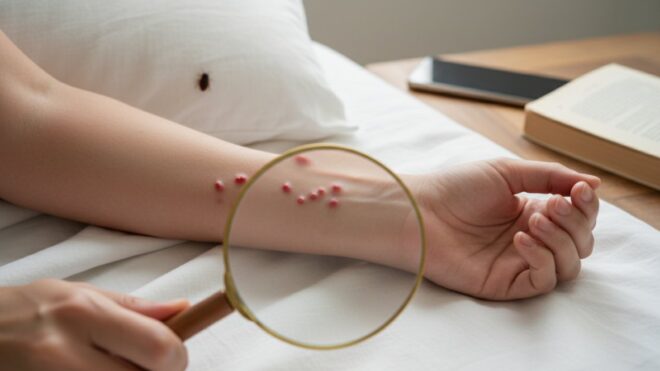
Bed bug bites are small, raised red bumps typically arranged in a cluster or line on exposed skin. They resemble mosquito bites but are more uniform in size and follow a pattern reflecting the bug’s feeding path.
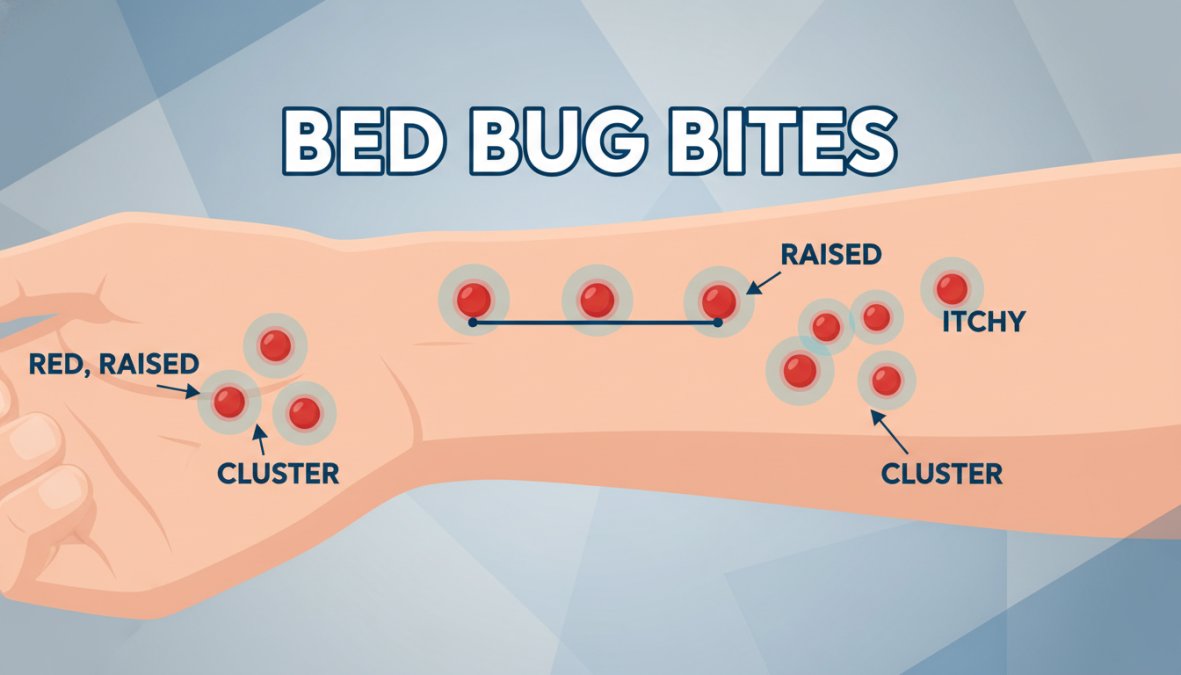
Bites most commonly appear on areas exposed during sleep: arms, shoulders, neck, face, and legs, rarely under clothing. Each bite typically develops a small dark center surrounded by a red, inflamed ring. In sensitive individuals, the surrounding area may swell noticeably, resembling hives.
Don’t dismiss a few bites as random mosquito activity. Bed bugs feed multiple times per session, which is why bites appear in groups of three or more.
Bite Appearance on Different Skin Tones
On lighter skin tones, bites appear as bright red, raised welts with clearly defined borders. On medium to darker skin tones, redness may be far less visible, look instead for raised bumps with darker pigmentation at the center, subtle discoloration, or areas of increased warmth and swelling. The itching is identical regardless of skin tone, so don’t rule out bed bugs based on appearance alone.
According to CDC guidance on skin conditions and parasitic infections, skin tone variation is a recognized factor in the clinical presentation of insect bites and should be accounted for in any assessment.
The Zigzag and Linear Bite Pattern Explained
The zigzag and linear bite patterns are the most reliable visual clues for identifying bed bug bites. Bed bugs move methodically along a blood vessel, biting at short intervals, producing a straight line or gentle curve sometimes called "breakfast, lunch, and dinner" bites. A true zigzag appears when the bug changes direction mid-feed: three to five bites forming a broken line or angled cluster. Flea bites scatter randomly; mosquito bites are isolated and unpatterned. The linear arrangement is a strong indicator of bed bugs.
If you’re unsure whether bites are from bed bugs, photograph them immediately after they appear. Bites change over 24-48 hours as inflammation peaks, so early documentation helps you and a pest professional make a more accurate assessment.
Bed Bug Bite Symptoms You Should Not Ignore
Most symptoms appear within one to three days of feeding, though some people react within hours. The primary symptom is intense itching, followed by raised red bumps or a larger flat welt depending on immune response. Secondary symptoms include burning or pain around the bite cluster, swelling beyond the immediate area, and fluid-filled blisters in stronger reactions. Blisters that break open create entry points for secondary infection, a real risk given how persistent the itching can be.
Notably, a significant portion of people show no visible reaction at all. A household member who doesn’t react may unknowingly allow an infestation to grow before anyone notices.
Allergic Reactions and When to See a Dermatologist
Severe reactions, widespread hives, significant inflammation, difficulty breathing, or facial swelling, require immediate medical attention. For less severe but persistent reactions, see a dermatologist when:
- Bites are not healing after 10-14 days
- Signs of secondary infection appear (increased redness, warmth, pus, fever)
- You’re experiencing recurrent bites without a confirmed pest source
- Over-the-counter antihistamines and hydrocortisone cream aren’t controlling symptoms
As noted by American Academy of Dermatology guidance on insect bites, topical hydrocortisone and oral antihistamines are the standard first-line approach, but persistent or infected bites warrant professional evaluation.
Do not scratch bed bug bites aggressively. Breaking the skin introduces bacteria and can lead to secondary infection, which is far more difficult to treat than the original bite reaction. Keep the area clean and apply a cold compress to reduce itching.
Bed Bug Bites vs Flea Bites and Other Insect Bites
The most common misidentification happens between bed bug bites, flea bites, mosquito bites, and chigger bites. Each has distinct characteristics once you know what to look for.
| Insect | Bite Pattern | Common Location | Key Identifier |
|---|---|---|---|
| Bed bugs | Linear or zigzag clusters | Arms, neck, shoulders | Appear after waking; patterned |
| Fleas | Random scatter | Ankles, lower legs | Near floor level; immediate itch |
| Mosquitoes | Isolated, random | Any exposed skin | Appear during outdoor activity |
| Chiggers | Clustered at skin folds | Waist, ankles, armpits | Intense itch; no visible bite mark |
| Carpet beetles | Scattered rash-like | Torso, arms | Reaction to fibers, not bites |
Flea bites are the most commonly confused with bed bug bites. The critical difference: flea bites concentrate around the ankles and lower legs because fleas live at floor level. Bed bug bites appear on upper body areas exposed during sleep. Carpet beetles deserve special mention because their larvae shed tiny hairs that cause a rash-like skin reaction, more diffuse than the distinct raised bumps bed bugs produce.
According to EPA overview of bed bug identification and comparison, confirming the pest source is essential before beginning treatment, since different insects require entirely different control strategies.
How Long Do Bed Bug Bites Last and the Post-Bite Recovery Timeline
Bed bug bites typically resolve within one to two weeks without treatment, though the timeline varies based on immune response, bite severity, and whether secondary infection occurs.
- Day 1-2: Bites appear as small red bumps; itching begins
- Day 3-5: Peak inflammation; bites may swell, blister, or darken
- Day 5-7: Inflammation begins to subside with proper topical treatment
- Day 7-10: Bites flatten and begin fading; residual discoloration may remain
- Day 10-14: Full resolution in most cases; darker skin tones may retain pigmentation changes longer
Infected bites extend this timeline significantly, potentially a month-long process requiring antibiotics. The timeline also depends on whether the infestation is still active. Repeated nightly biting means older bites never fully heal before new ones appear, creating the misleading impression that things are "getting worse" when the real problem is ongoing exposure.
Signs of Bed Bug Infestation Beyond the Bites
Bites alone are not enough to confirm a bed bug infestation. The most reliable confirmation comes from physical evidence in your sleeping environment.
- Rusty stains on bedding: Small reddish-brown spots from crushed bugs or blood smears after feeding
- Fecal spots: Tiny dark dots on mattress seams, headboards, and bed frames that don’t smear when wet
- Exoskeletons: Translucent shed skins left behind as bed bugs molt
- Live bugs: Adult bed bugs are apple-seed sized, flat, and reddish-brown; nymphs are smaller and nearly colorless
- Sweet, musty odor: A heavy infestation produces a distinctive smell from the bugs’ scent glands
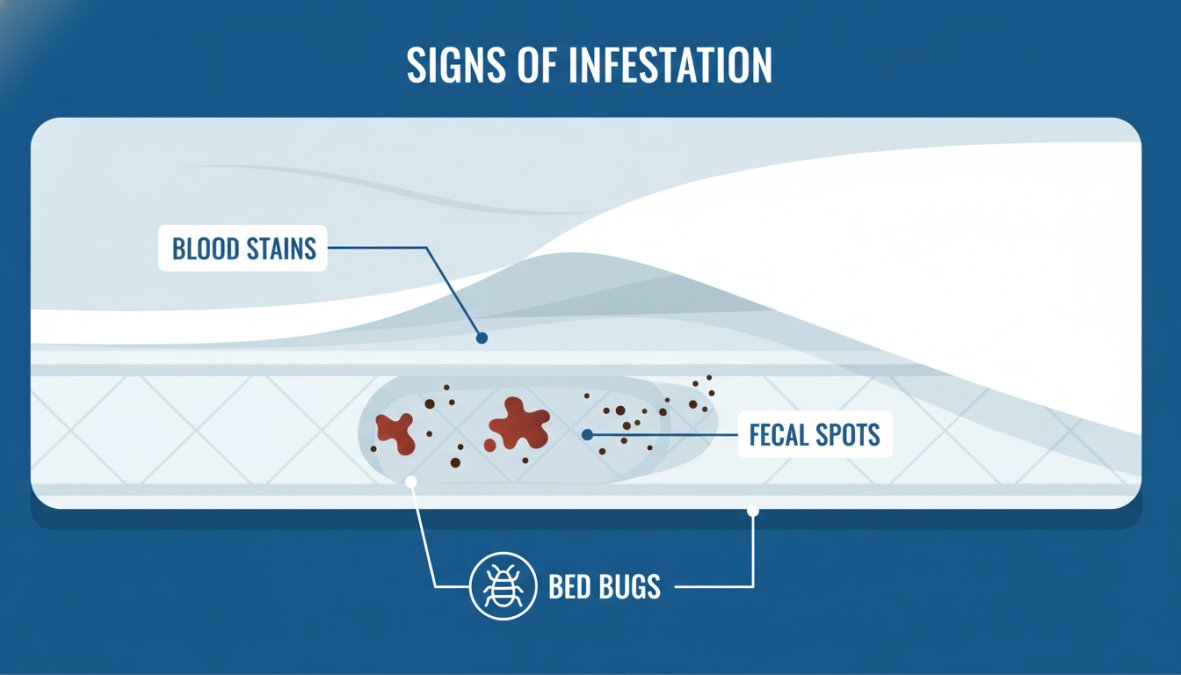
Fecal spots are one of the most reliable infestation indicators because they persist long after bugs have been disturbed. If you find dark specks along mattress seams that don’t wipe away cleanly, treat it as a confirmed infestation signal until proven otherwise.
Step-by-Step DIY Inspection Guide
A thorough DIY inspection takes about 30-45 minutes and requires a flashlight and a credit card or thin spatula to probe seams.
Step 1: Strip the bed completely. Examine all bedding under bright light for blood stains, fecal spots, or live bugs.
Step 2: Inspect the mattress. Check every seam, fold, and tag. Run the credit card along seams to expose hiding bugs. Flip and repeat.
Step 3: Examine the box spring. Remove the dust cover if present. Bed bugs favor the wooden frame and fabric folds inside.
Step 4: Check the bed frame and headboard. Inspect all joints, screw holes, and cracks.
Step 5: Expand outward. Check nightstands, baseboards, carpet edges, electrical outlets, and furniture within 10 feet of the bed.
Step 6: Document findings. Photograph any evidence before disturbing it to help a pest professional assess infestation severity accurately.
Treatment for Bed Bug Bites: Non-Toxic vs. Chemical Options
Treating the bites and treating the infestation are two separate problems. Bite treatment is straightforward; infestation treatment is where the real complexity lies.
For bite relief:
- Wash the affected area with soap and water
- Apply a cold compress to reduce swelling
- Use over-the-counter hydrocortisone cream (1%) to reduce inflammation
- Take oral antihistamines for severe itching
- Avoid scratching to prevent secondary infection
Non-toxic infestation approaches include diatomaceous earth applied to cracks and crevices, heat treatment (raising room temperature above 120°F for several hours), and mattress encasements that trap and starve remaining bugs. Chemical treatments involve pyrethroid-based insecticides that act faster but carry risks: improper application can scatter bugs deeper into walls, and bed bugs in many regions have developed resistance to common pyrethroids.
The honest assessment: DIY chemical treatment has a poor track record. Resistance, hiding behavior, and egg survival make professional-grade treatment significantly more effective for established infestations. As documented in National Pesticide Information Center guidance on bed bug control, effective elimination almost always requires multiple treatment methods applied by trained professionals.
The Psychological Impact of a Bed Bug Infestation
Living with a bed bug infestation causes measurable psychological distress. Sleep deprivation is the most immediate effect, knowing insects feed on you while you sleep disrupts rest even on nights when no biting occurs. Many people develop hypervigilance: checking bedding obsessively, sleeping with lights on, or abandoning their bed entirely.
Anxiety and social isolation are common secondary effects. The stigma around bed bugs, a public health concern that can affect anyone regardless of cleanliness, leads many people to avoid having guests or feel shame, which delays them from seeking help. Some people experience symptoms consistent with post-traumatic stress even after a confirmed infestation is eliminated: intrusive thoughts, difficulty sleeping in unfamiliar environments, and persistent anxiety about re-infestation.
The practical takeaway: address infestations quickly and decisively. Prolonged exposure compounds the psychological toll significantly.
How to Identify Bed Bug Bites Before the Infestation Spreads
The window between first contact and established infestation is narrow. A single pregnant female bed bug can seed an infestation that grows to hundreds of bugs within weeks. Early identification is not just a health issue, it’s a containment strategy.
Act immediately on these early warning signs:
- Waking with unexplained itchy welts in a linear or clustered pattern, especially on arms, neck, or shoulders
- Bites that appear consistently after sleeping in the same location
- Any single fecal spot or shed exoskeleton near the bed, even without visible bites
If you identify even one of these signs, inspect the bed that night rather than waiting. Travel is the most common introduction vector. After any overnight stay, inspect luggage before bringing it inside and wash all clothing on high heat immediately. This single habit prevents the majority of travel-related introductions.
The earlier you act on how to identify bed bug bites and their accompanying signs, the better your outcome. A two-bug problem costs far less to solve than a two-room problem.
Frequently Asked Questions
What do bed bug bites look like on human skin?
Bed bug bites typically appear as small, raised, itchy welts or red bumps on the skin. They are caused by Cimex lectularius using its proboscis to feed while you sleep. The bites often appear in a cluster, zigzag pattern, or linear bite pattern on exposed areas like arms, legs, neck, and shoulders. On lighter skin tones, they show as red raised bumps, while on darker skin tones they may appear as subtle dark spots or areas of inflammation that are easier to miss.
How can you tell the difference between bed bug bites and flea bites?
When comparing bed bug bites vs flea bites, location and pattern are the biggest clues. Flea bites tend to cluster around the ankles and lower legs and cause immediate, intense itching. Bed bug bites appear on any exposed skin and may not itch right away. Flea bites often have a red halo around a central puncture point, while bed bug bites are more uniformly raised and rounded. Bed bug bites also tend to follow a linear or zigzag pattern, which flea bites typically do not.
How long do bed bug bites last?
Bed bug bite symptoms typically last between one and two weeks for most people, though this varies by individual sensitivity. Initial itchy welts and skin inflammation usually peak within two to three days of the bite. People with stronger allergic reactions may experience hives or prolonged redness for up to three weeks. Avoiding scratching is important, as breaking the skin can lead to secondary infection. Topical treatments like hydrocortisone cream and antihistamines can help speed up the post-bite recovery timeline.
Where do bed bugs usually hide in a home?
Bed bugs are nocturnal feeders that hide close to their hosts during the day. Common hiding spots include mattress seams, box spring edges, bed frames, and headboards. They also shelter in carpet edges, behind loose wallpaper, inside electrical outlets, and within furniture joints near the bed. During a DIY inspection, look for rusty stains, fecal spots, and shed exoskeletons in these areas. The closer to the sleeping area, the more likely you are to find signs of a bed bug infestation.
Do bed bug bites itch immediately after being bitten?
Not always. One of the trickiest aspects of learning how to identify bed bug bites is that reactions are delayed. Many people do not feel or notice bites until hours or even days after the feeding occurs. This is because Cimex lectularius injects an anesthetic-like substance while feeding. Some individuals never develop visible symptoms at all, while others experience an allergic reaction with significant itching and swelling. This delay is one reason bed bug infestations often go undetected until they become a serious public health concern.
Can bed bug bites cause serious health problems?
For most people, bed bug bites are a skin irritation rather than a serious medical issue. However, a severe allergic reaction can produce hives, intense skin inflammation, or in rare cases, anaphylaxis, which requires immediate medical attention. Persistent scratching can break the skin and lead to secondary infection. The psychological impact of a bed bug infestation, including anxiety, sleep disruption, and stress, is also a real health concern. If symptoms worsen or do not improve, consulting a dermatologist is recommended.
Bed bug infestations move fast, and the bites are often the last clear warning you get before the problem becomes deeply established. If you’re seeing signs of an active infestation in the Metro Boston area, Zoifia Pest Control offers fast, licensed, and insured bed bug treatment backed by a 90-day guarantee. No long-term contracts, no runaround. Get a quote from Zoifia Pest Control and stop the infestation before it spreads further.
This article was written using GrandRanker
