
Table of Contents
- Why Do I See Roaches During Day: Understanding Nocturnal Behavior
- Daytime Sightings and Infestation Severity
- Common Hiding Spots and Nesting Areas
- Signs of a Cockroach Infestation
- How to Get Rid of Roaches Permanently
- When to Call an Exterminator for Roaches
- Conclusion
Last Updated: July 7, 2026
Why Do I See Roaches During Day: Understanding Nocturnal Behavior
Cockroaches are strictly nocturnal creatures, making daytime sightings a red flag. When you spot a roach in broad daylight, something has shifted in your home. According to pest management research, daytime activity indicates either severe overcrowding or extreme environmental pressure driving them into the open. This distinction determines how aggressively you need to respond.
Why Cockroaches Are Nocturnal
Cockroaches evolved as nocturnal insects over millions of years. Their compound eyes are optimized for low-light conditions, and their sensory organs detect vibrations far better than visual cues. Staying hidden during daylight keeps them safe from predators, dehydration, and human detection. The German cockroach, the most common household pest in North America, relies almost entirely on nighttime foraging, typically between midnight and 4 AM.
What Daylight Sightings Actually Mean
A roach crossing your kitchen in daylight represents a failure of the insect’s survival instincts. Daytime activity signals one of three scenarios: the colony has grown so large that available hiding spots cannot accommodate the population, the roach is sick or dying, or environmental conditions have become hostile. The most common cause is overcrowding, younger roaches are forced into open areas when dominant colony members compete for limited shelter space.
A single daytime sighting might be a stressed individual. Multiple sightings over several days indicate a serious infestation.
Daytime Sightings and Infestation Severity
The Link Between Daylight Activity and Colony Size
Research shows a clear threshold: when a colony reaches approximately 30-50% of maximum harborage capacity, daytime sightings begin. A small colony of 20-30 roaches can hide completely in a few square feet. A colony of 200-300 roaches cannot fit into those same spaces, forcing overflow roaches into visible areas.
If you’re seeing roaches during the day, your actual infestation is likely 5-10 times larger than observed. One daytime sighting might represent 30-50 roaches total. A German cockroach colony can double in size every 6-8 weeks under favorable conditions, so waiting two months before taking action could mean a colony four times larger.
Species-Specific Behavior: German Cockroach vs. Other Roaches
German cockroaches are smaller and more dependent on harborage. They cannot survive long without shelter and water. When overcrowded, daytime activity increases dramatically because they have fewer options. German roach daytime sightings are particularly indicative of severe overcrowding.
American cockroaches are larger and more mobile. They can survive in less-protected areas and are more likely to forage in open spaces regardless of colony size. A single American roach sighting during the day is less alarming than a German roach sighting, though it still warrants investigation.
Common Hiding Spots and Nesting Areas
Where Roaches Hide During the Day
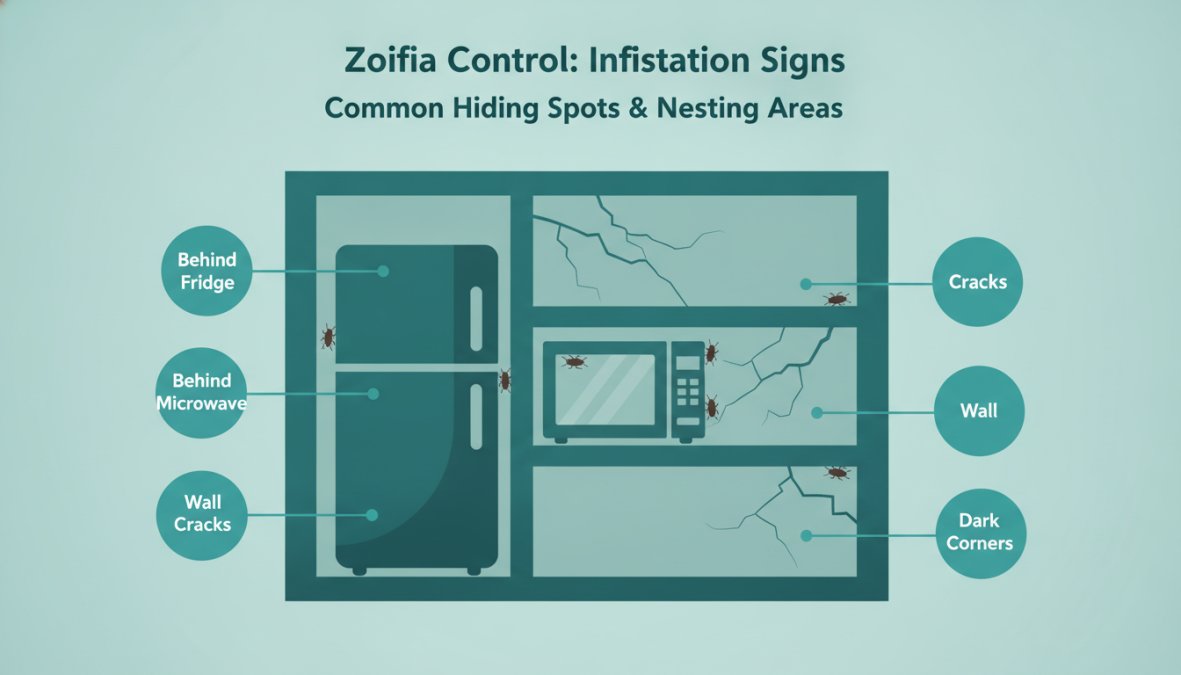
Cockroaches require darkness, proximity to food and water, and protection from air currents. Kitchen cabinets are the primary harborage, with spaces behind cabinet bases and inside hollow frames harboring 50-100 roaches. Appliances like refrigerators and stoves offer moisture, warmth, and food debris. Cracks and crevices as small as 1/8 inch thick serve as secondary harborage. Wall voids provide massive harborage capacity and make elimination extremely difficult without professional intervention.
Moisture and Food Sources That Attract Infestations
Roaches need water more urgently than food, they survive weeks without eating but only days without water. Standing water, leaking pipes, and moisture accumulation create primary attractions. Food sources include crumbs, grease, soap residue, and dead skin cells. Roaches are omnivorous and consume almost anything organic.
Sanitation directly impacts infestation growth rates. Poor sanitation allows colonies to grow faster; good sanitation slows growth but cannot eliminate an established infestation alone. You must address both moisture and food simultaneously, and typically need professional pest control for complete elimination.
Signs of a Cockroach Infestation
Identifying Roach Droppings and Egg Casings
German roach droppings appear as small dark specks the size of ground pepper, scattered near food sources and harborage. American roach droppings are larger and more oval-shaped. Fresh droppings indicate active roach activity within 24-48 hours.
Egg casings, called oothecae, are brown or tan capsules approximately 1/4 inch long, each containing 30-40 eggs. Finding oothecae indicates breeding activity and a colony in active reproduction. Early infestations show occasional oothecae in one or two locations; severe infestations show oothecae throughout the home.
Health Risks and Diseases Spread by Roaches
Cockroaches carry pathogens including salmonella, dysentery, and cholera. They also carry allergens that trigger asthma attacks, particularly in children. Roach allergens are present in approximately 63% of urban homes. A single roach poses minimal disease risk; a colony of hundreds creates significant exposure, especially in homes with children or immunocompromised individuals.
How to Get Rid of Roaches Permanently
DIY vs. Professional Pest Control: When to Choose Each
DIY approaches work for early-stage infestations with only occasional daytime sightings and minimal breeding evidence. Gel baits, diatomaceous earth, and boric acid can achieve elimination within 4-6 weeks at this stage.
However, DIY methods fail for moderate to severe infestations. Once you’re seeing multiple roaches during the day, finding oothecae in multiple locations, or noticing droppings throughout your home, professional pest control becomes necessary. Professional exterminators have access to more effective products, equipment for treating wall voids and appliance cavities, and expertise in identifying all harborage areas.
Call a professional when:
- You see roaches during the day on multiple occasions
- DIY methods fail after 3+ weeks
- You find oothecae in more than one room
- You suspect roaches in wall voids or appliance cavities
- You have vulnerable household members
Zoifia Pest Control specializes in eliminating roaches for residential and commercial properties across the Metro Boston area. Our licensed and insured team uses targeted treatment protocols combined with sanitation guidance to achieve elimination within 2-4 weeks, backed by a 90-day guarantee.
Sanitation and Structural Integrity Improvements
Sanitation is the foundation of successful roach elimination. Effective sanitation includes removing all food sources, eliminating water sources, reducing clutter, and sealing entry points. Structural improvements like caulking cracks and improving ventilation make the environment less suitable for roaches.
| Improvement Type | Effort Level | Impact on Infestation | Timeline |
|---|---|---|---|
| Food source removal | Low | Slows growth significantly | Immediate |
| Water source elimination | Medium | Slows growth significantly | 1-2 weeks |
| Crack and crevice sealing | Medium | Reduces harborage capacity | 2-4 weeks |
| Appliance cleaning/treatment | High | Eliminates major harborage | 1-2 weeks |
| Humidity reduction | Medium | Makes environment less suitable | 2-4 weeks |
When to Call an Exterminator for Roaches
Calling early, when you first notice daytime sightings or find oothecae, results in faster elimination and lower cost. Early-stage infestations require fewer treatments and less intensive intervention.
Waiting until the infestation is severe increases treatment complexity and cost. If you’ve seen roaches during the day on more than one occasion, or if DIY methods have failed after 3-4 weeks, call a professional immediately.
Post-Treatment Expectations and Psychological Relief
After professional treatment begins, expect dramatic reduction in roach sightings within the first week. The second and third weeks show continued improvement with occasional sightings as roaches in deep wall cavities are eliminated. By week four, most visible activity should cease.
The psychological relief from knowing roaches are gone often exceeds the relief from seeing physical evidence disappear. The 90-day guarantee from Zoifia Pest Control provides peace of mind beyond physical elimination, if roaches reappear within 90 days, we return and retreat at no charge.
Seeing roaches during the day signals an infestation requiring immediate attention. The larger your colony grows, the more expensive and time-consuming elimination becomes. If you’re experiencing daytime roach activity in the Metro Boston area, Zoifia Pest Control offers fast, reliable elimination backed by a 90-day guarantee. Contact us today and reclaim your peace of mind.
Frequently Asked Questions
Is it bad to see a cockroach during the day?
Yes, daytime sightings typically indicate a serious infestation. Cockroaches are nocturnal and normally forage at night. When you see them during daylight, it usually means the colony is overcrowded, food sources are limited, or pest pressure has forced them out of hiding. This suggests the infestation has progressed significantly and professional pest control intervention is strongly recommended.
What does it mean if you see roaches in the daytime?
Daytime roach activity signals an advanced infestation. Healthy colonies remain hidden in cracks and crevices during the day. When roaches venture out in daylight, they're desperately foraging for food and water sources, or the colony has grown so large that hiding spots are insufficient. This behavioral shift indicates overcrowding and warrants immediate professional extermination to prevent further spread of pathogens and allergens.
What are the signs of a cockroach infestation?
Key signs include: daytime sightings, dark droppings resembling pepper or coffee grounds, egg casings (ootheca) in hidden areas, musty odors, and structural damage to cracks and crevices. German cockroaches leave more visible droppings than sewer roaches. You may also notice increased allergens affecting respiratory health. Multiple signs together confirm infestation severity and indicate the need for professional pest management services.
When should I call a professional exterminator for roaches?
Call immediately if you see roaches during the day, notice multiple droppings or egg casings, or spot them in different rooms. If DIY baiting and sanitation efforts haven't reduced activity within 2 weeks, professional intervention is necessary. Experts use residual sprays, targeted baiting, and structural treatments that address colony nesting sites more effectively. Zoifia Pest Control offers fast response with a 90-day guarantee to ensure complete elimination.
This article was written using GrandRanker
