Table of Contents
- Why Natural Roach Repellents Work in Apartments
- Essential Oils for Roach Control That Actually Deter Infestations
- Eliminate Food Sources and Moisture Control
- How to Seal Gaps in Your Apartment to Stop Roaches
- Deep Cleaning and Sanitation Routines for Roach Prevention
- When to Call Professional Pest Control for Apartment Infestations
- Cross-Contamination Prevention in Multi-Unit Buildings
- Frequently Asked Questions
Last Updated: September 25, 2026
Why Natural Roach Repellents Work in Apartments
Natural ways to repel roaches in apartments offer a practical alternative to harsh chemicals in shared buildings. Roaches travel through walls, pipes, and shared spaces, so natural repellents work by creating an unwelcoming environment that drives them away without toxicity concerns.
Natural deterrents are most effective when combined with sanitation and structural improvements. Roaches need food, water, and shelter, remove those, and infestations lose their foothold.
Start with natural repellents while addressing the root causes, food sources and entry points. Repellents alone won’t eliminate an active infestation, but they’re excellent for prevention and reducing populations when combined with other tactics.
Essential Oils for Roach Control That Actually Deter Infestations
Essential oils repel roaches but don’t eliminate them. In apartment buildings, this simply moves the problem to a neighbor’s unit. For a complete natural approach, combine repellent barriers with natural elimination strategies.
How Repellent Oils Work
Roaches rely on smell to navigate and find food. Strong-smelling essential oils disrupt their movement and encourage them to relocate when applied around entry points and feeding areas.
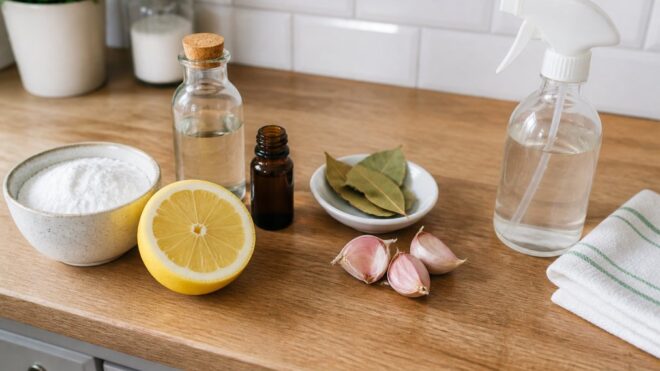
The most effective oils for natural ways to repel roaches in apartments are peppermint, cedarwood, and citrus-based formulas, best used as part of a layered approach.
Peppermint Oil and Cedarwood Oil
Mix 15-20 drops of peppermint essential oil with water and spray around baseboards, under sinks, and behind appliances. Reapply weekly for consistent protection.
Cedarwood oil has a sharp scent roaches avoid. Combine 10 drops with two cups of water and spray along cracks and entry points.
Weekly applications maintain deterrent effect as oils evaporate.
Citrus Sprays and Bay Leaves
Boil lemon peels in water for 10 minutes, cool, strain, and spray around kitchen areas, drains, and under sinks.
Natural Baiting and Elimination: Beyond Repelling
While essential oils repel roaches, they don’t eliminate them. To actually reduce roach populations rather than just displace them, you need natural baiting strategies that roaches will consume and that disrupt their reproduction or survival.
Boric Acid Baits (Natural and Low-Toxicity)
Diatomaceous Earth (Food-Grade)
Combining Repellents and Baits
- Use essential oils and citrus sprays to create barriers that drive roaches toward baiting areas
- Place boric acid or DE in high-traffic roach zones (under sinks, behind stoves, in cabinet corners)
- Maintain sanitation and eliminate food sources so roaches are more attracted to your baits than to other food
- Reapply oils weekly and baits every 2-3 weeks
Essential oils and citrus sprays work best as preventive barriers and are excellent for apartments because they’re safe and require no landlord permission. However, they only repel roaches, they don’t eliminate them. For actual population control, combine repellents with natural baits like boric acid or food-grade diatomaceous earth. This prevents the problem from simply moving to a neighbor’s unit.
Eliminate Food Sources and Moisture Control
Roaches are attracted to apartments for one reason: resources. Food scraps, grease buildup, and standing water are open invitations. Without these, even natural ways to repel roaches in apartments become far more effective because the roaches have no reason to stay.
Start with these steps:
- Clean under and behind all kitchen appliances monthly
- Wipe down stovetops and counters daily
- Store food in sealed, airtight containers
- Take out garbage daily and use sealed bins
- Don’t leave pet food bowls out overnight
- Clean up spills immediately
How to Seal Gaps in Your Apartment to Stop Roaches
Roaches enter through gaps as small as a credit card width. Sealing entry points is critical for preventing infestations in multi-family buildings.
Common entry points in apartments include:
- Gaps around pipes under sinks
- Cracks around baseboards
- Spaces where utilities enter the unit
- Gaps around electrical outlets
- Crevices around door frames and windows
- Holes in walls or flooring
Leaving gaps unsealed undermines all other prevention efforts. Even if you eliminate food sources and apply repellents, roaches from neighboring units will continue entering your space through open cracks and crevices.
Deep Cleaning and Sanitation Routines for Roach Prevention
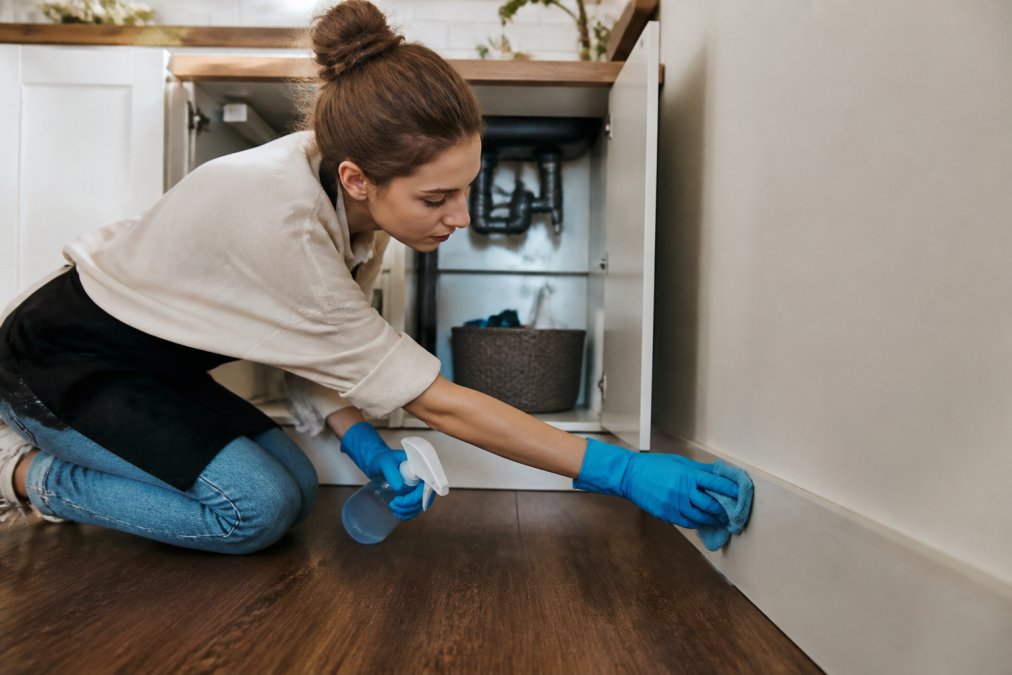
A deep cleaning routine removes the harborage areas and food residue that sustain roach populations. This is where prevention shifts from reactive to proactive. Regular sanitation makes your apartment inhospitable to roaches and prevents small problems from becoming infestations.
When to Call Professional Pest Control for Apartment Infestations
Natural repellents and sanitation work well for prevention and light infestations, but active cockroach infestations in apartments involve a legal and financial question that most renters don’t consider: who is responsible for professional treatment, you or your landlord?
Understanding Landlord vs. Tenant Responsibility
In most states, landlords are legally required to maintain habitable rental units, and that includes freedom from pest infestations. The implied warranty of habitability, recognized in all 50 states though with varying specifics, typically obligates landlords to provide pest control services at no cost to tenants when an infestation is not caused by tenant negligence.
Key steps before calling professional pest control:
-
Document the infestation. Take photos and videos of roaches, droppings, and egg cases. Note dates and times you see them. This creates a record if you need to dispute responsibility later.
-
Report in writing to your landlord or building management. Send an email or certified letter describing the problem, when you first noticed it, and what steps you’ve already taken (cleaning, sealing gaps, using natural repellents). Keep a copy. Written notice is critical, it establishes that the landlord knew about the problem and when.
-
Request professional pest control in writing. Ask your landlord to arrange and pay for treatment. Most landlords will comply because they’re legally obligated to. If they refuse or delay beyond a reasonable timeframe (typically 7-14 days depending on state law), you may have grounds to withhold rent, pay for treatment and deduct it from rent, or break the lease without penalty, but laws vary by state, so check your local tenant rights before taking action.
-
If you live in a multi-unit building, request building-wide coordination. This is crucial. Treating only your unit while neighboring units remain untreated is ineffective because roaches will migrate back from adjacent apartments. Insist that the landlord coordinate professional treatment across all affected units simultaneously.
When You Should Pay for Professional Treatment Yourself
There are situations where paying for your own professional treatment makes sense:
- Your landlord is unresponsive. If your landlord ignores written requests for weeks, paying for treatment yourself and deducting the cost from rent (where legally permitted) may be faster than waiting.
- You caused the infestation through negligence. If you left food out, didn’t maintain basic sanitation, or ignored water leaks, you may be liable.
- You want faster results. Professional treatment typically eliminates infestations in 1-2 weeks, whereas waiting for a landlord to arrange it could take longer.
- You’re in a building where the landlord refuses to treat. Some landlords in older buildings with chronic roach problems may be difficult to work with. Paying for professional treatment protects your health and prevents the infestation from worsening.
Signs That You Need Professional Pest Control
Natural methods alone are insufficient when:
- You’re seeing roaches during the day (indicates a large population that has exhausted harborage space)
- Roach droppings appear in multiple rooms, not just the kitchen
- You notice a musty, oily odor in cabinets or under sinks (a sign of heavy infestation)
- You find roach egg cases (oothecae), which are tan or brown capsules about the size of a grain of rice
- Roaches persist or return within 2-3 weeks despite consistent natural treatments and sanitation
- You suspect roaches are coming from neighboring units (a sign of building-wide infestation)
In these cases, professional pest control is not optional, it’s the only reliable solution.
Do not ignore an active infestation hoping natural methods will resolve it. Roach populations double every 2-3 weeks under ideal conditions. Delays allow the infestation to spread to neighboring units and become exponentially harder to treat. Early professional intervention saves time, money, and frustration.
Coordinating Professional Treatment in Multi-Unit Buildings
The most common reason DIY and even professional treatments fail in apartments is lack of coordination. If your unit is treated but your neighbor’s is not, roaches will migrate back within days. This is especially true in older buildings with poor insulation and shared plumbing.
- Treat all units with active infestations simultaneously
- Seal shared entry points (gaps around pipes, electrical conduits, and vents) between units after treatment
- Provide all residents with pre-treatment instructions (cleaning, removing pets, sealing food)
- Schedule follow-up treatments 2-3 weeks after the initial treatment to eliminate newly hatched roaches
- Coordinate with neighbors so everyone maintains sanitation standards after treatment
Cross-Contamination Prevention in Multi-Unit Buildings
In multi-family housing, roaches move freely between apartments through shared infrastructure. One neighbor’s infestation becomes everyone’s problem.
Frequently Asked Questions
What smells do roaches absolutely hate?
Roaches strongly avoid peppermint, cedarwood, and citrus odors. These scents disrupt their sensory systems and drive them away from treated areas. Bay leaves and garlic also act as natural deterrents. You can use essential oils diluted in water as sprays around baseboards, under sinks, and entry points. Reapply every 2-3 days for consistent repellent effect, especially in high-traffic roach areas like kitchens and bathrooms.
Do essential oils really repel cockroaches?
Yes, certain essential oils work as deterrents but are most effective as part of a broader strategy. Peppermint and cedarwood oils disrupt roach behavior and reduce harborage appeal, but they don’t eliminate existing infestations. Essential oils work best when combined with sanitation, sealing entry points, and eliminating food sources. For severe cockroach infestations, natural remedies alone may not be sufficient, professional pest control becomes necessary.
How can I prevent roaches from entering my apartment from neighbors?
Seal structural gaps where roaches travel between units. Caulk cracks around baseboards, pipes, and electrical outlets. Install door sweeps on entry doors and seal gaps under doors. Use weatherstripping around windows. In multi-family housing, roaches spread through shared walls and plumbing, so coordinate with your landlord on building-wide treatment. If neighbors have infestations, individual prevention is harder, professional pest management across the entire building is often necessary.
What’s the most effective non-toxic way to deter roaches in apartments?
Combine multiple non-toxic methods: eliminate moisture by fixing leaks, remove food sources through thorough cleaning, apply diatomaceous earth (food-grade) in cracks and under appliances, and use essential oil sprays as repellents. Seal entry points and reduce clutter where roaches hide. Vacuuming regularly removes droppings and eggs. This integrated pest management approach works best for prevention. For active infestations, non-toxic baiting strategies or professional treatment may be needed for complete elimination.