Table of Contents
- What Roach Nesting Sites Look Like
- Signs of Cockroach Infestation to Watch For
- Cockroach Droppings Identification and What They Tell You
- Where Do Roaches Hide in Kitchens and Bathrooms
- Common Roach Harborage Areas Throughout Your Home
- How to Inspect for Roach Nesting Sites Step by Step
- What to Do Once You Find a Roach Nest
- Frequently Asked Questions
Last Updated: September 24, 2026
What Roach Nesting Sites Look Like
Roach nesting sites are clusters where cockroaches gather, breed, and hide. They’re not always visible. You might find them in dark, warm, moist spaces behind appliances, inside wall voids, or under baseboards. The key is recognizing the signs before a small problem becomes a full infestation.
Active nesting sites contain adults, nymphs, and egg casings clustered together, with a musty, sour odor from aggregation pheromones that signal safe harborage to the colony.
Roaches shred cardboard, paper, and fabric into nest structures. Torn cardboard behind appliances or under sinks signals nesting activity.
Visual Markers of Active Nesting Sites
Look for these specific indicators:
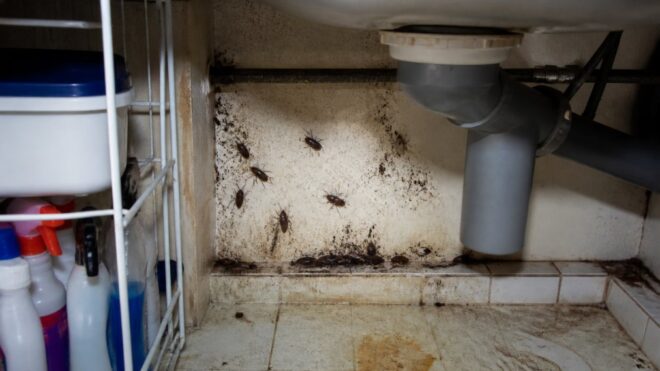
- Dark, greasy smudges on walls and surfaces
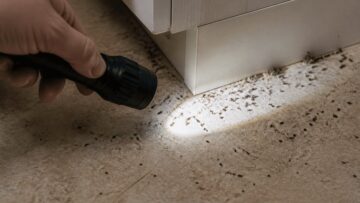
- Clusters of small brown droppings (not scattered, but grouped)
- Shed exoskeletons piled together
- A concentrated musty odor in one area
- Visible egg casings (ootheca) stacked or grouped
Signs of Cockroach Infestation to Watch For
Multiple roaches in the same area over several days signals a nearby nest. Roaches are nocturnal, so spotting them during the day indicates overcrowding and severe infestation.
Early warning signs include:
- Roaches visible during the day (means the nest is overcrowded)
- Droppings appearing in multiple rooms
- A musty smell that doesn’t go away
- Roach activity concentrated in one zone (kitchen, bathroom, or basement)
- Finding roaches in places you’ve never seen them before
If roaches appear in new areas weekly, the population is expanding and professional help is needed immediately.
The EPA’s guide to cockroach identification and control outlines how infestations progress. Early detection prevents exponential growth.
Cockroach Droppings Identification and What They Tell You
Roach droppings resemble pepper flakes or ground coffee and vary by species, helping identify which roach is nesting in your home and the severity of infestation.
German Cockroach Droppings
German roach droppings are 0.5-1 mm, resembling pepper specks, found in tight clusters within 3-8 feet of the nest in warm, humid areas near food and water. Clustered droppings in kitchen cabinets, under sinks, or inside appliances indicate German roach infestation.
American Cockroach Droppings
American roach droppings are 2-8 mm, ridged pellets found in basements, crawl spaces, and near plumbing. These outdoor pests enter through foundation cracks and gaps; indoor infestations are harder to eliminate because nests may be outside.
Brown-Banded Cockroach Droppings
Brown-banded roach droppings are 0.5-1 mm in linear or scattered patterns (not tight clusters), found in upper cabinets, closets, and bedrooms. Small droppings on high shelves suggest brown-banded roaches.
What Droppings Tell You About Infestation Severity and Location
Wet droppings indicate an active, recent or ongoing infestation; dry, crumbly droppings are older.
Dense clusters suggest a harborage site within 10-15 feet. Dropping trails show roach highways; multiple piles in different rooms indicate multiple nests or spreading infestation requiring immediate professional help.
Odor intensity correlates with population size. Faint musty smell suggests a small, localized nest; strong, pervasive odor indicates a large, established colony.
Dozens of droppings daily in one location signal an active, breeding nest. Increasing volume week to week indicates rapid population expansion.
How to Document Droppings for Professional Diagnosis
Photograph droppings in place with a ruler for scale, noting location, date, and moisture level. This helps professionals identify species, estimate severity, and target treatment to the nest.
Where Do Roaches Hide in Kitchens and Bathrooms
Kitchens and bathrooms are roach hotspots because they provide moisture, food, and darkness. Roaches need daily water and gravitate toward plumbing.
In kitchens, check these locations first:
- Behind and under the refrigerator (dark, warm, moist from condensation)
- Inside cabinet bases and under sinks
- Around the dishwasher motor and drain
- Inside the microwave and oven vents
- Behind the stove and between appliances
- Cracks around pipe penetrations through walls
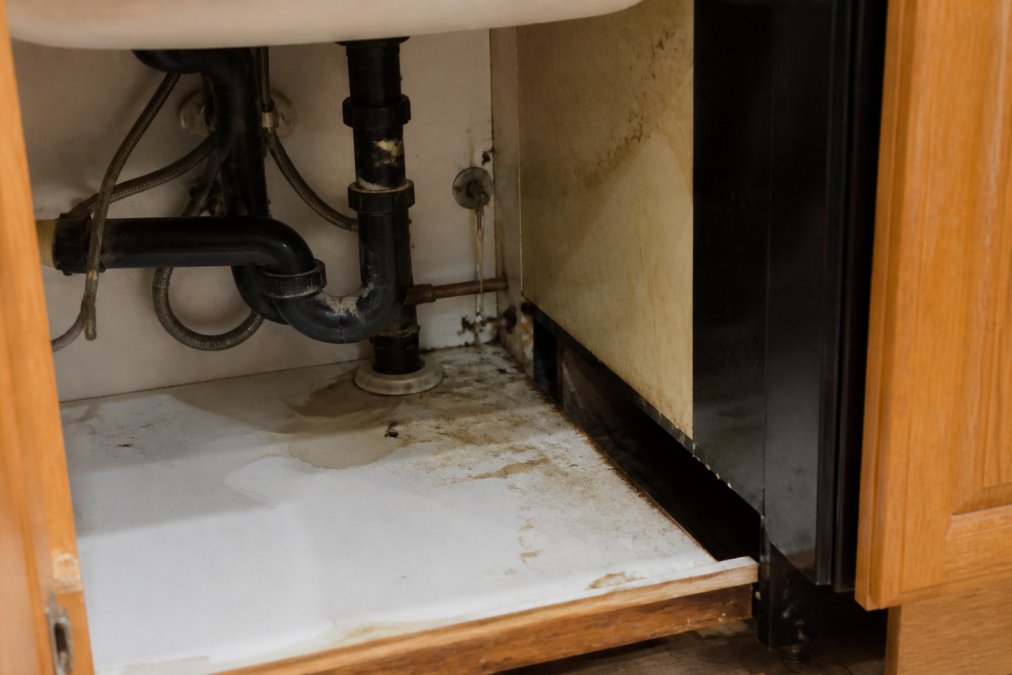
In bathrooms, roaches cluster around:
- Under and behind the toilet base
- Inside wall cavities around plumbing
- Under the sink and around drain pipes
- Behind the medicine cabinet
- Cracks in tile grout and wall-floor junctions
- Inside exhaust fan ducts
The wall-floor junction is a roach highway and critical to seal. Caulking these areas is one of the most effective prevention steps.
Common Roach Harborage Areas Throughout Your Home
Roaches hide in areas with minimal human activity. Bedrooms and living areas harbor them behind baseboards, inside wall voids (especially in older buildings), under furniture, in closets, and in cracks.
Basements and utility spaces are prime nesting zones because they’re dark, often damp, and undisturbed. Check around:
- Plumbing and HVAC penetrations
- Electrical conduit and junction boxes
- Stored cardboard boxes and paper
- Drains and sump pump areas
- Gaps around foundation cracks
Older buildings in the Metro Boston area are especially vulnerable. Older construction has more gaps, cracks, and structural voids. Roaches exploit these entry points and hide inside walls where they’re nearly impossible to reach without professional help.
Inspect wall-floor junctions carefully. These are roach highways. A single gap the width of a credit card is enough for a roach to enter and establish a nest.
How to Inspect for Roach Nesting Sites Step by Step
A systematic inspection takes 30 to 45 minutes and reveals where roaches are hiding. You’ll need a flashlight, a mirror, gloves, and optionally sticky traps and a smartphone for documentation. This guide combines visual inspection with non-toxic detection methods that don’t require chemicals or bait.
Step 1: Inspect During Low-Light Hours
Roaches are nocturnal and most active between 11 p.m. and 3 a.m.
Step 2: Start in the Kitchen
- The gap between the refrigerator and the wall (roaches hide in the warm condensation area)
- Under the sink drain and around the P-trap
- Inside the dishwasher motor housing and drain
- Cracks around pipe penetrations where water lines enter the wall
- The space between the stove and the counter
Step 3: Place Sticky Traps as Detection Tools
Step 4: Move to Bathrooms
- The space between the toilet base and the floor (a common harborage area)
- Inside wall cavities around plumbing (use your flashlight to peer into gaps)
- Under the sink and around drain pipes
- Behind the medicine cabinet
- Cracks in tile grout and wall-floor junctions
- Inside exhaust fan ducts (use your flashlight to look up into the vent)
Step 5: Inspect Appliance Motors and Vents
Step 6: Examine Baseboards and Wall-Floor Junctions Systematically
- All baseboards in the kitchen, bathrooms, and bedrooms
- Corners where two walls meet
- Areas where baseboards have pulled away from the wall
- Gaps around electrical outlets and light switches
- Cracks in plaster or drywall
Step 7: Check Closets and Storage Areas
Step 8: Assess Structural Vulnerability Points
Document entry points and vulnerabilities for later sealing:
- Cracks around pipes and conduits penetrating exterior walls
- Gaps under doors (especially basement and garage doors)
- Holes in walls where utilities enter
- Gaps around window frames and door frames
- Cracks in the foundation (in basements or crawl spaces)
- Gaps where siding meets the foundation
Step 9: Check Drains and Plumbing
Step 10: Document Your Findings
- Where you found droppings (and the species, if identifiable)
- Which sticky traps caught roaches and how many
- Gaps and cracks that need sealing
- Areas with musty odors
- Moisture problems (leaks, condensation, standing water)
Step 11: Monitor Over Time
What to Do Once You Find a Roach Nest
Finding a nest confirms you have an infestation that needs professional treatment. Do not attempt DIY elimination if you’ve found an active nesting site.
Immediate Steps:
-
Eliminate food sources. Clean up crumbs, seal food in airtight containers, and don’t leave pet food out overnight.
-
Remove water sources. Fix leaky pipes, dry sinks before bed, and remove standing water.
-
Declutter. Remove cardboard boxes, paper piles, and fabric where roaches hide and nest.
-
Seal entry points. Caulk gaps around pipes, baseboards, and wall-floor junctions.
-
Call a professional immediately. A confirmed nesting site requires professional treatment. Roaches reproduce quickly, and DIY methods rarely eliminate the entire colony.
Frequently Asked Questions
What is the difference between seeing one roach and having a roach nesting site?
A single roach sighting may indicate a stray pest, but a nesting site means a colony is established in your home. Nesting sites produce multiple roaches, egg casings, and droppings concentrated in one area. If you see roaches during the day or find clusters of droppings and egg casings, you have an active infestation requiring immediate professional treatment. One roach can become many within weeks if conditions are right.
How many roaches typically live in a single nest or colony?
A single roach nest can contain dozens to hundreds of roaches, depending on species and how long the colony has been established. German cockroaches, common in older buildings, reproduce rapidly and can grow from a few individuals to a large infestation in 2-3 months. American cockroaches produce fewer offspring but live longer. The size of the colony determines how many nesting sites you’ll find and how aggressive the infestation has become.
Can you get rid of a roach nest on your own, or do you need professional pest control?
DIY methods like roach baits and sprays may kill visible roaches but rarely eliminate entire nesting sites hidden inside walls, baseboards, and appliances. Professional pest control is more effective because technicians locate hidden colonies, use targeted treatments, and monitor for re-infestation. A 90-day guarantee from a licensed pest control service provides peace of mind. For serious infestations in older buildings, professional treatment is the most reliable option.
What are the primary signs of a cockroach nesting site in my home?
Look for clusters of pepper-like droppings, egg casings (ootheca), a musty odor, and live roaches in the same area. Nesting sites are typically in dark, warm, moist places like under sinks, behind refrigerators, inside wall-floor junctions, and within appliance motors. You may also notice roaches active during the day near the nest, which is unusual since they’re normally nocturnal. Finding multiple signs in one spot confirms an active nesting site, not just a passing roach.
Identifying roach nesting sites early stops infestations before they spiral. The musty smell, concentrated droppings, and visible roaches in specific areas all point to active nests. Once you’ve found one, don’t delay. Contact Zoifia Pest Control for a fast, reliable inspection and treatment. Our licensed technicians eliminate roaches at their source and back every service with a 90-day guarantee. Get a quote today and reclaim your home from roaches.