Table of Contents
- Natural Cockroach Repellents That Actually Work: What the Evidence Shows
- Essential Oils That Repel Cockroaches
- Household Items That Kill Roaches
- How to Keep Roaches Out of the Kitchen
- Do Mothballs Repel Roaches?
- Repelling vs. Killing Cockroaches: Why It Matters
- When Natural Cockroach Repellents Aren’t Enough
- Frequently Asked Questions
Last Updated: October 15, 2026
Natural Cockroach Repellents That Actually Work: What the Evidence Shows
Natural cockroach repellents that actually work are a small, specific group: strong-scented essential oils, certain kitchen ingredients, and physical barriers that keep roaches out rather than wipe out a colony.
That gap matters. A repellent pushes roaches away from one spot. Control removes the population. If you live in older housing stock, the difference decides whether you see one roach a month or twenty a night.
Below, we break down which remedies have real support behind them, which are folklore, and when to stop experimenting and call a licensed professional. We also cover the safety issues most guides skip, especially around pets and kids.
Natural repellents can reduce roach sightings in a treated area. They do not treat the nest, the eggs, or the source of moisture and food that keeps a colony alive.
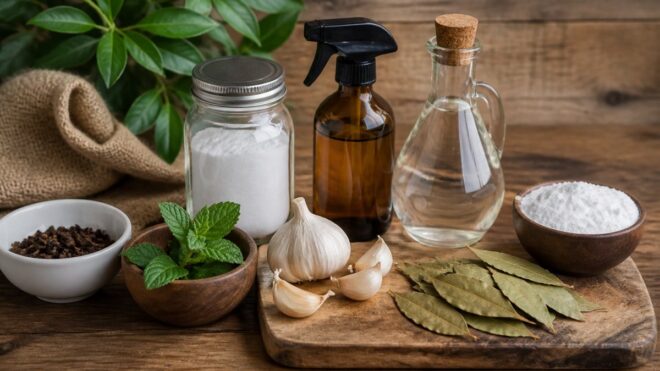
Essential Oils That Repel Cockroaches
Essential oils that repel cockroaches are the most studied natural option, but the honest framing is an evidence grade, not a blanket claim. Peppermint, eucalyptus, and mint oils show measurable deterrent effects in laboratory repellency assays. Oregano, rosemary, tea tree, and yarrow oils appear in the same research conversations with weaker or less consistent results. That is a real distinction, and most guides flatten it.
Here is what the lab work actually establishes, and what it does not:
- What it establishes: In sealed-container and choice-test designs, roaches avoid surfaces and air zones treated with certain oils. The effect is measurable and repeatable under controlled conditions.
- What it does not establish: That the same concentration, in an open kitchen with air exchange, food, moisture, and harborage, will keep a colony out. Lab repellency is not field control.
- Species matters: German cockroaches and brown-banded cockroaches do not respond identically to the same oil. A remedy that worked in one building may do nothing in another because the dominant species is different.
- Duration is short: Volatile oils off-gas quickly. A treated surface may lose most of its deterrent effect within hours, not days.
Evidence Grade by Oil
| Oil | Evidence Level | Typical Use | Realistic Expectation |
|---|---|---|---|
| Peppermint | Moderate lab support | Barrier spray along trails | Avoidance for hours; reapply often |
| Eucalyptus | Moderate lab support | Baseboards, entry paths | Similar to peppermint |
| Mint | Moderate lab support | Cabinets, shelves | Short-lived deterrent |
| Oregano | Weaker, less consistent | Spot treatment | Unreliable as a standalone |
| Rosemary | Weaker, less consistent | General spray | Unreliable as a standalone |
| Tea tree | Weaker, less consistent | Surface wipe | Unreliable as a standalone |
| Yarrow | Limited | Experimental | Not a practical home remedy |
How to Apply Essential Oil Repellents
- Mix 10 to 15 drops of peppermint or eucalyptus oil with one cup of water in a spray bottle.
- Add a splash of dish soap to help the oil mix instead of floating.
- Spray along baseboards, under the sink, and behind appliances.
- Wipe up food debris first. Oil on top of crumbs does nothing.
- Reapply every one to two days, or the barrier is gone.
A common mistake is spraying once and waiting a week. By then the scent has faded and roaches are back on the same path.
How to Tell If It Is Working
A repellent is working if you see fewer roaches in the treated zone, not fewer roaches overall. If sightings continue at the same rate after several days of consistent reapplication, the method is failing. If roaches appear in new rooms, you have likely pushed them rather than reduced them. That is the signal to switch from repellent to control.
Never spray undiluted essential oils around pets or small children. Cats in particular can react badly to concentrated oils on their paws and coat. Ventilate the room and keep animals out until surfaces are dry. People with asthma or other respiratory conditions should avoid breathing oil mist, and no oil spray should be applied to surfaces where food is prepared without wiping afterward.
Essential oils can deter roaches in a treated area for a short time. They do not treat the nest, the eggs, or the moisture and food that sustain a colony, and their effect fades within hours.
Household Items That Kill Roaches
Household items that kill roaches fall into two groups: powders that damage a roach’s outer shell, and baits that roaches carry back to the colony. Borax and diatomaceous earth are the two most common powders.
These are not instant killers. A roach that crosses a powder line may die hours or days later. That delay is actually useful, because a slow death gives other roaches time to contact the same material.
Garlic, bay leaves, citrus peels, and vinegar spray sit in a different category. These are deterrents, not killers. They may push roaches away from a cabinet, but they will not reduce the population.
| Remedy | Type | Speed | Best Use |
|---|---|---|---|
| Borax powder | Killer | Slow | Behind appliances, cracks |
| Diatomaceous earth | Killer | Slow | Baseboards, dry voids |
| Essential oil spray | Deterrent | Immediate, short-lived | Countertops, entry paths |
| Bay leaves, citrus peels | Deterrent | Weak | Inside cabinets |
| Vinegar spray | Deterrent | Very short-lived | Cleaning trails |
Natural Baits and Powders
Natural baits work better than sprays because roaches take the bait back to the nest. A simple borax bait mixes equal parts borax and a sweet powder like sugar, placed in a shallow lid near a known trail.
A few rules keep this from backfiring:
- Keep baits away from children and pets, ideally inside a covered station
- Do not place bait next to a repellent spray, since the smell keeps roaches away from the bait too
- Place small amounts in several spots rather than one big pile
- Give it one to two weeks before judging results
If you see no change after two weeks, the colony is likely larger than bait alone can handle.
How to Keep Roaches Out of the Kitchen
How to keep roaches out of the kitchen is not a cleaning checklist. It is an integrated pest management plan: sanitation, moisture reduction, exclusion, monitoring, and appropriate baiting, in that order. Repellents treat symptoms. This treats the cause, and it is the part most home-remedy guides skip.
Sanitation: Remove Food and Harborage
Start with the sink. Roaches need moisture more than food, and a dripping pipe under the cabinet is a five-star hotel. Fix leaks, dry the area, and check under the dishwasher.
Then cut the food supply:
- Store cereal, flour, and pet food in sealed containers
- Wipe counters and sweep floors nightly
- Take trash out daily, not weekly
- Clean behind the stove and fridge at least monthly
- Clear grease buildup on the range hood and cabinet tops
Moisture Reduction
Reduce moisture by fixing drips, running a fan after cooking, and clearing standing water from plant trays. Check the refrigerator drip pan and the condensate line on the air handler. A dry kitchen is a hostile kitchen.
Exclusion: Seal the Entry Points
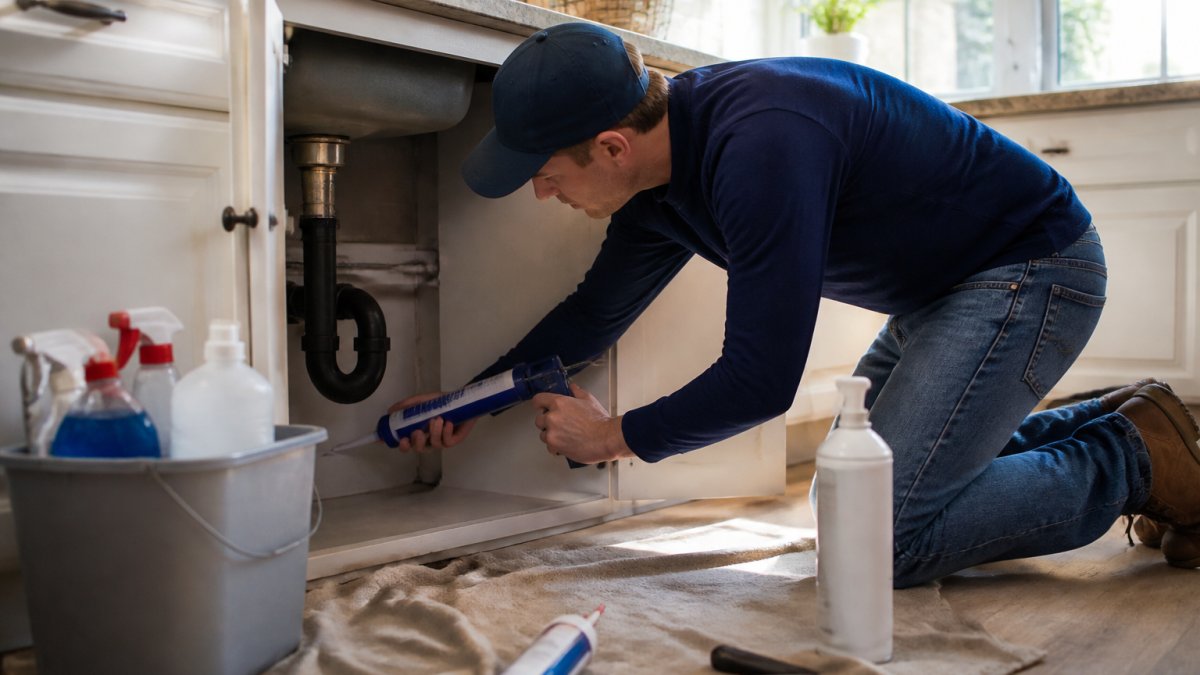
Roaches slip through gaps as thin as a coin. Seal cracks around pipes, baseboards, and cabinet hinges with caulk. Check where utility lines enter the wall. A door that lets light through also lets roaches through, so add a door sweep.
Monitoring: Know Before You Treat
Place sticky traps along baseboards, under the sink, and near the refrigerator. Check them weekly. Traps do two things: they catch roaches, and they tell you where the activity is concentrated. If traps stay empty for two weeks, your exclusion and sanitation are holding. If they fill up, you have an active population and should move to baiting.
Baiting: The Control Step
Bait works better than sprays because roaches take it back to the nest. Place bait stations near the trails your traps identified. Keep bait away from repellent sprays, since the smell keeps roaches away from the bait too. Give it one to two weeks before judging results.
Check the gap under your kitchen and bathroom doors. A simple door sweep closes that path for a few dollars.
Repellents change where roaches go. Sanitation, moisture control, exclusion, monitoring, and baiting change how many there are. Use them together, not instead of each other.
Do Mothballs Repel Roaches?
Do mothballs repel roaches? They can, but we do not recommend them. Mothballs contain naphthalene or paradichlorobenzene, and the fumes are toxic to people and pets as well as insects.
The smell may push roaches out of a closed cabinet or storage box. It does not kill a colony, and it does not stop roaches from living in the walls nearby.
Cedar and pepper spray are safer alternatives with similar limits. Both may deter roaches briefly. Neither solves an active infestation.
If you have mothballs in a kitchen or bedroom right now, remove them and ventilate the room.
Repelling vs. Killing Cockroaches: Why It Matters
This is the distinction most home remedy guides blur. A repellent changes where roaches go. A control method changes how many there are.
Repellents have a place. They can protect a specific area, like a pantry shelf or a pet food station. But when you push roaches out of the kitchen, they move somewhere else in the building. In a multi-family home, that often means the next apartment.
True control means treating the source: the nest, the eggs, and the conditions that let them thrive. That usually takes a combination of baiting, sealing, moisture control, and, for a real infestation, professional treatment.
| Goal | Best Approach | Realistic Outcome |
|---|---|---|
| Keep roaches off a shelf | Essential oil spray, bay leaves | Fewer sightings in that spot |
| Reduce a small population | Borax bait, diatomaceous earth | Slow decline over weeks |
| End an active infestation | Integrated pest management | Colony removed at the source |
When Natural Cockroach Repellents Aren’t Enough
Natural remedies have a ceiling, and it shows up fast in older buildings. If you see roaches in daylight, find egg cases, or spot them in more than one room, the colony is established. Sprays and powders will not catch up.
That is where a licensed service earns its place. Zoifia Pest Control handles roach removal across the Metro Boston area with a 90-day guarantee and no long-term contracts, so renters and landlords can get one-time treatment without signing up for monthly service. Our team is licensed and insured, and we treat the source rather than the surface.
Signs it is time to call:
- Roaches visible during the day
- Droppings or egg cases in multiple rooms
- A musty odor in cabinets or walls
- Remedies that worked for a week and then stopped
Frequently Asked Questions
What household items kill roaches?
Borax and diatomaceous earth are the most common household items that kill roaches. Borax, mixed with sugar as a bait, damages their digestive system and exoskeleton. Diatomaceous earth cuts through their outer shell and causes dehydration. Both work slowly and require direct contact. Neither resolves a large infestation on its own, especially if roaches have hidden egg cases in walls or appliances.
Do essential oils repel cockroaches?
Some essential oils do repel cockroaches, but the effect is short-lived. Peppermint, eucalyptus, tea tree, and rosemary oils have shown repellent activity in lab studies, mainly against German cockroaches. The problem is reapplication: the scent fades within hours, and roaches often return. Essential oils work best as a temporary deterrent in spots where you already keep things clean, not as a stand-alone fix for an active infestation.
Do mothballs repel roaches?
Mothballs do not reliably repel roaches, and they carry real health risks. The active ingredient, naphthalene or paradichlorobenzene, is toxic to pets and children if inhaled or ingested over time. Some people report roaches avoiding the smell, but there is no strong evidence it drives them out of a home. If you have an infestation, skip mothballs and use a method that targets the source.
When should I call a pest control professional for cockroaches?
Call a professional when you see roaches during the day, find droppings or egg cases in multiple rooms, or notice a musty odor that won’t go away. Those signs point to a settled infestation, not a few strays. Natural cockroach repellents can slow activity, but they rarely eliminate a breeding population hidden behind walls. A licensed technician can treat the source and follow up if activity continues.
Natural repellents can buy you time, but they cannot clear a colony hiding in the walls of an older building. If you have tried the oils, the powders, and the sealing and still see roaches, the problem is bigger than a spray bottle. Zoifia Pest Control offers fast response, licensed and insured technicians, a 90-day guarantee, and flexible service with no contract required. Get a quote and let us handle the source, not just the symptom.
