Table of Contents
- Why Older Homes Are Vulnerable to Bed Bug Infestations
- Inspecting for Bed Bugs: Finding Signs in Baseboards and Hidden Spaces
- Heat Treatment vs. Chemical Control: Which Method Works Best
- Non-Chemical Control Methods: Vacuuming, Laundering, and Freezing
- How to Seal Cracks for Bed Bug Prevention in Older Structures
- DIY Treatment vs. Professional Pest Control: Making the Right Choice
- Preventing Re-Infestation: Long-Term Monitoring and Maintenance
- Conclusion
Last Updated: August 17, 2026
Why Older Homes Are Vulnerable to Bed Bug Infestations
Older homes present a perfect storm for bed bug infestations. Original hardwood floors with gaps, plaster walls with cracks, and baseboards that don’t sit flush against walls create countless harborage sites that bed bugs exploit. Decades of settling, temperature fluctuations, and wear create small crevices throughout walls, flooring, and trim work. Bed bugs need only a space the thickness of a credit card to hide, and older homes multiply these spaces exponentially.
Multi-unit older buildings face even greater challenges. Bed bugs travel through shared walls, electrical conduits, and plumbing chases that connect units. A single infestation can spread to five others within weeks if not addressed aggressively. The life cycle accelerates urgency: from egg to adult takes roughly 30 days, and each female lays hundreds of eggs. Without proper treatment, populations explode rapidly.
Ignoring structural vulnerabilities in older homes often leads to repeated infestations within 60-90 days. The bugs retreat deeper into walls and emerge once chemical residues fade.
Inspecting for Bed Bugs: Finding Signs in Baseboards and Hidden Spaces
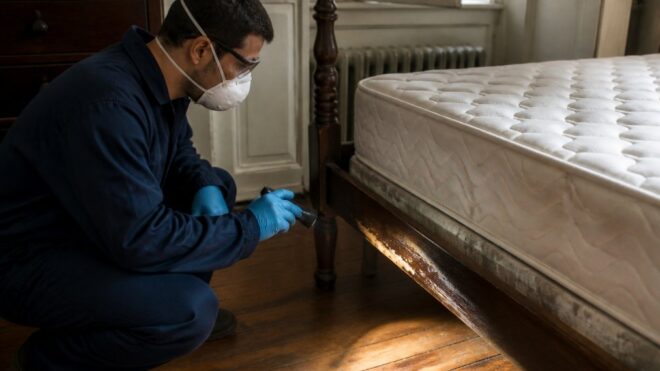
Finding bed bugs in older homes requires systematic inspection of every potential harborage site. Start with the bedroom, but understand that bed bugs travel throughout the home following hosts.
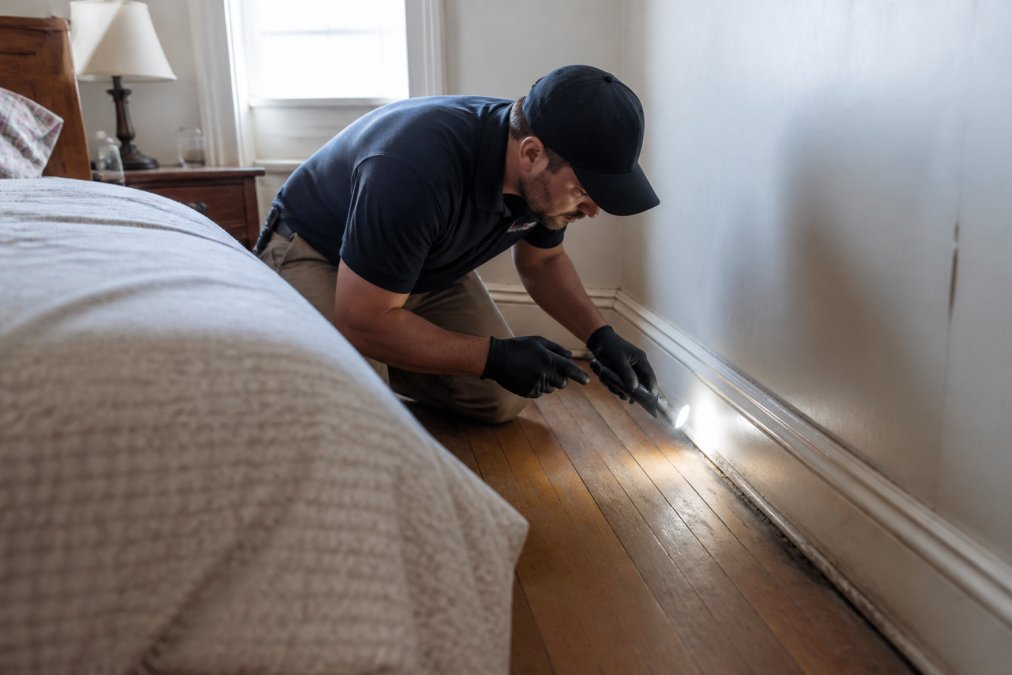
Baseboards are your first target. Use a flashlight and a stiff card to probe along the entire perimeter of infested rooms. Look for dark spots (fecal matter), shed skins, or the insects themselves, reddish-brown, flat, roughly the size of an apple seed.
Check mattress seams, box springs, and bed frames thoroughly. In older homes with antique furniture, wooden bed frames with carved details create excellent hiding spots. Inspect upholstered furniture along seams, under cushions, and where fabric meets wood. Check behind electrical outlets and light switches.
Examine wall cracks, peeling paint, crown molding, and picture frame hooks. Look for signs beyond the insects themselves: bed bug bites appear as small, itchy red welts in lines or clusters. Dark spots on sheets or mattresses (fecal matter) are more reliable indicators. You may notice a sweet, musty odor in heavily infested areas.
In older homes, always inspect the space where pipes and electrical conduits enter walls. These penetrations are rarely sealed properly, creating perfect entry and hiding spots for bed bugs.
Document any infestation with photos. This protects renters when communicating with landlords and helps pest control professionals understand severity.
Heat Treatment vs. Chemical Control: Which Method Works Best
Two primary approaches dominate bed bug treatment: heat treatment and chemical control.
Heat treatment raises the temperature throughout an entire structure to 118°F or higher for 90 minutes or longer, killing bed bugs at all life stages. Heat penetrates walls, furniture, and harborage sites that chemicals might miss. Bed bugs cannot develop resistance to temperature. The treatment is completed in a single day.
Limitations are significant. Heat treatment requires vacating the home for 24 hours or more. Some items cannot tolerate high temperatures: certain medications, electronics, and candles must be removed. The process is expensive. In older homes with poor insulation, maintaining target temperatures throughout becomes challenging.
Chemical control uses pesticides or non-chemical alternatives like diatomaceous earth and silica gel dusts. It’s less expensive upfront and doesn’t require extended vacating. However, it requires multiple applications. Bed bugs in protected harborage sites may not contact treated surfaces immediately. Most protocols call for a follow-up treatment 7-14 days after the initial application. Pesticide resistance has emerged as a real concern, especially with pyrethroid insecticides.
For older homes with extensive structural vulnerabilities, heat treatment offers faster resolution despite higher upfront cost. Chemical control works but typically requires multiple visits and a longer timeline.
Understanding Bed Bug Heat Treatment Cost and Effectiveness
Heat treatment effectiveness depends on proper execution. The entire structure must reach lethal temperature, including wall voids, attics, and crawl spaces. In older homes, achieving uniform temperature distribution is harder due to thick plaster walls, gaps in insulation, and uneven heating systems.
Effectiveness rates for properly executed heat treatment exceed 95 percent. However, re-infestation can occur if bed bugs are introduced after treatment. Heat treatment does not provide ongoing protection.
The process typically takes 24-48 hours from setup through final temperature verification. Most homeowners must vacate for at least 24 hours. A professional heat treatment company will provide a detailed list of items to remove or protect.
Non-Chemical Control Methods: Vacuuming, Laundering, and Freezing
Non-chemical control methods complement other treatment approaches and are essential for integrated pest management in older homes.
Vacuuming removes bed bugs and eggs from surfaces. Use a vacuum with strong suction and a HEPA filter. Vacuum mattresses, upholstered furniture, baseboards, and carpeting thoroughly. After vacuuming, immediately seal the vacuum bag in a plastic bag and dispose of it outside. Vacuuming alone won’t eliminate an infestation because it doesn’t reach bugs deep within wall voids, but it reduces the population significantly.
Laundering infested textiles in hot water at least 118°F kills bed bugs at all life stages. High-heat drying (120°F or higher for 30+ minutes) also kills them. Bag infested items before washing to prevent spreading bed bugs throughout the home.
Freezing works for items that can tolerate extreme cold. Temperatures below 32°F kill bed bugs, but the process is slow, items must remain frozen for several days. A standard home freezer maintains temperatures around 0°F, which is lethal, but the process takes longer than heat treatment. Freezing is practical for smaller items like books or clothing but impractical for furniture.
Desiccants and silica gel dusts work by damaging the bed bug’s exoskeleton, causing dehydration and death. These non-toxic products are safe for use in homes with pets and children. Diatomaceous earth (food-grade) is a common desiccant. Apply it sparingly along baseboards, behind furniture, and in accessible wall crevices.
Never inhale diatomaceous earth dust. Use a damp cloth to wipe application areas and wear a dust mask during application.
Non-chemical methods work best as part of a comprehensive approach. Combine vacuuming and laundering with chemical treatment or heat treatment for faster, more reliable eradication.
How to Seal Cracks for Bed Bug Prevention in Older Structures
Sealing structural vulnerabilities is essential for preventing re-infestation after treatment eliminates the current infestation.
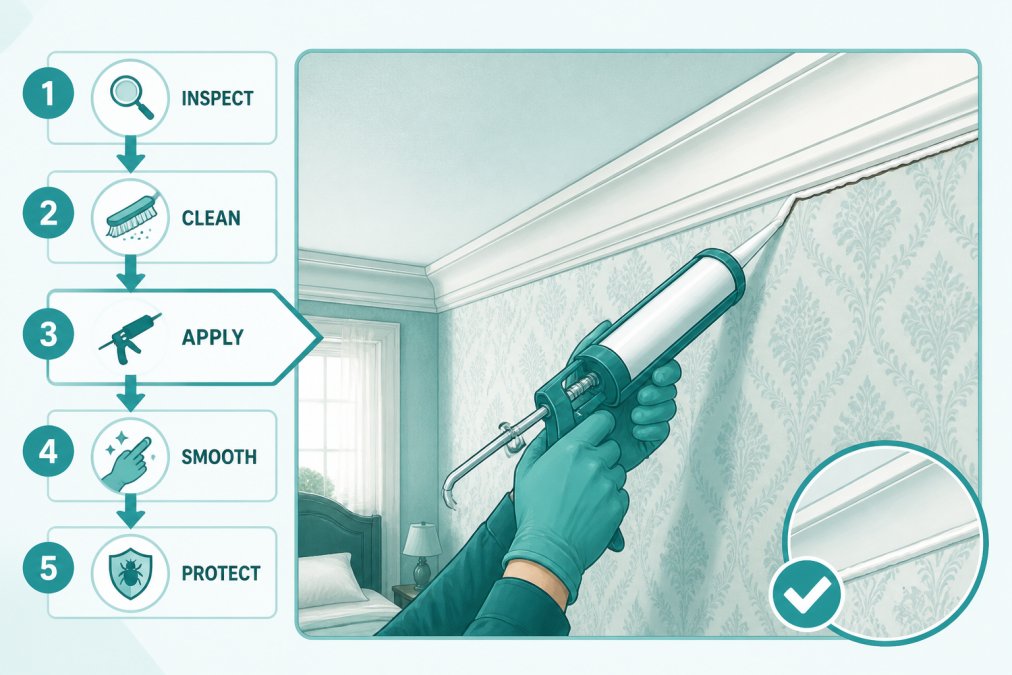
Start with baseboards. Use paintable caulk to seal gaps between baseboard and wall. Apply new caulk in a continuous bead, smoothing it with a wet finger or caulk tool.
Seal cracks in plaster walls and around trim work. Use spackling compound for small cracks (less than 1/8 inch) and caulk for larger gaps. Sand smooth after drying and paint to match the wall.
Address gaps around electrical outlets and light switches. Remove the cover plate and apply caulk around the outlet box where it meets the wall. Seal penetrations where pipes and electrical conduits enter walls using expanding foam sealant for large gaps, then trim excess and caulk over it.
Inspect and seal crown molding where it meets walls or ceilings. Check window and door frames and ensure weatherstripping is intact. Seal gaps in hardwood flooring near beds and furniture using flexible caulk designed for flooring.
Sealing is a long-term prevention strategy. It won’t eliminate an active infestation but prevents re-infestation after professional treatment.
After sealing, monitor sealed areas regularly. Caulk can crack or fail over time. Re-caulk annually or whenever cracks appear to maintain protection.
DIY Treatment vs. Professional Pest Control: Making the Right Choice
The decision between DIY treatment and professional pest control depends on infestation severity, your comfort level with pesticides, and the structural complexity of your home.
DIY treatment is less expensive upfront and allows immediate treatment. For minor infestations detected early, DIY treatment may succeed. However, over-the-counter pesticides are less potent than professional-grade products. Application is often incomplete; homeowners miss harborage sites that professionals identify. In older homes with numerous hiding spots, incomplete application almost guarantees treatment failure.
Professional pest control operators bring expertise, equipment, and professional-grade products. They conduct thorough inspections, identify all harborage sites, and develop tailored treatment plans. In older homes, this expertise is invaluable. Professional treatment includes follow-up visits scheduled 7-14 days after the initial application to catch newly emerged insects, significantly increasing success rates.
For renters in older buildings, professional treatment is typically the landlord’s responsibility. Document the infestation with photos and notify your landlord immediately. For homeowners and property managers, professional treatment is recommended for moderate to severe infestations or if DIY attempts have failed. At Zoifia Pest Control, we understand the unique challenges of treating bed bugs in older structures. Our licensed technicians conduct thorough inspections, identify structural vulnerabilities, and develop comprehensive treatment plans backed by our 90-day guarantee.
In older homes with multiple harborage sites, professional treatment provides faster resolution and higher success rates than DIY approaches.
Preventing Re-Infestation: Long-Term Monitoring and Maintenance
Preventing re-infestation requires ongoing vigilance. Bed bugs can be reintroduced through secondhand furniture, luggage from travel, or visitors. In multi-unit older buildings, they can migrate from neighboring units.
Establish a monitoring routine after treatment. Inspect your bed weekly for the first month, then monthly thereafter. Look for bed bugs, fecal spots, or shed skins using a flashlight.
Reduce clutter around the bed and throughout the home. Keep the bedroom relatively bare with minimal furniture and clear nightstands. Use mattress encasements designed for bed bug prevention. These zippered covers enclose the entire mattress and box spring, trapping any bed bugs inside. The encasement must remain in place for at least one year.
Maintain regular cleaning and vacuuming weekly. Wash bedding weekly in hot water. Inspect secondhand furniture carefully before bringing it into your home. When traveling, inspect luggage before unpacking and wash all clothing in hot water immediately.
In multi-unit buildings, encourage neighbors to report infestations promptly. Request that your landlord conduct inspections of adjacent units if an infestation is discovered. For property managers of older buildings, implement a preventative monitoring program with regular professional inspections and tenant education.
Never assume a bed bug infestation is resolved based on the absence of bites. Some people don’t react to bites, and bed bugs can hide for weeks without feeding. Continue monitoring even if you haven’t seen bugs or bites for several weeks after treatment.
Bed bug infestations in older homes require a comprehensive approach that addresses both immediate eradication and long-term prevention. The structural vulnerabilities that characterize older properties make effective treatment more challenging than treating newer construction, but success is absolutely achievable with the right strategy. Whether you choose heat treatment, chemical control, or a combination of methods, the key is thorough application and follow-up monitoring. For homeowners and renters in the Metro Boston area dealing with bed bug infestations, professional pest control services eliminate the guesswork and accelerate resolution. At Zoifia Pest Control, our licensed technicians specialize in treating bed bugs in older structures, understanding the unique challenges these properties present. We provide comprehensive inspections, professional-grade treatment, and follow-up visits to ensure complete eradication, all backed by our 90-day guarantee. Get a quote from Zoifia Pest Control today and reclaim your home from bed bugs.
Frequently Asked Questions
What is the most effective bed bug treatment for older homes?
Thermal treatment and integrated pest management combined with sealing harborage sites work best in older homes. Heat treatment kills all life stages, including eggs and nymphs, by raising temperatures to 118°F or higher throughout the structure. Older homes benefit most from professional thermal treatment because their gaps, baseboards, and crown molding create multiple harborage sites that DIY methods often miss. Chemical control alone frequently fails due to pesticide resistance in bed bug populations.
How much does bed bug heat treatment cost, and is it worth it?
Heat treatment cost depends on your home's size, layout, and infestation severity. Older homes with more structural complexity typically cost more to treat than newer properties because technicians must access more crevices and harborage sites. While professional heat treatment requires a larger upfront investment than DIY methods, it eliminates the entire infestation in one visit and includes a guarantee against re-infestation, making it cost-effective when you factor in failed DIY attempts. Request a quote from your local pest control operator to get accurate pricing for your specific situation.
Can I treat bed bugs myself in an older home, or do I need a professional?
DIY methods can work for light infestations caught early, but older homes present structural challenges that make professional treatment more reliable. Older homes have more gaps, baseboards, and floor voids where bed bugs hide, making thorough inspection and treatment difficult without specialized equipment. Many homeowners attempt DIY treatment multiple times before calling a professional, which costs more overall and allows the infestation to spread. A licensed pest control operator has thermal imaging, professional-grade pesticides, and experience treating the specific vulnerabilities of older structures.
How do I seal cracks to prevent bed bugs from coming back?
Seal cracks and crevices with silicone caulk or expandable foam, focusing on baseboards, crown molding, electrical outlets, and gaps around pipes and window frames. In older homes, pay special attention to areas where floor boards meet walls and where crown molding has separated. Use a caulking gun for precision, and smooth the caulk with a wet finger for a clean finish. After sealing, continue monitoring with mattress encasements and regular inspections, as prevention requires both structural repairs and ongoing sanitation practices to eliminate clutter and harborage sites.
This article was written using GrandRanker
