
Table of Contents
- 1. Integrated Pest Management for Commercial Properties
- 2. Physical Exclusion and Rodent Exclusion Services for Businesses
- 3. Non-Toxic Trapping and Monitoring Systems
- 4. Sanitation and Waste Management Protocols
- 5. Natural Repellents and Bittering Agents
- 6. How to Choose a Green Pest Control Company
- 7. Professional vs. DIY Eco-Friendly Rodent Control
- Conclusion
Last Updated: August 28, 2026
1. Integrated Pest Management for Commercial Properties
Integrated Pest Management (IPM) is a science-based approach combining multiple rodent control strategies to minimize chemical use while maximizing effectiveness. For commercial properties, IPM focuses on prevention, monitoring, and targeted interventions rather than relying on a single method.
Start with a thorough facility inspection. Identify rodent runways, dark, greasy trails along walls and baseboards where rodents travel repeatedly. Look for gnaw marks on wood, plastic, or wiring, and burrow holes near foundations. These signs reveal where rodents are active and where to focus efforts.
Maintain pest activity logs tracking sightings, droppings, and trap locations. This record proves compliance to health departments and reveals patterns, seasonal spikes, entry points, or sanitation lapses, you’d otherwise miss.
IPM is inherently eco-friendly. By addressing root causes rather than chasing symptoms, you reduce the need for repeated chemical applications. Zoifia Pest Control integrates IPM principles into customized prevention strategies that protect both operations and the environment.
IPM requires buy-in from your entire team. Train warehouse staff, kitchen workers, and maintenance crews to spot early warning signs and report them immediately.
2. Physical Exclusion and Rodent Exclusion Services for Businesses
Physical exclusion is the most effective long-term rodent control strategy. If rodents can’t get inside, they can’t infest your property.
Rodents are surprisingly small. Mice squeeze through gaps the size of a dime; rats need only a hole the size of a quarter (the CDC). Conduct a detailed structural integrity assessment, walking the entire perimeter and looking for gaps around pipes, conduits, vents, and foundation cracks.
Common entry points include gaps around utility penetrations, damaged weather stripping, foundation cracks, loading dock doors, ground-level openings, and deteriorated mortar between bricks.
Use the right materials. Steel wool is effective for small gaps because rodents struggle to gnaw through it. For permanent solutions, combine steel wool with caulk or foam sealant. For larger openings, install metal mesh or hardware cloth that rodents cannot penetrate.
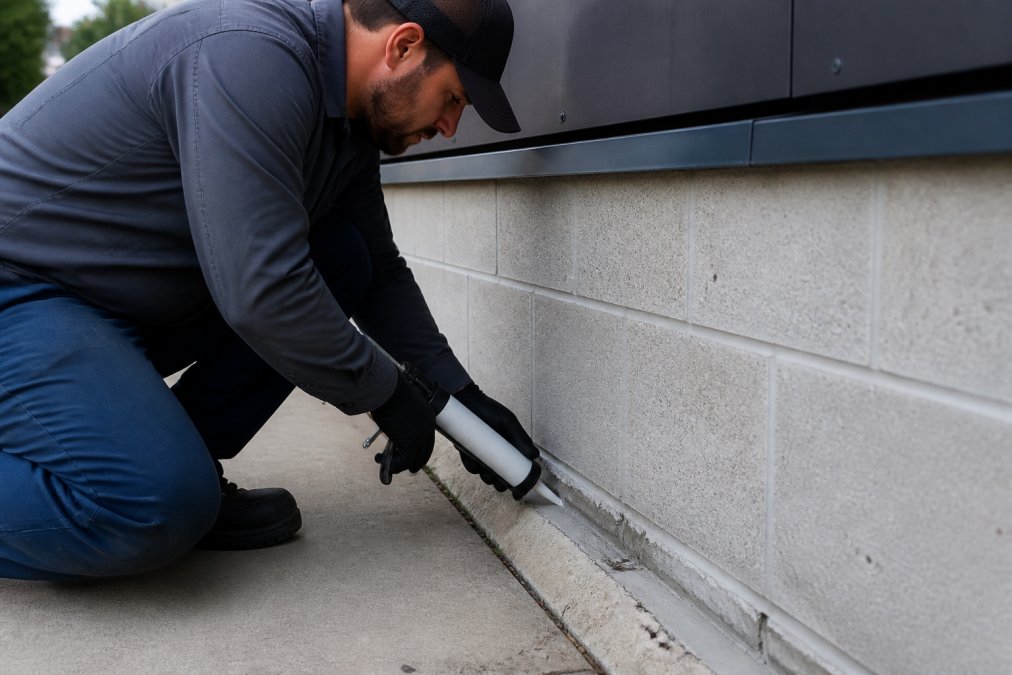
Professional exclusion involves mapping vulnerabilities, prioritizing high-risk areas, and implementing comprehensive sealing strategies. This is particularly important in older buildings where structural settling creates numerous entry points. Pest-proofing also includes installing door sweeps, ensuring overhead doors close completely, and installing chimney caps and vent covers.
Poor sealing can trap rodents inside or create new vulnerabilities. Professional rodent exclusion services assess your building’s unique characteristics and develop tailored solutions.
3. Non-Toxic Trapping and Monitoring Systems
Non-toxic trapping eliminates rodents without chemical rodenticides, making them safer for employees, customers, and the environment. Select the right trap type and place traps strategically along rodent runways.
Snap traps remain highly effective when set properly along rodent pathways. Live traps allow capture and relocation, though this requires careful handling and knowledge of local regulations. Electronic traps deliver a high-voltage pulse, killing rodents instantly without toxins.
Modern monitoring systems include electronic sensors that detect rodent activity in real time, sending alerts to your phone or computer. The Goodnature A24, a self-resetting automatic trap designed for commercial use, kills up to 24 rodents per CO2 canister using non-toxic bait, eliminating secondary poisoning risks and reducing labor overhead.
Non-toxic trapping provides transparency. You document each rodent removed, maintain regulatory compliance records, and adjust strategy based on actual activity data.
Placement matters enormously. Position traps perpendicular to walls along known rodent runways, not in open areas. Rodents follow established pathways, so proper placement dramatically increases capture rates. Check traps regularly and dispose of captured rodents according to local regulations.
4. Sanitation and Waste Management Protocols
Sanitation is the foundation of any successful rodent control program. Rodents need shelter, water, and food to thrive (the CDC). Remove the food source, and you’ve eliminated a major attraction.
For commercial properties, especially food service facilities, implement comprehensive sanitation protocols:
- Store all food in rodent-proof containers with tight-fitting lids
- Remove garbage daily and store it in sealed dumpsters
- Clean food preparation areas thoroughly after each shift
- Seal cracks and crevices where food particles accumulate
- Maintain proper ventilation to reduce moisture
- Remove clutter and excess storage that provides shelter
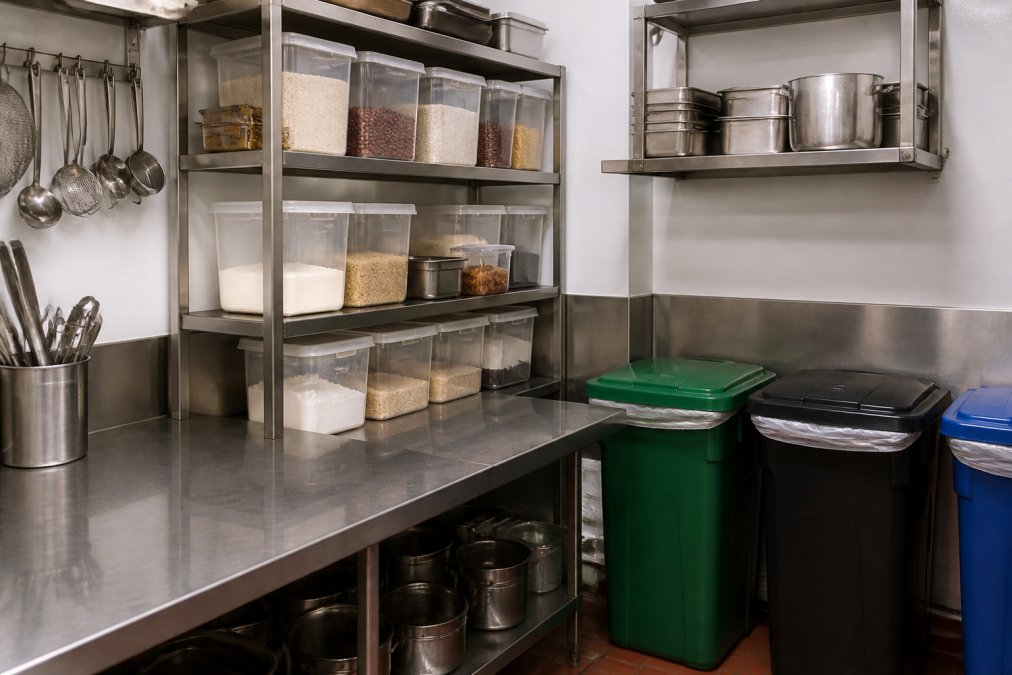
Implement a waste management system including sealed dumpsters located away from the building, regular dumpster cleaning, proper grease disposal, composting protocols that prevent rodent access, and frequently emptied recycling bins.
Document your sanitation practices. Health department regulations increasingly require proof of proper sanitation standards. Keep records of cleaning schedules, pest activity monitoring, and corrective actions. This documentation protects your business and demonstrates commitment to pest prevention.
5. Natural Repellents and Bittering Agents
Natural repellents offer supplementary protection when combined with exclusion and sanitation efforts. These products make your facility less appealing through taste or smell deterrents.
Bittering agents like RatX use ingredients targeting rodent physiology, causing dehydration without traditional rodenticide toxicity (the EPA). These non-poisonous baits appeal to natural feeding behavior while avoiding secondary poisoning risks.
Essential oil-based repellents like Pro-Pell Rodent Repellent use potent mint scents that rodents find offensive. The advantage is simplicity; the limitation is that rodents can become accustomed to scents over time.
Rotate repellent types to prevent habituation. Combine repellents with other methods rather than relying on them exclusively for severe infestations.
Natural repellents work best as preventative measures in low-activity areas, particularly in food storage areas and warehouses where chemical applications are restricted. They should not be your primary defense against active infestations.
6. How to Choose a Green Pest Control Company
Selecting a green pest control company requires evaluating more than marketing claims. Look for genuine commitment to eco-friendly rodent control through methods, certifications, and transparency.
Verify credentials. Licensed and insured pest control companies have completed required training and maintain professional standards. Ask for proof of licensing and insurance before hiring.
Ask specific questions about their approach. Do they prioritize exclusion over chemical applications? Will they conduct thorough inspection before recommending treatment? Do they use monitoring systems to track effectiveness? A reputable green pest control company should explain their integrated pest management strategy clearly.
Review experience with your specific business type. A company experienced with restaurants understands food service regulations. A company working with warehouses knows large-scale rodent problems. Experience translates to faster problem-solving.
Check references and reviews critically. Look for detailed feedback about whether the company solved the problem and response speed.
Understand their guarantee. Reputable companies like Zoifia Pest Control back their work with guarantees like the 90-day assurance ensuring your property remains pest-free. Know what the guarantee covers and what happens if rodents return.
Compare proposals carefully. The cheapest option isn’t always best value. Detailed proposals explaining scope of work, specific methods, and expected timelines indicate professional operations.
7. Professional vs. DIY Eco-Friendly Rodent Control
The choice between professional services and DIY approaches depends on infestation severity, facility size, and internal resources.
DIY rodent control works well for minor issues in small spaces. If you’ve spotted a single rodent or see activity in one area, you can implement exclusion measures and set traps yourself. Basic supplies, steel wool, caulk, snap traps, and monitoring devices, are inexpensive and readily available.
However, DIY approaches have significant limitations. Many business owners underestimate infestation scope. What appears localized often extends throughout the building. Amateur inspections frequently miss entry points professionals identify immediately. DIY exclusion work is often incomplete or improperly executed, leading to recurring infestations.
Professional pest control companies bring expertise DIY approaches cannot match. They understand rodent behavior, know where to look for hidden entry points, and have access to commercial-grade materials and monitoring systems. For commercial properties, professional services provide documentation satisfying health department regulations and insurance requirements.
The cost-benefit analysis shifts dramatically with facility size. A small office might save money with DIY methods. A restaurant, warehouse, or multi-unit building almost always benefits from professional intervention. The cost of a single infestation shutting down operations or triggering regulatory action far exceeds preventative professional service costs.
Consider a hybrid approach: hire professionals for initial inspection and exclusion work, then maintain the property yourself with ongoing monitoring and sanitation.
Zoifia Pest Control offers flexible service options without requiring long-term contracts, making professional solutions accessible for businesses wanting expert help without commitment. Licensed and insured technicians assess your specific situation and recommend whether professional management, DIY maintenance, or a combination approach makes sense for your property.
Rodent infestations threaten your business operations, employee health, and regulatory standing. The methods covered here provide a comprehensive toolkit for eco-friendly rodent control. Zoifia Pest Control specializes in helping Metro Boston businesses implement these strategies with licensed, insured technicians backed by a 90-day guarantee. Get a quote and discover how tailored, eco-friendly rodent control can protect your property without long-term contracts.
| Method | Best For | Key Advantage | Primary Limitation |
|---|---|---|---|
| Integrated Pest Management | All commercial properties | Combines multiple strategies for long-term success | Requires consistent implementation |
| Physical Exclusion | Prevention-focused facilities | Most effective long-term solution | Requires upfront structural assessment |
| Non-Toxic Trapping | Active infestations | Safe for employees and environment | Requires regular monitoring |
| Sanitation Protocols | Food service and storage areas | Eliminates primary rodent attraction | Depends on staff compliance |
| Natural Repellents | Preventative maintenance | Low toxicity and simple application | Limited effectiveness alone |
| Professional Services | Large facilities and severe infestations | Expert assessment and documentation | Higher upfront cost |
Frequently Asked Questions
What is integrated pest management and why is it effective for rodent control?
Integrated pest management combines multiple eco-friendly strategies, exclusion, sanitation, monitoring, and targeted non-toxic treatments, rather than relying on chemical rodenticides alone. This approach identifies what attracts rodents to your property and eliminates those conditions while using humane trapping or natural deterrents. Businesses see fewer re-infestations because IPM addresses root causes, not just symptoms. Health department regulations increasingly favor IPM for food service and commercial facilities because it protects employees and customers while controlling pest populations effectively.
Are non-toxic rodent control methods actually effective for large commercial spaces?
Yes, when combined properly. Non-toxic traps like the Goodnature A24 (which kills 24 rodents per CO2 canister) and electronic monitoring systems detect activity in real time, allowing faster response. Natural repellents and exclusion work best on larger properties because they prevent entry rather than just killing trapped rodents. The key is using exclusion first, sealing entry points and removing food sources, then deploying non-toxic traps in monitored stations. This layered approach works for warehouses, restaurants, and manufacturing facilities without exposing staff or customers to harmful chemicals.
How do I know if a pest control company is truly eco-friendly?
Ask about their approach to rodent exclusion, not just treatment. Legitimate green pest control companies prioritize sealing entry points, removing attractants, and using monitoring systems before suggesting any chemical or trap-based solution. Verify they use EPA-approved, low-impact products and can provide documentation of their methods for regulatory compliance. Request references from other local businesses and confirm they hold valid licenses and insurance. Companies offering customized inspections and exclusion work, rather than just one-size-fits-all monthly service, typically invest more in sustainable solutions.
What does Zoifia Pest Control's 90-day guarantee cover for rodent control?
Zoifia's 90-day guarantee means if you see rodent activity within 90 days of treatment, they return to address it at no additional cost. This protects you from paying again if the initial service doesn't fully resolve the problem. The guarantee covers the treatment method applied, whether trapping, exclusion, or monitoring. Since Zoifia offers no-contract service, you're not locked into ongoing monthly payments; you can request follow-up visits only when needed, making it ideal for businesses dealing with seasonal infestations or one-time problems.
This article was written using GrandRanker
