Table of Contents
- Why Older Homes Are More Vulnerable to Pests
- Common Entry Points and Structural Gaps in Historic Homes
- How Aging Materials Undermine Pest Control Effectiveness
- Moisture, Ventilation, and Crawlspace Issues That Attract Pests
- Pest Proofing Old Houses: Mechanical vs. Chemical Solutions
- Why One-Time Pest Control Service Cost Matters Less Than Long-Term Strategy
- Benefits of Non-Contract Pest Control for Older Properties
- Conclusion
Last Updated: August 29, 2026
Why Older Homes Are More Vulnerable to Pests
Older homes present a fundamentally different pest control challenge than newer construction. At Zoifia Pest Control, we understand that structural vulnerabilities in historic homes create conditions that make recurring pest infestations nearly inevitable without a strategic approach tailored to aging properties.
Modern homes follow building standards that prioritize structural integrity and pest exclusion. Older homes were built when those standards either didn’t exist or were far less stringent. A home built in 1950 or earlier was never engineered with the same level of airtightness or material durability that today’s code requires (iccsafe.org). Pests follow pressure points, when a structure has settling foundations, gaps between materials, deteriorating wood, and compromised barriers, pests treat these openings as highways into your home.
Consider the materials themselves. Older homes often have wood siding, wood foundations, or wood framing that has aged 50, 75, or even 100+ years. Wood rot develops. Seals fail. Gaps widen. A pest control treatment that works in a newer home with solid seals may have no lasting effect in an older structure where entry points keep multiplying. One treatment addresses the current infestation, but the underlying structural conditions remain unchanged. Pests return because the conditions that attracted them never improved.
Common Entry Points and Structural Gaps in Historic Homes
The most persistent entry points in older homes cluster around three areas: the foundation, the perimeter, and the roof line.
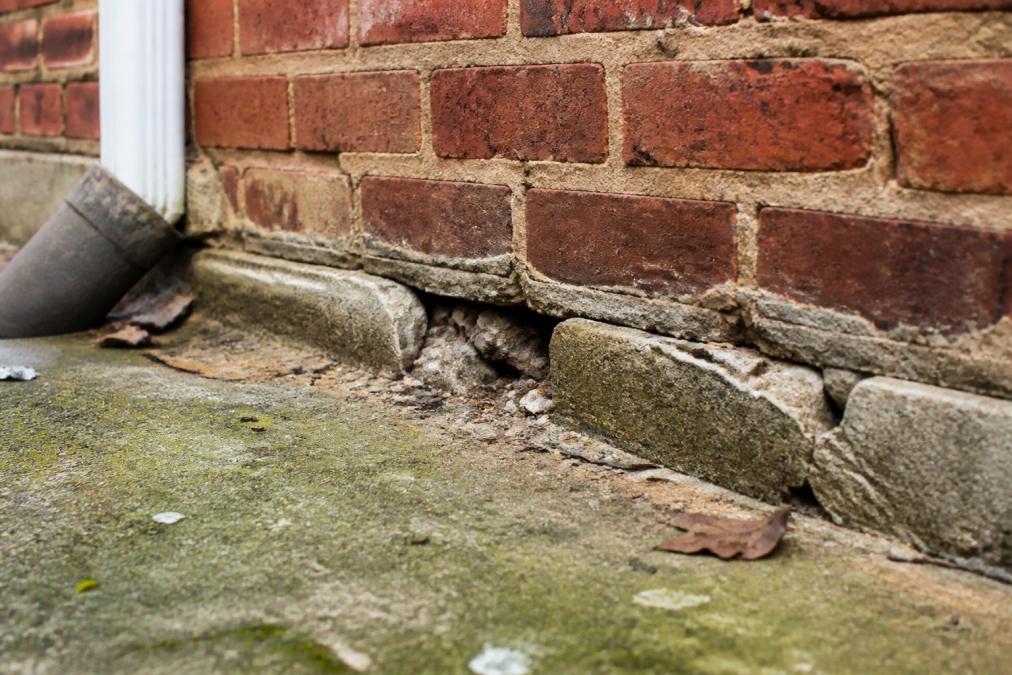
Foundation gaps are the biggest culprit. Older homes often have stone or brick foundations that settle unevenly over decades, creating small gaps between the foundation and the sill plate (peer-reviewed research). These gaps might be only a quarter-inch wide, but that’s enough for rodents and carpenter ants to exploit. Unlike modern foundations with continuous concrete and sealed edges, older foundations were simply laid and mortared. The mortar cracks. The stone shifts. The gaps persist.
Perimeter sealing is equally compromised. Older homes have gaps around door frames, window frames, and utility penetrations that modern construction would never allow. Weatherstripping hardens and shrinks. Gaps around pipes and electrical conduits were never properly sealed. The roof line presents another layer of vulnerability, soffit and fascia boards have warped, cracked, or separated, and gable vents lack proper screening. These upper entry points lead directly into attic spaces where pests nest undisturbed.
Crawlspaces and basement areas compound the problem. Many older homes have crawlspaces with exposed soil, minimal vapor barriers, and wood framing in direct contact with earth. This creates ideal conditions for termites and carpenter ants. An older home might have 20 or 30 distinct entry points across the foundation, perimeter, and roof. A one-time pest control service leaves these structural vulnerabilities intact, allowing pests to return through the same routes.
How Aging Materials Undermine Pest Control Effectiveness
Pest control treatments rely on barriers that assume a stable structure. When the structure itself is compromised, treatment effectiveness declines dramatically.
Wood siding that’s 80 years old has often absorbed moisture and lost its protective coating. Caulk applied to these surfaces doesn’t adhere the way it would to modern materials. Insulation in older homes has often settled, compressed, or degraded, and doesn’t provide the same pest-blocking properties as modern materials. Pests navigate through compromised insulation more easily.
Wood shrinks as it ages. Joints that were tight in 1960 have gaps now. Settling is cumulative and uneven, creating new gaps and widening existing ones. Paint applied and reapplied many times can peel and flake, exposing wood to moisture and pest damage. When pest control technicians apply treatments to these surfaces, the treatments don’t penetrate or adhere properly. The building is literally becoming less airtight every year, and the treatment addresses the pest population but not the structural conditions that allowed entry.
Moisture, Ventilation, and Crawlspace Issues That Attract Pests
Moisture is the magnet that brings pests to older homes. Older homes, by design, have moisture problems that newer homes don’t.
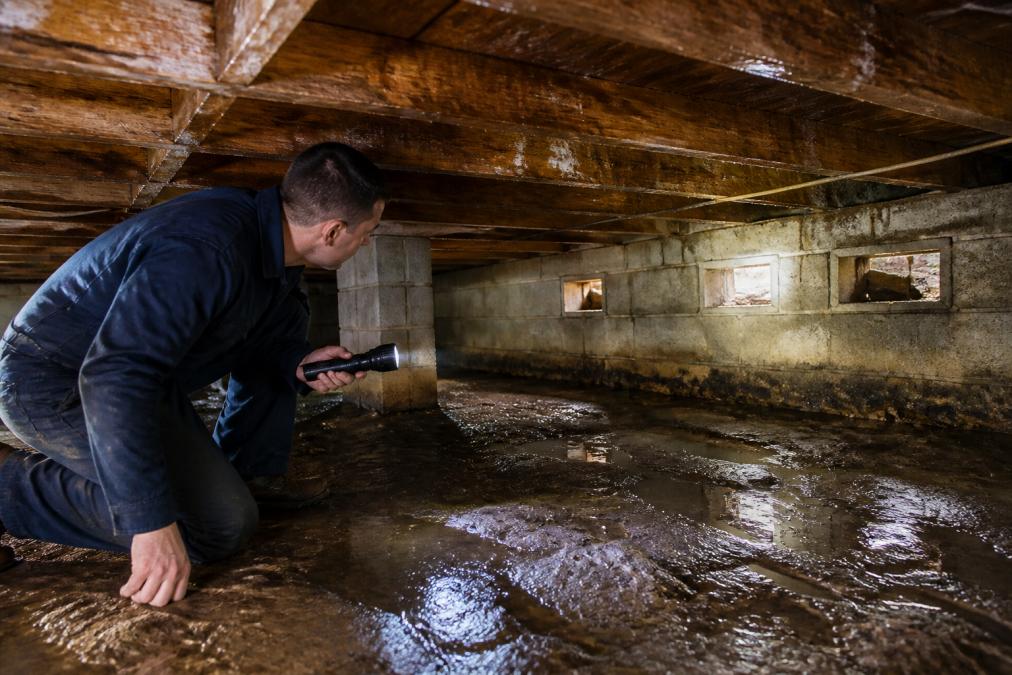
Crawlspaces in older homes were built with minimal ventilation and no vapor barrier. Soil moisture rises directly into the crawlspace air. Wood framing sits in contact with damp earth or concrete, creating ideal conditions for termites and wood-destroying insects. Even if pest control eliminates the current colony, the moisture conditions remain, ensuring reinfestation within months.
Basement moisture compounds the problem. Older basements often lack proper waterproofing, and water seeps through foundation walls. Cockroaches thrive in humid environments (the CDC). Rodents are attracted to moisture sources. Attic ventilation in older homes is often inadequate, soffit vents may be blocked by insulation, and gable vents provide insufficient air movement. This creates warm, humid conditions perfect for rodents and insects seeking nesting sites.
Gutters and downspouts in older homes often fail to direct water away from the foundation. Water pools around the foundation perimeter, creating moisture that wicks up into the foundation and basement. Every moisture source is a pest attractant. Pest control can eliminate the current infestation, but the moisture conditions that attracted them persist, and pests return.
Pest Proofing Old Houses: Mechanical vs. Chemical Solutions
Two fundamentally different approaches exist for controlling pests in older homes: mechanical exclusion and chemical treatment.
Chemical solutions target the pest population directly and work quickly, but they address only the symptom, not the cause. Once the chemical degrades, pests find their way back in through the same structural gaps. In older homes, chemical-only approaches consistently fail long-term because the structural vulnerabilities remain.
Mechanical exclusion prevents pests from entering and nesting by sealing gaps, installing screens, repairing damaged materials, and eliminating moisture sources. It addresses the root cause but requires time and resources. An older home might have 20+ distinct entry points, making this a significant undertaking.
The most effective approach combines both. Start with mechanical exclusion to eliminate structural vulnerabilities, sealing foundation gaps, installing proper crawlspace ventilation and vapor barriers, repairing soffit and fascia, and addressing moisture issues. Once the structure is secured, chemical treatments serve as a maintenance tool. For older homes, mechanical exclusion is what stops recurring pest control failures. Chemical treatment alone is like bailing water from a boat with a hole in it. The hole needs to be patched first.
Why One-Time Pest Control Service Cost Matters Less Than Long-Term Strategy
Many homeowners approach pest control as a cost decision, but in older homes, this strategy guarantees failure and higher total costs over time.
A one-time service addresses the immediate infestation, but within weeks or months, pests return in an older home with structural vulnerabilities. The cost of repeated treatments over a year often exceeds the cost of addressing underlying structural issues once. If a homeowner pays for pest control monthly because infestation keeps returning, they’ve spent far more than they would have spent on sealing gaps and addressing moisture.
The real cost isn’t just service calls, it’s the damage pests cause. Termites damage wood framing. Rodents chew through wiring. Each infestation cycle causes additional damage that compounds over time. Long-term strategy means asking why pests are returning and how to eliminate those conditions permanently. This often requires a combination approach: initial pest control eliminates the current infestation while simultaneous structural repairs eliminate the conditions that attracted pests. Ongoing maintenance prevents reinfestation. This costs more upfront but saves money long-term and prevents cumulative damage.
Benefits of Non-Contract Pest Control for Older Properties
Many pest control companies require long-term contracts, but these often don’t serve older homes where the situation is complex and evolving.
Non-contract pest control offers flexibility that older homes require. You can adjust your approach as conditions change, starting with monthly treatments while addressing structural issues, then reducing to quarterly or seasonal service once structural work is complete. You can also work with multiple service providers: a general pest control company, a foundation contractor, a crawlspace specialist, and a roofer, each handling their specialty.
Non-contract service also means you pay only for treatments you actually need. If structural vulnerabilities are addressed and infestation is controlled, you don’t need monthly service. At Zoifia Pest Control, we offer non-contract service because older homes don’t fit standard pest control models. Our 90-day guarantee means if you see pests within 90 days of service, we return at no additional charge.
| Approach | Best For | Drawback |
|---|---|---|
| Monthly contract service | New homes, predictable situations | Inflexible, may pay for unnecessary service |
| Non-contract service | Older homes, evolving situations | Requires more active management |
| Hybrid (initial intensive service + seasonal) | Older homes with structural repairs | Requires coordination across multiple contractors |
Conclusion
Pest control fails in old homes because the underlying problem isn’t the pest population, it’s the structure itself. Gaps, moisture, aging materials, and poor ventilation create conditions that pests exploit. One-time treatment eliminates the current infestation but leaves these conditions intact. Pests return because the reasons they arrived never changed.
The solution is to address both the pest and the structure. Eliminate the current infestation, then seal the vulnerabilities that allowed them in. Improve ventilation and moisture control. Repair aging materials. This requires a strategy that goes beyond a single service call.
Zoifia Pest Control specializes in older properties where this approach is essential. We eliminate the immediate infestation with fast, reliable service backed by our 90-day guarantee, and we help you understand the structural vulnerabilities that allowed pests in so you can address them permanently. No long-term contracts required, just flexible service that adapts to your home’s actual needs.
If you’re dealing with recurring pest problems in an older home, the issue isn’t that pest control doesn’t work. The issue is that the structure needs attention alongside pest treatment. Get a quote from Zoifia Pest Control, and let’s develop a strategy that actually stops the cycle.
Frequently Asked Questions
Q: Are old houses more prone to bugs?
A: Yes. Older homes have more structural vulnerabilities than modern construction. Foundation settling creates gaps, aging materials deteriorate faster, and historic building standards didn't account for modern pest pressure. Combined with moisture issues common in older crawlspaces and basements, these factors create ideal conditions for rodents, termites, and other pests to establish themselves. Standard pest control treatments often fail because they only address active infestations, not the underlying structural entry points.
Q: Why do pests keep coming back after professional treatment in older homes?
A: Pest control treatments eliminate existing infestations, but they don't seal the structural vulnerabilities that allowed pests to enter in the first place. In older homes, this means treating the infestation cycle repeatedly without addressing foundation gaps, deteriorated weatherstripping, or compromised crawlspace ventilation. Pest exclusion, sealing entry points, combined with chemical treatment is essential for long-term success. One-time treatments without structural repair typically fail within weeks or months.
Q: What's the difference between one-time pest control and ongoing service for older homes?
A: One-time treatments address the immediate pest problem but don't prevent re-infestation. Ongoing pest control or non-contract flexible service allows technicians to monitor for new entry activity, adjust treatment strategies based on seasonal pest pressure, and catch infestations before they spread. For older homes with multiple vulnerabilities, flexible recurring visits, without long-term contracts, provide better protection while giving you control over frequency and cost.
Q: Can pest proofing an old house actually prevent infestations?
A: Pest proofing combined with professional treatment significantly reduces re-infestation risk. This includes sealing foundation gaps, installing vent screens, replacing damaged weatherstripping, and improving crawlspace ventilation. However, older homes often have structural limitations that make complete exclusion difficult. A combination approach, mechanical exclusion (sealing), chemical treatment, and preventative maintenance, works better than any single strategy alone.
This article was written using GrandRanker
