Table of Contents
- Professional vs DIY Roach Control: Key Differences
- How Long Does Professional Roach Treatment Last
- Dangers of Over-the-Counter Roach Sprays and DIY Methods
- Signs of a Severe Cockroach Infestation
- Why DIY Treatments Fail and Roaches Return
- Integrated Pest Management: The Professional Approach
- When to Call a Professional Exterminator
- Frequently Asked Questions
Last Updated: September 21, 2026
Professional vs DIY Roach Control: Key Differences
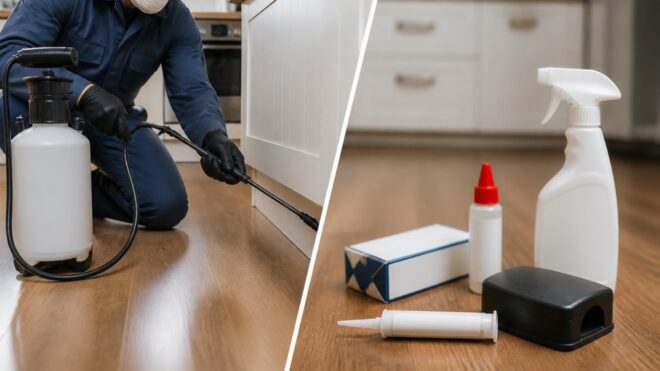
When you’re facing a cockroach infestation, the choice in professional vs diy roach control comes down to one question: how severe is the problem, and what’s your tolerance for risk?
Professional pest control combines targeted application, integrated pest management principles, and the ability to identify harborage areas your eyes won’t catch. DIY methods rely on you to execute perfectly with products that weren’t designed for your specific situation.
Here’s what separates them:
Professional treatment uses professional-grade chemicals, structural inspection, and follow-up monitoring. A licensed technician identifies entry points, nesting sites, and the cockroach life cycle stage you’re actually dealing with. They apply bait rotation strategies and can access areas homeowners typically miss.
DIY treatment puts you in control of over-the-counter products like gel baits and sprays. You buy what’s available at hardware stores, apply it yourself, and hope the cockroach mortality rate is high enough to matter. There’s no expert assessment of infestation severity.
The gap widens when infestations are moderate to severe. A single application of consumer-grade gel bait might suppress a small population for a few weeks. It won’t eliminate an established colony living in your walls.
| Aspect | Professional | DIY |
|---|---|---|
| Chemical strength | Professional-grade formulations | Over-the-counter products |
| Infestation assessment | Expert inspection of nesting sites | Visual inspection only |
| Application precision | Targeted placement in harborage areas | General application |
| Follow-up monitoring | Scheduled visits and bait rotation | Homeowner responsibility |
| Time investment | Technician handles everything | 5-10 hours of your time |
| Cost | Higher upfront | Lower initial cost |
| Success rate (moderate infestation) | 85-95% within 2-3 weeks | 40-60% within 4-6 weeks |
| Re-infestation risk | Low with preventive maintenance | High without structural fixes |
How Long Does Professional Roach Treatment Last
Professional roach treatment typically shows results within 5-7 days, with full elimination taking 2-4 weeks for moderate infestations. The duration depends on infestation severity, building structure, and how well you follow sanitation protocols.
Here’s what the timeline actually looks like:
Days 1-3: The technician applies professional-grade gel baits and monitors entry points. Adult roaches begin consuming bait, and population suppression starts.
Days 4-7: You’ll notice fewer roaches. The bait has spread through the colony as roaches return to nesting sites and share contaminated food.
Weeks 2-4: Nymphs (juvenile roaches) are eliminated as they consume poisoned food sources. This is where DIY methods often fail, most homeowners stop treating too early, before nymphs die.
Weeks 4-8: The technician returns for follow-up visits, checks bait stations, and applies additional treatments if needed. Bait rotation prevents roaches from developing chemical resistance.
The 90-day guarantee from Zoifia Pest Control covers this entire period. If roaches return within 90 days, treatment is repeated at no charge.
Professional treatment lasts longer than DIY because it addresses the entire cockroach life cycle. A single gel bait application kills adults but misses eggs. A professional plan includes follow-up applications timed to catch emerging nymphs.
The biggest mistake homeowners make is stopping treatment after 2 weeks because they see fewer roaches. That’s when you need to keep going, the nymphs are still hatching, and early termination guarantees re-infestation.
Dangers of Over-the-Counter Roach Sprays and DIY Methods
Over-the-counter roach sprays create real safety risks, especially in homes with children or pets. The toxicity levels in consumer products are lower than professional-grade chemicals, but that doesn’t mean they’re safe when misused.
Inhalation exposure is the biggest concern. Many DIY users spray indoors without proper ventilation, creating airborne pesticide particles. This is particularly dangerous in apartments where ventilation is limited and chemicals drift to neighboring units.
Improper application concentrates pesticides in the wrong places. You might spray baseboards thoroughly but miss the wall voids where roaches actually live. This wastes product and creates chemical exposure without solving the infestation.
Chemical resistance develops when roaches are exposed to low doses of the same product repeatedly. Over-the-counter gel baits lose effectiveness after 4-6 weeks of continuous use. Professional treatments rotate between different active ingredients to prevent this resistance.
Pet and child safety is compromised when gel baits are placed in accessible areas. A curious toddler or cat can ingest bait meant for roaches. Professional technicians place baits in tamper-resistant stations and areas children can’t reach.
The EPA regulates consumer-grade pesticides, but regulation doesn’t equal safety in home use. A product that’s legal to sell doesn’t account for your specific apartment layout, ventilation system, or household composition.
Mixing different roach sprays is a common DIY mistake that can create toxic chemical reactions. Never combine products or apply different treatments within 48 hours of each other without professional guidance.
Signs of a Severe Cockroach Infestation
A severe cockroach infestation means you’re dealing with hundreds or thousands of roaches, not dozens. The difference matters because it determines whether DIY treatment has any chance of working.
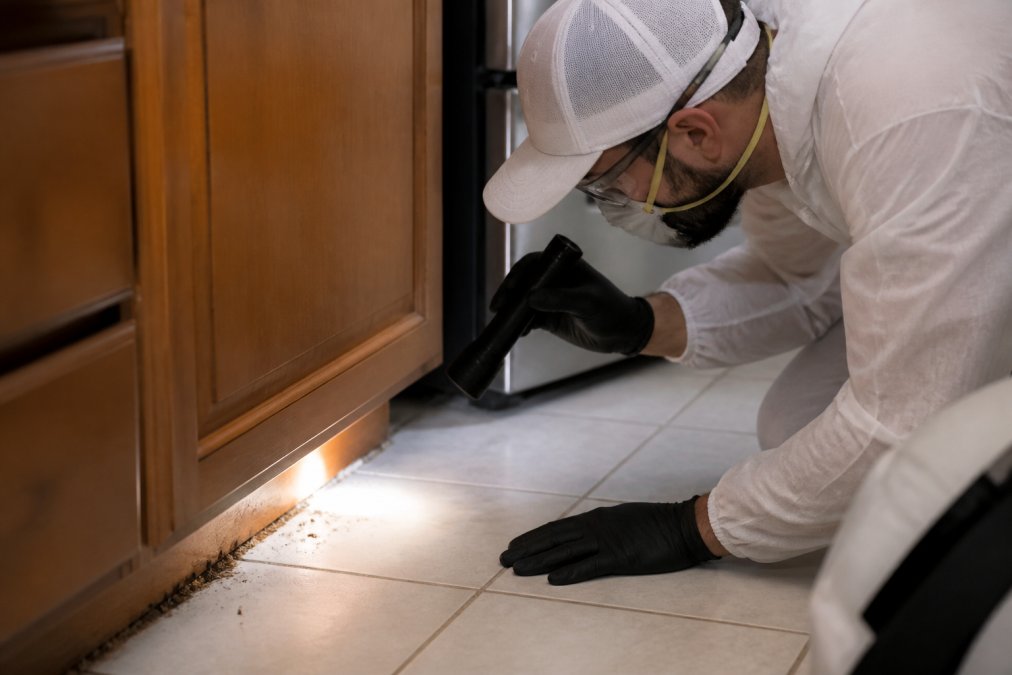
Visible roaches during the day is the clearest sign. Roaches are nocturnal, if you see them in daylight, the population has grown so large that nighttime harborage areas are full. They’re forced into visible spaces because there’s nowhere else to hide.
Fecal droppings look like small dark specks or smudges, typically found along baseboards, in cabinet corners, or behind appliances. A severe infestation produces droppings everywhere, not just one or two areas.
Egg casings (oothecae) are brown, capsule-shaped objects about the size of a grain of rice. Finding multiple casings indicates an established breeding population. Each casing contains 30-40 nymphs.
Musty odor develops when populations reach critical mass. Roaches produce pheromones that create a distinctive smell in kitchens and bathrooms. This odor intensifies as the infestation worsens.
Roaches in unusual places like bedrooms, living rooms, or upper floors indicates population overflow. A small infestation stays in the kitchen. A severe one spreads throughout the building.
Bites or allergic reactions occur in severe infestations. Roaches bite skin and shed skin particles that trigger allergies. You might wake with bite marks or experience unexplained rashes.
If you’re seeing multiple signs, DIY treatment alone won’t work. The infestation severity has exceeded what consumer products can handle. You need professional assessment and integrated pest management to eliminate it.
Why DIY Treatments Fail and Roaches Return
DIY roach control fails for three core reasons: incomplete application, lack of structural fixes, and poor timing.
Incomplete application means you’re treating visible areas but missing harborage sites. Roaches live in wall voids, behind dishwashers, inside electrical outlets, and under sink pipes. You can’t see these spaces, so you can’t treat them. A professional inspection finds these hidden nesting areas and applies bait directly into them.
No structural prevention is the second failure point. Roaches need entry points and food sources. Sealing cracks, fixing plumbing leaks, and removing clutter eliminates harborage areas. Most DIY users apply bait but don’t address why roaches came in the first place. They return through the same gaps.
Timing problems kill most DIY attempts. Roach gel baits work on a 10-14 day cycle. You need to reapply every 2 weeks for 6-8 weeks minimum. Most homeowners apply once, see improvement, and stop. Then nymphs hatch from eggs you didn’t know existed, and the population rebounds.
Chemical resistance develops when you use the same product repeatedly. Roaches exposed to sub-lethal doses of the same active ingredient develop tolerance. Professional treatments rotate between different bait formulations to prevent this.
Lack of monitoring means you don’t know if treatment is working until roaches reappear. Professionals place monitoring stations and check them weekly. They adjust treatment based on real data about population suppression.
DIY treatments have a low success rate for moderate infestations and are largely ineffective for severe ones. Professional treatment addresses all five failure points simultaneously.
The reason roaches return after DIY treatment isn’t because the bait was bad, it’s because you stopped treating before the entire life cycle was eliminated, or you never sealed the entry points that let them in.
Integrated Pest Management: The Professional Approach
Integrated pest management (IPM) is the framework that separates professional roach control from DIY spray-and-pray approaches. It combines chemical treatment, structural prevention, sanitation practices, and monitoring into a coordinated strategy.
IPM starts with inspection. A technician assesses infestation severity, identifies nesting sites, locates entry points, and determines which cockroach species you’re dealing with. Different species respond to different baits and require different application strategies.
The chemical component uses professional-grade gel baits placed directly in harborage areas. These aren’t the same products you buy at the hardware store.
When to Call a Professional Exterminator
Call a professional exterminator when DIY treatment has failed, when infestation severity is moderate to severe, or when you’re dealing with an apartment building where structural fixes require landlord approval.
Frequently Asked Questions
Does professional pest control actually work for roaches?
Yes. Professional roach control combines multiple methods, inspection, targeted gel baits, structural entry point sealing, and follow-up monitoring, to address the root cause of infestation. Professionals identify hidden nesting sites and apply professional-grade chemicals with precision that DIY methods cannot match. Most severe infestations require professional intervention because roaches develop chemical resistance to over-the-counter treatments and hide in areas homeowners cannot reach.
What is the most effective product for controlling cockroaches?
Gel baits are the most effective for both DIY and professional use. Advion Cockroach Gel Bait is the professional-grade standard, containing Indoxacarb, which overcomes bait aversion and kills the adult population plus nymphs. Consumer options like Terro T502 work for minor infestations but require strict monitoring and reapplication. Professional treatments combine gel baits with structural exclusion and sanitation practices, the bait alone is only part of integrated pest management.
Why do roaches keep coming back after DIY treatment?
Roaches return because DIY methods typically address only visible populations, not the full life cycle or hidden harborage areas. Roaches develop chemical resistance quickly, and over-the-counter sprays kill only what they touch. DIY users often miss nesting sites in walls, under appliances, and structural entry points. Professional treatment includes bait rotation, preventive maintenance, and exclusion to stop re-infestation. Without addressing sanitation and structural gaps, roaches will return within weeks.
How long does it take for professional pest control to eliminate roaches?
Initial elimination typically takes 2-4 weeks with professional treatment, depending on infestation severity. However, complete eradication requires ongoing monitoring and follow-up visits over 4-8 weeks to catch any remaining nymphs as they mature. Professional services like Zoifia Pest Control include a 90-day guarantee, meaning if roaches return during that period, follow-up treatment is covered. This timeline is significantly shorter than DIY approaches, which often fail and extend the infestation for months.
